August 20, 2026
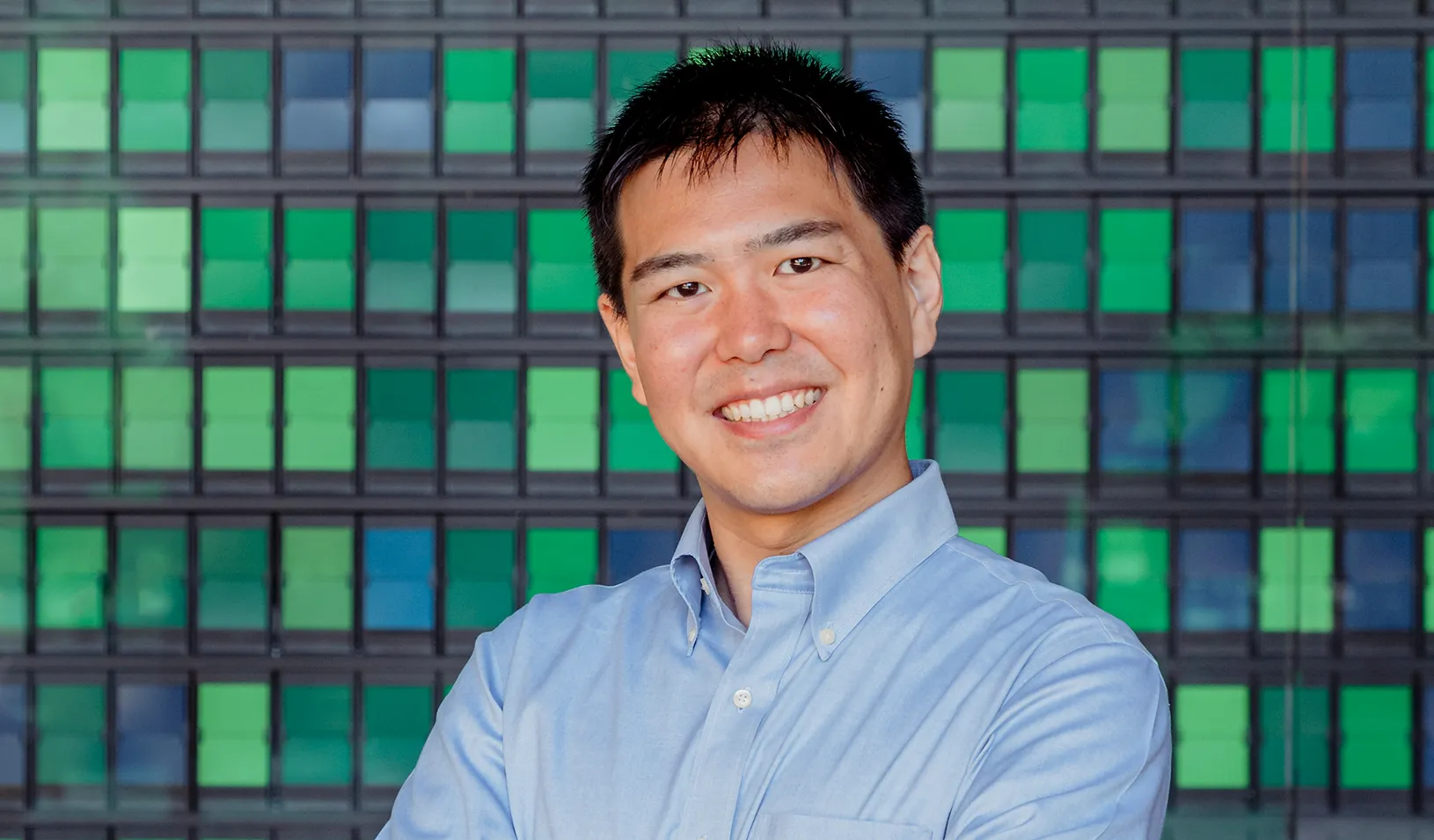
| by Bjorn CareyFor nearly a decade, Ryo Takanashi, MBA ’25, purchased and transported corn from farms around the world to Japan. As chief corn trader for Japan’s largest commercial grain importer, roughly a fifth of all Japanese imports passed through his book. The role required constant adjustment to external factors, as he buttressed the supply chain to mitigate disruptions caused by trade wars, the war in Ukraine, and COVID-19.
The disruptor he struggled with the most, however, was water, as rainfall and drought conditions brought on by extreme weather grew increasingly unpredictable. Takanashi planned his imports months ahead, only to see them unravel as fields suffered from drought. “I was never able to answer the question, what happens when weather patterns change,” Takanashi says.
Takanashi realized he would never answer this question from his trading desk, so he enrolled in a joint MBA/MS in Environment and Resources program at Stanford to find some solutions. With the support of a Stanford Impact Founder Fellowship from Stanford Ecopreneurship and an Innovation Transfer Grant from the TomKat Center, and funding from the Stanford Sustainability Accelerator, Takanashi co-founded WaterOne.ai to transform clunky, disparate data into a powerful, living database of real-time water access information.
Assessing a Complex Landscape
The San Joaquin Valley presented a perfect test case to build out WaterOne.ai, Takanashi says. The area is a near-perfect Venn diagram of high-value agriculture, water shortages, a disconnected network of regulatory systems, and, with its proximity to Stanford and Silicon Valley, an openness to solving issues with technology.
Water management, as a rule, is hyper-local from both a physical and administrative perspective. A water crisis in a sub-basin in Fresno County has almost nothing in common with the one in neighboring Monterey. Access to groundwater is managed by roughly 250 local groundwater sustainability agencies, each empowered to ration water to keep farms productive without depleting aquifers. The district decides on rules governing fallowing land, drilling new wells, and banking water credits for future usage. The rules change every year and vary depending on rainfall and snowmelt.
For farmers trying to keep abreast of regulations, attending the in-person public meetings where these decisions are made is extremely challenging — four-hour meetings are held monthly, often midweek, in distant rural locations, and often rescheduled on late notice. The decisions from those meetings can take weeks to months to be transcribed and disseminated. This is difficult enough for a single farmer to follow, but it is compounded for large agricultural operations that work across multiple plots of land straddling a dozen water districts. The information is also critical to banks and real estate investors, who need to know whether rationing has silently slashed a property’s value to a fifth of its former value.
While researching the issue and looking for answers, Takanashi found a natural partner in Stanford GSB classmate Tomo Kumahira, MBA ‘25, who was in the same joint MBA/MS program and shared the goal of using technology to help manage natural resources under stress from extreme weather. The two had developed the same obsession from opposite sides of the world, with Kumahira coming to Stanford as a former CFO of a startup conducting sustainable forestry in Africa, where drought poses an existential threat of its own. Together, they interviewed dozens of authors from the Intergovernmental Panel on Climate Change, heads of the Food and Agriculture Organization within the United Nations, and water regulators throughout California, which led to a 100-page white paper detailing a solution that would become WaterOne.ai.
A ‘Google’ for Local Discussions and Decisions
Where Google’s original mission was to map all the information on the internet and make it universally accessible and searchable through a single portal, Takanashi says that WaterOne.ai is an effort to do the same for regulatory discussions held in local public meetings.
The approach is straightforward, he explains. State sunshine laws allow anyone to attend and record public meetings such as those held by the water agencies, so he and Kumahira designed a system to keep track of when thousands of local public meetings occur, attend them in-person or via Zoom, take notes, and then, moments after the meeting wraps, produce a searchable database of real-time water intelligence called Aquifer.
Clients train a custom AI agent to identify the specific information they need from meetings and from which districts, and to receive immediate synopses they can act on to proactively conserve water and other resources.
“Aquifer is, in effect, a structured database of local oral history that would otherwise be lost,” Takanashi says. “Thousands of meetings a month, analyzed and stored, across thousands of agencies. No other source has assembled this corpus.”
As WaterOne.ai expanded to cover over 10,000 monthly meetings across all 50 states and Canada, it wasn’t long before Takanashi realized that public water agency meetings covered topics of interest to far more than just farmers: Pump-station repair companies, security firms, and specialty chemical suppliers are now among his clients.
“Our name kind of undersells what we do a little,” Takanashi says. “We’re surfacing local problems that people talk about in a public board meeting, and we match those with people able to provide innovative solutions.”
Takanashi and Kumahira expanded the WaterOne.ai platform to attend any public meeting and, with an agent custom-tuned to a customer’s needs, scour for any publicly discussed topic. They’ve recently seen a surge of interest from data center operators, who want to gauge public sentiment to stay ahead of issues and quickly identify regulatory changes.
“I think our company’s best trait is being very good at pivoting,” Takanashi says. “We would have never imagined we’d hit such demand for data center build-out two years ago, so we’re excited to see whatever else time brings us as well.”
Finding Success at Stanford
Takanashi credits much of WaterOne.ai’s success to his time at Stanford. Despite his professional accomplishments, he had no real experience in startups or venture capital. He credits courses like Stanford Climate Ventures for providing critical operational know-how, helping him learn how to raise capital, and shifting his entrepreneurial mindset.
“In Japan, it’s ‘How can we not fail?’” Takanashi says. “But here I learned to ask, ‘Is there potential for a home run?’”
The interdisciplinary nature of Takanashi’s studies at Stanford has been critical to his success. The idea for the 100-page white paper that earned Takanashi and Kumahira much of their pre-seed funding was formed while taking a class called The Business of Water, taught by Stanford Law professor Barton “Buzz” Thompson, an expert on water law who introduced them to key people in the California water ecosystem. “He has been a huge support from day minus 50,” Takanashi says.
These days, Takanashi splits his time between building out the WaterOne.ai platform and visiting the farmland he set out to serve — often in the cowboy boots he bought once he realized how much time he’d spend in the fields meeting growers to learn about their challenges. He says he still hasn’t gotten used to how hard the boots are to take on and off, but discomfort, in his experience, is usually the first sign that real adaptation is taking place.
For media inquiries, visit the Newsroom.