World Development Report at Stanford Leadership Institute, SLI
Thursday, Sep 24, 2026
9:00am – 4:15pm
PDT | Find local time

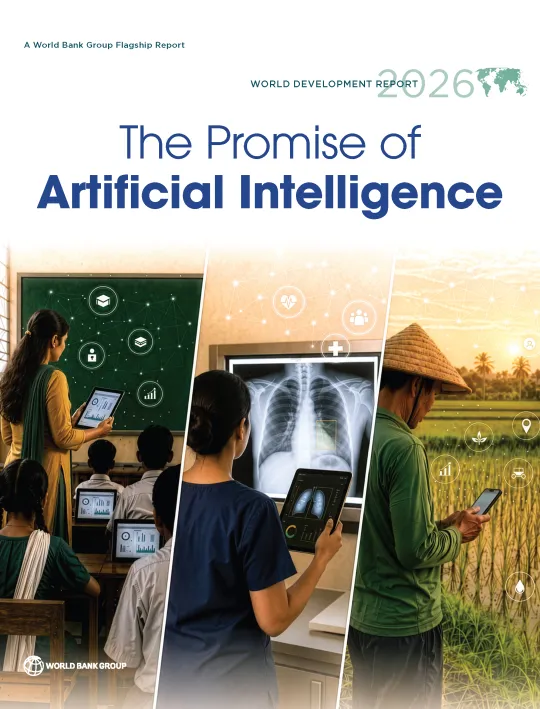
World Development Report 2026: The Promise of Artificial Intelligence

In a time when development progress has dipped to its weakest pace in 75 years, artificial intelligence (AI) offers developing economies a rare path to greater prosperity. World Development Report 2026 provides the first comprehensive assessment of what AI means for these economies — how firms and governments are already using it, what is holding them back, where the largest gains may lie, and how the risks can be managed.
Open to
Students
Stanford Community
Alumni

Location

Vidalakis Dining Hall
Stanford University
United States

Event Sponsors

World Bank Logo
Stanford Digital Economy Lab Logo

Join us for an all-day event exploring the Report and its clear framework — adopt, adapt, and advance — for the road ahead to help countries capture AI’s benefits without wasting scarce resources or deepening dependence on any single supplier. Earlier technological revolutions left much of the developing world behind. This landmark edition of the World Development Report offers developing economies a road map to prevent a repeat of that outcome.

The World Development Report 2026

This event introduces the main themes of the report, including new frameworks for understanding AI’s impact alongside original research on adoption and government responses. Members of the writing team will present these contributions alongside leading academic and policy leaders. Topics include macroeconomic impacts, impacts on business and labor, applications that show promise in development settings, and policy responses.
Featured Speakers
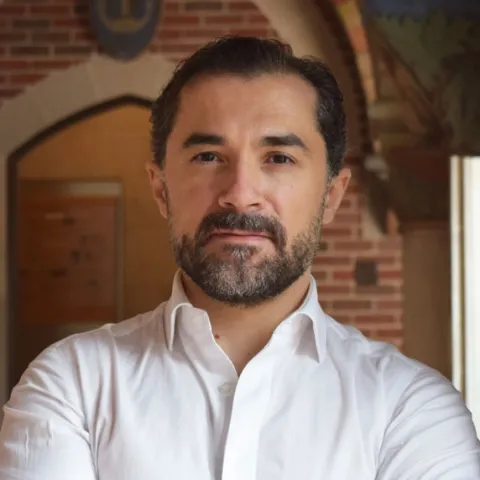

Ufuk Akcigit
Co-Academic Lead, World Development Report 2026, and Deputy Chief Economist and Director of Private Markets, Development Economics, World Bank Group

Ufuk Akcigit served as the Co-Academic Lead for the World Development Report 2026 and is currently the Deputy Chief Economist and Director of Private Markets in the Development Economics Vice Presidency of the World Bank Group. Prior to that, he was the Arnold C. Harberger Professor of Economics and Co-Director of the Growth Academy at the University of Chicago, where he is currently on sabbatical leave.

He is widely recognized for his research on economic growth, innovation, and firm dynamics, and he is regularly consulted by major international institutions on these topics. He served as the Lead Academic for the World Development Report 2024, which examined the middle-income trap. He is also a Lead Academic Advisor and Board Member of the World Bank’s Institute for Economic Development and a member of the IMF Managing Director’s Advisory Council on Entrepreneurship and Growth.

His contributions have been recognized with several major honors, including the Rahmi M. Koç Medal of Science (2025), the Max Planck–Humboldt Research Award (2021), the Kiel Institute Global Economy Prize (2022), and the National Science Foundation CAREER Research Award (2015), among several others. He is also a Guggenheim Fellow, a Fellow of the Econometric Society, and an elected member of the Turkish Science Academy.

Akcigit’s research has appeared in leading journals, shaping current thinking on productivity, innovation policy, economic mobility, and cross-country growth. He earned his PhD in Economics from the Massachusetts Institute of Technology in 2009. Before joining the University of Chicago, he was on the faculty of the University of Pennsylvania.

Susan Athey
Co-Academic Lead, World Development Report 2026; The Economics of Technology Professor, Stanford University Graduate School of Business

Susan Athey is the Economics of Technology Professor at the Stanford Graduate School of Business, a Senior Fellow of the Stanford Institute for Economic Policy Research (SIEPR), a Senior Fellow at the Stanford Institute for Human-Centered Artificial Intelligence, and a faculty affiliate at the Stanford Institute for Computational and Mathematical Engineering. She is the faculty director of the Golub Capital Social Impact Lab at Stanford GSB. Her research covers digitization, causal machine learning and artificial intelligence, marketplace design, and the design of complex experiments.

She is a Fellow of the National Academy of Sciences and the American Academy of Arts and Sciences, and a recipient of the John Bates Clark Medal. She was the 2023 President of the American Economic Association, and she served two years as Chief Economist at the U.S. Department of Justice Antitrust Division, where she was a lead economics author of the 2023 Merger Guidelines. She previously served as Microsoft Corporation’s first chief economist for five years.

Nicholas (Nick) Bloom
William D. Eberle Professor in Economics, Stanford University

Nicholas (Nick) Bloom is the William D. Eberle Professor in Economics at Stanford University, a Senior Fellow of the Stanford Institute for Economic Policy Research (SIEPR), and the Co-Director of the Productivity, Innovation and Entrepreneurship Program at the National Bureau of Economic Research. His research focuses on management practices and uncertainty. He previously worked at the UK Treasury and McKinsey & Company.

He is a Fellow of the American Academy of Arts and Sciences and the recipient of the Alfred P. Sloan Fellowship, the Bernácer Prize, the European Investment Bank Prize, the Frisch Medal, the Kauffman Medal, and a National Science Foundation CAREER Award. He has a BA from Cambridge, an MPhil from Oxford, and a PhD from University College London.

Joshua Blumenstock
Chancellor’s Professor, U.C. Berkeley School of Information and the Goldman School of Public Policy

Joshua Blumenstock is a Chancellor’s Professor at the UC Berkeley School of Information and the Goldman School of Public Policy. He is the Co-Director of the Global Opportunity Lab and the Center for Effective Global Action. Blumenstock’s research combines methods from computer science and empirical economics, with a focus on how novel data and technology can better address the needs of very poor and vulnerable populations.

He has a PhD in Information Science and an MA in Economics from UC Berkeley, and bachelor’s degrees in Computer Science and Physics from Wesleyan University. He is a recipient of awards including the NSF CAREER Award, the Intel Faculty Early Career Honor, and the UC Berkeley Chancellor’s Award for Public Service. His work appears in general-interest journals including Science, Nature, and PNAS, as well as prominent economics journals, such as the American Economic Review and Review of Economic Studies, and computer science conferences, including ICML, KDD, AAAI, WWW, and CHI.

Elwyn Davies
Co-author of World Development Report 2026 and Senior Economist, Development Research Group, World Bank Group

Elwyn Davies is a Senior Economist at the World Bank, working on firm dynamics, productivity and innovation in a wide range of countries. Elwyn’s work focuses on constraints to firm growth and productivity as well as on questions related to structural and economic transformation, including the role of services in development. He is an author of the World Bank flagship report At Your Service? The Promise of Services-Led Development, part of the World Bank’s Productivity Project. He has published in Journal of Development Economics, Journal of Economic Behavior & Organization, World Bank Research Observer, and Journal of African Economies, among other journals. He holds a DPhil (Ph.D.) and MPhil degree in Economics from the University of Oxford and BSc and BA degrees in Physics and Liberal Arts & Sciences from Utrecht University.

Indermit Gill
Former Chief Economist and Senior Vice President for Development Economics, World Bank Group

Indermit Gill is the former Chief Economist of the World Bank Group and former Senior Vice President for Development Economics. Prior to that, Dr. Gill served as the World Bank’s Vice President for Equitable Growth, Finance, and Institutions, where he helped shape the Bank’s response to the extraordinary series of shocks that have hit developing economies since 2020. Between 2016 and 2021, he was a professor of public policy at Duke University and non-resident senior fellow at the Brookings Institution’s Global Economy and Development program. Dr. Gill led the World Bank’s influential 2009 World Development Report on economic geography. His work includes introducing the concept of the “middle-income trap” to describe how countries stagnate after reaching a certain level of income. The 2024 World Development Report, prepared with his guidance, highlights strategies for countries to escape the middle-income trap—by adopting modern technologies and driving innovation. Indermit has published extensively on key policy issues facing developing countries—among other things, sovereign debt vulnerabilities, green growth and natural-resource wealth, labor markets, and poverty and inequality. Indermit has also taught at Georgetown University and the University of Chicago. He holds a Ph.D. in economics from the University of Chicago.

Somik V. Lall
Director of Strategy, Office of the World Bank Group Chief Economist

Somik V. Lall is Director of Strategy in the Office of the World Bank Group Chief Economist. Lall has held various leadership positions across the World Bank Group including Senior Adviser to the World Bank Group Chief Economist, Acting Director of DEC Development Policy, Head of the Climate Economics Team, and Global Lead in the Sustainable Development and Infrastructure Vice Presidencies. Lall has also directed the World Bank's 2024 World Development Report on the “Middle Income Trap” that examines how middle-income countries can break into the ranks of the wealthiest economies. He is also a co-founder of the Growth Academy, a joint initiative between the World Bank and the University of Chicago to advance joint research programs on economic growth with think tanks in emerging economies.

As head of the climate economics and policy team in the World Bank’s Equitable Growth, Finance, and Institutions vice presidency, he developed and supervised policy research programs on resilience and economic development, the macro-criticality of climate change, and innovations for the low-carbon transition.

Lall has published extensively on key policy issues facing key emerging economies. Recent research includes assessment of business dynamism in Ukraine, the cost of keeping women out of productive jobs, the effectiveness of spatially targeted industrial policies, jobs potential of African cities, and identifying “differentiated” responsibilities for carbon emissions across countries. During the pandemic, he developed a novel data-driven approach to help city mayors rapidly respond to protect their citizens from the ravages of COVID 19. Listen to his Monocle podcast.

Lall also teaches at Johns Hopkins University and has been a Visiting Professor at the National Institute of Public Finance and Policy in New Delhi. He has previously served as Senior Economic Counselor to the Government of India.

Gaurav Nayyar
Director, World Development Report 2026

Gaurav Nayyar is the Director of the World Development Report 2026. Prior to that, he served as Lead Economist in the Office of the Chief Economist in the Equitable Growth, Finance, and Institutions Vice Presidency at the World Bank, which he joined as a Young Professional in 2013. Previously, he was an Economics Affairs Officer in the Economic Research Division of the World Trade Organization, where he co-led the World Trade Report 2013: Factors Shaping the Future of World Trade.

Gaurav’s research interests lie primarily in the areas of economic growth, structural transformation, trade, industrialization, and firm productivity, and he has published in a variety of academic journals on these issues. His latest book is At Your Service? The Promise of Services-Led Development.

Gaurav holds a DPhil in Economics from the University of Oxford, where he was a Dorothy Hodgkin Scholar. His other alma maters include the London School of Economics and Political Science, the University of Cambridge, and St. Stephen’s College, University of Delhi.

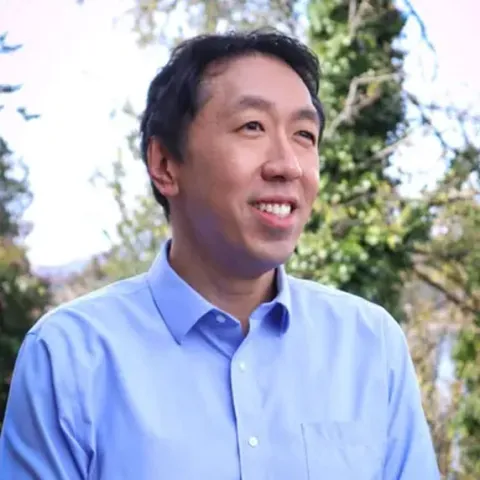
Andrew Ng
Founder, DeepLearning.AI, and Adjunct Professor, Stanford University

Andrew Ng is the Founder of DeepLearning.AI, Managing General Partner at AI Fund, Managing Partner at AI Aspire, Executive Chairman of LandingAI, Chairman and Co-Founder of Coursera, and an Adjunct Professor at Stanford University. As a pioneer in machine learning and online education, Dr. Ng has changed countless lives through his work in AI. More than 8 million people have taken an AI class from him.

He was the founding lead of the Google Brain team, which helped Google transform into a modern AI company. He served as Vice President and Chief Scientist at Baidu, where he led a 1,300-person AI team responsible for the company’s AI technology and strategy. He was formerly Director of the Stanford AI Lab, home to more than 20 faculty members and research groups. In 2023, he was named to the TIME100 AI list of the most influential people in artificial intelligence.

He has authored or co-authored more than 200 papers in AI and related fields and holds a BSc from Carnegie Mellon University, an MSc from MIT, and a PhD from UC Berkeley. Dr. Ng now focuses his time primarily on providing AI training and on his entrepreneurial ventures, looking for the best ways to accelerate responsible AI adoption globally.

Anja Sautmann
Co-author of World Development Report 2026 and Senior Economist, Development Research Group, World Bank Group

Anja Sautmann is a Senior Economist in the World Bank's Development Research Group and the point person for DECRG's  AI and Digital Development (AI/DD) Research Initiative. Her research asks how individual behavior shapes optimal policy design, with a focus on demand for healthcare and public healthcare provision for children and mothers in West Africa. She has contributed to developing methods for measuring preferences and for selecting optimal policies faster and more accurately based on experimental evidence. Anja is working on several projects in healthcare and in the justice sector that try to understand how machine learning techniques and AI can support better development outcomes. Before joining the World Bank, Anja was an Assistant Professor at Brown University and the Director of Research, Education, and Training at the Abdul Latif Jameel Poverty Action Lab at MIT. She received her Ph.D. in Economics from New York University.

Christopher Tonetti
Associate Professor, Stanford Graduate School of Business

Christopher Tonetti is an associate professor at Stanford Graduate School of Business and a research associate at the National Bureau of Economic Research. His research is in the area of macroeconomics, with a focus on growth and household finance. Christopher received a BA in economics-mathematics from Columbia University and a PhD in economics from New York University.

Event Agenda

Time
Session
8:30 – 9:00 am

Registration and Breakfast

9:00 – 9:05 am

Welcoming Remarks

Katherine Casey, Faculty Director, King Center on Global Development, Stanford University

Somik V. Lall, Director of Strategy, Office of the World Bank Group Chief Economist

9:05 – 9:30 am

Presentation of Main Findings, World Development Report 2026

Gaurav Nayyar, Director, World Development Report 2026, World Bank Group

9:30 – 10:30 am

Panel Session 1: AI as a General-Purpose Technology

AI is a general-purpose technology, or GPT. That puts it in rare company with steam power, electricity, computers, and the internet. Each transformed entire economies, and did so through incremental innovation over decades, where changes in one sector enabled and incentivized changes in other sectors. AI is following a similar pattern. This session will explore the implications of AI as a GPT, focusing on what determines the pace of change for different types of impacts and how country policy builds on an understanding of the drivers of timing and bottlenecks to change.

Presenter: Susan Athey, Co-Academic Lead for the World Development Report 2026 and The Economics of Technology Professor, Stanford Graduate School of Business

Presenter: Christopher Tonetti, Associate Professor, Stanford Graduate School of Business

10:30 – 11:00 am

Coffee Break

11:00 am – 12:00 pm

Panel Session 2: How Will AI Impact Jobs and Productivity?

AI is reshaping pathways of growth, productivity, and jobs. With most people employed in manual rather than cognitive work in developing countries, the immediate impact of AI adoption is to complement rather than displace workers. Over time, as complementary factors—infrastructure, skills, institutions, and venture capital—develop, AI can enable productive businesses to grow. In the absence of the right complementary factors, however, AI may widen gaps in productivity between developing countries and high-income countries, where rates of AI adoption are higher. This session will explore how AI has been impacting labor markets, including a presentation of survey results on how firms are using and adopting AI.

Presenter: Elwyn Davies, Co-author of World Development Report 2026 and Senior Economist, Trade, Competitiveness, and Business Group, World Bank Group

Presenter: Nick Bloom, William D. Eberle Professor in Economics, Stanford University

Moderator: Ufuk Akcigit, Co-Academic Lead, World Development Report 2026, and Deputy Chief Economist and Director of Private Markets, Development Economics, World Bank Group

12:00 – 1:15 pm

Lunch

1:15 – 2:15 pm

Panel Session 3: How Can AI Improve THE Delivery of Public Services?

AI can help government officials do their jobs better, address shortages of skilled workers who interact directly with citizens, and make a variety of back-office government functions far more efficient. However, many governments face obstacles to using AI widely, often lacking clear information on which AI tools to choose, how to buy them, and how to implement them effectively. This session will explore how governments can use AI to improve their services on both the back end and front end, including a presentation of survey results on how governments are currently using AI worldwide.

Presenter: Anja Sautmann, Co-author of World Development Report 2026 and Senior Economist, Development Research Group, World Bank Group

Presenter: Joshua Blumenstock, Chancellor’s Professor, U.C. Berkeley School of Information and the Goldman School of Public Policy

Moderator: Gaurav Nayyar, Director, World Development Report 2026, World Bank Group

2:15 – 3:15 pm

Fireside Chat: Navigating AI’s Opportunities and Risks in Developing Economies

AI is transforming economies, societies, and public services at a pace unprecedented in previous technological revolutions. It has the potential to expand access to knowledge and expertise, increase productivity, improve service delivery, and help countries address pressing development challenges. At the same time, realizing these benefits will require policies that ensure that the gains from AI are widely shared and that the risks are safeguarded against. Join us for a fireside chat to discuss some of these policies that developing countries will need to put in place to realize the benefits of AI.

Indermit Gill, Former Chief Economist and Senior Vice President of the World Bank Group

Ufuk Akcigit, Co-Academic Lead, World Development Report 2026, and Deputy Chief Economist and Director of Private Markets, Development Economics, World Bank Group

Moderator: Somik V. Lall, Director of Strategy, Office of the World Bank Group Chief Economist

3:15 – 3:30 pm

Coffee Break

3:30 – 4:15 pm

Fireside Chat with Andrew Ng: Making AI Work for Development

AI is changing the skills that matter, from software engineering to other sectors. This creates opportunities for workers around the world. In parallel, falling costs of accessing AI and improvements in voice interfaces make it easier for developers to build applications that reach individuals and small businesses with limited connectivity, literacy, or digital skills. Join us for a fireside chat with Andrew Ng, founder of DeepLearning.AI, managing general partner of AI Fund, and co-founder and chairman of Coursera. A pioneer in machine learning research and online education, Dr. Ng has taught AI to more than eight million people. The conversation will discuss how governments and institutions such as the World Bank can better coordinate with startups so that developers can tailor their work toward products in education, health, and agriculture that have the potential to be adopted and positively impact the people they are meant to serve.

Andrew Ng, Founder, DeepLearning.AI, and Adjunct Professor, Stanford University

Moderator: Susan Athey, Co-Academic Lead for the World Development Report 2026 and The Economics of Technology Professor, Stanford Graduate School of Business