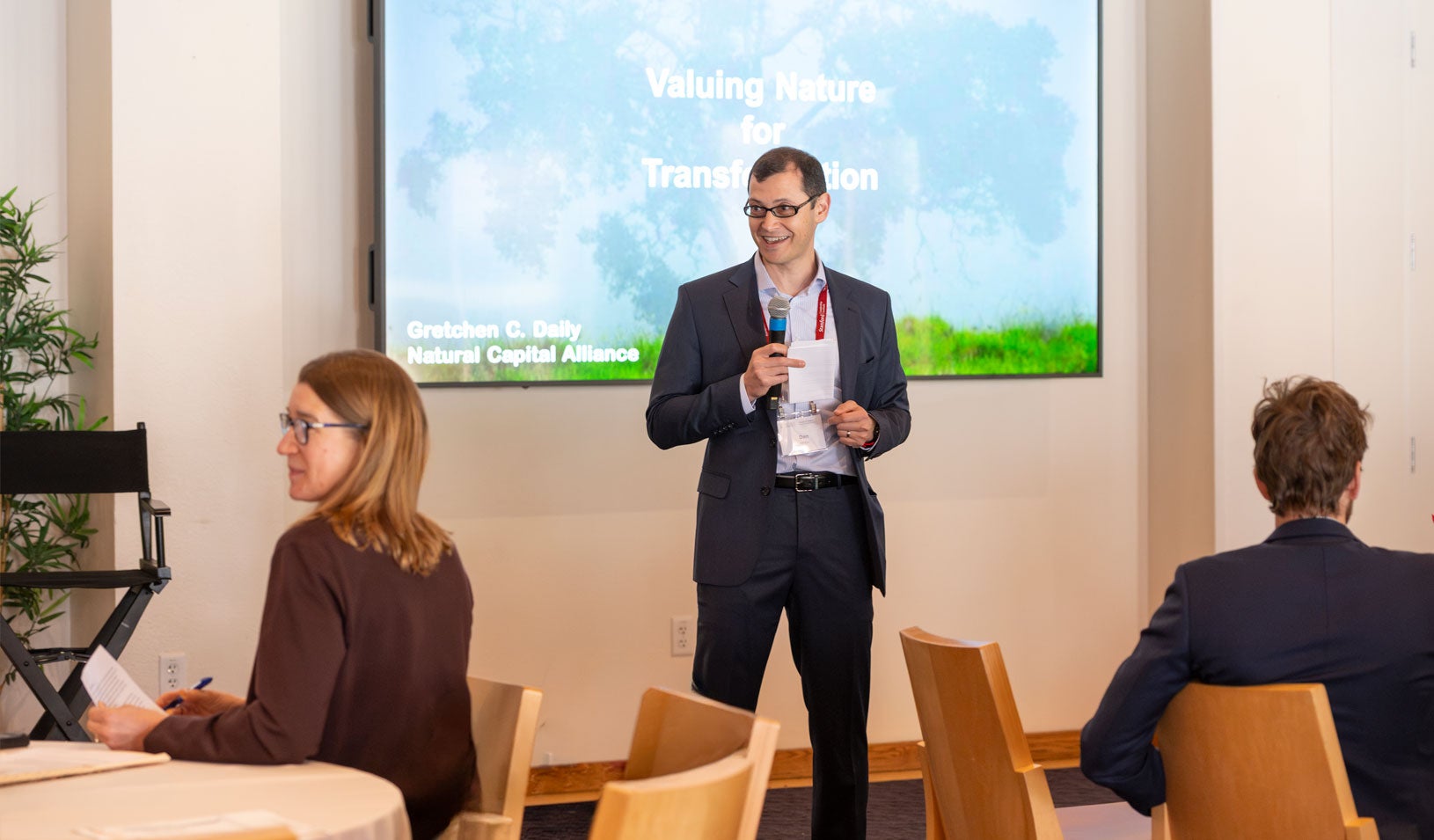
Krish Mehta, MBA ’24, wants to reinvent concrete. Standing before a packed room at Stanford, he described how PHNX Materials turns coal ash, once a polluting waste, into a low-carbon cement substitute. The cement industry alone is responsible for 8% of global CO₂ emissions. His fix? A scalable, circular solution that’s “cheaper, higher quality, has lower emissions,” and taps into billions of tons of unused ash sitting in U.S. landfills, modeling the ‘insanely commercial’ mindset founders need to scale sustainability solutions.
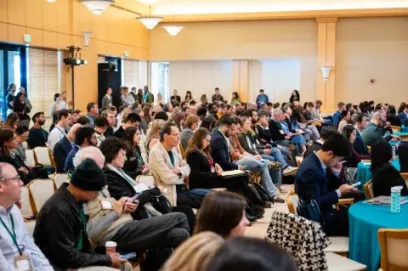
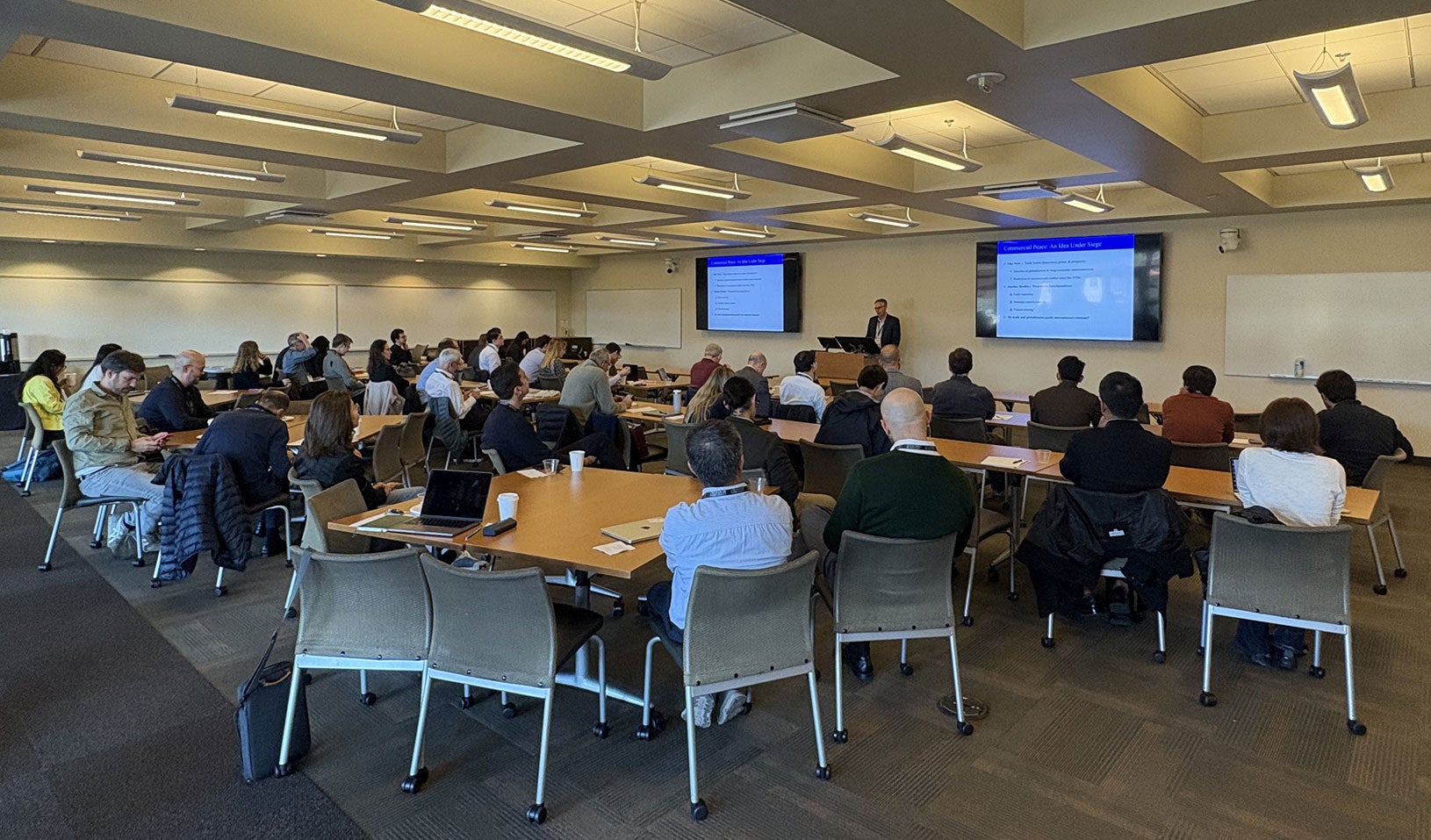
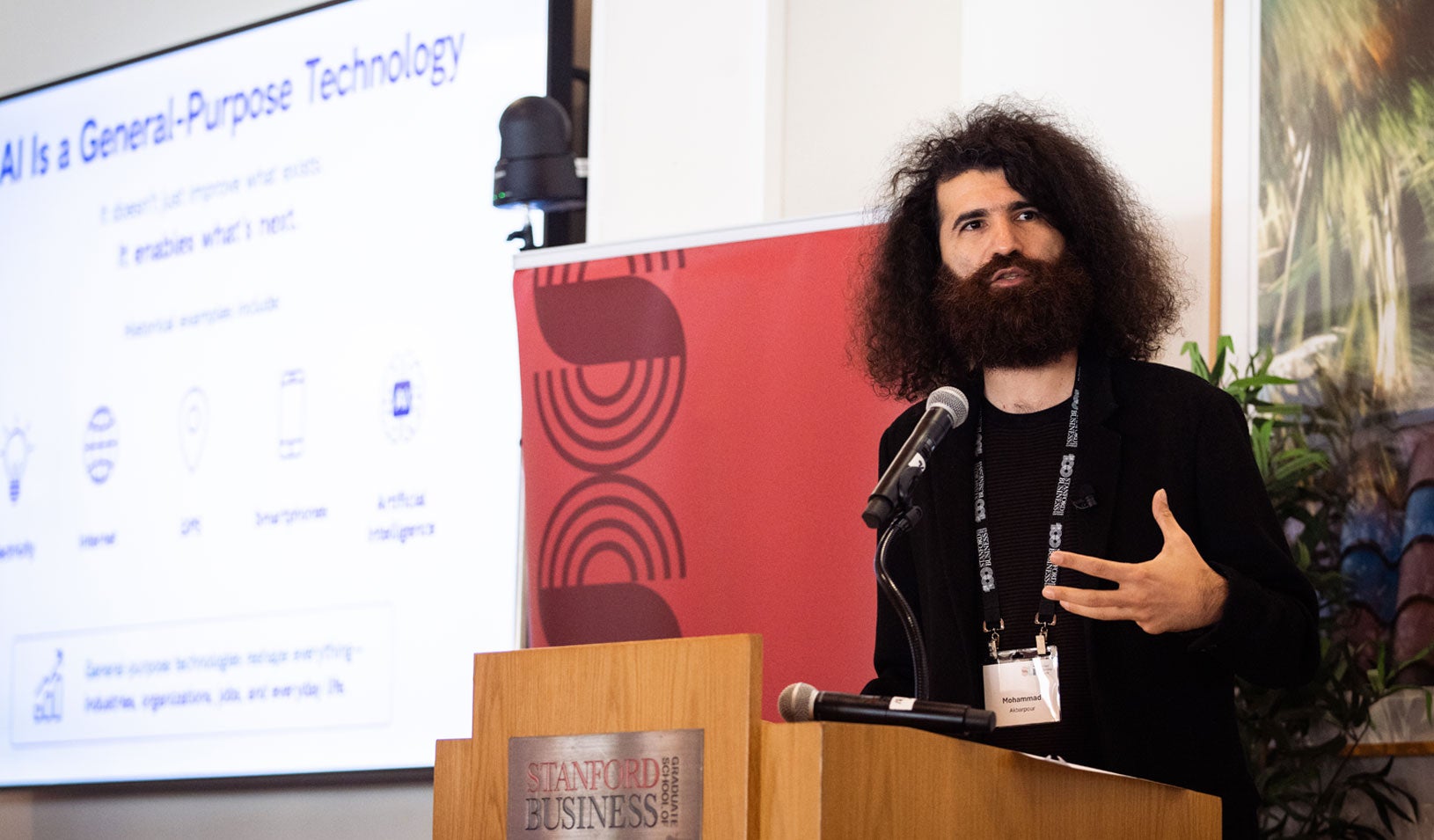
Mehta’s pitch was one of many at Stanford’s Scaling Sustainability Innovation Conference, which brought together more than 370 students, researchers, founders, funders, and corporate leaders. The event, co-hosted by Stanford Ecopreneurship, the Business, Government, and Society Initiative at Stanford Graduate School of Business, the Precourt Institute for Energy, and the Sustainability Accelerator at the Stanford Doerr School of Sustainability, was designed to support the ecopreneurial ecosystem at Stanford and beyond. The event was chaired by Prof. Stefanos Zenios, faculty director of the GSB’s Center for Entrepreneurial Studies, and Prof. Yi Cui of Stanford’s Department of Materials Science and Engineering.
Throughout the day, speakers and panelists offered both high-level systems thinking and gritty operational lessons, two dimensions that startup founders must learn to integrate to build ventures that scale.
Speed, resilience, and scale
With the world’s population estimated to grow from 8.2 billion today to about 10 billion by 2050, unchecked increases in energy use, food production, and infrastructure could drive Greenhouse Gas emissions far beyond manageable levels if we’re slow to act, said Prof. Sally Benson of Stanford’s Department of Energy Science & Engineering.
Benson noted that solar power, emerging in the 1950s, took nearly five decades to reach global scale, modeling a development and adoption timeline we can no longer afford. To overcome these long timelines, she described a “parallel processing” model for innovation, from her time at the White House: “The White House created the full decadal vision for fusion energy with compressing this cycle by investing and working on all of these activities together in concert,” Benson said. “By 2035, I am optimistic that we will begin to see these devices ready to scale.”
Preparing for the sustainability revolution
GSB’s Prof. William P. Barnett painted a vivid picture of what’s coming: the sustainability revolution. “This one we see coming,” he said, unlike the industrial or digital revolutions, where society scrambled to catch up. But visibility doesn’t mean ease. “The incumbents will absolutely oppose the technical changes,” Barnett warned, that those who create organizations during tough economic times, while facing a higher initial failure rate, historically achieve greater growth and financial success if they persevere.
And to persevere, entrepreneurs, in particular, need a mindset of flexibility and resilience, noted Prof. Julia Novy, a professor of practice in the Doerr School of Sustainability, emphasizing the qualities of leaders who can connect, adapt, and innovate in the face of complex and evolving challenges. She shared the story of Harish Hande of SELCO India, who lived in rural communities to co-design solar products tailored to local needs, showcasing that effective leadership means designing with communities, not just for them, and that impact is driven by creativity and adaptability grounded in local realities.
Local context - globally understood
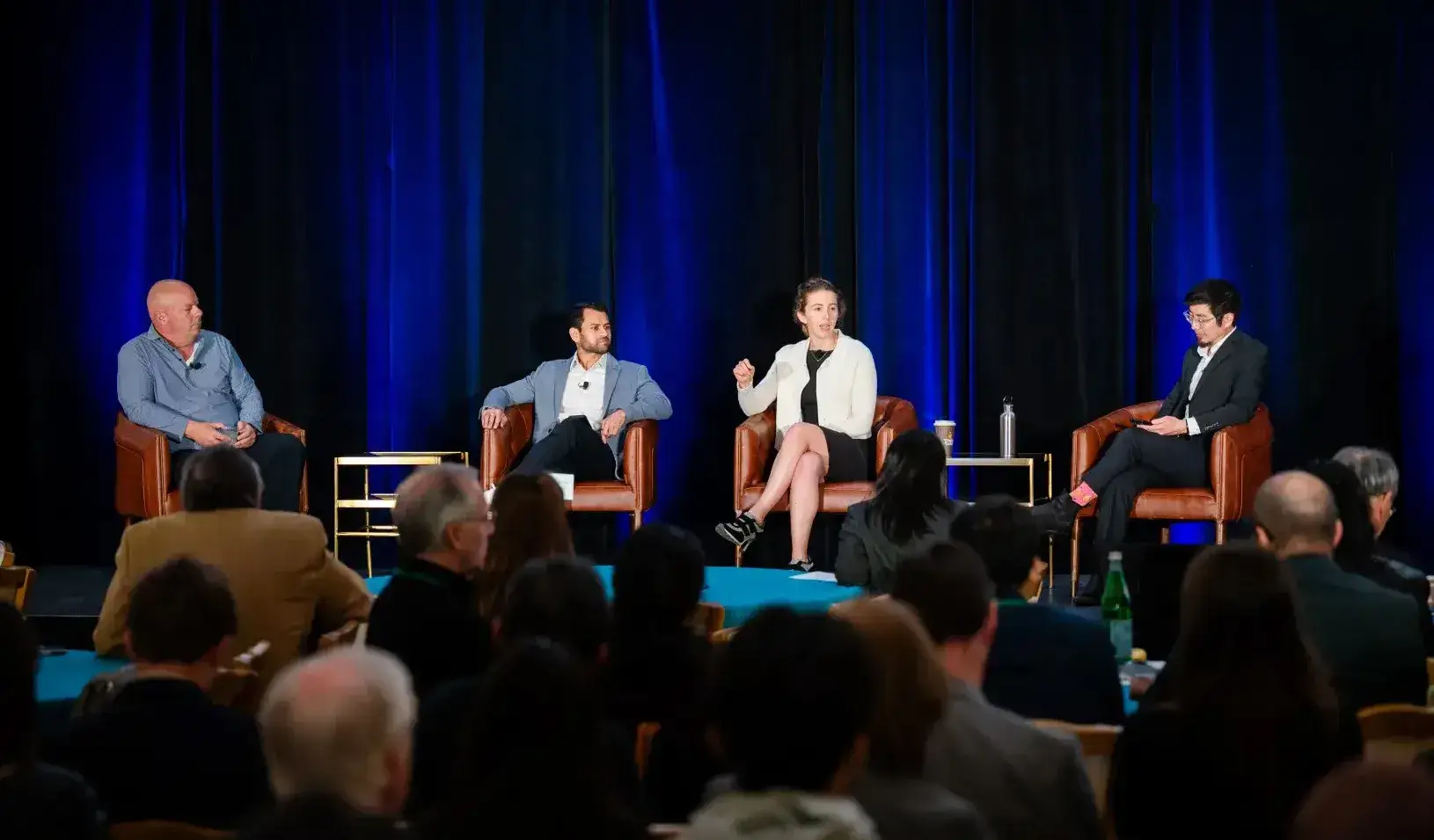
Just as effective solutions are grounded in local realities, so is startup growth. The International Innovation Ecosystem panel explored how geography influences operational choices and access to capital and partnerships across global markets. “Silicon Valley remains the top destination for early-stage financing and high-risk, high-reward ventures,” said Pulakesh Mukherjee, PhD ’00. However, Taehong Huh, MBA’17 of GS Futures, mentioned that over half of their portfolio companies have visited South Korea. “That’s because the innovation needed to scale up, whether in EPC, smart manufacturing, or actually operating at scale, is happening quite a lot in Korea. (…) The innovation here in Silicon Valley is great, but it’s not enough.”

Additionally, Lars Eiermann of TUM Venture described Germany’s entrepreneurial landscape as more risk-averse, with a strong emphasis on engineering-based industries aligned with the country’s workforce expertise, while Genta Ando of JETRO underscored the importance of proximity to suppliers and customers when choosing a base of operations. More broadly, panelists stressed the role of government support for sustainability to enable sustainable innovation across all regions.
Changes in the Funding Landscape
Funders are sitting on “about $80 billion in dry powder,” and that capital needs to go somewhere, said Accelerate Investment Group partner Kunal Doshi, MS’22. While the availability of capital for early-stage sustainability-focused startups remains strong, slower exits from previous venture cycles and broader market uncertainty mean that “the bar is being raised so the company that probably would have made it through in 2021 or 2020 would not make the cut” today, Doshi said.
In 2024, investors participated in about 1,000 sustainability-related first-round investments, with about 80% of capital flowing to the transportation, energy, and land-use sectors, said Sophie Purdom, Managing Partner of Planeteer Capital. Data centers and clean firm power are the current “mega-deal darlings,” with the top 10 deals in those areas in 2024 each attracting at least $300 million. At the same time, Purdom added, investments in growth-oriented mid-stage firms declined sharply to $6.8 billion in 2024, down 38% from the prior year, driven by a quiet IPO market and fewer exits across industries.
From Ideas to Implementation
Creating the right policy environment requires addressing investor confidence, according to Jared Blumenfeld, former Secretary of the California Environmental Protection Agency. “People are hungry for certainty,” he said, noting that strong regulatory signals can help unlock investment and lower perceived risk for developers.
Furthermore, public policy shapes the pace and direction of the energy transition. “We’re fundamentally looking at an energy transformation, and it’s not just a bunch of investments in new technology,” said Kate Gordon, CEO of California Forward. She urged policymakers to move quickly and creatively, calling for the reuse of industrial land to speed deployment. “We need to be thinking about creative re-use,” she said, citing coal mines, oil refineries, and industrial zones as prime candidates for redevelopment.
Founders are leading the way
Dandelion Energy exemplified the approach of retrofitting legacy infrastructure during the afternoon Innovation Showcase, featuring over 40 sustainability-focused startups launching out of Stanford. Founder Kathy Hannun, MS’15, explained how the company’s geothermal systems replace traditional home heating and cooling, an example of the scale-ready innovation policy leaders find essential to the energy transition. Bruno Lam, 2023 Knight-Hennessy Scholar and co-founder of HVAC Hero, ties in themes of workforce development and systems change, outlining his non-profit’s program that provides online training in heating and cooling systems and refers graduates to contractors for apprenticeships.
Nitricity, meanwhile, is a great example of regional resilience and decarbonized supply chains. Co-founder Nicolas Pinkowski, PhD’21, explained how the company uses renewable energy to power small fertilizer factories close to farms, reducing approximately 5% of global greenhouse gas emissions from manufacturing and transportation of conventional fertilizers. And thanks to the proximity to customers, Nitricity can customize fertilizer to local crops and soil conditions, increasing its effectiveness. “We can design for the product for the community,” Pinkowski said.
The conference underscored that ecopreneurs occupy a unique position in the sustainability transition - they are not just building businesses, but actively disrupting entrenched systems while scaling the innovations society desperately needs. With the right combination of resilient leadership, strategic capital and partnerships, and resilient business models that work across different policy landscapes, these founders are proving that profitable, scalable solutions can emerge even from the most complex global challenges.
The recordings from most sessions of the day can be found here.
With additional contributions by Elena Garidis.