
We empower faculty to design and discover original research that challenges conventions and creates breakthroughs that push boundaries of knowledge.
Publication Types
Journal Articles
Books
Working Papers
Case Studies
Browse Publications
SafePoint II: Sustaining Adoption
After reading a newspaper article that predicted the spread of HIV through medical syringes, Marc Koska committed himself to addressing the threat of unsafe injections. He spent nearly 10 years in the field, investigating all aspects of the…
SafePoint I: Stimulating Adoption
After reading a newspaper article that predicted the spread of HIV through medical syringes, Marc Koska committed himself to addressing the threat of unsafe injections. He spent nearly 10 years in the field, investigating all aspects of the…
Searching and Learning by Trial and Error
I study a dynamic model of trial-and-error search in which agents do not have complete knowledge of how choices are mapped into outcomes. Agents learn about the mapping by observing the choices of earlier agents and the outcomes that are realized…
Self-ambivalence and resistance to subtle self-change attempts
Recent research has demonstrated the malleability of self-views to subtle situational influence but has not uncovered features of the self-concept representation that make it susceptible to such change. Using research on attitude ambivalence as a…
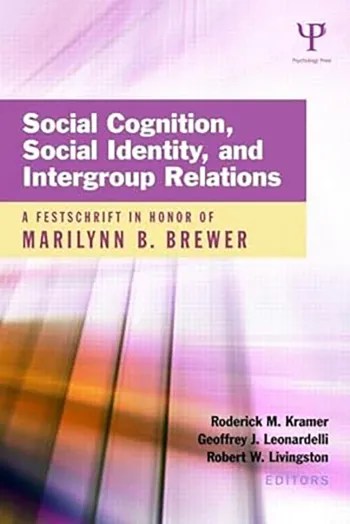
Social Cognition, Social Identity, and Intergroup Relations
Perhaps the defining feature of humanity is the social condition — how we think about others, identify ourselves with others, and interact with groups of others. The advances of evolutionary theory, social cognition, social identity, and…
The Effects of Quantitative Easing on Interest Rates: Channels and Implications for Policy
We evaluate the effect of the Federal Reserve’s purchase of long-term Treasuries and other long-term bonds (QE1 in 2008–09 and QE2 in 2010–11) on interest rates. Using an event-study methodology, we reach two main conclusions. First, it is…
The Incentive for Tax Planning
We use a proprietary data set with detailed executive compensation information to examine the relationship between the incentives of the tax director and GAAP and cash effective tax rates, the book-tax gap, and measures of tax aggressiveness. We…
The Perils of False Certainty: A Comment on the ASA Amicus Brief in Dukes vs. Wal-Mart.
The Roots, Rituals, and Rhetorics of Change: North American Business Schools After the Second World War
Some rather remarkable changes took place in North American business schools between 1945 and 1970, altering the character of these institutions, the possibilities for their future, and the terms of discourse about them. This period represents a…

The Shifting Meaning of Happiness
An examination of emotions reported on 12 million personal blogs along with a series of surveys and laboratory experiments shows that the meaning of happiness is not fixed; instead, it systematically shifts over the course of one’s lifetime.…
The Tea Party Is Good for America
An interview with the former U.S. Secretary of State, Condoleezza Rice, is presented. When asked about the difficulty of coping with racism during her career, she says that the U.S. is very open about race but the country still has a long way to…
The bigger they are, the harder they fall: Linking team power, conflict, congruence, and team performance
Across two field studies, we investigate the impact of team power on team conflict and performance. Team power is based on the control of resources that enables a team to influence others in the company. We find across both studies that low…
The dynamics of message passing on dense graphs, with applications to compressed sensing
Approximate message passing algorithms proved to be extremely effective in reconstructing sparse signals from a small number of incoherent linear measurements. Extensive numerical experiments further showed that their dynamics is accurately…
Trust and Distrust
*American Library Association Outstanding Reference Source of 2013.
Trust and Distrust in the Leadership Process: A Review and Assessment of Theory and Evidence
Typecasting, legitimation, and form emergence: a formal theory.
We propose a formal theory of multiple category memberships. This theory has the potential to unify two seemingly unconnected theories: typecasting and identity-based form emergence. Typecasting, a producer-level theory, considers the…
Using Spectrum Auctions to Enhance Competition in Wireless Services
Spectrum auctions are used by governments to assign and price licenses for wireless communications. Effective auction design recognizes the importance of competition, not only in the auction, but in the downstream market for wireless…
Veterans, Organizational Skill and Ethnic Cleansing: Evidence from the Partition of South Asia
Can combat experience foster organizational skills that engender political collective action? We use the arbitrary assignment of troops to frontline combat in World War 2 to identify the effect of combat experience on two channels that change…
What Make a Better Annuity?
Given costly and limited annuity products, we investigate how annuity market innovation could improve participation and increase individual welfare. We find that participation gains are most likely with new annuity products that concentrate…
What if Marketers Put Their Customers Ahead of Profits?
We examine a duopoly where one of the firms does not maximize profit, but instead maximizes customer surplus subject to a profit constraint. (Customer surplus for a firm is the sumo f its customers individual consumer surpluses, i.e., the dollar…