
We empower faculty to design and discover original research that challenges conventions and creates breakthroughs that push boundaries of knowledge.
Publication Types
Journal Articles
Books
Working Papers
Case Studies
Browse Publications
Corporate Governance, Compensation Consultants, and CEO Pay Levels
This study investigates the relation between corporate governance and CEO pay levels, and the extent to which the higher pay found in firms using compensation consultants is related to governance differences. Using proxy statement disclosures…
Counteractive Construal in Consumer Goal Pursuit
The present research explores a self‐control operation, namely, counteractive construal, that helps consumers resolve the conflicts between an important goal and a short‐term temptation by altering the construal of the temptation. We propose that…
Detecting Deceptive Discussions in Conference Calls
We estimate classification models of deceptive discussions during quarterly earnings conference calls. Using data on subsequent financial restatements (and a set of criteria to identify especially serious accounting problems), we label the…
Dilemmas and Doubts: How Decision Makers Cope With Social Uncertainty
Doubting one’s doubt: A formula for confidence?
People feel, think, and act differently when doubt rather than confidence is accessible. A traditional perspective
on the accessibility of doubt holds that multiple sources of doubt activation should lead to
increased levels of…
Economic and psychological perspectives on CEO compensation: A review and synthesis
To many, the principal–agent model is the obvious lens through which executive pay should be viewed. Such a sentiment sits uncomfortably with a large number of empirical studies suggesting that the process of determining executive pay seems to be…
Employee Stock Options and Future Firm Performance: Evidence from Option Repricings
We investigate firms’ operating performance subsequent to the repricing of executive and non-executive employee stock options. We find that, relative to non-repricers, repricing firms have a larger increase in operating income and cash flows in…
Endogenous Selection and Moral Hazard In Compensation Contracts
The two major paradigms in the theoretical agency literature are moral hazard (i.e., hidden action) and adverse selection (i.e., hidden information). Prior research typically solves these problems in isolation, as opposed to simultaneously…
Evidence-Based Management for Entrepreneurial Environments: Faster and Better Decisions with Less Risk
Entrepreneurship is risky. Most new technologies and new businesses fail. Shane (2008) reported that 25% of new businesses failed in the first year and that by the fifth year, fewer than half had survived. In the United Kingdom, Stark (2001)…
Executive Compensation and Financial Accounting
Existence of Equilibria in All-Pay Auctions
For an all-pay sealed-bid auction of an item for which each bidder’s realized value can depend on every bidder’s privately observed signal, existence of equilibria in behavioral strategies is established using only the assumption that bidders’…
Existence of Equilibria in Auctions with Interdependent Values: Two Symmetric Bidders
For two symmetric bidders, weak monotonicity conditions are shown to imply existence of an equilibrium in mixed behavioral strategies for a sealed-bid first-price auction of an item for which each bidder’s value depends on every bidder’s observed…
Existence of Equilibria in Auctions with Private Values
A first-price sealed-bid auction of an item for which bidders are risk-neutral and have privately known values is shown to have an equilibrium in mixed behavioral strategies if the joint distribution of bidders’ values has a continuous density on…
Extraordinary, Ordinary People: A Memoir of Family
This is the story of Condoleezza Rice — her early years growing up in the hostile environment of Birmingham, Alabama; her rise in the ranks at Stanford University to become the university’s second-in-command and an expert in Soviet and…

Feasting on Leftovers: Strategic Use of Shortages in Price Competition Among Differentiated Products
Two single-product firms with different quality levels and fixed limited capacities engage in sequential price competition in an essentially deterministic model where customers have heterogeneous valuations for both products. We develop…
Fragile enhancement of attitudes and intentions following difficult decisions
Increased liking of one’s choice following difficult decisions (e.g., choosing between similarly attractive options) is well documented. Given the common mechanism proposed for this effect—a highly involving dissonance reduction process—it would…
Going Private but Staying Public: Reexamining the Effect of Sarbanes-Oxley on Firms’ Going-Private Decisions
This Article examines whether the cost of complying with the Sarbanes-Oxley Act of 2002 (SOX) contributed to the rise in going-private transactions after its enactment. Prior studies of this issue generally suffer from a mistaken assumption that…
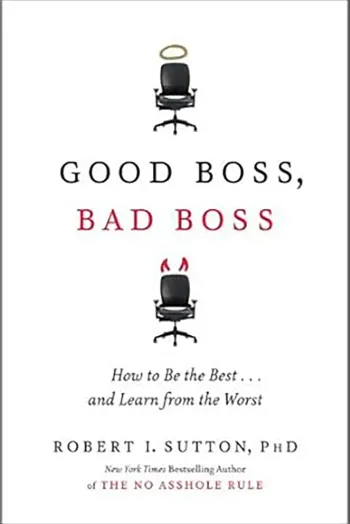
Good Boss, Bad Boss: How to Be the Best ... and Learn from the Worst
If you are a boss who wants to do great work, what can you do about it? Good Boss, Bad Bossis devoted to answering that question. Stanford Professor Robert Sutton weaves together the best psychological and management research…
How Big Banks Fail and What to Do About It
Dealer banks —that is, large banks that deal in securities and derivatives, such as J. P. Morgan and Goldman Sachs — are of a size and complexity that sharply distinguish them from typical commercial banks. When they fail, as we saw in the global…

How Debt Markets have Malfunctioned in the Crisis
The financial crisis that began in 2007 is especially a crisis in debt markets. A full understanding of what happened in the financial crisis requires investigation into the plumbing of debt markets. During a financial crisis, when funds often…