
We empower faculty to design and discover original research that challenges conventions and creates breakthroughs that push boundaries of knowledge.
Publication Types
Journal Articles
Books
Working Papers
Case Studies
Browse Publications
An Incentive Mechanism for Decongesting the Roads: A Pilot Program in Bangalore
We describe an experiment conducted in Bangalore, India, for incentivizing a population of commuters to travel at less congested times. The goals were to reduce the travel times and increase the travel comfort of commuters, and to reduce…
Anti-Egalitarians for Obama? Group-Dominance Motivation and the Obama Vote
The election of the first Black president was a watershed moment in American race relations, and many Obama voters saw their choice as affirming and furthering the dream of racial equality. However, the present study provides evidence that Obama…
Common Ground and Cultural Prominence: How Conversation Reinforces Culture
Why do well-known ideas, practices, and people maintain their cultural prominence in the presence of equally good or better alternatives? This article suggests that a social-psychological process whereby people seek to establish common ground…
Ethical Standards in Gains Versus Loss Frames
The book is divided into three relatively coherent sections that focus on understanding the emergence of (un)ethical decisions and behaviors in our work and social lives by adopting a psychological framework. The first section focuses on…
Expressing Deviant Opinions: Believing You Are in the Majority Helps
Three studies tested whether group members whose opinions differ from the average member’s opinion in the direction of the group prototype (“descriptive norm deviants”) are more vocal than those whose opinions differ in the opposite direction (“…
Financial Regulation and Securitization: Evidence from Subprime Loans
We examine the consequences of existing regulations on the quality of mortgage loans originations in the originate-to-distribute (OTD) market. The…
Myopic Voters and Natural Disaster Policy
Do voters effectively hold elected officials accountable for policy decisions? Using data on natural disasters, government spending, and election returns, we show that voters reward the incumbent presidential party for delivering disaster relief…
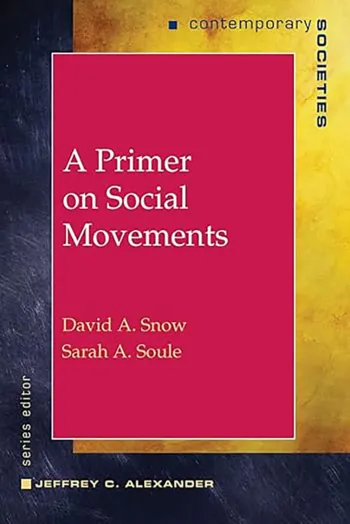
A Primer on Social Movements
A brief, affordable introduction to collective behavior and social movements. Award-winning sociologists David Snow and Sarah Soule draw from a broad range of theories including political sociology, theories of organizations, and the study of…
The Evolution of Aggregate Stock Ownership - A Unified Explanation
Since World War II, direct stock ownership by households has largely been replaced by indirect stock ownership by financial institutions. We argue that tax policy is the driving force. Using long time-series from eight countries, we show…
Toward a More Responsible Supply Chain: The HP Story
Hewlett-Packard’s Supply Chain Social and Environmental Responsibility (SER) program has evolved steadily in recent years. Today, it’s not only about complying with labor, environmental, and health and standards, but also about helping suppliers…
Depreciation Rules and the Relation Between Marginal and Historical Cost
The reported cost of a product frequently contains historical cost components that reflect past investments in productive capacity. We examine a setting wherein a firm makes a sequence of overlapping capacity investments. Earlier research has…
Economic evaluation: The effect of money and economics on attitudes about volunteering
Recent research shows that hourly payment affects decisions about time use in ways that disfavor uncompensated activities such as volunteering. This paper extends that argument by showing that the activation of money and economics as aspects of a…
Reaching for the Stars: Who Pays for Talent in Innovative Industries?
Innovative firms need to hire and motivate highly talented workers. This article connects the potential returns to innovation to the structure of compensation for skilled employees. We show that the software firms that operate in software…
The “Shaken Self”: Product Choices as a Means of Restoring Self-View Confidence
The present research shows that when a confidently held self‐view (e.g., “I am an exciting person”) is temporarily cast in doubt, individuals are motivated to choose products that bolster their original self‐view (e.g., choosing brands with…
When does choice reveal preference? Moderators of heuristic versus goal‐based choice
Heuristic use is a central topic in consumer research, but the factors that determine when consumers will settle for shortcut solutions to choice problems (e.g., compromise) versus rely on “true” preferences (e.g., self-goals) remain unclear. We…
Retail Competition and the Dynamics of Consumer Demand for Tied Goods
We present a demand system for tied goods incorporating dynamics arising from the tied-nature of the products and the stockpiling induced by storability and durability. We accommodate competition across tied good systems and …
Empirical Analysis of Metering Price Discrimination: Evidence from Concession Sales at Movie Theaters
Prices for goods such as blades for razors, ink for printers, and concessions at movies are often set well above cost. Theory has shown that this could yield a profitable price discrimination strategy often termed “metering.” The idea is that a…
Global Imbalances and Financial Fragility
The U.S. is currently engulfed in the most severe financial crisis since the Great Depression. A key structural factor behind this crisis is the large demand for riskless assets from the rest of the world. In this paper we present a model to show…
Price and Capacity Competition
We study the efficiency of oligopoly equilibria in a model where firms compete over capacities and prices. Our model economy corresponds to a two-stage game. First, firms choose their capacity levels. Second, after the capacity levels are…
Space Debris: Assessing Risk and Responsibility
We model the orbital debris environment by a set of differential equations with parameter values that capture many of the complexities of existing three-dimensional simulation models. We compute the probability that a spacecraft gets destroyed in…