August 26, 2026
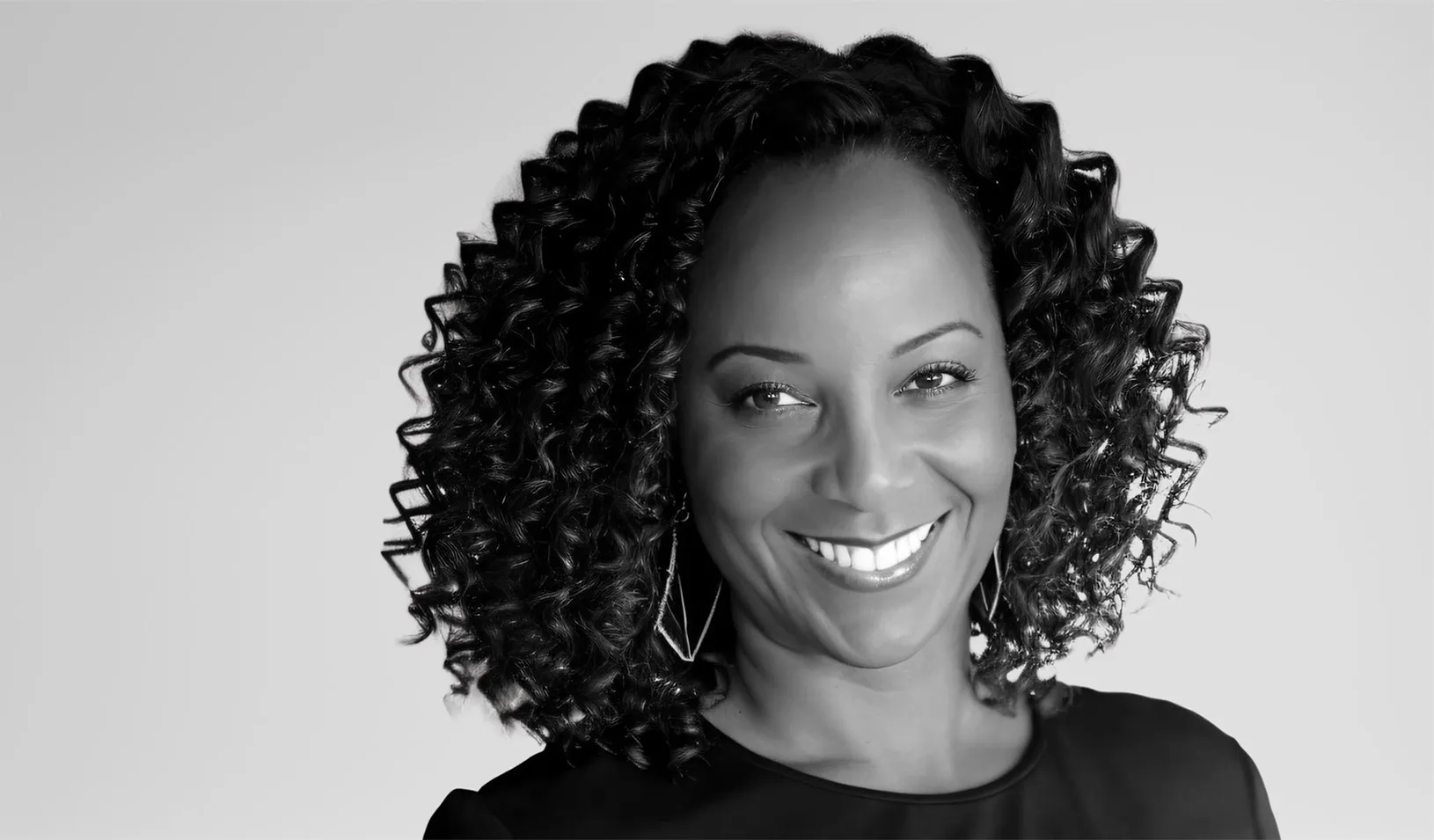
| by Michael McDowellWhen Tekedra Mawakana told her mother she was thinking about taking a job at Waymo, her mom had a question: “Who is going to get in those cars?” The company, which calls itself the “world’s first autonomous ride-hailing service,” currently operates self-driving, for-hire vehicles in about a dozen cities across the United States, including San Francisco, Phoenix, Atlanta, and Austin.
“We want to be the world’s most trusted driver,” Mawakana tells Amira Weeks, MBA ‘26, in a View From The Top conversation recorded live at Stanford Graduate School of Business. “Cars are getting safer, but humans are more distracted than ever.”
She envisions massive safety gains — “We have to improve the status quo: 1.2 million people killed globally on the roadways is unacceptable” — and cities remade by a reimagined mobility infrastructure. “My hope is that we’ll see cities with more green spaces, more convening spots — which will hopefully make them feel more like cities and communities and less like concrete jungles.”
Mawakana held legal and public policy roles at eBay, Yahoo, and AOL before she became Waymo’s COO. “I hadn’t actually given myself the opportunity to be in a place that was genuinely a moonshot,” she reflects. “Trust that small voice that is telling you that everything you’ve done has prepared you for this.
Listen & Subscribe
Stanford GSB’s View From The Top is the dean’s premier speaker series. It launched in 1978 and is supported in part by the F. Kirk Brennan Speaker Series Fund.
During student-led interviews and before a live audience, leaders from around the world share insights on effective leadership, their personal core values, and lessons learned throughout their career.
Full Transcript
Note: This transcript was generated by an automated system and has been lightly edited for clarity. It may contain errors or omissions.
Amira Weeks: Welcome to View From The Top: The Podcast. I’m Amira Weeks, an MBA student of the Class of 2026.
Michael McDowell: And I’m Michael McDowell, a producer at Stanford Graduate School of Business. Amira, who is on View From The Top today?
Amira Weeks: We have Tekedra Mawakana, the co-CEO of Waymo joining us today.
Michael McDowell: Wonderful. For those who may be unfamiliar, can you tell us a little bit about Waymo?
Amira Weeks: Waymo is an autonomous vehicle company headquartered here in the Bay Area, and they’re really on the forefront of autonomous vehicles and driving.
Michael McDowell: Tekedra is one of the leaders kind of bringing the future into the present. How did you prepare for this conversation, and what were you most excited to ask her?
Amira Weeks: I watched a lot of interviews of her. I read a lot of articles about what was going on in Waymo, and I really wanted to get a little bit under the surface and below some of the talking points that are out there already. Obviously, safety is really important to them, how they compare to competitors, also something that people talk about. But I was inspired by two of the classes that I’ve taken here at the GSB. One of them is called Strategy Beyond Markets. It’s about how it’s not just supply and demand that impacts the outlook of your product or your service. There’s also things like governments and regulators, and Waymo is a really good example of a business that has to work with governments and regulators to make sure that its product can hit the streets, the roads.
Michael McDowell: Right, yeah.
Amira Weeks: Another class that I took that I was inspired by was Leadership and Crisis Management. Waymo’s another example of a company where they have pretty high-profile crises in the news, whether it’s something I mentioned in the interview, which was the Waymo recall after a vehicle drove into a flooded roadway and was swept away, or I think they nearly hit a child or not stopping for school buses or things along those lines where because this company is such on the forefront of technology, everything that it does becomes a headline. And so, how do you navigate that as a leader as well? I wanted to get a little bit deeper in this conversation and was excited to hear some of the things about Waymo that we don’t always hear about in the news.
Michael McDowell: Yeah. This is a company that’s really changing an experience we all have for most of us, and at least in the United States, almost every day.
Amira Weeks: Yeah. It feels like just the forefront of the future, like something you imagined about when you were a kid, one day cars will be driving themselves and now we’re here, and that comes with dealing with governments, dealing with regulators, navigating crises, building trust with people, making sure people understand the real safety impacts this kind of technology can have on the world.
Michael McDowell: Absolutely. Well, with that said, Amira, should we play the tape?
Amira Weeks: Let’s roll it.
Amira Weeks: Welcome to the GSB, Tekedra.
Tekedra Mawakana: Thank you. Thank you. What a warm welcome. Thank you so much.
Amira Weeks: I know a lot of us in this room probably took our first Waymo ride when we moved here for business school. What do you remember about your first Waymo ride?
Tekedra Mawakana: What I remember most is, because we had this vision that we would transfer people safely from point A to point B with no one behind the wheel, the question in the back of my mind always was, what would it take for people to trust technology? Given that every person I’d ever met would say to me, “My cell phone constantly drops. How is this going to work?” And so, what was in the back of my mind when I got into the car the first time was, what are all the ways this is not like the technology that we’ve come to rely on, whether we view it as reliable or not, and how can those attributes become what we really emphasize? And so, as I sat there, I just felt like a student of the experience. Like what can I learn? What can I glean? What did I feel nervous about?
My mom was not. When I told her I was thinking about going to Waymo, my mom was like, “Honestly, it sounds crazy. I understand what you do now. I understand what these companies do. Who is going to get in those cars?” And so, I really also thought about the question of how safe did I feel? And of course, I felt safe and the drive, the ride was uneventful. It really became the beginning of this question and pursuit around how do we get other people to understand that?
Amira Weeks: I can relate to that feeling of being a little bit nervous my first ride. Something I remember about my first ride is that instinct I had when the ride was over to say thank you to the driver, but there was no driver, so I awkwardly said thank you to the car instead.
Tekedra Mawakana: So good.
Amira Weeks: It feels really meaningful that you’re here with us today, Tekedra, and we can say thank you to you.
Tekedra Mawakana: Oh, that’s so nice.
Amira Weeks: For helping to build such a transformative piece of technology.
Tekedra Mawakana: Yeah. Thank you. Thank you. And I love that you say thank you to the car. I do love it. It’s like, “Thank you, Waymo.” I do that every time. Every time. Just because we are raised with good manners.
Amira Weeks: Well, I want to start where your story begins. You were born in Mississippi and raised across the South. What did your early life, how did that influence your sense of ambition?
Tekedra Mawakana: I think, it’s funny, living in California, a lot of people say to me, “Gosh, I never meet anyone from Mississippi.” And I think, obviously, I was sort of in it, so I didn’t know. But one of the things I’ve really, really grown to appreciate is the sense of family and community. The way my grandmother would say it is you know whose you are and you know who’s you are. That was both about faith and it was about family and identity and culture. And so, I think such a big part of who I am foundationally came from that, just knowing I was loved and supported and had this big community on my mom’s side of the family and my dad’s side of the family, both of them grew up across town in Mississippi, literally on two sides of the tracks. And so, I think just getting to go back there every summer, I didn’t live there, but me and my brother went back there. And we got to do things, you know, we lived in the suburbs in Virginia and other places, but we got to do things that you don’t get to do in the suburbs, like feed the pigs, which was my favorite. Throwing whatever you want in the slop thing, that was so exciting. You know what I mean? You don’t put anything in the trash, you put it out in the bin for the hogs. Getting the eggs from the chickens. It meant, I remember years later, one of my really good friends said to me, he said, “Dude!” I said, “Yeah.” And he said, “I was just at a peppermint farm and I never really thought about all the ways that peppermint comes from that plant.” And I just think that that closeness to the Earth and that understanding of where things come from was such a big part, both family and what grounded us, which was the Earth and the farmland around us. That’s a huge part of the ambition of you can make anything with this. These are all the ingredients you need in order to do anything in this world.
Amira Weeks: And that ambition led you to Columbia Law School. You’ve said before that you went to law school and ultimately wanted a career in business. Most people with that goal pursue an MBA, so why law school?
Tekedra Mawakana: Yeah. I really love that question because it’s not one that I’ve spent a lot of time thinking about, and I think it’s because I didn’t spend a lot of time thinking about business school. When I was in high school, there was a program if you had a certain GPA where you could actually choose to go work in an office. My mom didn’t believe in like, I was going to have odd and end jobs. She was just like, “No, focus on school or get a job where you’re learning something.” And so, my GPA was such that, starting my junior year, I left every day from 2:00 to 6:00 and I worked at a law firm. I worked for this lawyer, Carol Clark, who, there wasn’t anything glamorous, she was so hardworking, but it really left an imprint on me that she was doing something she was very passionate about.
She was helping people. She did real estate law, so it was a very limited insight. And then, I think it was commercial real estate. I was in the file cabinet clerk office. I wasn’t doing any of this. But what I saw from her was this ambition, this drive, this hard work. And I also saw things that should have not been that appealing. She ate a scoop of peanut butter for lunch every day. She worked around the clock and didn’t really have much of a personal life. There were these things that could have been unattractive, but mostly what I thought is, “Oh, with this degree, I could do anything. I don’t have to decide yet.” And that was high school. So then, when I got to college, I kind of forgot. I just got lost in learning, which I love. I majored in Poli Sci and did a minor in Economics and Women’s Studies and learned all of these things I was interested in.
But then, when it came time to decide what I was doing for grad school, I was immediately kind of like, “Oh yeah! You at some point really wanted to go to law school.” And so it was just the seed was already there. And so then I applied to all of these law schools and kind of never viewed it as therefore I have to be a lawyer. It’s like, “Therefore, I can do whatever I still want to do after I graduate.”
Amira Weeks: Well, that path led you to hold legal and public policy roles at AOL, Yahoo, eBay, iconic early internet companies shaped by equally iconic leaders. Is there a story or lesson from that era of your career that still sticks with you today?
Tekedra Mawakana: It might be hard to imagine this depending on what era you grew up in in this technology evolution, but I graduated law school in ‘96, which happened to be the year of the 1996 Telecoms Act. And so, what did that mean? It meant just like students right now, who are graduating in this AI era, I had a front seat in this new thing that was happening, which is the internet and trying to figure out what it would mean. And if you can believe it, back then, some of the biggest, most complex issues were, if you made a TV show for distribution on a cable channel, what are the laws and regulations that will allow you to transmit that copyright onto this thing called the internet? This was like before streaming services. Those questions, that entanglement of there’s something that you own, there’s a platform that’s emerging. How do you actually bring discipline in order to that?
That, to me, sparked this interest that my career could have these attributes of constantly learning, growing and building. And so, that’s what I remember the most is at each step there was this new thing shepherded by technology. And there were all of these questions that happened to need regulatory tools, public policy discipline in order to get from the ideation to the technology to then eventually the commercialization. That’s really what I remember the most about each of those moments. Even though not each of those companies is thought of as riding a way of a burgeoning change, that was my personal career experience in each of them.
Amira Weeks: So finding ways to learn and grow, solve complex problems and see where you could also add value.
Tekedra Mawakana: Yes.
Amira Weeks: And then, in 2017, you decided to join Waymo going from companies with millions of users to one that had no guarantee its product would work at scale.
Tekedra Mawakana: Yeah, or even not at scale.
Amira Weeks: Lawyers are trained to hedge risk, Tekedra.
Tekedra Mawakana: Yes.
Amira Weeks: And here you were taking a pretty big one. What made you willing to take that bet?
Tekedra Mawakana: So, back in the day at Yahoo, Yahoo acquired this company Tumblr. One of my side things that I really like is inspirational quotes and sayings and personal development. And so, I keep a Tumblr blog off on the side and it’s full of beautiful images and sayings, I still have it. Actually got my like, you’ve had your blog for however many years, anniversary notice recently. But one of the sayings I look at so much that comes up in so many contexts is like, if it doesn’t terrify you, it’s probably not worth it. And there was really something about when Waymo first started recruiting me, the person who was recruiting me has become a friend, but when she first started recruiting me, I was like, “Oh yeah, no, that sounds super interesting for someone else.” And I gave her names and I went back to work and she called again and she called again.
We ended up in a conversation for a year, and what I realized when I went in for the interview, well, I actually went in for lunch because I think she realized I was never coming for an interview, so I went for lunch and the pizza at that building is all it takes. But then she’s like, “Why don’t you meet people now that you’re here?” And I remember being like, “Uh-oh, I accidentally ended up in an interview.” But mostly what I realized is I hadn’t actually given myself the opportunity to be in a place that was genuinely a moonshot. This is that lawyer part of me.
Certainty and clarity was not part of what I worked on, but it was very much a part of the career choices I was making. I knew how to be an A student. I knew how to be studious and do a good job. I knew if I went to a place that was on the public markets, I knew how their stock performed. I knew what my compensation was. And so, all of the certainty had always been in those choices, not necessarily in the business side. For the first time, this was going to be me kind of saying, “This is an opportunity.” And I don’t mean for me abundance. I mean abundance in an environment where what would you do if all you had to do was take this technology and solve a challenge facing humanity? Who would you be in that circumstance of abundance?
That, for me, is what I had to realize was really the thing I’d never done. It was the thing I’d never imagined. Therefore, I didn’t even realize I wasn’t doing it yet. And so, that was the leap for me was it wasn’t about the risk of the business. It wasn’t about the massive change in compensation that going to a startup is. It wasn’t going from a team like the introduction said, leading a team across five continents to leading a team of one is what I came in to do. It wasn’t any of that. It was really, do I have the confidence in my abilities as a builder to go all the way back to the beginning and build something that’s never been built, but also be a builder in that context?
And so yeah, it terrified me. And it was like a put me in coach moment for me professionally because I said, “This is exactly what that blog is about. These are the kinds of bets you have to take on yourself.” And so that’s what made me say, “Yeah, I’m going to go and do this.”
Amira Weeks: What advice would you give to students here in the audience today who may be thinking about taking a bet on something unproven for their next career move?
Tekedra Mawakana: What I would say is trust that small voice that is telling you that everything you’ve done has prepared you for this. You have everything that you need and the way you will address it with what you have, your tools, your experiences, your victories, your defeats, that is not what anyone else has. And so, it isn’t something that people can advise you on because we don’t naturally share all of who we are when we’re having those conversations. We talk narrowly about what we’ve learned or we talk narrowly about what we’ve done or we talk narrowly about how we failed, but we don’t talk about everything. It’s not natural. We don’t remember it. But there’s, I believe, this very small whisper that will tell you, “You know what? You got this.”
And then, there’s a louder voice that might start challenging it. “What makes you think that?” It’s like, know that you can work your way to the other side of that.
Amira Weeks: You have to have self-belief.
Tekedra Mawakana: You have to have self-belief, and I think that voice is your experience speaking to you. It’s just like when we hire someone at the company, it’s very easy. You hire someone, they’re a, let’s say, senior manager and they’re doing a product role. Then you look at their resume. And they founded two companies, they went to Stanford, they did all of these things. And we have this tendency as an organization for organizing principles that are very valid you sort of get someone down to the thing that they’re there for, but there’s so much behind that. And I think it’s that the voice is reminding you of everything else that you bring to that situation and circumstance. That would be my very nebulous advice.
Amira Weeks: Well, that bet paid off for you. In 2021, you were named co-CEO of Waymo, making you one of very few black female CEOs. Looking back, what steps did you take to position yourself for that role?
Tekedra Mawakana: I always say this, first and foremost, know your craft. I think it’s easy to get infatuated with a problem. It’s easy to get infatuated with a title, a path. But I think knowing your craft, there’s not a substitute for it, which means constantly be learning. Know your path isn’t static. You have to always be learning. Know yourself, which is also a constantly who you are in this circumstance and that circumstance changes, know that better than anyone else. Know what is your relationship with ambiguity? What is your relationship with hierarchy? What is your relationship with communication? All of that, the more you know, those are the things that this position has given me a chance to bring all together.
Amira Weeks: I want to move a bit to company culture. Safety is core to Waymo’s mission. How do you ensure that safety first mindset shows up and help people make everyday decisions, especially as the company scales?
Tekedra Mawakana: Yeah, it’s foundational to everything, how we’ve built the culture from the early days. I say, I don’t think you can build safety retroactively. We put it in, obviously, our safety framework, which is about the software releases, we put it into our reporting mechanisms. People can raise concerns. We have multiple channels. We talk about it openly. We pause when we see things that require us to reconsider our prior plans. I think you have to speak safety. I think you have to put it into the culture. And then, I think you have to model what it looks like to make decisions that some people may say are counter to progress, but it’s because we’re only interested in advancing safely. And so, we’re not interested in progress for progress’ sake. That’s one of the things I am most proud of, when you come to a company and there’s a technology and there’s an opportunity, it’s like what you do in the middle is really who you are. And what is your sort of do you say ratio, and are you really willing to do what you say?
I think we’ve worked really hard and it is hard. This is a hard thing to do. Educating the public that we’re safe and not perfect, accounting for things that happen that might be perceived safety, but are not actual safety risks. All of that’s a really complicated conversation to have with the public while having the cars on the road. And I think it’s not for the faint of heart. And it also isn’t for someone who doesn’t believe that technology companies should be held to account.
Amira Weeks: What does safe enough really mean in this industry?
Tekedra Mawakana: I think safe enough isn’t good enough, so I don’t know what that means. I think we have to improve the status quo. 1.2 million people killed globally on the roadways is unacceptable. It’s unacceptable because we can do better. And so, right now, we’re showing a 13 times reduction in these serious injury-causing crashes. That leapt that bar at Waymo that we can perform that much better than humans in the same places where we are driving, for me, takes the conversation from, what’s safe enough to whether or not saving lives is urgent? And to me, this is about we’ve been rigorous, we’ve built the Waymo driver, we’ve been cautious, we’ve metered our scale and rollouts. And now, we really feel that there’s an opportunity for us to treat this like saving lives is urgent. Safety is foundational. Safety is aspirational, but it shouldn’t actually be a floor and it definitely shouldn’t be a race to the bottom.
Amira Weeks: Yeah, absolutely. External dynamics are also really important here. Waymo operates in a heavily regulated space where progress depends on governments, regulators, and building public trust. This is something that people here in the audience today may have to navigate at some point in their careers. How do you think about bringing stakeholders along and building something with you that doesn’t fully exist yet?
Tekedra Mawakana: I think one of the, early days, if I’d had this conversation with you, it’s kind of funny now when I think about it. One of the things we did in the early days at Waymo was we made these cardboard virtual reality goggles and we took them to Congress to try to get people to imagine what this experience of being in the car was like. What we hadn’t accounted for is whether or not the virtual reality goggles would be a step too far too. We were like, “Oh yeah, that’s right. Okay, so this is how the cardboard works. And then, now let’s talk about you’re in the car and look around and this is the experience.” The point is, we recognized in the early days that we have to try to bring that imagination to life. Imagining a world. The thing my mom had such a hard time imagining for me that I would join this company and one day people would trust their precious children in there, me, grownups, in there.
She couldn’t imagine it. And so, I think you have to be willing to engage at all levels, not just of government, but also community. Early days, of course we did federal, state, local engagement. You also have to figure out who else in the ecosystem is trying to solve similar problems because this isn’t a Waymo’s going to save society mission. This is a, “We’re on a mission to build the world’s most trusted driver.” There are a lot of organizations that have been trying to make the road safe for decades. And so we partnered with many of them. Mothers Against Drunk Driving, National Safety Council, the list goes on and on and on. And then, there are a number of organizations who’ve been trying to manage taking keys away from elderly populations, vision-impaired children, children with epilepsy, all of these ailments that mean that on your 16th birthday, you have no more independence than you did before your 16th birthday.
So us going out and partnering with those organizations gave us the chance to authentically and organically root for the same thing, which is another option. An option that’s safe, an option that increases independence. So I think really thinking about the landscape, what’s the problem you’re tackling? Who else has been trying to tackle it? And how could this technology shed a new light? So they don’t have to be like technologists, or focused on AI, they just actually get to benefit and their causes get to be accelerated by your inventions. And so, that’s the way that I’ve thought about it. It’s an entire flywheel, and I think it’s important because then as things happen, those are the folks who come out on our behalf and say, “This is important. We need this. We want this.” We’re experiencing that now. We’ve been experiencing it for the last five years.
Amira Weeks: But then, there are also moments when the trust you’re building comes under spotlight. Just last week, Waymo issued a recall after a vehicle drove into a flooded roadway and was swept away. How do you think about, as a leader, navigating scrutiny, navigating crisis, but also maintaining public trust in your product?
Tekedra Mawakana: Yeah, I think we have to own those. This was in San Antonio and it was during a flood. I think the way we own it is, one, this was a recall that we decided to issue. It’s really important for us to understand what happened. It’s really important for us to continually improve, so that recall is us saying we’re taking a moment and we’re making improvements. Whether they’re operational or engineering improvements, that’s critical to maintaining this trust. We think of ourselves as having an agreement with the communities in which we operate that we will do what we say and things will happen. It will not be perfect, so that’s one. Obviously, working with regulators, a recall, NHTSA governs a recall, so engaging with them quickly, transparently, and proactively is really important to us. And then, when the news is kind of out there, making sure that we’re shaping that story and so that it’s not told that we have no idea what’s happening or why this happened or anything like that. We really want it to be understood that we recognize exactly why this happened and what improvements are needed and that we’re making them.
Amira Weeks: Another challenge to your business is scale and sustainability. Your competitor, Tesla, has chosen a very different model than Waymo. They sell cars to consumers for as low as $37,000. You can buy a self-driving subscription add-on versus Waymo owns and operates its own fleet with cars costing upwards of $100,000. How do you think about those two very different models as you consider Waymo’s path to profitability?
Tekedra Mawakana: Yeah. We are building the driver. We are not building vehicles, and this is why we want to be the world’s most trusted driver. That Waymo driver has already seen a life across multiple vehicle platforms. We have the Jaguar IPACE vehicles now, but we had vehicles in the past and we have more coming online in the future. That generalizable driver is not only powering ride hailing, it will also power local delivery. It will power Class 8, long-haul trucking, and it will power through licenses with automotive companies, personally-owned cars. So this isn’t where we’re stopping, this is where we’re starting. Why did we start here? Because it gives us an opportunity to educate the public about this technology. Most people have technology in their personally owned cars that they don’t use and in fact turn off because there isn’t an understanding of how it works and how to trust it and why to trust it.
So it’s really important to us that we build this generalizable driver and then pursue multiple business lines. In addition to that, it’s really, really important to be clear that when we are talking about the Waymo driver, we are only talking about technology that means you don’t need a driver’s license. You don’t need to be behind the wheel. Back in 2012, Waymo had what you would think of as kind of an autopilot product, where people, it would take you from ramp to ramp. We asked employees, they were the only ones who had access to these cars. And we asked employees, “Pay attention! This is an experiment, pay attention. Make sure that you’re alert. You will have to take over.” And what we saw is that people trust the technology beyond its capability.
People were putting on their makeup and shaving and turning around and plugging in things and doing the things they didn’t get a chance to do that morning at home. That’s the whole purpose of giving people this free sort of time back. And so, that’s when we decided back in 2012, beginning of 2013, that we were only interested in fully autonomous. And so, we don’t want to be in the situation where we’re inviting people to unplug from the driving task and then expecting them to take over at a really, really urgent moment. The way we think about this is for years and years and years, all of these companies, car companies, everyone, seat belts, airbags, we’ve all been patching around the problem because cars are getting safer, but humans are more distracted than ever. We want at the center of our strategy is humans don’t have to worry about the driving task.
Humans don’t have to have a driver’s license. Humans are not sitting behind the wheel. Go be human. Jam out to your music, talk to your people, text who you have to text, shave if that’s the thing you do on your way to work, whatever. And they were like men shaving. It wasn’t like people shaving. It was just like a guy shaving. If those are the things you didn’t get the chance to finish doing this morning, then by all means do it. Just don’t also be responsible for driving safely.
Amira Weeks: I mentioned Tesla, but of course you have other competitors as well, Uber, Zoox, to name a few. Why will Waymo win? Is it because of this bet on the Waymo driver technology or is it something else?
Tekedra Mawakana: I’ll answer that question in two ways. I think, first and foremost, the reason that we have the lead that we have is because we’ve had a lot of discipline about safety. And I think that kind of humility and patience, that this isn’t about how fast you can go, this isn’t about how many flags you can plant before everyone else, this is really about building a product that I would put my son in, that I would trust other people to put their kids in, that proves out its worth in societal benefit. And so I think that kind of rigor and discipline I’m really proud of because what it does is it says to everyone in the space, “this is worth doing.” And I think that’s the point we are at right now. A lot of people are getting involved in scaling and increasing their investment. And I don’t mean in Waymo, I mean in these competitive spaces.
And so, one, I feel like we’ve done it, and that’s great. But on the question of long term, why will we be most successful? I think that’s because riders are going to choose. Consumers are going to decide, who do they want to ride? Who have they grown to trust? And we won’t get to decide that. We’re just going to work every single day to not rely on the trust from yesterday, but earn the trust today, earn the trust tomorrow. We recognize it takes a long time to earn it, not a long time to lose it, and we are committed to the work needed to keep earning trust.
Amira Weeks: We’ll be back with more of Tekedra Mawakana after this.
BREAK
Amira Weeks: I want to talk about the broader implications of this technology. Autonomous vehicles will displace many driving roles. You’ve said before that new roles will also emerge, but the Uber driver who loses their job today may not be the same person who becomes a fleet technician in the future. How do you think about your responsibility as a leader in navigating that transition?
Tekedra Mawakana: Yeah, it’s something we’ve been spending a lot of time thinking about. We are actually finding through some of our fleet operating partners. In some cities, our fleet is run by partners and those partners are hiring people. And they’ve actually been able to take logistics specialists and drivers and move them into depot managers, fleet operators, people who are dispatched to manage the job in an ad hoc basis. Because when you’re talking about people who’ve been working in gigs, they don’t necessarily have eight hours available, but they have time available to be helpful. And so, we are actually watching some of our partners be able to do that. We’re in the early days, so I don’t want to say that that’s what we’re focused on the most as a company. As a company, there are three things we know to be true. Jobs are going to go away, jobs are going to change, and jobs are going to be here tomorrow that were not here yesterday.
The last one we’re already seeing. The first one, we’ve already seen evidence in markets where jobs where we’ve been there, in Phoenix and San Francisco, where the entire pie has grown. The demand for people being driven in San Francisco grew 7%, and the wages grew 14%, our first year in San Francisco, for cab drivers, limo drivers. And so there is this, as people start to focus on whether or not driving is the safest way to get from point A to point B, as tourists start to flock to cities to have the chance to check out this technology, there are surplus. And that surplus is actually benefiting traditional jobs. How do I think about our responsibility in it? We have to be in this conversation. This isn’t only about Waymo. This is about how is autonomy going to shift the world of jobs in the future.
This is a conversation that where we had it yesterday at our company-wide meeting. We’re going to continue to have it. There are studies that are happening right now that are premature for me to talk about, but we’re funding those studies. There are job retraining programs, an organization called TechForce. We’re taking traditional mechanic roles and turning them into autonomous mechanics. We think that’s important. We have a partnership with Bronx Community College, where we want to teach the next generation of trade specialists how to work in the autonomous space. It’s going to be like a building block, answer to your question, but I think we have to just kind of say all the things we’re doing. And then, hopefully, over the next year, there will be these reports that we can put out that organize all of the data. The scale isn’t there yet to really talk about it, and we haven’t seen the job displacement impact yet, and so, that’s also really important.
Amira Weeks: There’s also another question about access. If Waymos meaningfully improve safety on the roads, it starts to feel like something everyone should have access to. How do you ensure Waymo’s technology isn’t just limited to big cities or people who can afford it?
Tekedra Mawakana: Yeah, that was something we really thought about early, early days. When we launched in San Francisco and Los Angeles, we sought out, because in those days we were launching, we didn’t go direct to public. We went sort of through early riders. We sought out a host of diverse transportation need use cases. And as a result, we ended up with a diverse socioeconomic, racial, location, early riders, and we took that feedback. One of the things we learned in that was people would really find it useful if Waymo and transit operators had a closer tie. And so, in Los Angeles when we launched, we actually provided a credit for people who are coming from public transit into a Waymo or vice versa, to be able to save on their Waymo rides. And so again, we are interested because this is about discovery and learning, and we have to make sure this technology improves on what exists, isn’t just replicating what exists.
There’s no reason for us to be here if that’s all we’re doing. And so, we feel like one of the ways we earn trust is by listening to communities. How have you been left out of the transportation network? How might we improve that? Not by replacing transit and all of this, no, no. By partnering with them to make sure that we’re meeting the needs, that we’re getting further out from the center city. Some people are like, “It’s just so congested. I’ll always be late to work. I work at the hospital. I work overnight.” Fine. Let’s do a partnership where we do pickups outside of the city and dropoffs outside of the city and then people take public transit to the hospitals in the city center. These are the conversations that we’re having. We don’t have all the answers. We receive those answers from the communities in which we operate.
Amira Weeks: In your view, what is the single biggest obstacle to widespread autonomous driving in the United States.
Tekedra Mawakana: In the U.S., I think always the question is, is the technology ready? And so, if you’re talking about cities that have heaps and heaps and mounds of snow, some significant part of many months of the year, I don’t think that, certainly for the Waymo driver, we’re at the early part of deploying in cities with that kind of snow. I think that that’s one. Second is the regulatory framework. If the driver can work, then has the municipality actually figured out how they want to regulate the technology? And I think that’s, in a lot of cities where we technologically could launch and aren’t, it’s because the regulators aren’t ready. And in other cities, it’s because there’s a weather pattern of some sort that we need to continue to work on.
Amira Weeks: Before we get to hear from our student audience, I have one more question for you.
Tekedra Mawakana: Okay.
Amira Weeks: You have a teenage son who recently got his driver’s license?
Tekedra Mawakana: I do, yes.
Amira Weeks: That’s not the question.
Tekedra Mawakana: I was like, “That’s an easy last one. I’ll take it.”
Amira Weeks: If Waymo accomplishes its mission, what will the world look like in 10, 20, 30 years? Will teenagers still be learning how to drive?
Tekedra Mawakana: If it’s my son, the answer’s yes, because he really wanted to … He knows Waymo, he loves Waymo. I think it’s really exciting to think about driving when you want to, as being when you drive. You drive when you want to, you drive when you’re on your way to a happy family vacation and there’s luggage hanging off of every part of the vehicle. But I think in a 10 to 20-year horizon, people have decided if they want to keep driving or if they want to buy cars that drive them. Because the Waymo driver, as I mentioned, will have this opportunity to be in cars. And for people who never want to drive, I still hope that people will take ride share or ride-hailing, like Waymo, because it still won’t make a lot of sense for city centers to be congested with cars that just sit in garages all day. This technology gives you the chance to be dropped off and for that vehicle to make its way back and to come back and get you.
And so, my hope is that we’ll see cities with more green spaces, more convening spots, which will hopefully make them feel more like cities and communities and less like concrete jungles. That means transportation planners will take millions, tens of millions of dollars, and re-deploy them into other really important services for people, which sort of lifts the tide of everyone in those cities. And so, I just hope there’s a re-imagination. And I can only hope because this isn’t my side of the line. This is for cities to really start to invoke their own imagination about that future, and we’re partnering with them on it and we think it could be really exciting.
Amira Weeks: Absolutely. Well, definitely given us all something to think about and we’ll stay tuned, I suppose, and see what happens.
Tekedra Mawakana: Thank you. Yeah.
Amira Weeks: Okay. And with that, we’ll turn to questions from the audience.
Tekedra Mawakana: Awesome.
Student: Hi, Tekedra.
Tekedra Mawakana: Hi.
Student: I’m Blake. I’m a second year business student. And I got to say, as a car nerd, this was the best View From The Top I’ve been to, so thanks for being here.
Tekedra Mawakana: Thank you.
Student: I wanted to ask you about the technology that underpins the Waymo driver. It feels like Waymo has made an implicit bet that LIDAR is necessary to sort of use autonomous driving safely. And Tesla’s made a bet that you can achieve that safety with cameras. And I’m curious, given that with the six-gen Waymo driver, you cut the number of cameras in half, like 29 to 13, but you only went from five LIDAR to four. How should we expect to see Waymo’s tech suite evolve over time and what it means for maybe the future where we could use this on a passenger vehicle.
Tekedra Mawakana: Yeah. Thank you. What a great question, and I love that. For us, we think that we are the only company that’s been able to achieve this over the last five years. It was October of 2020 that we removed the human from our fleets. And we strongly believe that where technology was at that time, the only way to have gotten there in 2020 is with Lidar. And to have done so with the safety results that we care about. So really, the question as I think about it is, do we have to stay on that path in the future? Maybe not. But now, our world model has all of that data in it. Do we fundamentally believe that there’s no reason to short circuit the type of data that’s in your model that’s going to inform this technology as it drives on the roads?
Yeah, there’s no reason to short circuit that. And so, we feel strongly that that was the right bet, exactly what you said. When you see these changes, it isn’t because we’re making these kinds of … we are trying to make sure we’re costing down the product and that the capability is staying the same. When we think about the future with personally-owned cars, this will be integrated into the vehicle totally different than what you’re seeing now. People are like, “I don’t want to own one of those.” Other people are like, “I want a Waymo right now.” People will have all kinds of preferences and we have to think about that future, but these are laser-focused safety. That sounded like a pun, it wasn’t. It’s like a dorky AV pun, sorry.
But just to be clear, we use Lidar camera and radar. Sounds like you already know this. It isn’t just a bet on Lidar, it’s a bet on a multimodal, multi-sensor system. And I see and I hear and I smell and I taste and I touch, and we just don’t think there’s any reason to eliminate those in these early days. Thanks for your question.
Student: Hi, Tekedra.
Tekedra Mawakana: Hi.
Student: Thank you for speaking with us today.
Tekedra Mawakana: Thank you.
Student: Waymo’s safety data is compelling and especially in dense cities, but also as someone from the South, I know trust is often cultural and emotional. My family also thinks I’m a little crazy when I ride Waymo. Beyond the numbers and the stats, what do you think has to happen for Waymo to earn trust from communities that are a bit more skeptical of tech companies and autonomous driving?
Tekedra Mawakana: Yeah, I really like that question, because I think one of the things I am always reminded of, I have this experience often where I meet people who would never get in and they’re like, “Oh, now I’ll get in. I just assumed that I wouldn’t see anyone who looks anything like you or me or from my background or whatever it is, and therefore, I now feel more trusting of it.” And so I think one of the things we have to do as a company is continue to make sure we are hiring people that feel to the communities in which we operate, like people who understand the skepticism, the negativity, the exclusion that has happened.
And for us, sometimes it’s like, people have been excluded in industries that aren’t even our industry, but because we are coming up with this technology to offer options, they’re like, “How do I know it isn’t just going to be like this other thing?” So we have to also have a very broad aperture and say, how have people been left out of mobility? How have people been left out of early waves of new technology? How have people been sort of trained to believe that? This is the really great question. “This is for a select few. It’s not for me.” And so, we have to be very deliberate in each of our launches. And so, this is an example of, we have very specific conversations. If someone thinks, “Oh, that’s not for me because I’m vision-impaired, because I have to wayfind my way to the car, I have to wayfind my way into a business.” Obviously, the benefit of being with a ride-sharing driver is they can help me.
So then, we had to build all of those tools into our toolkit, coming out of a building, making sure that there’s a honk feature so you can honk and hear your way to the vehicle. It’s like listening, learning, showing that we’re humble, making sure that we’re taking the feedback when we get it, and then improving. And I think it’s literally the only way to do it, is to do it. The whole team knows this. Everything we’re doing is difficult because it requires being deliberate every single day, and this is one of the areas that we take great ownership in. Thank you.
Amira Weeks: Thank you, Blake and Gabby for those questions. Okay, Tekedra, we like to wrap up our View From The Top interviews with rapid fire questions. Are you ready?
Tekedra Mawakana: I am.
Amira Weeks: Okay.
Tekedra Mawakana: I think.
Amira Weeks: What was the first car you drove, and did you have a name for it?
Tekedra Mawakana: Oh, the first car I drove was a Rabbit. Does anyone even know what those were? Okay, thank you. It was a VW, for those of you who are looking at me like, “What the heck’s a rabbit?” And it did not have a name.
Amira Weeks: Okay.
Tekedra Mawakana: But it was a stick shift, I’m very proud.
Amira Weeks: Okay. You should be.
Tekedra Mawakana: My dad, that was a requirement. Like my daughter’s going to know how to drive a stick shift.
Amira Weeks: Waymo has a partnership with Stanford Athletics, so I have to ask, what’s your favorite sport to watch?
Tekedra Mawakana: Basketball.
Amira Weeks: Okay. Okay. Classic.
Tekedra Mawakana: Yeah.
Amira Weeks: If a Waymo could take you anywhere, where would you want to go on your Waymo road trip?
Tekedra Mawakana: Oh, gosh. Okay. So it can’t go over water, so I think it would be really fun for the Waymo to take me to Collins, Mississippi, where I was born. That would be really fun. Everyone would conclude I’m crazy, but that would be really fun.
Amira Weeks: What’s something you love doing that might surprise people?
Tekedra Mawakana: Roller skating.
Amira Weeks: Okay. Where do you roller skate?
Tekedra Mawakana: Well, I did roller skate at a Roller Rink in San Jose until it closed. It closed like a year ago and I was very sad. But I like indoor, old school roller skating. So now, I roller skate on the East Coast when I’m back there because there are still a lot of roller rinks open. I’m that person, I love roller skating. Some of you are like, “Okay, I was with her until she said roller skating.”
Amira Weeks: Who’s more nervous when your son is driving? You or him?
Tekedra Mawakana: Well, he is probably made nervous by me, but the truth is, and so he disinvites me from riding with him, but I think he’s not nervous. And so, that both gives me confidence and makes me nervous.
Amira Weeks: The fearlessness of a teenager.
Tekedra Mawakana: Yes. He’s not nervous. Although … yeah, I won’t say it. Nevermind.
Amira Weeks: Okay. And I have one final question for you. It is definitely not a rapid fire question.
Tekedra Mawakana: Oh, okay.
Amira Weeks: One day when you look back on your life and career, what impact do you hope you’ve had on the world?
Tekedra Mawakana: I love that the last question was about my son, because of course, impact on the world, I think about him, first and foremost, and I think about it in this way. I just want driving to not be the risk that it is today. I don’t want him leaving the house to be as scary as it is. I don’t want the number of people whose mothers, fathers, loved ones just don’t make it home. It is such a stressful reality if you allow yourself to think about it. And so, what we mostly do is we say, “They’re going to be fine.” I want that to just be true, and I want that to be part of what we were able to offer people, is if it’s true, it’s great. If it’s not true and someone shouldn’t drive, they’re angry, they’re distracted, they’re drunk, they’re tired, then there’s this option available to them.
And when I was growing up and when so many of us were growing up, that just wasn’t an option. And so, when I think about the impact, I would love for it to be that there’s always a safe way home. There’s always a safe way to get from point A to point B, and we don’t lose as many lives as a result.
Amira Weeks: Yeah. That’s a beautiful want for the world. Thank you so much for being here today, Tekedra.
Tekedra Mawakana: Thank you.
Michael McDowell: Amira, you asked Tekedra about her first Waymo ride. I want to ask you about your first rideshare experience.
Amira Weeks: My first rideshare experience, I don’t know if I remember the exact first moment, but it definitely was sometime in college. I feel like all the rideshare companies were giving out free discount coupon codes all over. I did not have a car, I was living in Boston at the time, and so yeah. I don’t remember it sticking out to me as much as my first Waymo experience, because to me it kind of felt like a more convenient taxi, something I already knew. Where the first time I took a Waymo, it was here in San Francisco after moving here for school. The first five minutes, I’m on edge feeling nervous. And then after that, you feel relaxed and you’re like, “I’ve actually never felt safer in a car before.” It’s crazy how quickly your mindset can change.
Michael McDowell: Yeah. Ironically enough, a driverless car feels safer than a car with a driver in some cases.
Amira Weeks: Absolutely. Absolutely.
Michael McDowell: But with that comes a lot of questions. Some people feel like getting into a car driven by a stranger might not be so safe. Other people feel like getting into a car driven by a computer is dangerous. How do you think about this question of safety? And, what did you think of Tekedra’s perspective?
Amira Weeks: The claims that Waymo is making is that it’s so much safer than getting into a car that’s driven by a person. For me, if that’s true, which I think it is, that should be the future. That’s how I think about it. I liked that when she talked about safety and I asked her that question, what does safe enough really mean in this industry? Because getting into a car every day is one of the most dangerous choices that we make every day.
Michael McDowell: It is, yeah.
Amira Weeks: It’s not safe. And I liked her response that safe enough is not good enough, and that that hope also that we all will have a safer option one day to get home and to get wherever we’re going. I like how she approached this and safety is so much on the forefront of how Waymo is thinking about the future of autonomous vehicles.
Michael McDowell: I thought her frame of cars are getting safer, but humans are more distracted than ever, I thought that was really interesting.
Amira Weeks: Yeah, it’s true. And honestly, hate to out myself, but, I feel like when I drive these days, I’m very distracted. Your phone’s buzzing, there’s a million push notifications, people are texting you. You’re trying to do the GPS and your Spotify. And so, if a computer can do that for you and make sure that you actually are actually safe, I don’t know.
Michael McDowell: All the better?
Amira Weeks: All the better, I think.
Michael McDowell: You asked a very important question about business models operating a fleet versus selling cars to consumers. Tekedra said Waymo wants to create the world’s safest driver before building out other business lines. What do you think about that choice?
Amira Weeks: I thought it was interesting how she framed it as the Waymo driver, not necessarily tied to the Waymo vehicle as we think about it today, so it’s really like this software layer that they’re building, which can be applied to other use cases as well. To me, that choice makes sense and sounds like it will get to a place where it’s not just kind of this Waymo robo-taxi model, but also a model where you could own your own car. It’s definitely a choice and stake in the ground that they’re taking and excited to see how that goes for them in the future.
Michael McDowell: So Tekedra’s career trajectory began in intellectual property and she also did some notable work in the privacy space. What did you observe about the relationship between this background, especially in policy and her leadership style?
Amira Weeks: I talked about how lawyers are trained to hedge risk. It feels like you have to be very measured and really think through all pieces of the equation in that line of work. And, at Waymo, it’s a company where people are getting in there, their lives are on the line, and so you want that kind of person with that kind of background running a company like that, where they’re really thinking through the risks, the safety component, and so that’s how I see that translation and that tie.
Michael McDowell: And so much relation to current regulation and how that space is evolving.
Amira Weeks: Yeah, absolutely. It’s definitely a job where there’s so many pieces to the puzzle that you have to bring together in order to make the impact that they aspire to make.
Michael McDowell: And along those lines, Tekedra said, “Know your craft. Knowing your craft, there’s no substitute for it.”
Amira Weeks: Yeah. It really struck me when she was speaking about her decision to join Waymo and how that process all unfolded. And at the end of the day, for her, it was about taking a bet on herself, a bet that she had the skills to build something from the ground up. To me, that’s a different way to frame it because sometimes people talk about taking a bet on a company or believing in the company. She had that as well, but also knowing I have the skills to do this and I’m going to bet on myself in this instance, I think is also really important. Something that I was thinking about when the interview was over.
Michael McDowell: Amira, would you take a risk on being a builder, like Tekedra did? Why or why not?
Amira Weeks: I think more and more I’m thinking that one day I will. That’s really different from where I came in, when I came into the GSB. I didn’t really see myself as a builder, I saw myself as somebody who was really great at accelerating something that was already built. But more and more I am seeing myself as somebody who could do that, and so I think for the right company and the right opportunity, I would take that risk to build.
Michael McDowell: From self-driving cars to-
Amira Weeks: Who knows? But probably something in the creative media entertainment storytelling space.
Michael McDowell: Fantastic. Well, Amira, thank you so much.
Amira Weeks: Thank you, Michael. You’ve been listening to View From The Top: The Podcast, a production of Stanford Graduate School of Business. This interview was conducted by me, Amira Weeks, of the MBA Class of 2026. Michael McDowell is our managing producer and Veronica Simonetti edited and mixed this episode. Special thanks to Liz Walker. View From The Top is the Dean’s Premier Speaker Series. It was started in 1978 and is supported in part by the F. Kirk Brennan Speaker Series Fund. During interviews led by students, leaders from around the world share insights on effective leadership, core values, and lessons learned along the way. You can find more episodes of View From The Top on our website, gsb.stanford.edu/business-podcasts. Don’t forget to rate and subscribe and follow us on social media @stanfordgsb. And see you next time on View From The Top.
For media inquiries, visit the Newsroom.