October 06, 2026
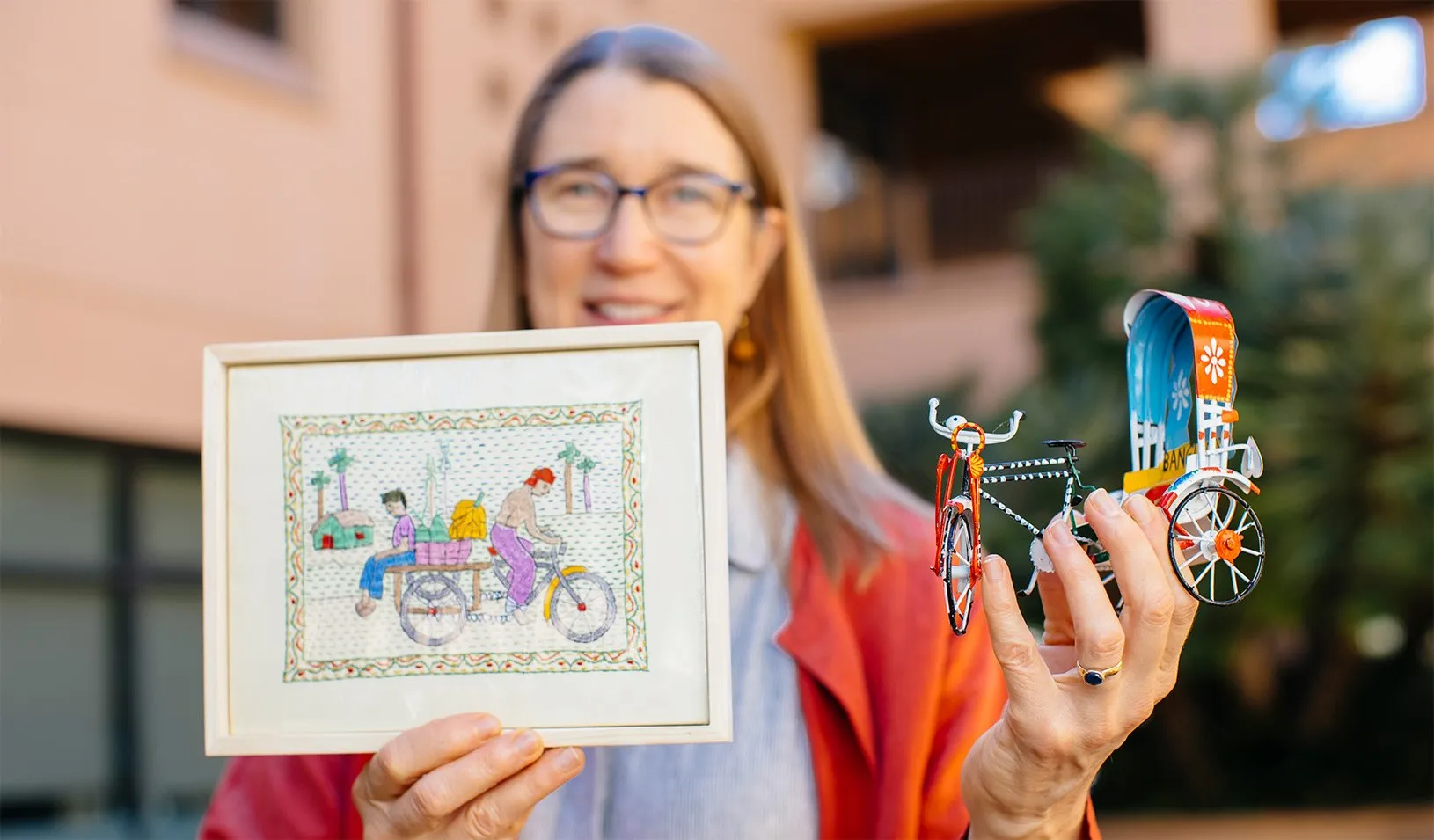
I received this miniature rickshaw as a gift from my wonderful friends and research partners in Bangladesh. It represents the charming, old-fashioned pedal rickshaws that were popular throughout the country before they were converted to battery electric vehicles.
Editor’s Note
In this ongoing Stanford Business series, we visit Stanford GSB professors’ offices and ask them to share the stories behind some of their favorite mementos.
Erica Plambeck is the Charles A. Holloway Professor of Operations, Information & Technology at Stanford GSB.
Today, streets in Bangladesh are crowded with electric three-wheelers. Electric vehicles seem positive for mitigating climate change. But inside those electric vehicles are massive, low-quality lead-acid batteries that waste electricity and — worse yet — cause lead poisoning.
A decade ago, Bangladesh put up trade barriers to prevent battery imports and to foster domestic manufacturing and recycling. Around the same time, China tightened environmental regulations on its lead-acid battery industry, and some noncompliant manufacturers and recyclers moved to Bangladesh. It became a lemons market of counterfeits and low-quality batteries. The useful life of lead-acid batteries in EVs dropped from two or three years to one year (and often much less), and the battery recycling rate more than doubled.
Often, a battery is recycled by an informal process with high lead emissions. People break open the battery by hand to remove scrap lead and smelt this with coal in a makeshift furnace or small open holes in the ground. They do this at night because it makes such horrible black smoke.
This is causing a public health crisis in Bangladesh. We found that terminated pregnancies — a well-known indicator of lead poisoning — increased for women living near battery industry sites. The toxic sites are widespread, so much of the population is exposed. When my Stanford Medical School colleagues tested children throughout greater Dhaka, 98% had elevated blood lead levels.
To deal with climate change, we need to shift to renewables and electrify transportation and industry. But that requires huge amounts of metals and minerals and the mining, manufacturing, and recycling can produce toxic emissions and create other environmental challenges.
Just focusing on the recycling process doesn’t help. You have to look at the whole system. We have to pursue market-based solutions because they can be faster. I’ve recommended increasing tariffs on imported lead to make used batteries more valuable and encourage less wasteful recycling. We’re also working with microfinance institutions to offer loans for high-quality batteries, including lithium batteries. The goal is to transition to lead-free batteries while safely moving lead out of the country.
I’ve been researching lead and lead poisoning in Bangladesh for about five years, drawn in by wonderful colleagues from Stanford Medical School and the Woods Institute for the Environment. I have gotten to know people of great intelligence and heart who have worked long and hard to understand, communicate, and rectify the lead poisoning problem. What a joy to work for and with these people!
For media inquiries, visit the Newsroom.