Quote
The whole idea of the MSx Program is about combining the academic and theoretical with practical applications of these concepts. And that’s what makes Stanford so unique.
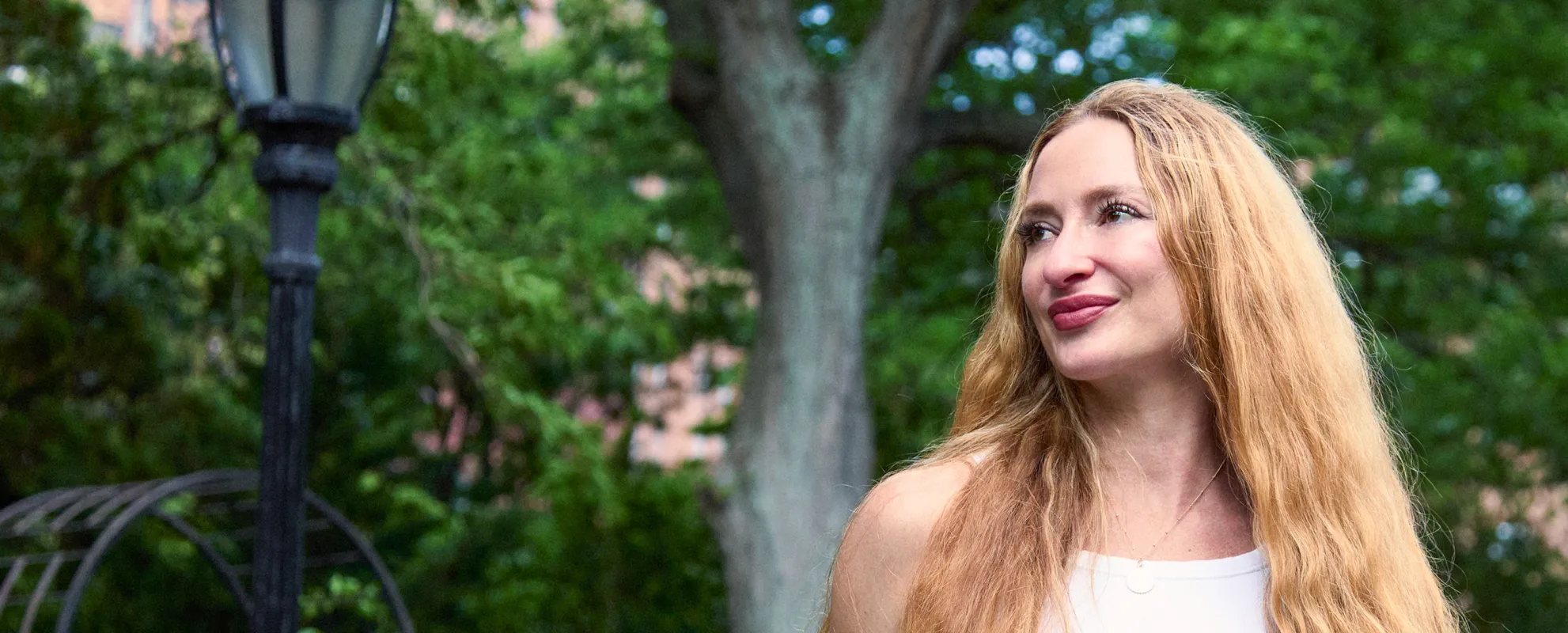
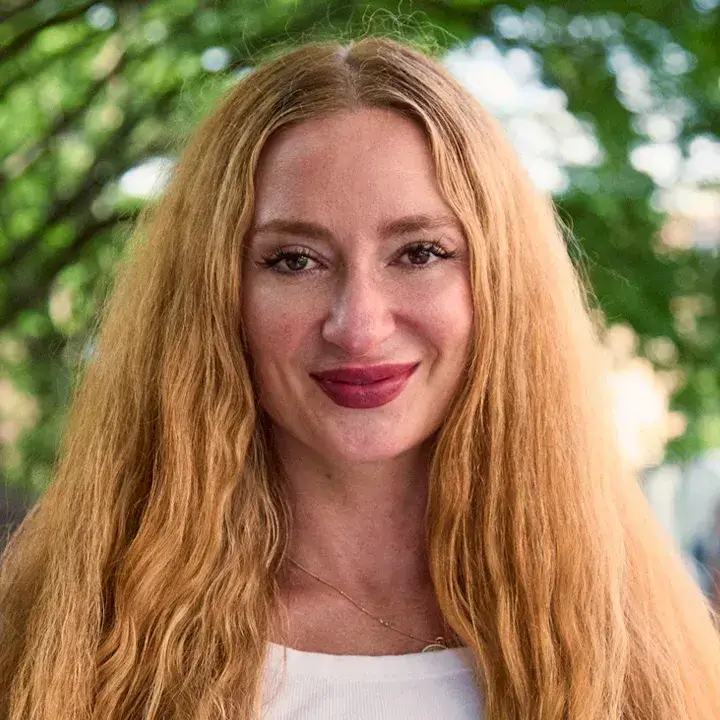
After growing up in Russia and building her venture capital career across Singapore and the United States, Olga Maslikhova had already spent nearly a decade investing across global technology ecosystems.
But it wasn’t until she attended Stanford Graduate School of Business that she set her sights on Latin America. At Stanford GSB, she focused her professional path on Brazil — without knowing either Spanish or Portuguese. To build trust and develop relationships within that emerging market, she created a podcast called The J Curve, named after the startup growth curve and one of the leading English-language podcasts covering entrepreneurship and venture capital in Latin America.
“Coming to Stanford and getting validated by the university and having such a supportive community gave me an emotional and psychological safety net, and the self-confidence to combine my background and passions and take more risks,” she says. “At the GSB, you hear that you can do anything, and that you can do it in your own unique way.”
After releasing more than 100 episodes of The J Curve, which has now surpassed three million views on YouTube, Maslikhova is about to take another big step: She is launching a venture fund focused on Brazilian startups with global ambitions this summer.
I was born in Moscow in the mid-1980s. My mom hustled to invest in my brother’s and my future. She left her stable job to become an entrepreneur in the golden rush of the ’90s, providing for the family as a single mother. She saved enough money to send me to Canada for school in the summer, where I had the experience of seeing a completely different way of living. She taught me how to take risks and make a change when my circumstances no longer fit me.
After studying organizational management in college, I started working in private equity for Troika Dialog, the largest independent financial institution in Russia. After the financial crisis hit in 2008, I was promoted to venture capital to handle investor relationships and portfolio management. One of the companies I managed was Evernote. Our fund was the first institutional investor, and we later sold our stake for a massive return. Having this scale within two to three years made me believe, okay, this is what I want to do.
I also wanted to live outside of Russia because I didn’t see it as a country willing to change. I used the success of selling Evernote to launch my first VC fund, Phystech Ventures. It was heavily focused on enterprise software outside of the U.S. because my business partner and I were first-time fund managers and didn’t want to compete with established Silicon Valley VCs. We focused primarily on Southeast Asia, with some exposure to the U.S. in the early years. I moved to Singapore, where I spent about four years investing across the region. It was a great environment professionally, but not necessarily one where I saw myself building a long-term future.
So I applied for an O-1 visa to the U.S., which was granted based on my investment activity and track record as a venture capitalist. I moved to the United States in 2017.
I knew I never wanted to do anything besides technology and venture capital, and I realized that if the United States was going to be the country I called home, what better way to immerse myself in the heart of the technology and venture capital ecosystem — and get a preview of how groundbreaking companies are built and funded — than to go to Stanford? Even though I had been working in venture capital for over a decade, I felt I needed a glimpse of the future given how quickly the world was changing.
I did a two-week executive program for growing companies at the GSB. I loved some of the professors and I met some of my best friends there. I thought, if I can meet these people in two weeks, what can I do in a year on campus?
I’d seen how much a difference technology makes in emerging markets. It’s absolutely insane what mobile technology or access to credit can do.
I started thinking about what a good emerging market was for this kind of transformational change. In the power-law model of venture capital, a few companies are able to generate a huge return. For tech companies to become big, you need a really big market, and one that is decentralized and not overregulated. And it needs to be a democracy.
As I was thinking about these macro-type characteristics, suddenly, there was news about tech in Brazil in every media outlet. So I went to São Paolo in between classes to meet with people and understand the scale of the opportunity.
I came back to the GSB and texted Rob Siegel to see if he would sponsor my independent research into Brazil. He made some valuable introductions. I was able to interview some market makers and to scrutinize the returns of venture capital funds and see how much money was being made in Brazil. But nobody knew about it because of the language barrier.
My initial plan was to launch a fund in Brazil right after graduation. But I didn’t speak Portuguese, and people were suspicious of me. I had to build trust first.
By 2020, there were a few examples of people who broke into a different geographical market or industry by building a podcast. The most famous is Harry Stebbings of The Twenty Minute VC. He used this new media opportunity to build strong relationships with the market where he wanted to operate. I figured if Harry could do it in Silicon Valley, I could do it in Brazil.
And I had taken GSB professor Jeffrey Pfeffer’s course The Paths to Power, which is about finding non-obvious ways to succeed in business and life, and realizing that you don’t have to move up the corporate ladder to do that.
One outcome is facilitating fundraising and partnerships. When someone comes to the podcast, they become visible to investors, founders, and operators across both Latin America and the U.S., and deals happen. It’s a bridge between Brazilian opportunities and U.S. capital.
What I’m most proud of is creating a number of leadership examples for the new generation of entrepreneurs. In Brazil, failure is deeply personal, and taking risks is societally not acceptable. For people who want to go build a startup instead of becoming a dentist, you really go against what your family thinks you should be doing with your life. The podcast is a platform that lets me reach those people and show them some of the best entrepreneurs and investors talking about their experience building companies. It’s about motivating and encouraging others to pursue hard problems.
It’s a $10 million fund concentrated on seed and Series B investments in Brazil. We’re in huge industries — healthcare, insurance, logistics, legal. One of the core ideas is that as AI becomes a commodity, value shifts to proprietary data and local distribution and execution advantages. Brazil is a particularly interesting market because many industries are highly fragmented and heavily regulated. This means that U.S. companies can’t just roll out their legal or tax solutions.
So you have to be local. If you succeed, you become an incredibly valuable and relevant company on the global stage, because of the amount of proprietary data that you have and the complexity of execution. Our value thesis with TJC Ventures is that we have the expertise in storytelling and brand-building that the Brazilian founders don’t. Many exceptional Brazilian technology companies are far less known internationally than they warrant, so they don’t have a product problem — they often have a visibility problem.
I moved to Palo Alto with my three daughters — my eldest was around 13 at the time and my two younger daughters were 5 and 3. There was no version of that year where I could do everything perfectly. I’ve always been very competitive and achievement-oriented, and for the first time in my life, I had to consciously decide where I was willing to underperform. That was psychologically very difficult for me, but ultimately one of the most valuable lessons I took from Stanford.
At the same time, it was an incredibly formative experience for my daughters. They saw their mother choose to do something very difficult. They watched me operate outside my comfort zone and make trade-offs in real time. There is something powerful about children witnessing ambition not as perfection, but as resilience.
One very special aspect of the MSx community was how family-oriented it was. Many of my classmates and partners had children, and our kids ended up spending a huge amount of time together after school and on weekends. My daughters were suddenly exposed to this international, multicultural environment with families from all over the world. Years later, I think that experience expanded their sense of what was possible and how many different ways there are to live, think, build, and lead.
The whole idea of the MSx Program is about combining the academic and theoretical with practical applications of these concepts. When we had guests who talked about how they actually used what they learned to achieve the incredible, remarkable success they’ve had, it drives the point home. And that’s what makes Stanford so unique. Most of the lecturers are also operating as VCs, entrepreneurs, or executives.
And in this environment, you learn that failure is not personal and you can always build something else. This gives you the emotional safety to take more risks. That gave me the ability to think about doing something that I wouldn’t have done before.