Advances in artificial intelligence are giving companies new tools for personalizing their outreach to consumers — and are opening new avenues of marketing research for academics.
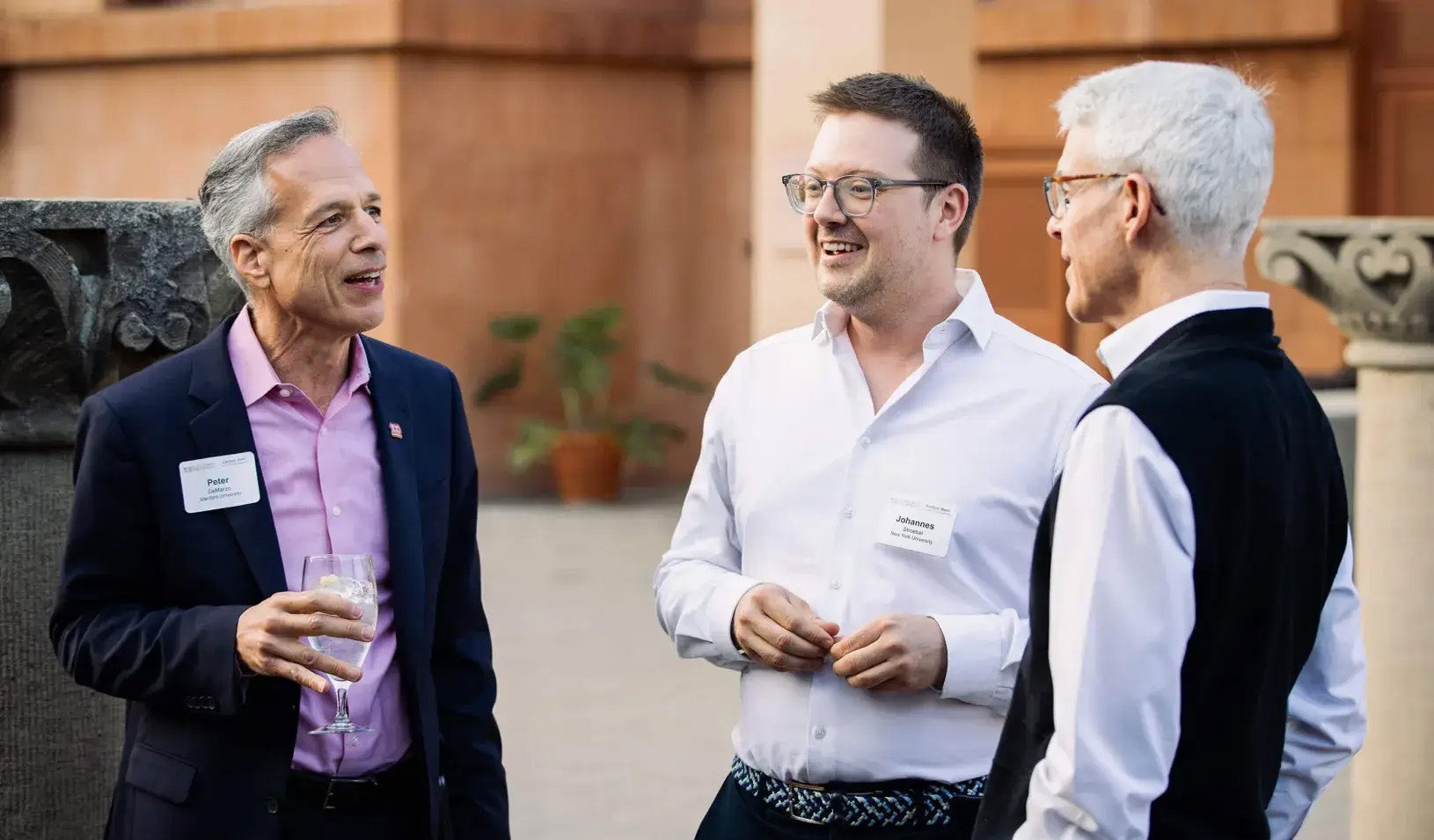
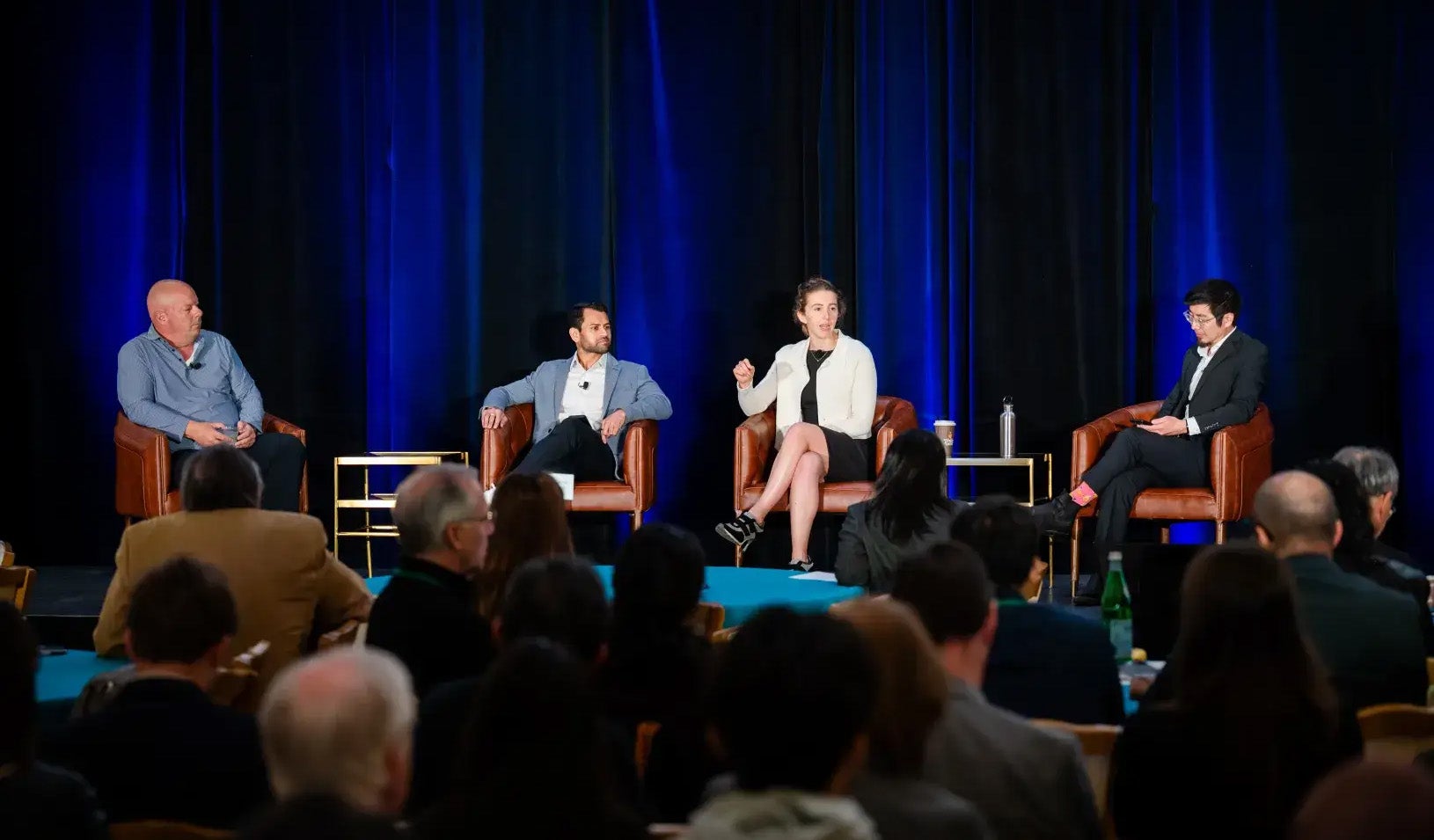
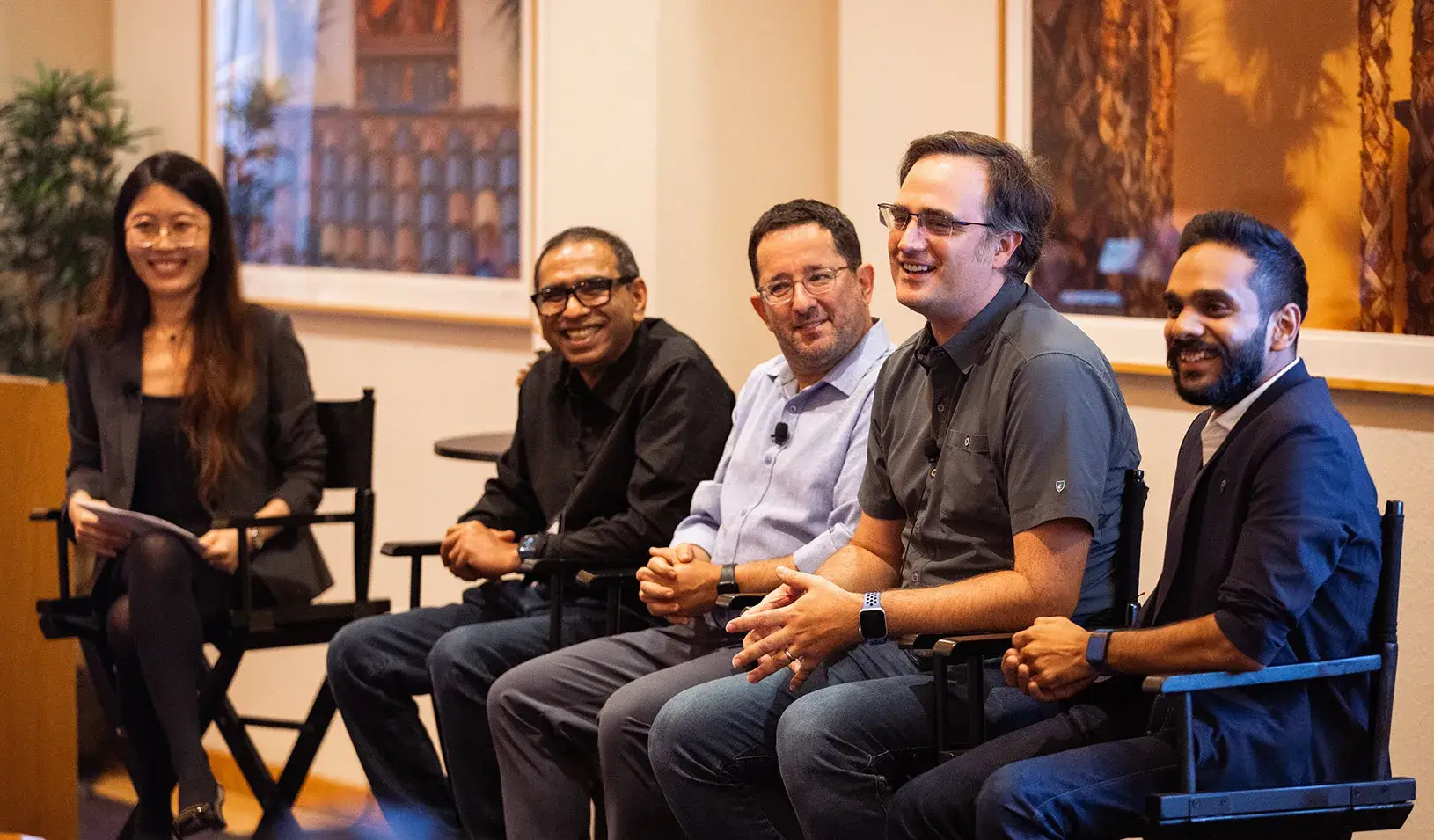
This was the message from “AI and Marketing: New Methods and New Risks,” a recent conference at Stanford Graduate School of Business that explored the intersection of AI and marketing.
“The goal of the conference was to bring together academic researchers and industry practitioners to share methodological advances in AI and marketing, and to examine the risks that may arise,” said Yuyan Wang, assistant professor of marketing at Stanford GSB, who co-organized the conference.
Conference participants heard about real-world applications of AI in marketing, as well as about the theoretical underpinnings of the technology.
“There was clear excitement about the ability to use these tools and lots of new unstructured data to personalize things like landing pages, ad context, or even data analytics on the buy side of advertising,” said Samuel G. Goldberg, assistant professor of marketing at the GSB, co-organizer of the conference. “That excitement was mirrored by a lot of caution about how we can use these tools effectively to investigate marketing insights and experiment with new ideas.”
Applying AI advances to marketing practice

AI tools promise marketers new ways to reach their audience from engaging stories to distinctive audio to compelling headlines.
“There are way more tools, way more data, and way more objectives — but that doesn’t change the business problems the marketer needs to solve,” Goldberg said.
Industry practitioners at the conference discussed the ways AI is affecting advertising. For example, AI tools are giving smaller entities access to creative content generation that can change based on a consumer’s prior journey. They are also giving advertisers the ability to easily optimize their advertising. Industry presenters noted that increased possibilities for personalization need to be undergirded by good measurement tools, and they emphasized the need for human-in-the-loop review for marketers.
Academic participants also highlighted ways that AI can be used to help marketing practitioners.
Oded Netzer, Vice Dean for Research and the Arthur J. Samberg Professor of Business at the Columbia Business School, offered an example of how large language models can support salespeople working in call centers. LLMs can listen to conversations and offer analysis in real time, something that was not possible with older methods of data analysis.
Netzer’s research examined how salespeople in sales call centers decide when to end a sales call and move on to the next prospective customer. A lot of literature about sales is focused on how to encourage salespeople to be more persistent, he said, but in reality, a key to increasing sales is knowing when to give up on a conversation that is not going to lead to a sale.
“We looked at: How do they talk less, and when should they stop conversations?” Netzer said.
Netzer found that an LLM could listen to a phone call in real time and assess, in the first 30 seconds, whether the salesperson was talking to the wrong person — and if so, tell the salesperson that it was time to move on. By 60 seconds into the conversation, the LLM could detect signals that the customer was not interested — another reason to end the call — and at 90 seconds, the LLM could discern whether the salesperson was likely to overcome the reasons the prospective customer was giving for not buying.
“Salespeople are not that good at predicting – they tend to persist way too much. They should be talking less and moving on,” Netzer said.
Looking beneath the surface
AI by itself won’t work marketing miracles. To generate — and increase — value for marketing, AI models must be combined with theory from areas such as marketing, human behavior, and economics.
“Marketing is fundamentally about persuasion using unstructured data — language, images, stories, and interactions — which is exactly where modern AI excels,” said K. Sudhir, the James L. Frank ’32 Professor of Marketing, Private Enterprise and Management at the Yale School of Management, who has been studying machine learning since 2015. “A lot of this used to be ‘art.’ AI now allows us to make this a ‘science.’ For marketing scholars and practitioners to get the most out of these tools, they need not only a solid understanding of how AI models work, but also how to embed their theoretical knowledge into the structure of those models.”

In the keynote address at the conference, Susan Athey, the Economics of Technology Professor at the GSB, showed how new AI models are making it easier for researchers to gain marketing insights. Athey has worked with a multidisciplinary team for the last decade to model worker careers, developing methods to analyze causal effects of certain interventions on the evolution of career and wages. For example, some of her work analyzes the causal effect of layoffs or interventions that help workers navigate career transitions. These methods could also be used by marketers to gain insights into how exposure to marketing interventions affect the customer journey, since both involve a sequence of choices.
Researchers used to have to build complicated models to do this type of work, Athey said, but now they can much more easily build and code predictive models. Recent advances in AI make it easier to work with unstructured data and fine-tune foundation models — models trained on large datasets — for a specific objective. Athey’s work shows how to modify that objective for the problem of understanding differences between groups, rather than just predicting outcomes within a group.
“When analyzing the causal effect of a marketing intervention, our methods are designed to identify what in the customer’s history predicts a positive response to the intervention,” Athey said. “Over the last few years, we’ve not only adapted methods originally developed for text to analyze causal effects, but also demonstrated how to provide insights from generative models to decision-makers.”
Athey has found that using a foundation model works: There is no tradeoff in terms of accuracy when you change the goal to estimating causal effects. This could give marketers the confidence to use these models to determine, for example, where along the customer journey firms should be intervening or investing. This approach could also open new avenues of customization and research when categorical data is used: for example, when the model is fine-tuned based on what products a user consumes and what movies they watch.
“You’re limited only by your own imagination,” Athey said.
AI tools are expanding what researchers can do using images, as well.
Hema Yoganarasimhan, professor of marketing at the University of Washington’s Foster School of Business, described her work using a generative adversarial network, or GAN, to generate counterfactual images that are then used to measure visual polarization. To study how different publications choose visual content in a politically polarized way, she used AI to generate variations on photos of politicians. She was able to isolate the effect of a smile by changing only whether the politician was smiling or not smiling — the other aspects of the photos, such as lighting and background, stayed the same. This technique could also be applicable to other types of research studying visual content.
Mitigating risks and asking better questions
Using AI in either marketing research or an industry setting opens up vast new opportunities, but it also comes with some risk — especially if the users don’t fully understand the underlying theory.
Take, for example, the use of synthetic data: artificially generated data that can be used in marketing to mimic consumers’ purchase decisions. It is faster and easier to use AI to generate this data than to gather it from actual consumers. But users need to understand that the act of prompting the AI model to generate the data influences the data it generates, said Sanjog Misra, Charles H. Kellstadt Distinguished Service Professor of Marketing and Applied AI at the University of Chicago Booth School of Business. Prompt engineering, Misra said, is basically adapting queries to match the researcher’s anticipated data.
“Language models can’t give a prediction without a query. You have to query, and the moment you query, it’s subjective,” Misra said.
This means safeguards are needed if either researchers or marketers use synthetic data. Transparency is critical, and researchers need to be aware of the subjective bias they are injecting into their experiment if they rely on an LLM to simulate data. In addition, synthetic data won’t work in a situation that requires replication, since LLMs will perform an experiment slightly differently each time. These cautions also have implications for agentic interaction: a future in which AI agents are interacting with each other instead of being guided by humans.
“We shouldn’t use it the way we use real data,” Misra said about synthetic data. “This cannot be an objective model, ever — but we should use it, because it’s incredibly informative and useful.”
Using synthetic data to perform faster or more extensive research is just one way advances in AI are expanding options for marketers.
Netzer, who has been researching unstructured data since 2006, said LLMs are changing the questions that marketing executives can ask.
“I’m excited about the use of LLMs to extract better features from the unstructured data,” Netzer said.