Quote
At the end of the day, we are a hospitality business that depends on a million-and-a-half-plus folks around the world providing a great experience to consumers in 150 countries.

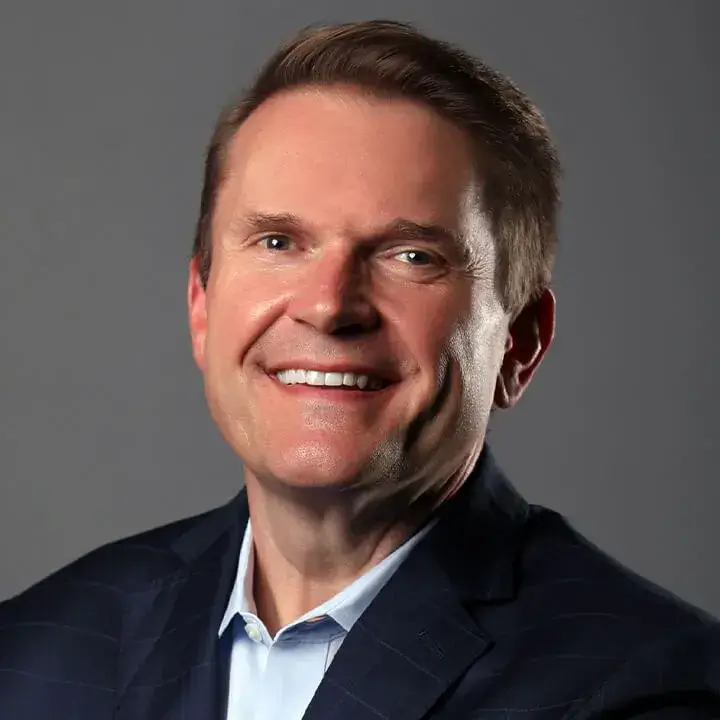
As CEO of Yum! Brands, the multinational corporation behind such iconic fast-food chains as KFC, Taco Bell, and Pizza Hut, Chris Turner, MBA ’02, helms the world’s largest restaurant company from his offices in Plano, Texas.
Yet Turner once envisioned a very different life for himself. Hailing from a family of rice farmers in a working-class part of the Arkansas Delta, Turner assumed that he would one day also work in agriculture. But his mother and father had met in university — “one of the privileges I had is that both of my parents had gone to college, and that just wasn’t the case for most kids there,” he says — and expected him to pursue a degree as well.
The experience proved to be life-changing. Studying industrial engineering at the University of Arkansas and interning at Walmart’s Arkansas headquarters broadened Turner’s horizons and whetted his appetite to see more of the world. After a stint with Andersen Consulting (now Accenture), Turner earned his MBA from Stanford GSB, then spent more than a decade with consulting firm McKinsey & Company, where he had his first contact with the restaurant industry, including Yum! Brands.
When the itinerant lifestyle of a consultant began taking a toll, Turner changed course again and became an executive at PepsiCo. In 2019, an unexpected phone call took him to Yum! — where he was named chief executive officer last year.
I was born in a little town called Stuttgart, Arkansas, which is the self-proclaimed rice and duck capital of the world. My dad was a fourth-generation rice farmer, and I grew up working on the farm. At age 8 or 9, I was walking the fields with a shovel, and at age 10 I finally got to drive the big tractors. My feet barely touched the pedals, but I loved it.
I went to the University of Arkansas thinking that I would come back home and work in agriculture. But I applied for a couple of internships the summer before my senior year, and the one that I ended up taking was with Walmart at their home office in Bentonville, Arkansas.
I fell in love with retail: I could see them making decisions today that would affect consumers tomorrow. But I realized that I had only experienced my narrow little slice of Arkansas, and that I needed to learn a little more about the world.
So I went to the career office at the university and said, “Hey, are there any recruiters coming to campus who offer roles with a lot of travel?” And they said, “Well, the largest consulting firm that comes to campus is Andersen Consulting.” So instead of joining Walmart, I joined Andersen.
The Stanford experience was pivotal for me. It expanded my worldview. At Andersen, I focused on a few specific projects and learned how to apply my engineering knowledge to operational or technology-oriented business problems. But at Stanford, I had a global set of classmates who had all done amazing things and who helped me understand the possibilities that existed in the world. I also had an incredible set of professors. I still apply lessons from my entrepreneurship class day in and day out.
And the case format of the classes at the GSB, which requires you to form and defend an opinion, helped me a lot at McKinsey: Everyone on the McKinsey team had an obligation to dissent if they believed the problem-solving was headed in the wrong direction.
I thought that I might have been their hiring mistake, and that I would last maybe six months before they kicked me out. But I thrived. I led recruiting for the southern U.S. for many years. I led the retail operations practice and then the broader service operations practice, which included any business that had a large frontline workforce serving consumers, from the gate agents in an airline to the technicians in a cable TV company.
One of my clients happened to be Yum! I served Pizza Hut in 2011 — internet ordering had become a big part of the pizza business, and we helped figure out how to deal with that — and I later served KFC, Taco Bell, and Yum’s international division called Yum! Restaurants International.
I loved going around the world visiting different cultures and serving clients, but I needed to slow the travel down a bit. A number of McKinsey partners had gone to PepsiCo, and PepsiCo’s Frito-Lay division was based here in the Dallas area, so it was a great transition.
I started out leading strategy for Frito-Lay, which was a very familiar job. But I met with PepsiCo’s CEO, and she asked, “What do you want to do?” I said I’d like to be a general manager, not really knowing what that entailed.
Eighteen months later, she called and said, “We have a GM opportunity for you. We’re going to have you run the Walmart account around the globe for all of PepsiCo,” which was a $13 billion business at the time.
The CFO of Yum! Brands, my client during one of my McKinsey engagements with Yum!, called one day and said that he was going to become the CEO and needed to find his replacement.
I said, “That’s amazing! Here are three great finance people that you should call.” And he said, “Well, I was thinking about you.” And I said, “I’ve never been in finance a day in my life. I took one or two classes at Stanford, I built several models at McKinsey — but I’m not an accountant. I’m not a finance guy.” And he said, “We have an amazing team already, and you’ll figure it out. And by the way, I want you to lead technology as well.”
I spent several weeks trying to talk him out of hiring me, but I also knew that I loved Yum! and its people and culture. We like to say that Yum! is “where the best belong,” and I am continually impressed by the quality of our talent. The CFO job ended up being a blast; it was a really good combination of strategy, operations, and practical problem-solving.
We have four iconic brands — KFC, Taco Bell, the Habit Burger & Grill, and Pizza Hut. Across those brands, we have more than 63,000 restaurants, 97% of which are owned by 1,500 franchisees. Yum! will become slightly smaller when we close a transaction to sell the Pizza Hut brand later this year — but KFC and Taco Bell are each the largest global restaurant brands in their respective categories.
Each franchisee has their own staff, and in total, there are roughly a million and a half people who work in our restaurants around the globe. In fact, KFC has more than 34,000 restaurants across more than 150 countries, only about 3,500 of which are in the U.S. Despite our scale, we remain a growth company; as an example, we open a new KFC somewhere in the world every three hours on average.
Because it’s such a decentralized business, Yum! is much less about command and control and much more about influence and relationships and trust. We only get things done when we have great relationships with our team members and franchisees, when we build trust, and when we can influence people to drive the strategy. So, my role is largely about being the chief relationship officer. My Touchy-Feely [Interpersonal Dynamics] class at Stanford has been very helpful!
You also need to have a future-forward mindset: If you’re not looking to the future, then the people on your team aren’t looking to the future either. Of course, we’re looking to drive growth; and as a hospitality business, we’re going to do that through our people. But technology is an incredibly important part of the future as well. There’s no large-scale retail business in the world that doesn’t control its destiny from a technology standpoint.
In 2018, only 1% of Taco Bell’s sales were digital. Now, Taco Bell’s sales are more than 40% digital. Globally, for all Yum!’s businesses, we’re now approximately 60% digital, translating to a roughly $40 billion e-commerce business. Byte is the underlying technology platform that enables a number of our largest businesses, and it’s critical because it powers the business today — but more importantly, it provides the platform that will enable the rapid change and innovation that is going to happen in the future, in part as a result of AI.
In the broader retail landscape, we’re seeing consumers start to shift toward agentic interactions as opposed to traditional ones. At Yum!, we’re using AI in the drive-thru at Taco Bell: We have almost 900 restaurants where you pull up and you’re talking to AI. It’s incredibly friendly and makes the jobs in the restaurants easier. We’re also using AI in marketing. And we know that the more platformed we are in terms of the underlying transactional systems and databases, the easier and faster we can deploy AI innovations in the future.
When it comes to AI, we’re taking a very people-centric approach. At the end of the day, we are a hospitality business that depends on a million-and-a-half-plus folks around the world providing a great experience to consumers in 150 countries. So, we want to bring AI to life in a way that empowers our team members, makes their jobs easier and more fun, and creates a better consumer experience.

“As a CEO or general manager, you make thousands of decisions a year. Your job is to make them boldly and quickly and get as many right as possible. You can’t wait for perfect information, and you can’t overanalyze every choice. If you consistently make decisions quickly and decisively, get most of them right, and execute with discipline, you’ll be in great shape. I am also a big believer in “roll up your sleeves” leadership. So much so, in fact, that my personal recognition award is the “Roll Up Your Sleeves” award.”
– Chris Turner