Quote
Human capacity for innovation is immense. I am hopeful we can direct it in ways to make global populations better off.
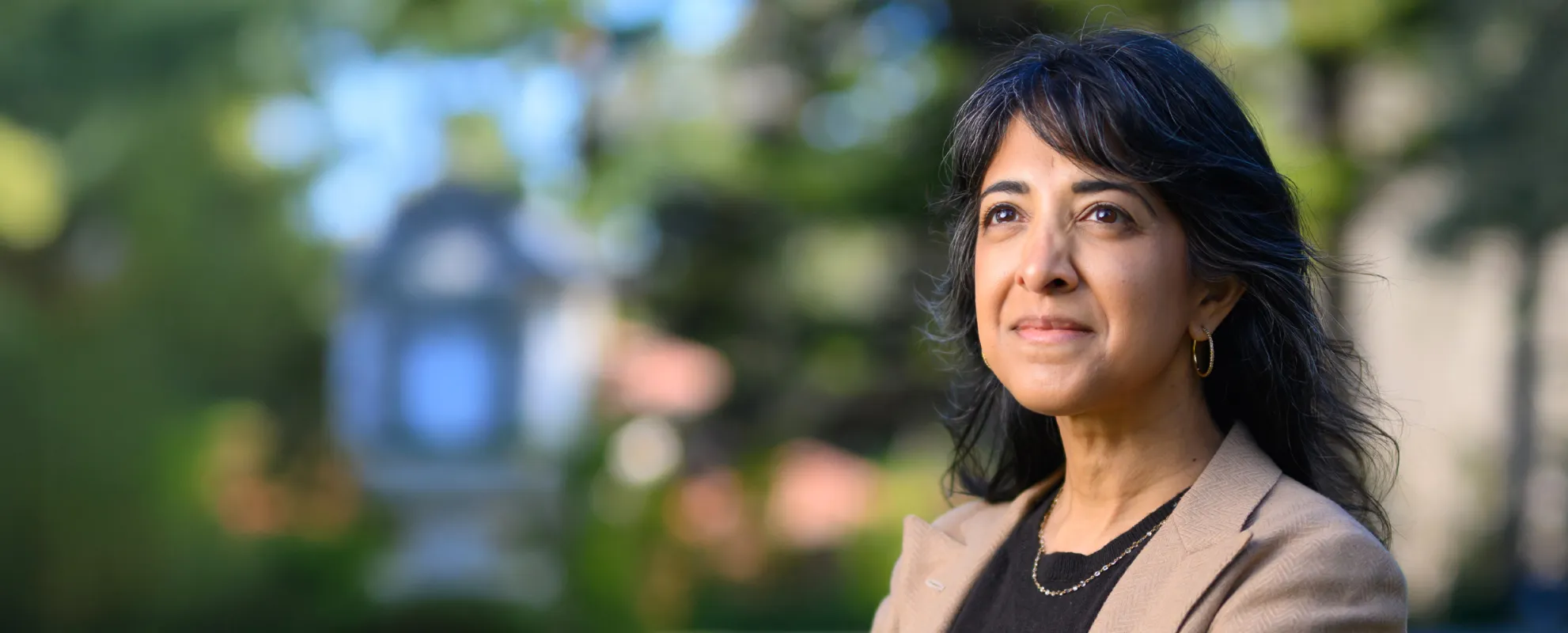
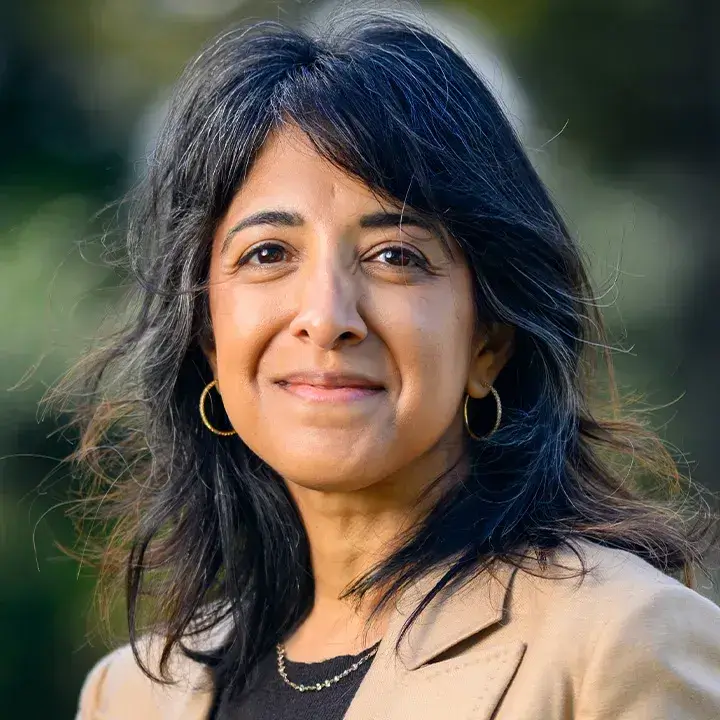
No one’s been more surprised by the twists and pivots of Saloni Multani’s career than Multani herself. Wryly describing herself as “a one-foot-in-front-of-the-other” kind of person, she studied economics at Harvard, became a Blackstone analyst, and evaluated investments at global private equity firm Hellman & Friedman.
But when she married and became the mom of two daughters, she began thinking about the world they would inherit. “I was motivated to align my time with my values,” Multani says, “but I didn’t have clarity about what that could look like.” Her former Blackstone boss, Mark Gallogly, reached out in 2016 to say that he was launching a family office focused on climate and sustainability, an opportunity that piqued Multani’s interest. She joined him at Three Cairns Group in 2016.
“Mark wanted to build a mission-aligned investing effort, and I was able to apply my background to what felt like a more values-aligned pursuit,” Multani says. “This opened up a whole new ecosystem. It’s been a real gift.” Today, she is a partner and co-head of the innovation and expansion fund at Galvanize Climate Solutions in San Francisco. The investment firm backs companies that prioritize sustainability, efficiency, and clean energy.
Before that move, however, Multani took an unusual detour: She left her investment jobs and spent eight months in 2020 as the chief financial officer of the Biden for President campaign.
I did not intend to go into politics. It was very much a moment in time. As the election approached, I wanted to engage somehow, and I called a few people I thought would have perspective for advice on how to do that. One of those calls surfaced that the campaign was looking for a CFO, and a few days and several phone calls later, I found myself in the seat!
The apparatus of a campaign is an ephemeral thing because it exists for only an election cycle. We raised and spent over a billion dollars — from a planning perspective, you want to end with “nothing in the tank.” It’s kind of a startup that builds out, scales up, raises and spends a bunch of money in a relatively short period of time, and then shuts down. It was a fascinating, unbelievable experience.
Galvanize was founded in 2021 by Tom Steyer, MBA ’83, and Katie Hall, MBA ’84. Tom had spent nearly three decades building Farallon Capital, and I had known him from my time at Hellman & Friedman, where he served on the investment committee.
After the 2020 election, I knew I wanted to return to climate investing. In the intervening years, the climate ecosystem had matured significantly — the conversation had shifted from whether solutions were viable to how quickly they could scale. I reconnected with Tom at that moment of inflection.
What resonated with me was the recognition that climate is fundamentally about deployment and scale. Innovation is critical, but the bottleneck increasingly is capital: how to fund, build, and accelerate businesses that can move from promising technology to real-economy impact.
I believe venture and growth capital sit at a pivotal point in that capital stack. It’s where you take the highest-risk innovation and help it cross into commercial scale. If you do that well, infrastructure and credit capital can follow. Galvanize was built to address that full continuum, and it felt like the right platform to put the investing cleats back on and help drive that next phase of progress.
From the outset, the vision for Galvanize was to build a multi-strategy asset management platform focused on the energy transition. That means bringing together different forms of capital — venture and growth, credit, real assets — because scaling solutions requires all of them.
But capital alone isn’t enough. We’ve also built internal expertise across science, policy, markets, and strategy to better understand how the transition unfolds and to support our portfolio companies as they scale. Climate is deeply interconnected with regulation, infrastructure, supply chains, and technology development. Having that interdisciplinary perspective strengthens both our underwriting and our value creation.
Within venture and growth specifically, we invest in companies that are commercially viable and positioned to scale — businesses contributing to a more decarbonized, resilient economy. That includes technologies and infrastructure reshaping how we produce energy, move goods, power industry, and manage resources.
Our goal is to be an active partner as companies move from innovation to durable market leadership.
What drew me to economics in college was systems thinking, understanding how incentives, markets, and behavior interact. Climate operates in a similar way. It sits at the intersection of science, technology, policy, capital markets, and human behavior. You can’t understand it through a single lens.
It also touches nearly every major physical and industrial system on the planet. Energy, transportation, agriculture, manufacturing — all are undergoing transformation. That makes climate both intellectually compelling and economically significant.
At its core, I view climate as a capital deployment challenge. We are turning over enormous capital stock: how we generate energy, how we build cities, how we power industry. That requires innovation, but it also requires disciplined investment across the risk spectrum. Our venture and growth fund plays one role in that broader ecosystem of capital.
The remarkable thing is, I didn’t come to focus on climate through my own investigation; I came to it through reconnecting and working with someone I had met very early in my career and had tremendous respect for. That’s a reminder to remain open and know that sometimes your life pursuits can originate in places you didn’t expect.
If you’d asked me 10 or 15 years ago, I would have said no, I’m a one-foot-in-front-of-the-other person. My college summers were spent working in consulting and investment banking, I went on to work in private equity, and then on to business school. All quite linear. Then, through some trial and error and experimentation, I realized it didn’t have to be linear. I could take some turns. I had to live it to realize that not everything has to be planned. That realization allowed me to continue to take bigger steps and appreciate that the possibility set was broader than I thought.
My objective in going to Stanford wasn’t to make a career pivot. It was to reflect on what kind of life I want to have. And Stanford is amazing for that because of its holistic focus on helping you think about what you want your contribution to the world to be.
It took me a while to realize that this is a community I can lean on, and they can lean on me as we continue to go through different stages of life. If I’m looking at an investment in a certain area, I can post it to our class group. People are always helpful in thinking through career arcs or changes or just being there for each other.
Just a few months ago in Santa Fe, we had a class mini-reunion. About 40 of us got together and talked about — among other things — what we want to be when we grow up. We’re still thinking about those questions. The community connection is there.
I also think about [Irv] Grousbeck’s class. Even though I was never a general manager, his ability to roleplay case studies and tap into the core of what it is to manage people and have difficult conversations was really special.
Human capacity for innovation is immense. I am hopeful we can direct it in ways to make global populations better off. That hope comes in large part from watching my daughters — but I know they are looking to us as well!
I pinch myself that I’m able to do this work, that I can leverage and tap into this skill set I have spent my professional career developing, and apply it to a category that I think represents a huge investment opportunity and is also critically important.
Photos by Josh Edelson