Quote
I think Stanford is the best place to study business because it teaches you about people.
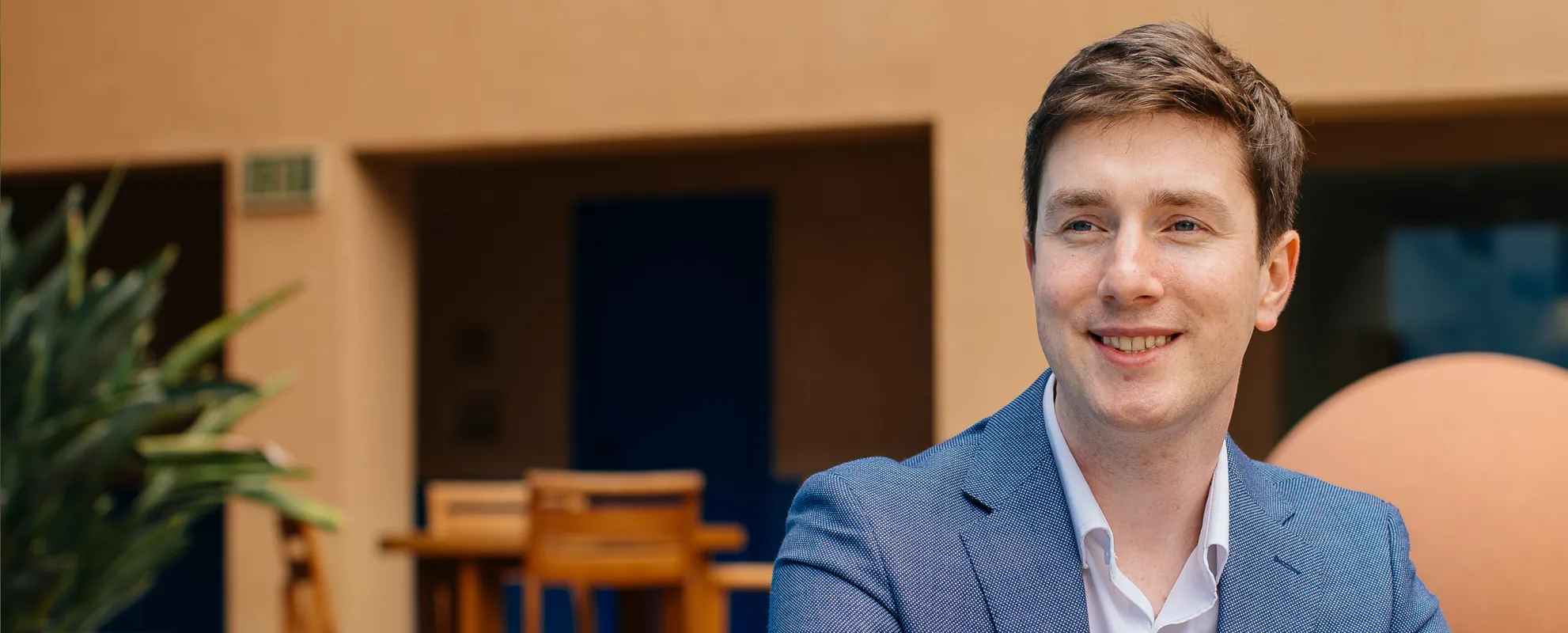
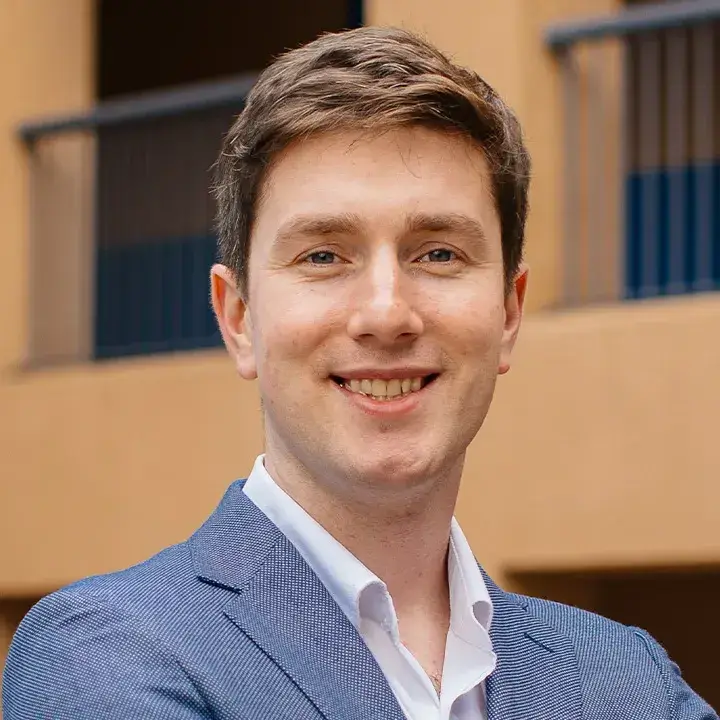
Sam McColgan did not set out to work in finance. Raised in Wales, where the finance industry was often viewed with a degree of skepticism, McColgan instead earned his undergraduate and masters degrees in civil engineering. Working across improvement and strategy roles at Skanska — a global construction and development company — he became increasingly interested in how organizations allocate capital over time.
A severe bout of long COVID took him to Japan in search of recovery and, somewhat unexpectedly, gave him the time to explore those same questions through the lens of public markets. What many might have experienced as a setback became an intensive apprenticeship in small-company investing and, ultimately, the foundation for his decision to attend Stanford Graduate School of Business and launch his own investment firm.
Growing up in Wales, the idea of a career in finance never really occurred to me. In my mind, finance was just banking, and bankers were the greedy people who had crashed the economy. I liked math, and I wanted to be a builder, which is why I chose civil engineering. I liked the idea of working on things that were tangible and lasting.
However, once I was on site, I found that I was spending most of my time coordinating contractors and navigating rigid regulatory constraints. It lacked the kind of creativity I was looking for, and I realized I was more interested in the strategic decisions that dictated what and why we were building rather than just the implementation.
At Skanska, I moved from site engineering into quality improvement and later into corporate strategy. That progression gave me exposure to the different layers of decision-making inside a large organization. I began to see that businesses, similar to infrastructure, have underlying structures that determine whether they will endure. I found myself increasingly drawn to questions about incentives and capital allocation — why some organizations execute consistently well while others, with similar resources, struggle to do so.
I was struggling with long COVID and moved to Japan for treatment. While recovering, I suddenly found myself with extra time and began to read more broadly. I happened to pick up an investing book by Peter Lynch and soon discovered that the public markets offered exactly the kind of analytical freedom and creativity I had been looking for in my work.
What began almost by accident quickly became much more serious. I started investing time, energy, and capital into learning the craft, writing about investing online and producing investment research for the Breakout Investors community. Looking back, that year became an intense apprenticeship in how businesses operate and how markets value them.
Early on in my investing journey, I was struck by a comment from Warren Buffett: If he was starting again with a small amount of capital, he would go back to the pink sheets, where he could guarantee significantly higher returns again. That idea resonated with me and I soon discovered for myself how the lack of institutional research and capital amongst microcaps creates large pricing inefficiencies. I encountered a landscape of under-followed companies with durable niches and strong economics, making the space feel unusually rich with opportunity.
After arriving at Stanford, I figured I would need to spend several years at a large investment firm before I could think about doing something on my own. But I think Stanford got to me, and I began to question whether I needed to wait. I kept hearing the same message: Don’t wait around to pursue what it is you really want to do.
As I began sharing the idea of starting a fund, I was emboldened by encouragement from mentors and support from fellow classmates. Launching my own investment firm, Cadoc Capital, began to feel like the natural next step.
Stanford GSB has surpassed expectations on every front. I feel substantially better equipped to build my investment firm. I think Stanford is the best place to study business because it teaches you about people. If I can understand the leaders of companies better than others, that can be an edge.
The GSB helped me understand motivations and incentives and what drives people to make certain decisions. I’m also currently co-CIO of the GSB Student Fund, where we manage a portion of Stanford’s endowment, which has been an excellent opportunity to manage a group of analysts and manage another portfolio.
I met an investor through the Breakout Investors community who encouraged me through my many early fumbles and difficult periods. While I am naturally drawn to cheap stocks, he helped me prioritize business quality and momentum and recognize that great companies often outperform longer than people assume.
He also taught me that strong investors must understand both the company itself and the market’s perceptions of it. Beyond the technical side, he brings a generosity and sense of humor, something that is surprisingly useful for keeping calm and collected during the investing troughs.
Faith has always been central for me. Fatherhood and faith are intertwined and equal in importance. Faith helps me be a better person, a better father, a better husband, and a better friend, as I try to be the type of person who I perceive God or Christ wants me to be. Faith has always brought me joy, peace, and perspective on my priorities. I help co-run the GSB Latter Day Saints Association, which has been an important way to help build community on campus.
My wife and two sons joined me at the GSB. We live on campus in a community of Stanford parents. It’s really fun to have so many young families nearby. The kids play and go to school together. We’ve been really happy here.
I intend for Cadoc Capital to prioritize strong returns on a smaller asset base, rather than grow beyond what the strategy can support. I enjoy the work of investing and the process of understanding businesses, and I want to spend my time doing that carefully and responsibly on behalf of the people who I like and respect, and who trust me with their capital.
More broadly, I believe my most meaningful impact will be through relationships. If I can be a good husband, father, friend, and mentor alongside building a solid investment record, I would consider that a huge success.