Quote
My internship deepened my commitment to advancing meaningful development around the world.
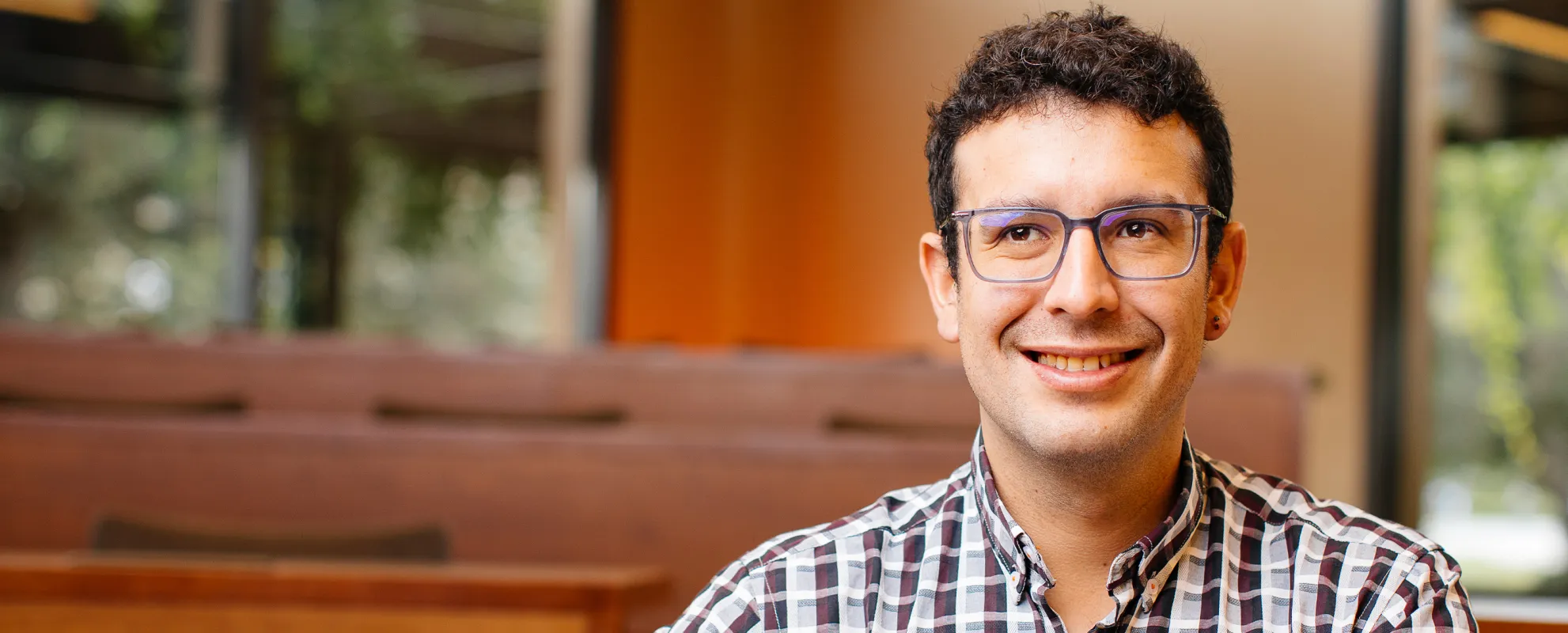
Santiago Paz Ojeda intends to continue working at the intersection of government and the private sector after graduation to help build better lives for the people in Peru, his native country. But he says his experiences at Stanford GSB broadened his perspective, and he’s now exploring creative ways to use “blended finance” — a combination of government aid and private money — as well as technology and AI to jump-start investment in public hospitals, schools, and other critical infrastructure.
“Blended finance may align incentives because there are more private actors involved who require returns, encouraging clearer metrics and accountability,” says Paz Ojeda. “It’s capital invested in solutions that incorporate risk management mechanisms and offer opportunities for scale.”
I’ve always had a passion for public service and always wanted to contribute to my hometown and my country. Growing up, I wondered how to improve public education, hospitals, and infrastructure, and I saw the government play a critical role. It can bring development to rural communities and poor people. When I started studying economics, I realized that working in government was a great way to have an impact.
Definitely. I had a good education, so I had access to resources, and I wanted other people to have that opportunity. I started in government just before the pandemic, and I saw the importance of policy solutions to help people, not just with funding hospitals and distributing vaccines, but also to help small businesses. The pandemic years reinforced my commitment to contribute.
I was working within the government’s budget office, which is like the treasury department in the U.S. My last role was to assign budgets to all of the ministries and public sector departments responsible for economic development — agriculture, mining, energy, production, fishing, and other sectors. The goal was to promote policies to increase the competitive business of the country, and to develop the infrastructure to attract private investments and growth. The role required coordination with different public offices to improve the allocation of resources, as well as convince the private sector to invest.
I’m exploring different ways to contribute, both in the public and private sector. I’m working on ideas to improve the use of technology in government and develop a startup in the govtech space to see how we can help the government invest in infrastructure like public hospitals and schools. The GSB has helped me realize we can build more bridges between the private sector and the government. Especially with the growth of AI, there are opportunities to use these technologies to improve public services.
Long-term, I see myself in a senior government role, but short-term, I want to keep building my skills in the private sector. Sometimes it’s not possible to have all of the impact we’d like in government, and the private sector can play a critical role in facilitating innovation. I want to learn how to bring that innovation to governing.
The way we used to think about supporting development was through international aid. That helps, but it also has limits because it’s influenced by political dynamics. There are different ways to mobilize resources into emerging economies, including blended finance deals where the money doesn’t just come from grants or aid, but also private investors who expect returns but are willing to cooperate with other institutions and assume some risk. The financial sector is open to experimenting with new mechanisms to mobilize resources in different ways. That’s exciting to me.
We’ve had six presidents in the last five years, so political instability definitely affects how social impact investors see opportunities in Peru. That’s why other investors need to provide some guarantees or assume risk. The second challenge is that Peru and Latin America don’t receive the same interest that other regions of the world receive. We are stuck in the middle-income trap. Our economic growth rate is 3% or less, and we don’t see a clear way to accelerate it and continue improving public services. It’s a huge challenge for the region to find ways to grow better and rise out of this situation.
The GSB-sponsored internship was an opportunity to see how the private sector is implementing high-impact solutions. KOKO Networks is a cooking fuel and equipment company that primarily provides bioethanol as cooking fuel to customers to replace charcoal fuel. I was able to see first-hand how the company was making an impact and providing clean fuel to more than a million households. Kenya and Peru have similar challenges, including political instability. My internship deepened my commitment to advancing meaningful development around the world.
Corporate Financial Modeling. One of my reasons for coming to the GSB was to learn the language of finance. I know financial policy, which is basically how the government invests, but I wanted to learn the private finance vocabulary. This class helped me see how decisions are made and the numbers investors use. I can apply the skills I learned in this class to my next role.
I’m a member of the Social Impact Club and the Government and Politics Club. It’s important to build community and find people who are passionate about similar topics. I’ve really enjoyed finding my place.
I guided 36 friends on a four-day hike to Machu Picchu. The altitude was challenging and many people had never been camping, but we all had a great time. I enjoyed the opportunity to share Peru and many of its wonders.
Photos by Elena Zhukova