Quote
Who you are as a person, your humanity, it all comes down to authenticity.
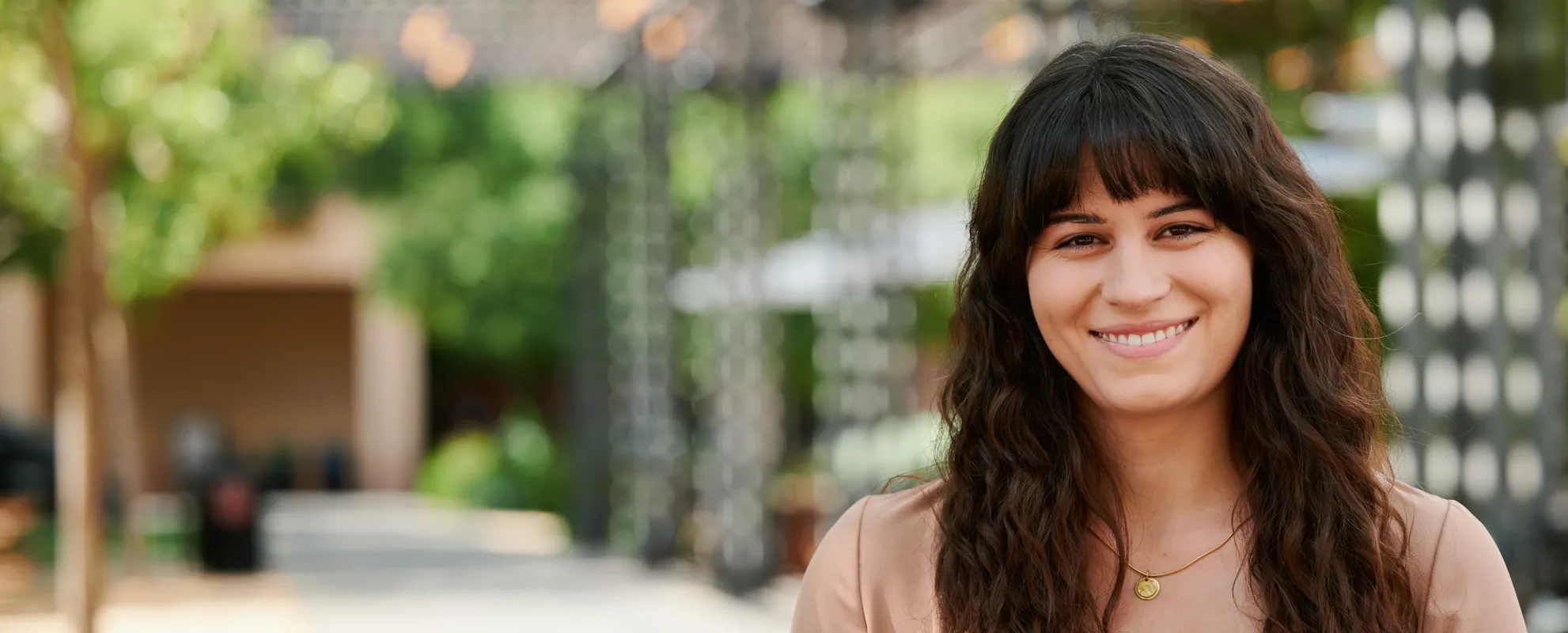
As a child actor in community theater in El Paso, Texas, Alexa Samaniego always knew her lines. But instead of being applauded for her smooth delivery, she was sometimes criticized for seeming “over-rehearsed.” Now a doctoral student at Stanford Graduate School of Business, Samaniego has channeled her childhood frustration over directors’ feedback into her research on authenticity and what it means to come across as authentic. “I realized I could solve the issue that I’ve been having since I was eight,” she told herself, “if I could just study this.”
Samaniego’s path to Stanford GSB was winding and serendipitous. Her family moved to San Diego to expand her academic opportunities when Samaniego was 13. A first-generation college student, she tried out various majors at UC San Diego — theater, English literature, anthropology, communications — while working as a portrait photographer and making short horror films on the side. Unsure of her future path, she even dropped out briefly before a last-minute email about a new business psychology major lured her back.
That new interest led to a master’s program at San Diego State University and eventually to Stanford GSB, where her advisor, Benoît Monin, the Bowen H. and Janice Arthur McCoy Professor of Ethics, Psychology, and Leadership, is also an actor.
Now, Samaniego coaches speakers on campus and for TEDxStanford, and she hopes to continue her filmmaking and photography in the future. The questions that keep her up at night, however, center around her research. “I want to figure out what makes people seem authentic. It sounds like such a simple question, but no one fully knows,” she says. “I would like to be able to get closer to answering that.”
I grew up performing in community theater from a pretty young age and peaked around 12 years old, when I played Dorothy in The Wizard of Oz. But as much as I loved being onstage, eventually I realized that I was even more interested in the idea of performance itself. I wanted to understand how people interact and present themselves on stage.
I was a theater major because I loved the playwriting and directing aspects, but once I started spending time with all these really smart people who were doing research and engineering and computer science, I began to wonder what else was out there. I explored a lot of majors, but none of them felt totally right. I actually dropped out of college for about six months to work at a bakery and figure out my next move.
Then, almost by chance, I got an email from UCSD saying that they had created a new major: business psychology. I’d already taken one organizational psychology course and loved it, so it felt like a sign from the universe. It was literally the day before my withdrawal would have been permanent, and I immediately emailed them and said, “I’m coming, don’t give up my spot.”
I loved the fact that I didn’t have to commit to just one job. I could observe other people in their various jobs. The idea of picking a career was so difficult for me at that time, and then there was this organizational psychology class that suggested my job could be to help other people succeed in their jobs more. I was already interested in how performers present themselves on stage, so it seemed like a natural extension to think about how employees present themselves in the workplace.
After college, I did my master’s in applied psychology, with an emphasis in industrial organizational psych, at San Diego State. I knew I wanted to do a PhD because I liked the research. I had two roads I could follow: a psychology PhD or a business school PhD. I thought business school might make more sense from a practical standpoint.
So I did an internship at Columbia to see how it would feel to be in that world, and it was great. I worked for two senior faculty members, and they gave me more autonomy than most people get at that stage in their career. I read broadly, came up with my own ideas and theories, and designed the studies. I was basically a PhD student for the summer.
At other schools I visited, I felt so stressed and so nervous and so out of place. Everything was very shiny and minimalist and white and glass. And then I came here, and there were palm trees, and people were nice, and I felt comfortable.
I met my PhD advisor for the first time at the GSB admit day, when prospective students can meet with faculty. I actually didn’t apply to work with him originally, but when reading my application, he must have seen the similarities between our research areas and wanted to meet with me. Meeting him in person and realizing that our interests overlapped so heavily pushed me toward coming here.
Having a lot of shared experiences in acting led us to ask the same questions about the world. It’s been great because we speak the same language. For instance, we’re looking at how people think about repeated speech in terms of authenticity. It seems like they should be in opposition: The more spontaneous you are, the more authentic you’re being. So if you’ve repeated or rehearsed something a million times, you risk it not feeling authentic. But because we both have a lot of experience with rehearsal ourselves, we’re not convinced this is true.
Because of my hands-on background as an actor, I’m interested in hands-on answers and applications of authenticity. A lot of the literature is about the theoretical aspects of seeming authentic. That’s great, but how does someone know when they’re watching someone talk that it’s off the cuff? What does it mean to be spontaneous? What does it mean to be consistent or trustworthy or all these things that we know in theory lead to authenticity?
We’re finishing a project with a colleague at UC Berkeley, looking at how politicians can be perceived as more authentic, because that’s a huge problem. If politicians do the usual things that lead to authenticity — tell a joke or try to be spontaneous — people assume they’re just trying to seem authentic, which doesn’t really work. And so we found that one of the pathways to authenticity was associating with an ordinary person: friends or supporters who seem like average people.
Projects like that make me feel like there’s this whole world of research that hasn’t been done that people are super interested in and that inspires me.
This kind of research could be applied in any situation where authenticity is called into question. If you hire someone as CEO, you need to know that they’re not just saying what you want to hear, but that you can actually trust their character and judgment. You want to hire people you can believe in. You want to elect into leadership positions people you don’t think are going to manipulate you.
For me, coming here and not knowing how to act in a business school or grad school, not knowing how to act among famous professors, I was really worried about seeming competent, seeming smart — I didn’t know how to feel and act authentically in this space. And so I’d like my research to help people in similar situations communicate authenticity. If you can control how you’re perceived, that affects the level of success you can have in a lot of people-driven fields.
My research questions keep me up at night. If I could do something else and let this go, I probably would. I could make more money elsewhere and I could be less stressed elsewhere. But every time I want to take a little break, I come back to my research because these are the questions I’m asking myself all the time. With my research, I’m getting as close as I can to the truth.
The thoughts that I have about authenticity and the way that I view the world have been shaped so strongly by the faculty at the GSB. I’ve learned so much about myself and about what’s out there and what I’m good at by coming here.
Authenticity seems like a core trait that people are always looking for. If I know you’re authentic, I can let go of a lot of concerns. I trust you. I know what you’re going to do next. I believe in what you say. So I think it’s evolutionarily useful to be able to judge authenticity. Do I want to hire you? Do I want to work with you? Do I want to give you money? Who you are as a person, your humanity, it all comes down to authenticity.
Right now, in particular, not being able to tell what’s real or not with AI people and AI videos, people are getting more and more attuned to authenticity and whether or not something or someone is real. Portraying authenticity, convincing people that you are what you claim to be, is a skill that’s going to become more and more important in the future. It’ll be essential.
Photos by Drew Kelly