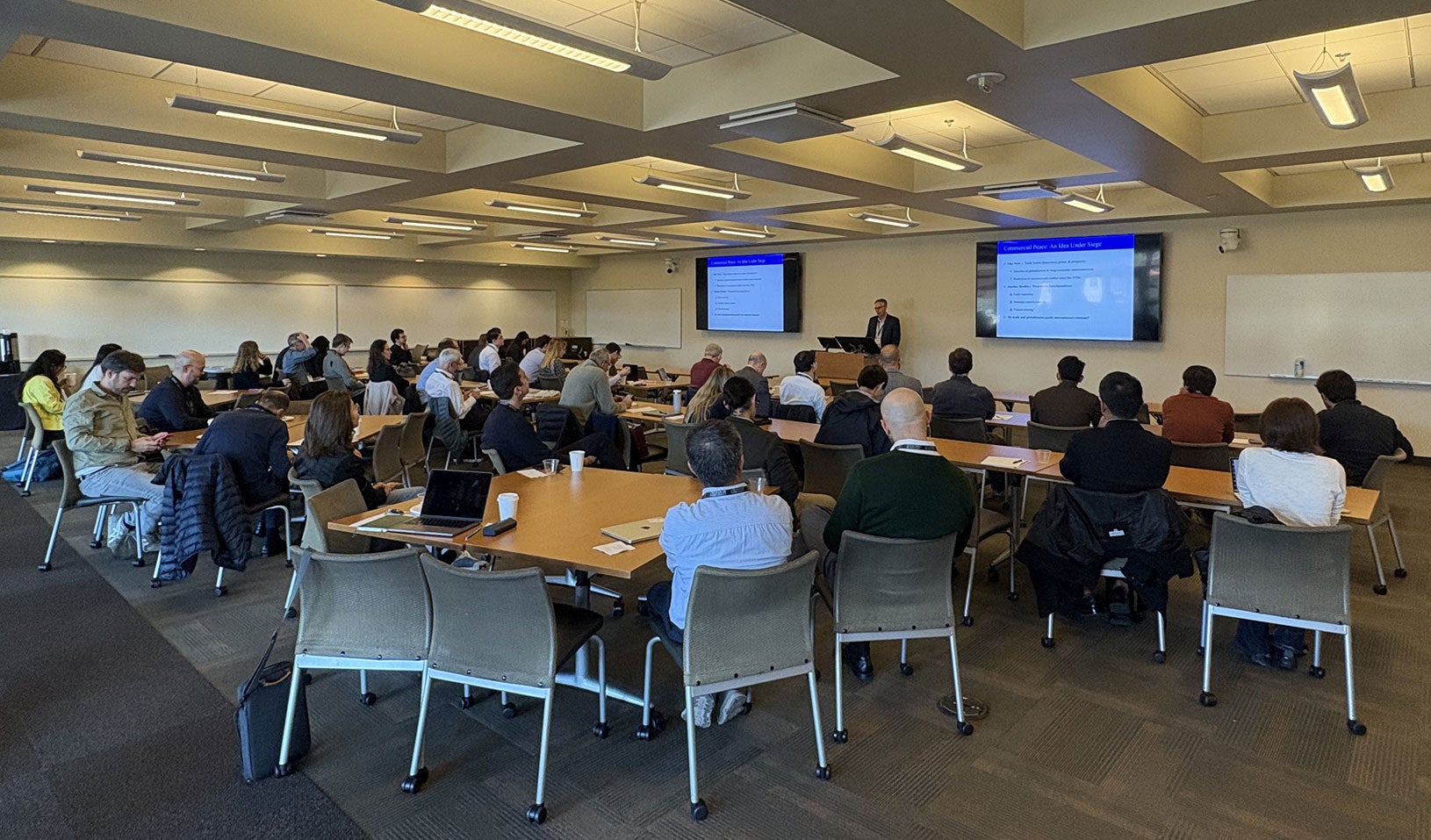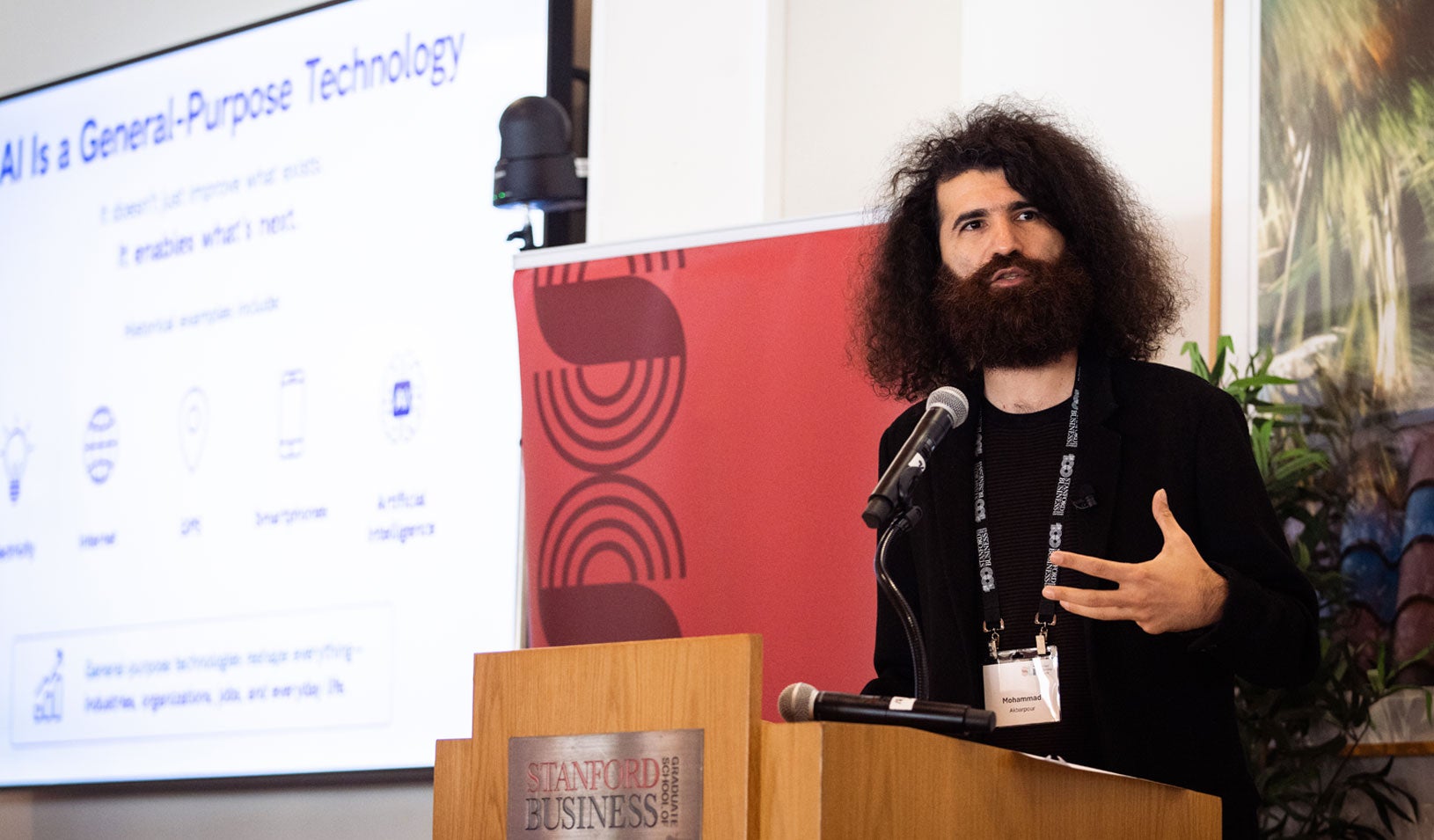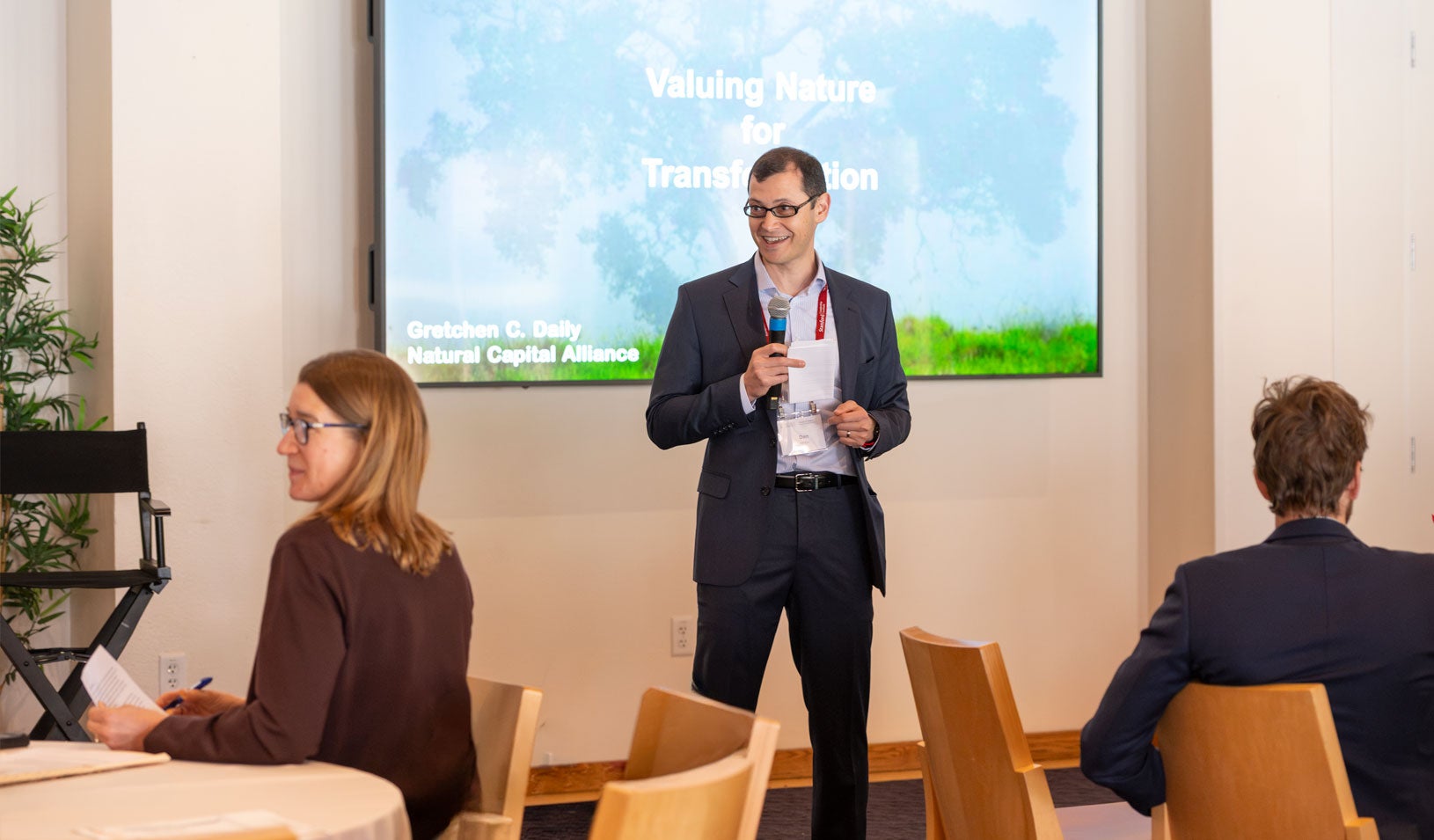
At a moment when the public conversation around climate action appears to oscillate between exuberance and fatigue, a recent Stanford conference on environmental entrepreneurship offered something rarer: a granular, empirically grounded look at how sustainability is being built firm by firm, policy by policy, and place by place.
The conference, part of the Sustainability Conference Series and sponsored by the Stanford Leadership Institute was co-chaired by Profs. William Barnett of Stanford University and Olav Sorenson of UCLA, brought together papers spanning social psychology, finance, political science, and organizational theory. At first glance, the agenda looked wide-ranging, but a focused pattern emerged. Environmental entrepreneurship is not defined by a single breakthrough or policy regime, but is the product of many small frictions and the ways entrepreneurs navigate them.
“Geography Matters” or “Mobility Limitations”
Sorenson’s opening remarks challenged the idea that entrepreneurship is easily portable. “Most entrepreneurs often trade off their reputation and their friendships for the types of resources they need, and most of those connections are local,” he explained. That reliance on local networks shapes where firms are created. Sorenson continued: “It is a lot easier for entrepreneurs to succeed when they start businesses in their own places.” The point is well established in the literature. But its implications for sustainability are sharper. Unlike software startups, many environmental ventures must operate where physical problems exist. That creates what Sorenson described as a “spatial mismatch between where people have the expertise and where the problems actually exist.” The expertise needed to build a clean-energy company may be concentrated in one region; the environmental need may lie in another.
Local embeddedness brings additional advantages. Entrepreneurs rooted in their communities tend to care not just about doing well for themselves, but how their business is affecting the community as well. In sectors defined by externalities, that alignment may matter.
“Belief Traps” or “Following the Crowd”
If geography shapes who builds firms, beliefs shape what they build and whether consumers adopt it. This was a theme taken up by Sara Constantino and Dror Etzion, whose paper examines how social norms influence environmental behaviour. Individuals, as Sorenson observed, often infer “what they should be doing based on watching others.”
The result is a concept explored by Constantino and Etzion called belief traps: when unsustainable behavior persists because it appears to be the norm. Breaking such traps is less about prices than about perception. If people can be shown that their pro-environmental preferences are more common than they assume, they may act on them. For entrepreneurs, this turns market creation into a social process. Demand is not fixed. It is shaped by visibility, imitation, and signaling.
“Capital Constraints” or “No Free Lunch”
If demand can be nudged, supply must still be financed. Here the conference struck a more cautious tone. Several papers, including Riitta Katila’s field experiment and Caroline Flammer’s work on blended finance, explored the difficulty of mobilizing capital for sustainability ventures.
Katila’s findings suggested that projects framed as “sustainable” may be penalized, even when their expected returns are similar. Flammer, by contrast, examined how government action can make social investments more attractive financially. One approach is to combine public and private funding.
Yet the underlying tension remains unresolved. The field continues to wrestle with whether sustainability can consistently pay for itself. “It is not clear if impact investing can deliver reasonable financial returns,” Sorenson noted, “Is there a free lunch here?”
The answer, as several papers implied, is often no. Environmental entrepreneurship may require tradeoffs between financial returns and social impact, between scale and immediacy, or between private incentives and public goals.
Cycles of Enthusiasm
Beyond capital constraints, interest in environmental issues is volatile. A set of papers, including Jeffrey York’s study of ocean energy, examined the dynamics of hype in environmental innovation. Environmental issues are often caught in hype cycles. At first, there’s a huge amount of excitement, but over time, there is a downturn in interest.
However, Barnett’s own work from a working paper with Natasha Overmeyer and Jason Chen, complicates the narrative. “When hype is high, it is easier to get support, which means that lower quality entrepreneurs can enter the market. When it fades, entry becomes harder, but the ventures that do emerge tend to be stronger. It may actually be better for an entrepreneur to create during a period where hype is on the downswing.”
Other distortions arise from incumbents. Tom Lyon’s paper on greenwashing showed how firms may exaggerate their environmental credentials to keep environmental entrepreneurs out. In this sense, hype is not just cyclical, but strategic. The broader implication is that today’s quieter discourse around sustainability may not signal retreat. It may indicate a shift from exuberance to discipline.
Papers by Chris Rea and Ed Walker explored the role of government in shaping environmental entrepreneurship, from state capacity to regulatory constraints. Policy influences not only incentives but also feasibility. Permitting, zoning laws, and infrastructure decisions can determine which ventures succeed, and the built environment has emerged as a particularly important domain. Housing, construction, and land use can lock in environmental outcomes for decades. As Barnett put it, “The built environment is the driving force for so much of the good progress we make towards sustainability, but it can also cause some of the big mistakes.”
Beyond the Buzz
The conference highlighted the diversity of approaches to environmental entrepreneurship. Researchers from different disciplines examined it through distinct lenses, yet their findings often converged. “There appears to be a kind of groundswell across sectors for dealing with sustainability, from NGOs, to for-profit businesses, to non-profits, to government agencies,” Barnett said. “Each of these research streams is coming at it from different directions, and yet they’re seeing sustainability-related phenomena.” In that sense, sustainability is not a sector so much as a condition, cutting across industries and institutions in ways that are sometimes visible, sometimes not.
That breadth helps explain another, simpler insight. Despite ebbs in public enthusiasm, entrepreneurial activity continues. Firms may speak less about sustainability, but they do not stop investing. This divergence between rhetoric and action reflects a maturing field. Early hype cycles have given way to a more pragmatic approach. Organizations invest not because it is fashionable, but because it is necessary, whether to manage risk, comply with regulation, or prepare for future constraints. For those expecting a dramatic transformation, this may seem underwhelming, but the future of environmental entrepreneurship will not be built on spectacle. It will be built on an accumulation of local knowledge, social norms, financial structures, and institutional change.