Quote
When you’re managing in different cultures and different environments, you have to quickly understand what are core values and what are non-core values.

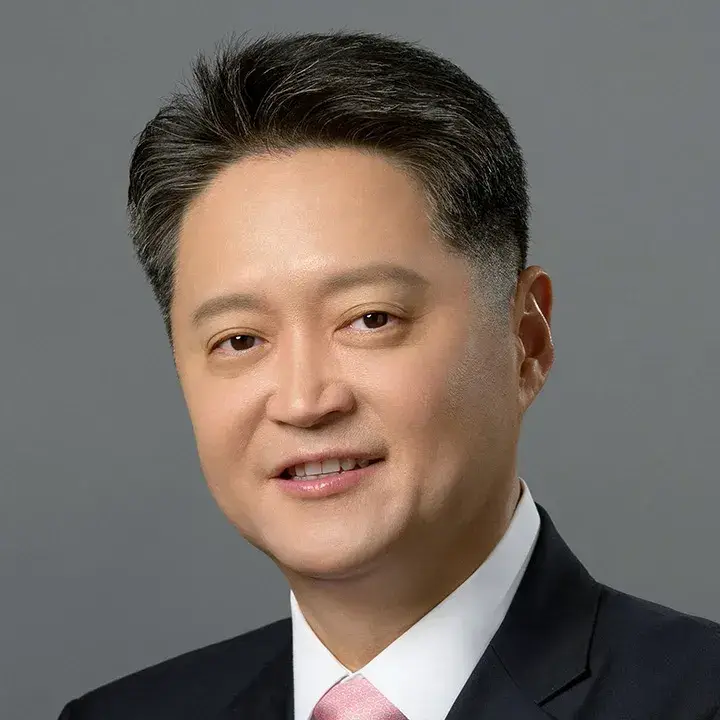
Luke Kang attributes much of his success to being a people person — a trait he honed while growing up in New York City. Riding the subway every day, attending schools with globally diverse student populations, and spending time in dense urban neighborhoods have all shaped his perspective.
“As a young person, there’s a tendency to create caricatures of people’s cultures. But once you break through the artificial barriers people put up, you realize people are people,” he says. “As kids, we all goofed off in the same ways, and we all watched the same content. Understanding that commonality has really helped me throughout my career.”
Kang’s ability to navigate cultural barriers has taken him around the world. Working briefly at a Hong Kong-based digital media startup out of its Seoul office, he then spent eight years leading regional strategy at MTV Networks Asia Pacific, based in Singapore, and later managed the MTV Networks Korea business before joining Disney in 2011 as managing director of Korea, shortly after graduating from Stanford GSB.
Now, as president of The Walt Disney Company in Asia Pacific, Kang’s role spans movies, streaming, local content production, media networks, and media distribution across brands such as Disney, Pixar, Marvel, Lucasfilm, 20th Century Studios, ABC, Hulu, ESPN, and National Geographic throughout the region. Since joining the company, Kang has led the rollout of Disney+ in 11 markets and the production of over 150 APAC Originals, including award-winning hits such as the Korean action drama series Moving and Nine Puzzles, a docuseries on K-pop band BTS, and the Japanese thriller Gannibal.
I lived in New York from the second grade to high school. New York City in the ’80s was a very different place from what it is now; it was a tougher environment where you truly needed to be aware of your surroundings at all times to avoid trouble. I went to high school at Bronx Science and had to commute for over an hour each way by subway. I saw muggings and beatings and all kinds of things on the hour subway commute to school every day.
Despite the challenges, that diverse environment really shaped who I was and who I became. I draw on those experiences and the knowledge from having such a diverse set of friends from pretty much every culture around the world to help me understand a range of cultures and perspectives.
I like to try new things. I really wanted to go to California, but my parents thought it was too far. So I went to the Midwest and it was great, a very different place from where I grew up. I still remember stepping onto campus in Ann Arbor and I didn’t know what to do when people smiled at me and said hi.
In college, I majored in history, which is, at its core, the practice of pattern recognition. You study history to understand what the future can be, what drove people to do certain things in certain circumstances, and how that can repeat or how you can learn from those results. And that’s been extremely helpful in my career because a lot of business strategy is about pattern recognition.
While at college, I spent a semester abroad. I’m Korean American, but I wasn’t interested in Korea at the time. I was actually interested in doing an exchange program in Japan, but couldn’t go because Japan was one of the most popular destinations and I had applied too late. So on a whim, I decided to go to Korea. This spontaneous decision changed the course of my life. At that time in Korea, you could sense the raw energy of the market. And I was like, wow, I want to be part of this.
After graduating, I was supposed to start law school. But I changed my mind two weeks before classes started and decided to stay in Korea; I realized I didn’t have a passion for studying law. I got a job working for the Korean Ministry of Finance for a year, editing documents and writing English speeches for official foreign visits.
The job gave me a perspective on how governments think and operate, while also giving me a lot of time to think about what I wanted to do.
After my year in Korea, I went into management consulting. There, I learned the importance of macro and tailwinds, and how macroeconomic factors influence consumer behavior and industry evolution. For example, it was clear that certain factors such as per capita income and disposable income determine when certain industries will begin to blossom. I sensed that one of those patterns was about to play out in certain markets in Asia, in industries such as high-end consumer goods, travel and leisure, and entertainment, as per capita income levels passed certain thresholds.
I was in my mid-20s, and I observed that the peak of most people’s careers was in their late 40s to early 60s, so I took a very macro view and asked myself what industries would be hot in 30 years.
As a result, I saw this huge opportunity in the entertainment industry in Asia, especially in markets like Korea and China, where the macro tailwinds were very strong — driven by GDP growth and rising disposable income. And that’s when I realized, okay, I need to bet my career on this pattern, this trend.
After being razor-focused on continuous career progression for over 12 years, I realized that maybe there were other aspects of my life I hadn’t explored enough. Maybe I needed a bit of time to reflect; I thought grad school would be the perfect place to recalibrate. But I felt like two years was too long. When I discovered the MSx program for experienced executives, it was perfect. And one year in Palo Alto — how can you beat that?
I loved the whole experience. It was a great environment for me to look at the world in a very different way. The Silicon Valley startup ecosystem, the venture ecosystem, and the entrepreneurship classes at the GSB were unmatched. Being at Stanford allowed me to explore multiple areas and a lot of my what-ifs. My time at the GSB also helped me to crystallize what I was good at and what I enjoyed doing. It was truly a transformational time in my life.
The amount of access you have to amazing people was extremely impressive. I still remember when George Shultz, the late former Secretary of State, came to talk to our group. It was fascinating, hearing his stories and his insider perspective on these big diplomatic events that you only heard through the news. It was something that I knew I would never be able to replicate because there was so much intellectual horsepower, wisdom, and experience in such a relatively small place.
While I loved the startup environment, I felt that Disney had tremendously more potential in Korea, and I could not pass up the opportunity to help bring Disney to increased prominence in that market. I wanted to bring the One Disney approach to the consumer in a much more coordinated and strategic way.
I thought I could do something about that, given my experience, given my network, given my vision for the company and the strength of the brands. So for me, it was really the challenge of wanting to see brands that I personally love get to their rightful place in the ecosystem.
You try to find commonalities and universal themes to bring people together. Look at a film like Coco. It’s based on a Mexican cultural reference, but it was a huge hit in China because, at the core, the values of family, honoring your ancestors, all of that really resonated because they are shared universal values.
When you’re managing in different cultures and different environments, you have to quickly understand what are core values and what are non-core values. People have a tendency to assume somebody’s non-core values are actually core values. And that’s when you have cultural friction.
For example, in a lot of cultures in Asia, speaking up or being the loudest voice in the room is looked down upon. So how do you reconcile that with a Western organization, where speaking up and being a loud voice in the room is many times rewarded? How do you manage around that? These are the nuances that you have to understand in different cultures.
Early in my career, 90% of my time was spent thinking and analyzing things, looking at the market, talking to people, trying to push my ideas. Now, 90% of my time is spent on people. My job is to bring great people together, create the right culture in which they can succeed, emphasize the right values so we can all achieve the goals we want to achieve together. It’s really about making sure that people are taken care of and that they’re fully and properly equipped to succeed.
I’ve been able to put together some really great teams during my career at Disney. There’s a lot of continuity, shared visions, shared values. We’re vested in each other’s success rather than individual success. And that’s the thing I’m most proud of.
If you look at various industries over the last several decades, you often go from what I call a unipolar world — where you have one center of pretty much most innovation and production in the world — to a multipolar world, where you have multiple centers of production and innovation across the world. You see this pattern in cars, electronics, ship-making, whatever.
And for a long time, in entertainment, Hollywood was the epicenter of everything. But now you see different centers of content creation and entertainment evolving. And today, reaching a global audience is much easier because of technology. For those markets and those locations that are able to create content and products that not only appeal to their home market but can also resonate with a global audience, they’re going to be the new poles in this multipolar world. So I think that’s a very exciting and interesting trend in the media and entertainment industry.
Photos courtesy of Luke Kang