Stanford Graduate School of Business has named the 2026 recipients of its Stanford Impact Founder (SIF) Fellowships and Prizes, which support graduating advanced degree students with exceptional potential who are dedicated to launching new ventures that create social or environmental impact.
Founded in 2009 at Stanford GSB’s Center for Social Innovation, the SIF program has two tracks: Social Entrepreneurship (SIF-Social), offered through the Center for Social Innovation, and Ecopreneurship (EcoSIF), offered through Stanford Ecopreneurship, a partnership between Stanford GSB and the Stanford Doerr School of Sustainability. SIF-Social requires applicants to be receiving a degree from Stanford GSB, and EcoSIF is open to applicants from any Stanford advanced degree program.
The 2026 SIF cohort includes graduating students from six of Stanford’s seven schools: Stanford Graduate School of Business, the Stanford Doerr School of Sustainability, the Graduate School of Education, the School of Medicine, the School of Humanities and Sciences, and the School of Engineering.
Upon graduation, these students will launch ventures across industries and geographies — from career coaching in rural Montana to producing bio-based carbon fiber in Maine to manufacturing low-carbon steel in India. Each student shares the qualities central to SIF selection: a clear commitment to impact, a well-developed venture model, and demonstrated leadership potential.
“This year’s SIF cohort is taking on some of the world’s most important challenges with rigor, creativity, and a deep sense of purpose,” says Sarah A. Soule, the Philip H. Knight Professor and Dean of Stanford Graduate School of Business and Morgridge Professor of Organizational Behavior. “Some are using AI to help veterans navigate access to critical benefits. Others are advancing clean energy solutions to meet growing demand for reliable power. They are connected by the ambition of their ideas, their ability to pair innovation with a clear understanding of real human needs, and a practical path to impact. The SIF awardees embody what leadership at its best looks like: people willing to take on hard problems and translate ideas into meaningful action.”
Empowering Meaningful Change
SIF awardees receive either $110,000 in fellowship funding in the year following graduation or $20,000 for a shorter period, as well as personalized coaching and access to ongoing resources from Stanford GSB’s Grousbeck-Holloway Center for Entrepreneurial Studies, Stanford Ecopreneurship, and the Center for Social Innovation.
The 2026 SIF cohort graduates into a world where the problems they’ve chosen to work on are growing increasingly urgent. For 16 years, the SIF program has found that providing catalytic support at a critical moment in a graduating student’s trajectory can accelerate their path from a promising idea to a working solution.
“Building a company to solve a social or environmental problem is one of the hardest paths a graduate can choose,” says Nedjip Tozun, MBA ’07, co-founder of d.light, which has scaled solar-powered lighting to reach more than 200 million people across Africa and Asia. Tozun served as one of the judges for the SIF-Social Entrepreneurship awards this year. “The timelines are long, the trade-offs are real, and the safety net is thin. Each year, SIF makes that path a little less precarious for a remarkable group of founders.”
The Path to SIF Selection
SIF fellowships recognize the goals, design, and planning of the proposed ventures as well as the leadership potential of the graduates who will head them.
Judges noted applicants’ high-potential business and impact models, and clear motivations to solve the problems they identified. Many showed consistent through-lines from earlier stages of their careers to their venture ambitions.
“As an impact investor for most of the last decade, I’ve seen how founder-problem fit is paramount to the long-term success of young companies,” says Catha Groot, associate director of co-curricular ecopreneurship programs at Stanford Ecopreneurship. “By giving students the space to focus on challenging societal problems that matter deeply to them, SIF facilitates founder-problem alignment — a precursor to real-world impact.”
The 2026 SIF cohort showed a significant engagement with Stanford GSB’s entrepreneurial curriculum and opportunities, with nearly all of the 10 selected fellows having participated in the EcoSprint or Impact Design Immersion Fellowship summer programs or taken Stanford GSB’s Startup Garage course.
For many applicants, the SIF application process itself was a valuable tool for sharpening their entrepreneurial thinking. It provided an opportunity to explore the root causes of the problems they seek to solve, and to articulate and pressure test how their venture would address risks and challenges. The application also asked about unit economics, market sizing, and work planning, helping applicants focus their tactical thinking.
Dean Soule notes, “Our courses and programs are designed to prepare graduates to tackle complex, systemic problems. The SIF cohort shows that’s working.”
SIF-Social Entrepreneurship Fellows
This year’s SIF-Social Entrepreneurship fellows are tackling deeply rooted and complex issues. “The breadth of what this cohort is taking on, from STI testing to agricultural supply chains to AI for veterans, is genuinely inspiring,” says Tozun.
Awardees have spent hundreds of hours in conversations with key stakeholders and proposed insightful business plans that engage with key partners, regulators, and institutions in their relevant ecosystems to align incentives in ways that can grow markets, stabilize incomes, and improve lives. Many of the founders have personal or professional ties to their target geographies or communities.
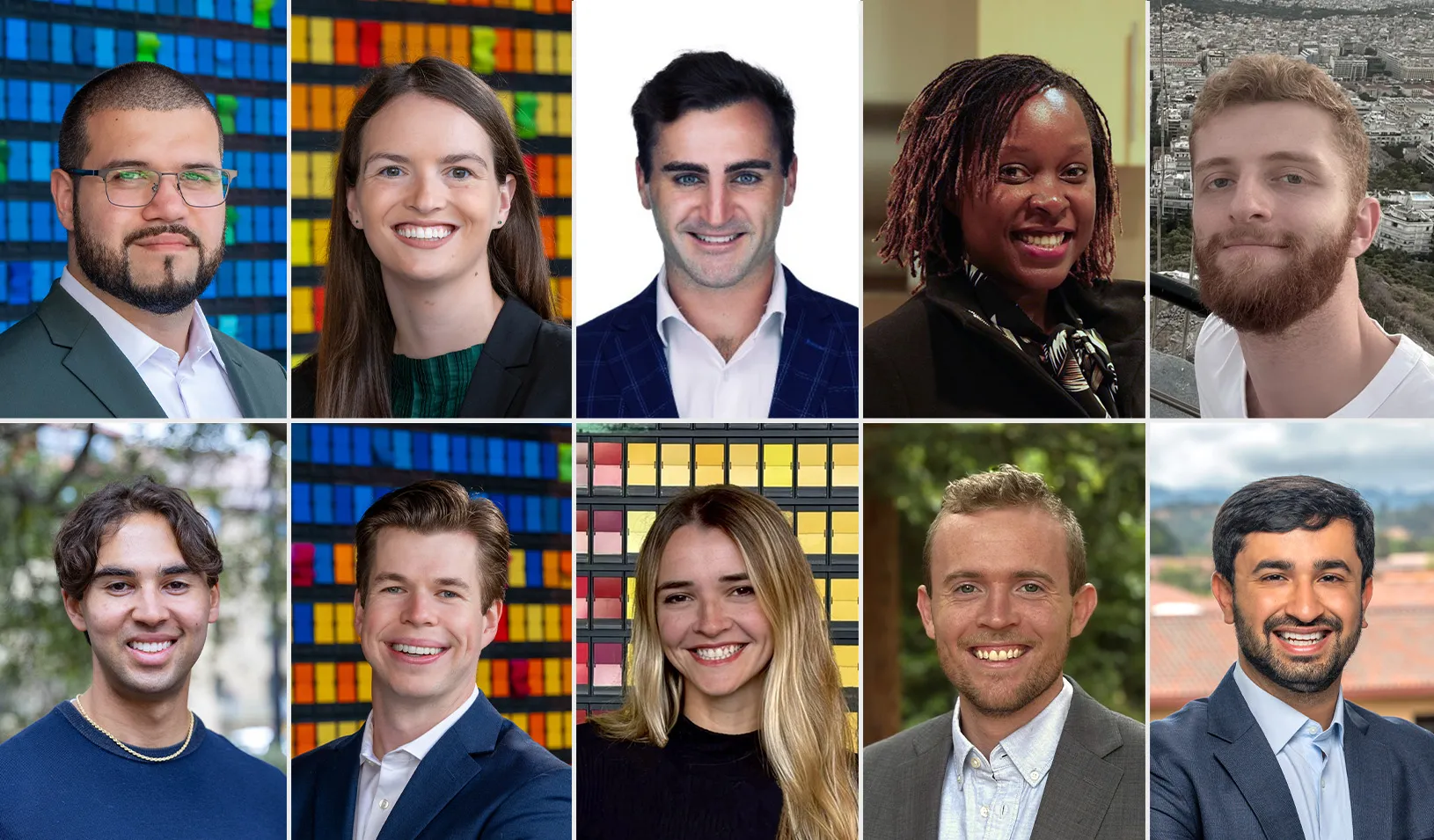
This year’s SIF-Social Entrepreneurship fellows:
-
Gleb Vizitiv, MBA ’26, Anton Health: Modern, free, and confidential sexual health care for all
-
Maxima Nsimenta, MBA ’26, Farmetric: Advancing agriculture with the power of data
-
Michael Kappaz, MBA ’26, Shire: The front door to life after service
-
Rahim Haliminski, MBA ’26, Kuwa: Financing the tools that build rural African economies
-
Thresa Skeslien Jenkins, MBA ’26 / MA Education ’27, Roots & Routes Montana: Unlocking potential and creating opportunity in rural Montana communities
SIF-Ecopreneurship Fellows
The 2026 SIF-Ecopreneurship fellows are targeting industries that have historically had high adoption barriers for sustainability solutions, but where these solutions are becoming more commercially viable due to rising demand for reliable energy, advances in AI and data modeling, and supportive policy and regulatory tailwinds. The EcoSIF cohort is well positioned to take advantage of these tailwinds due to their extensive expertise and passion for solving problems in their fields.
“The strongest SIF founders arrive on day one with deep domain knowledge, real conviction, and years already invested in understanding a complex problem that others are afraid to touch,” says Harsh Patel, MBA ’04, co-founder and managing partner of Wireframe Ventures and one of the judges for this year’s EcoSIF awards. “I’ve seen the program be catalytic in helping these students refine ideas into viable solutions for a problem they were always meant to solve.”
This year’s SIF-Ecopreneurship fellows:
-
Blake Jones, MBA ’26, Birdseye: AI for simpler operations modeling
-
Kyle Lottinville, MBA ’26 / MS Environment and Resources ’26, DualWell: Carbon-negative geothermal energy using CO₂ from industrial emitters
-
Renata de Marsillac, MBA ’26, Mar.OS: Fuel to Capital: The platform that makes global maritime decarbonization actually work
-
Shubhankar Mihir Seth, MBA ’26 / MS Environment and Resources ’26, Climitra: Powering clean steel through agricultural and forest waste
-
Will Salisbury, MS Materials Science and Engineering ’26, Latis Materials: Commercializing low-cost bio-based carbon fiber
SIF Prizes
The $20,000 SIF prize recognizes awardees’ ventures and leadership potential. In addition to the financial benefit, awardees receive personalized impact and entrepreneurship coaching, and access to workshops and a community of peer impact entrepreneurs.
This year’s SIF prize winners, Social Entrepreneurship track:
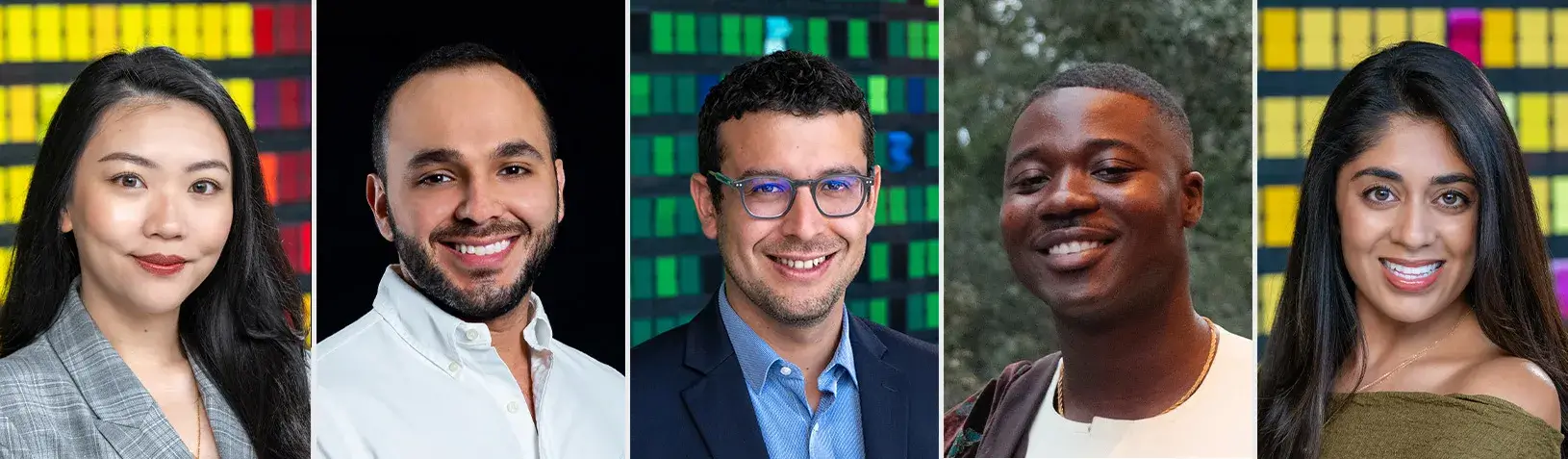
Left to right: Losania Vernanda Hedianto, Elman Amador, Santiago Paz Ojeda, Abu Rogers, Sal Rao
-
Abu Rogers, MBA ’25 / MD ’26, Motion Health: Patient-centric, data-driven health service to reduce post-hospitalization care gaps
-
Elman Amador, MBA ’26, Tribu AI: Democratizing access to clinical research
-
Losania Vernanda Hedianto, MBA ’26, NUOS Care: Protecting caregivers, empowering mothers, safeguarding families and children
-
Sal Rao, MBA ’26, Truebase: AI-powered expense intelligence driving financial sustainability for affordable housing
-
Santiago Paz Ojeda, MBA ’26 and MA International Policy ’26, Effora: Reliable public infrastructure that serves communities
This year’s SIF prize winners, Ecopreneurship track:
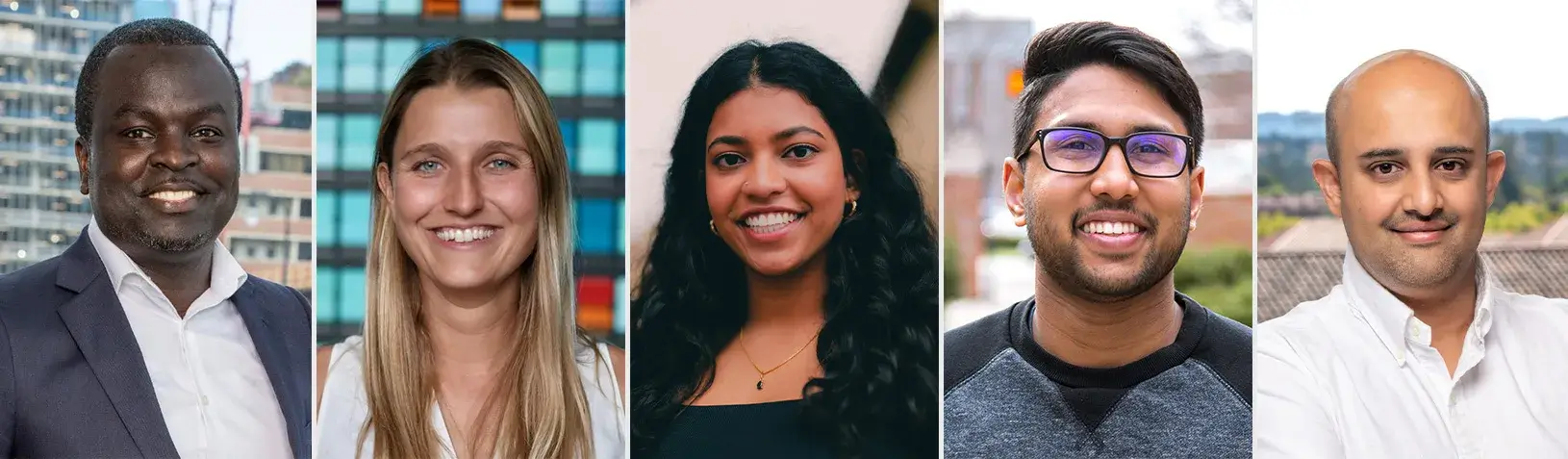
Left to right: Francis Appiah, Kathryn Bacher, Nivitha Mavuluri, Akshay Rao, Sai Rao
-
Akshay Rao, PhD Civil and Environmental Engineering ’26, E-Flex: Unlocking industrial energy flexibility through integrated design
-
Francis Appiah, MS Chemical Engineering ’26, Cetera Energy: From wastewater to low-carbon lithium
-
Kathryn Bacher, MBA ’26 / MS Environment and Resources ’26, Telluscope: Environmental risk intelligence for real assets
-
Nivitha Mavuluri, MS Earth Systems ’26, EcoCool: A solution for combating extreme heat
-
Sai Rao, MSx ’26, drillers.AI: De-risking the subsurface for geothermal
For media inquiries, visit the Newsroom.