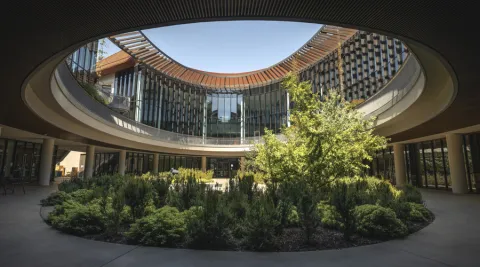
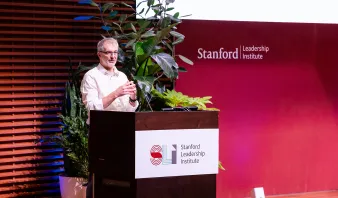
Overhead scene of the SLI at Stanford
Understanding Cultural Impact

Culture Initiative of Stanford Leadership Institute

Culture pervades how people think, feel, connect, and act — shaping everything from how children learn language to how leaders manage conflict, from how scientists innovate to how organizations adapt.

The Culture Initiative is an intellectual hub and collaborative community dedicated to advancing fundamental research on culture and translating it into real-world impact.

Leading Culture Research

With faculty affiliates spanning more than a dozen departments and schools across Stanford, the initiative brings together anthropologists, psychologists, neuroscientists, economists, sociologists, linguists, political scientists, biologists and computer scientists who combine a diverse toolkit of methods at the forefront of culture research – including years-long ethnographic immersion, AI-powered analyses of internet-scale language data, cross-cultural network experiments, brain imaging, and more. The initiative fosters the cross-pollination of perspectives and insights through thematic workshops, seminar series, graduate affiliates, and micro-grants for exploratory research.

You can learn more about the research of our affiliated faculty through the links below.

Journal Article | Migration and the Making of the English Middle Class

Vasiliki Fouka & Theo Serlin

National Bureau of Economic Research. January 2026.

Working Paper | Emergent Directedness in Social Contagion

Fabian Tschofenig & Douglas Guilbeault

October 2025.

Journal Article | Cultural Defaults in the Time of COVID: Lessons for the Future

Markus, H. R., Tsai, J. L., Uchida, Y., Yang, A. M., & Maitreyi, A

Psychological Science in the Public Interest. 2024

Journal Article | Half a century of quantitative cultural evolution

Marcus W. Feldman

Proc. Natl. Acad. Sci. U.S.A. November 2024

Journal Article | From Partners to Populations: A Hierarchical Bayesian Account of Coordination and Convention

Hawkins, Robert D., Franke, Michael, Frank, Michael C., Goldberg, Adele E., Smith, Kenny, Griffiths, Thomas L., Goodman, Noah D.

Psychological Review. July 2023.

Culture Initiative Graduate Student Fellowship

The Culture Initiative is launching the Culture Initiative Graduate Student Fellowship, a new award for PhD students whose research focuses on culture. 

Award
Each fellowship provides $5,000 to support graduate student research, with an emphasis on data collection efforts. Funds are intended to support the research process (e.g., data collection, including fieldwork, and/or computing resources) but may not be used for conference travel or dissemination purposes. Beyond financial support, the graduate student fellowship also includes a mentoring lunch with faculty from the Culture Initiative, a poster presentation at a Culture Initiative Capstone Event, and other networking events.

Eligibility
The fellowship is open to Stanford PhD students. Applicants’ proposed research should fit within the Culture Initiative’s mandate: advancing fundamental research on culture and translating it into real-world impact.

Application
Applications can be submitted here are due by 11:59 PM on October 14th, 2026. Decisions will be announced in early November 2026.

Culture Events and Opportunities

Explore culture related events and opportunities at Stanford.

Europe from Its Margins: Georgia and the Making of Modern Europe

October 2, 2026  |  Event

Europe is commonly narrated from its historical centers. Political ideas, cultural innovation, and modernity itself are assumed to originate in places such as Paris, London, or Berlin before spreading to the continent’s margins. Georgia usually appears in this narrative, if at all, as a distant periphery whose history merely reflects developments elsewhere.

This lecture argues that such a view is historically misleading. Rather than treating Georgia as Europe’s edge, it proposes to read it as one of the places from which Europe’s history becomes newly intelligible. Revisiting the invention of “Eastern Europe,” Georgia’s democratic experiments of the early twentieth century, the multilingual urban culture and avant-garde of Tbilisi, and the shared but uneven legacy of 1989, the lecture examines how supposedly peripheral experiences challenge established narratives of European modernity.

────────────────────────────────────────────────────────────

Social-meaning Sources of Hermeneutical Injustice

October 2, 2026  |  Event

Based on work in McCready and Henderson on the reliability of testimonial evidence in a social meaning setting (Henderson and McCready 2025), we build a formal pragmatic model of hermeneutical injustice in the Flores case, which produces an improved account of its pragmatic source. It also links hermeneutical injustice to testimonial injustice, making the latter prior to the former. This is an important result because it contradicts previous literature, which takes hermeneutical injustice to lead to testimonial injustice, rather than the reverse.

────────────────────────────────────────────────────────────

Human-Centered AI for Social Impact

October 7, 2026  |  Event

The Stanford Institute for Human-Centered AI and the Hasso Plattner Institute of Design at Stanford join forces to offer an engaging educational experience that integrates human-centered AI development with human-centered design. The program equips social-sector leaders with tools to create AI-driven solutions that are both innovative and responsible.

────────────────────────────────────────────────────────────

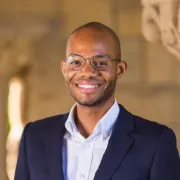
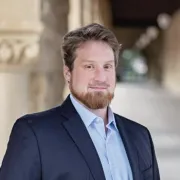
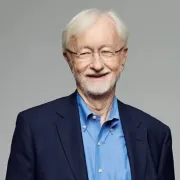
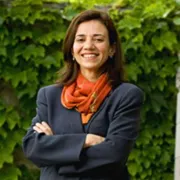
Faculty Co-Directors

The John H. Scully Professor in Cross-Cultural Management and Professor of Organizational Behavior
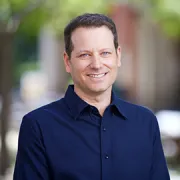
Amman Mineral Professor of Organizational Behavior

Associate Professor of Organizational Behavior
Assistant Professor of Organizational Behavior

Culture Initiative Affiliates

Senior Associate Dean for Social Sciences, Stanford Federal Credit Union Professor of Economics, and Senior Fellow at the Stanford Institute for Economic Policy Research
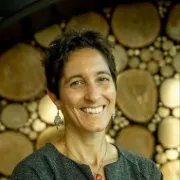
Senior Fellow at the Freeman Spogli Institute for International Studies
Associate Professor of Communication
Assistant Professor of Sociology
Assistant Professor of Environmental Social Sciences
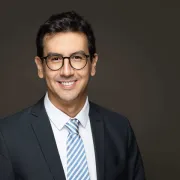
Assistant Professor (Research) of Psychology

Senior Lecturer King's College London
Senior Fellow at the Freeman Spogli Institute for International Studies, Emeritus
Burnet C. and Mildred Finley Wohlford Professor
Bing Professor of Human Biology, Associate Professor of Political Science and Senior Fellow at the Stanford Institute for Economic Policy Research
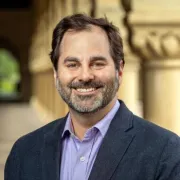
Benjamin Scott Crocker Professor of Human Biology
Roger and Cynthia Lang Professor
Executive Director & Senior Research Scientist
Assistant Professor of Linguistics
Professor of Environmental Social Sciences
James T. Watkins IV and Elise V. Watkins Professor
Albert Ray Lang Professor
Davis-Brack Professor of the Behavioral Sciences
Professor of Education
The Frank E. Buck Professor of Management
Senior Research Scholar
Senior Fellow at the Hoover Institution
Center on Democracy, Development, and the Rule of Law
Dunlevie Family Professor
Assistant Professor of Environmental Social Sciences
Holbrook Working Professor of Price Theory, Department of Economics
Professor of Sociology
Assistant Professor of Computer Science
News from the Institute

School Stories & News Opensearch
May 29, 2026
Written

Stanford Leadership Forum Showcases Lessons from the Global to the Local

The Stanford Leadership Institute brought together leaders from business, government, and academia to share ideas for navigating a changing world.
May 28, 2026
Written

Stanford Leadership Institute Focuses on Navigating an Increasingly Complex World

With foundational support from Diane and Andreas Halvorsen, MBA ’90, and other donors, the Stanford Leadership Institute will equip leaders to navigate the forces reshaping business and society.
May 11, 2026
Written

The New Business of the Environment

Behind the rhetoric, environmental entrepreneurship is advancing through incremental change.

We prepare leaders to navigate and shape the complex forces changing our world.