Quote
I’m looking at how we can use AI to combat disinformation and think more critically about information we see online.
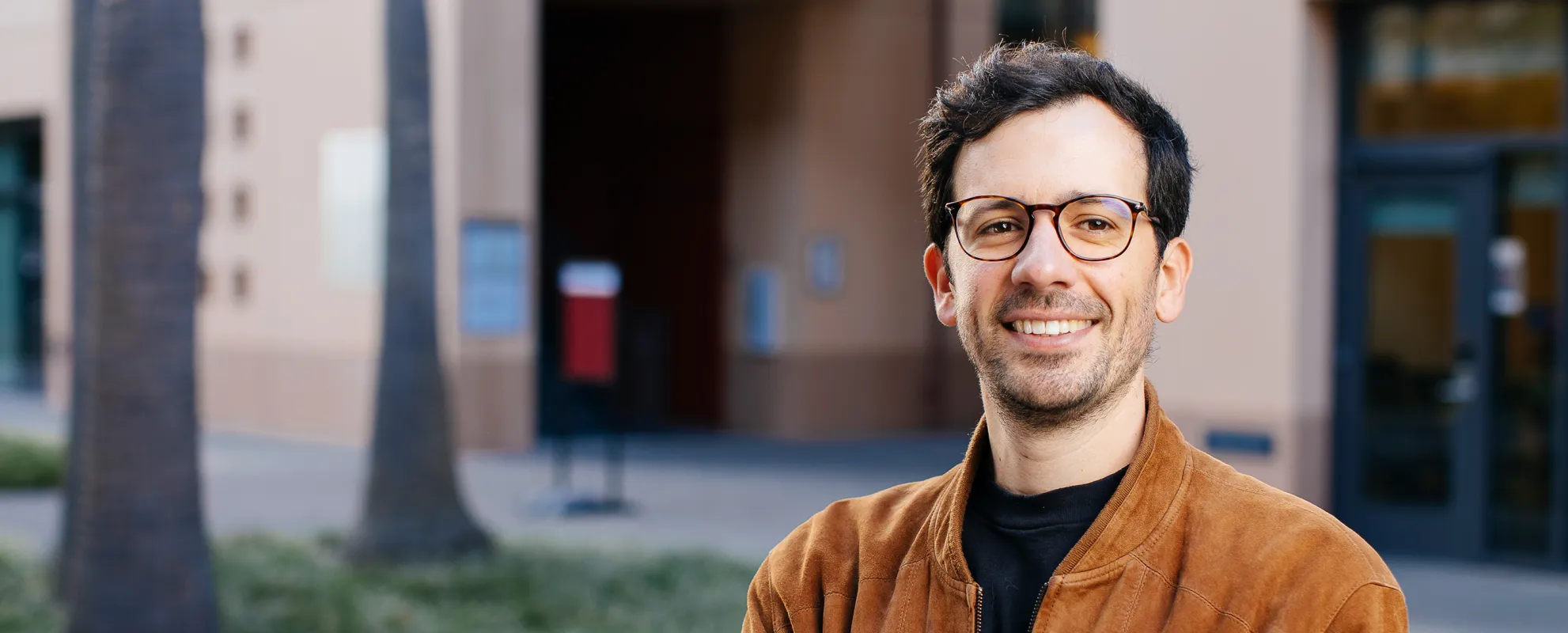
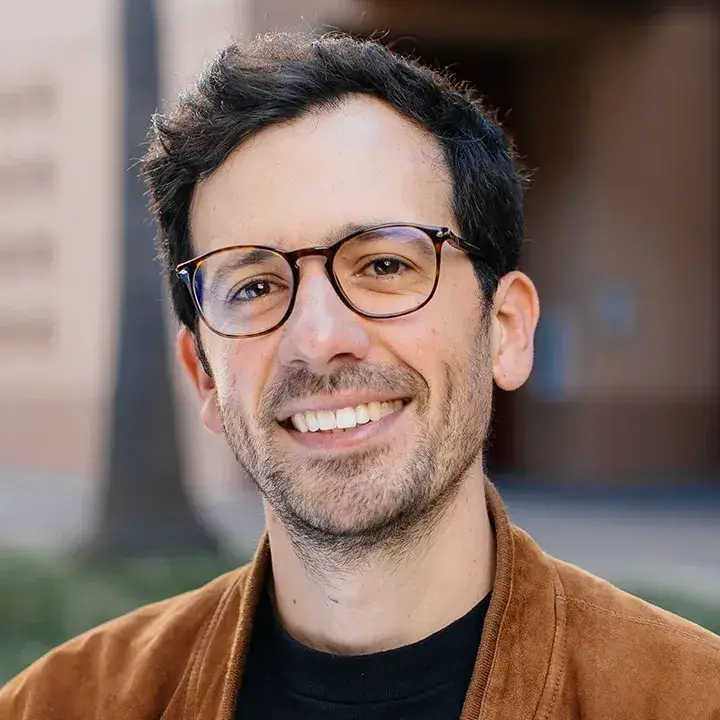
Stanford MSx student Alessandro Balzi’s career pivot came five years ago after meeting the Peruvian human rights lawyer who eventually became his wife.
“Josefina asked me a very powerful question: What do you want your legacy to be?” recalls Balzi, who back then was an applied AI manager at Deloitte. “I realized I want to be a person who fought to make our society a better place. That was life-changing.”
That simple question eventually brought the couple to Stanford — she to the Knight-Hennessey Scholars Program and the International Legal Studies Program at Stanford Law School, and Balzi to Stanford Graduate School of Business, where he’s developing AI tools to help media consumers distinguish credible information from disinformation.
I had been working in consulting at Deloitte, and I got to a point where I wanted to pivot. I wanted to do something entrepreneurial and use my AI skills. I decided to pursue a degree at Stanford so I could get the skills and knowledge to make a positive impact on the world. The AI ecosystem made the program a natural fit for me.
I’m still in the exploration phase, but what hasn’t changed is my commitment to use responsible and safe AI to generate that impact. The GSB is helping me learn about entrepreneurship and the steps to success. Whether it’s starting a new venture or joining a company, I’ll definitely advance my career in AI.
I’m looking at how we can use AI to combat disinformation and think more critically about information we see online. Instead of AI thinking for us, could we use it to enrich our critical thinking? Also, how do you make sure we understand how these AI systems make decisions? At the moment they’re just big black boxes and no one knows what’s really happening inside them. If we can’t understand how they make decisions, we can’t explain their decisions. This idea of interpreting and explaining an AI system is something I’m passionate about.
It’s impeding people from making good decisions about important issues. It’s difficult to know what’s true or false, and that’s the basis for making good decisions. Think about the Covid-19 pandemic with all of the disinformation that spread about vaccines. That made it difficult for people to decide whether or not to get vaccinated.
There’s also the problem of polarization. Whenever you see news that’s not real, it tends to propagate a specific narrative, much like propaganda. That polarization results in you living in your bubble and processing information that only serves your own bias. That’s partly why we’re living in a polarized society.
While AI is creating some harm, it also has the potential to be a great catalyst for society. The most talented AI engineers want to build unicorns, and they’re focused on building profitable companies and on automating business operations. But we need more AI talent working on solving societal challenges and advancing human rights. AI is so powerful and important; I want to help make sure we use it responsibly and safely.
There are, but those ways are not easy. The first problem is that the average media consumer processes information quickly without thinking about what they’re seeing. The second challenge is convincing people to cross-check. People can do that, but it’s time-consuming. I’m researching how to contextualize information better and make that context available quickly so users don’t have to do the extra step of cross-checking. I’m working on that problem with the Stanford Institute for Human-Centered Artificial Intelligence.
I’m taking a course called Acting with Power, and it challenges you to rethink the notion of power. When we think of power, we think of somebody strong and maybe a bit of a jerk. But the course teaches you about power in a different way and how to project your power. That was a new concept to me. It’s very challenging, but I’m loving getting out of my comfort zone.
It’s been an incredible experience to get to know my cohort. I love learning about different cultures and perspectives, and my international classmates have taught me so much. This diversity in worldviews will enrich any endeavor I choose to pursue next.
I want to be known as the person who focused on AI for social impact and to make the world a better place. On the personal side, I’d like to be remembered as a good person who wants to help others and does the extra work to be a good friend.
“Do the Right Thing” by Spike Lee. It’s personal for me because we used to live in Bed-Stuy in New York, just a couple of blocks from where the movie was set. It makes you reflect on the fact that the world is not black and white, and how difficult it is to know the right thing. That’s a topic we’ve discussed in some of our leadership classes at the GSB.
Photos by Elena Zhukova