Quote
Every day at Stanford, I have the opportunity to work with founders and investors and take courses to help me better understand the startup ecosystem.
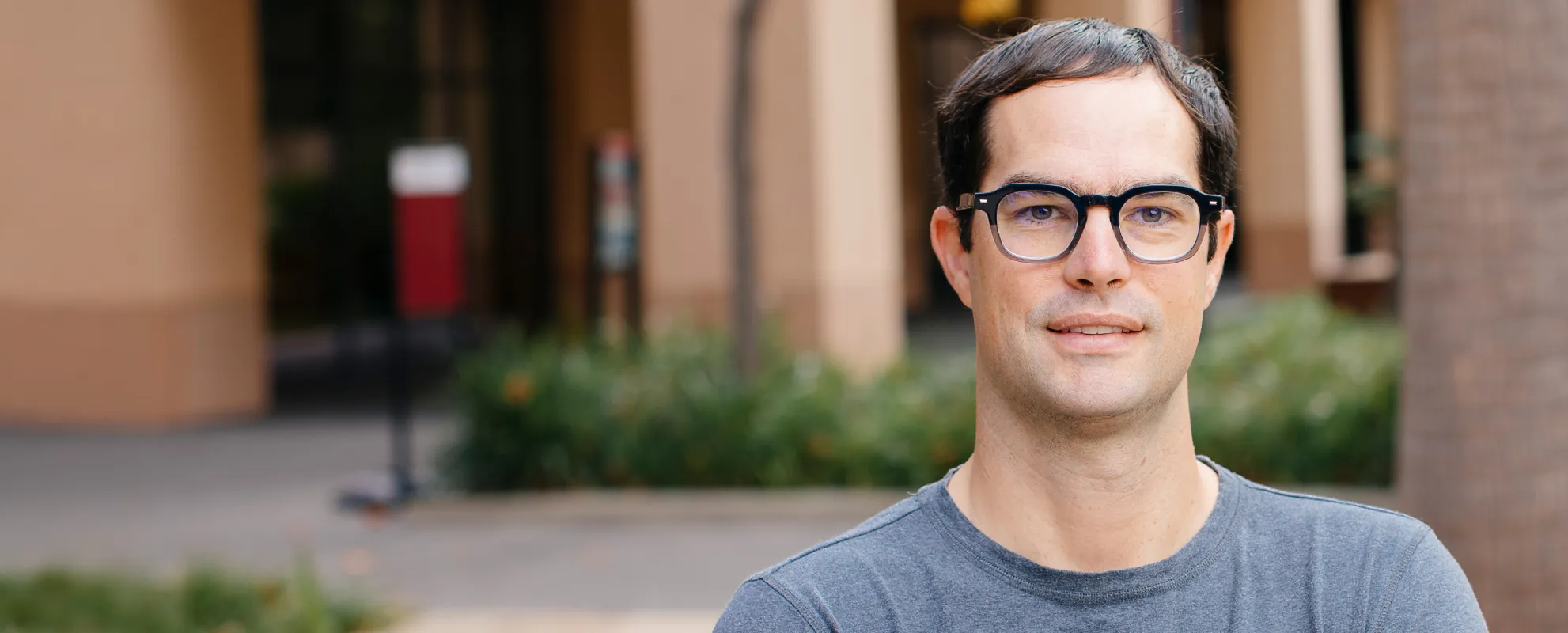
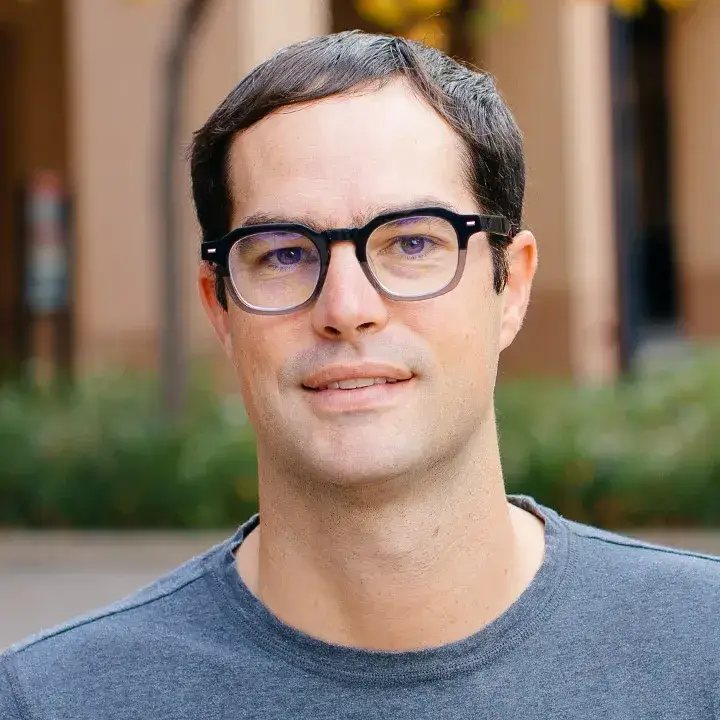
Dan Nelms left his job as head of AI Launch Governance & Operations at Google to pursue the business and leadership skills he’d need to build a business from the ground up. Though he had many ideas for what that business might be, he wanted more exposure to the startup environment and entrepreneurial thinking that Silicon Valley had to offer.
“I was very clear when I left Google and came to Stanford that I wanted to start a business and scale it,” says Nelms, a former basketball standout at Davidson College who played semiprofessionally in Ireland. “I’ve used business school to explore all sorts of ideas.”
His coursework and educational direction reflect his professional goals. Nelms is currently focused on starting a tech business that combines his deep knowledge of online scam prevention with an innovative solution that would offer victims insurance to cover any losses they incur if the technology doesn’t work.
What was your role at Google prior to coming to Stanford GSB?
I was focused on understanding which responsibility risks were applicable for new AI products and features released companywide. I worked on mitigating those risks, measuring and evaluating whether the risk has been mitigated, and giving responsibility input into launch decisions. My team led the pre-launch process for Responsible AI, including the design of the company-wide process and integration. We also led operations and governance for about 1,000 product launches and new features within existing products.
Why did you leave your position to enroll in the MSx Program?
Before Google, I worked on two bootstrap startups, and I really enjoyed that experience. I always wanted to go back to working with startups. With the explosion of AI and the need for entrepreneurs, I feel well-positioned, with my Google experience and Stanford education and network, to build a company that is impactful and challenges me in a new way.
Were there specific skills you hoped to develop through the program?
I worked for 13 years in the same part of the same company. While the Trust & Safety department evolved many times, I recognized there were aspects to business that I hadn’t been exposed to in the corporate world and thought the GSB could help round out my skill set and prepare me to be an executive for a growth startup.
I had lived in San Francisco most of my years, but devoted most of my time to Google and my family and had not plugged in deeply to Silicon Valley’s startup and investment ecosystem. Every day at Stanford, I have the opportunity to work with founders and investors and take courses to help me better understand the startup ecosystem.
What type of startup are you interested in joining or founding?
I’m interested in scam detection and prevention, which is a growing problem. I want to make an impact on a problem that affects one in four adults globally who lose money to a scam each year. Banks and insurance companies are not reimbursing authorized transactions, and most scams trick you into making authorized transactions. It’s not until afterward that you realize it’s a scam. By that stage, the money is gone, and you’re typically not going to get it back. Even if you have cyber-insurance bundled with homeowners’ insurance, the actual losses usually are excluded from coverage.
I think there’s an opportunity to provide a protection product that identifies scams across applications on devices and notifies people when a scam is detected. There’s also an opportunity to add insurance that actually covers losses. By combining the risk reduction with insurance, we could protect consumers.
What’s the biggest risk of deploying AI irresponsibly and why are you so committed to make sure that doesn’t happen?
As a society, we’re taking on a lot of unknown risks. AI products are powerful and will become exponentially more powerful, so there’s no question AI has the potential to transform our lives and improve every aspect of society in unimaginable ways. The concern is that everybody is incentivized to move fast. This is true at every level for businesses. If you don’t adopt AI, you’re going to be left behind.
I’m not saying we shouldn’t progress, but a lot of risk is piling up, including major security risks, alignment risks, and privacy risks. We hope the missteps are not catastrophic, but the true answer is that we just don’t know, and I don’t think anyone is slowing down enough to confidently answer that question.
What has been your most challenging class at Stanford GSB so far?
Financial Statement Analysis. I had studied economics, but I’d never worked in an accounting or finance role. In class, we were given 100-page quarterly reports and asked to analyze company financials. The professor taught us how to derive meaning from the data, understand incentives behind what you reveal, and read between the lines. It was definitely the most work I put in on any GSB course.
How has what you’ve learned in business school helped prepare you for your career goals?
We have many opportunities to attend incredible events and speaker sessions on campus. Learnings from those events have helped me formulate a forward-looking hypothesis on where I’m going in my career as well as the different paths to success as a founder. I’ve also spent a lot of time using startup-related resources — those aren’t something you have access to at just any school.
Who are your most influential role models and why?
My grandfather was an electrical engineer, and my dad was a mechanical engineer. They were both tinkerers, and their ingenuity, resourcefulness, and self-reliance inspired me to see problems as opportunities rather than things that get in my way. My grandfather and father owned a place in a 100-person fishing village on the Gulf Coast surrounded by swamp. There were no grocery stores or restaurants –– it was just us and the sea. They designed the home, the dock, the sea wall, and rebuilt it after every storm. That taught me how to problem-solve and be self-sufficient.
Even with a demanding job, my dad was always there for us. He didn’t bring the work home. He taught me how to balance many things at once. I was an athlete in school, I played basketball in Ireland while I worked at Google, and I have three kids at home. I’ve learned how to have balance in my life even if I’m under pressure.
Given your love of basketball, which NBA player’s poster would you put on your wall?
That’s an easy question. Steph Curry was my classmate and teammate at Davidson. He’s done amazing things in the NBA. When I lived in San Francisco before Stanford, we went to a lot of Warriors games and cheered on Steph.
Photos by Elena Zhukova