Quote
The thing I’ve benefited from the most is the incredible connection to people in my cohort in the MSx Program.

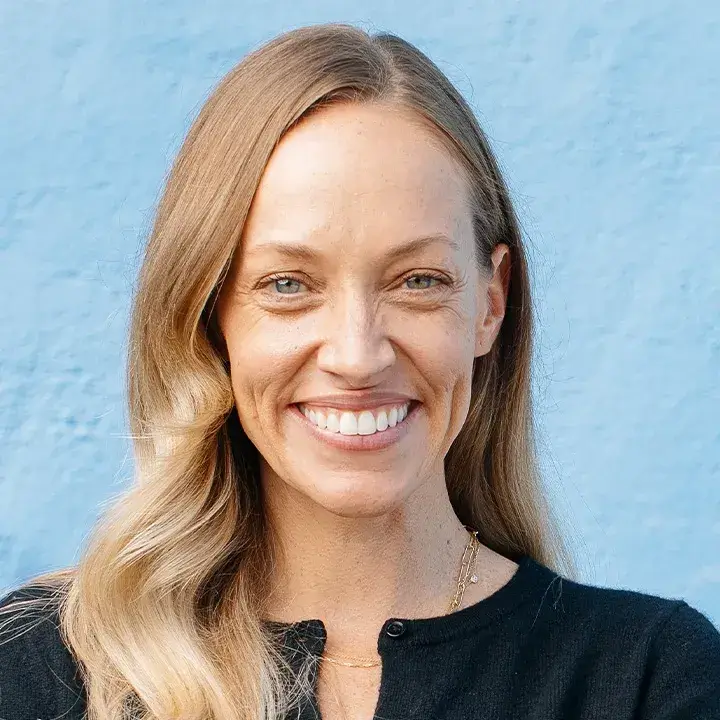
After earning degrees in bioengineering and biomedical engineering at UCLA and UC Irvine, Jessica Olsen returned to her native Fresno and spent a decade working at the San Joaquin Valley Air Pollution Control District.
“Although it sounds like an environmental agency, the San Joaquin Valley Air Pollution Control District is actually a public health agency because of the way air pollution impacts our health, especially that of sensitive populations,” says Olsen. She appreciates how that role increased her knowledge of the industry and the many challenges facing the environment.
While working for the district, Olsen directed the regional administration of a statewide air-protection program that reduced emissions by 16,000 lifetime tons in four San Joaquin Valley communities by investing more than $140 million in buying more efficient school buses, replacing diesel trucks with electric trucks, enabling homeowners to replace gas-powered tools and vehicles with electric alternatives, and upgrading air filtration systems in homes.
Olsen decided to pursue an MSx degree because of Stanford’s emphasis on social innovation and because she believes she can have even more impact by switching to the private sector.
The air in Fresno can be poor at times because it’s impacted by specific topography and meteorology. Many residents have health risks during periods of bad air quality due to location, age, and health conditions.
For one particular project, our original focus was on reducing vehicle emissions because we knew it would help the air quality the most. But community input pushed us toward solutions residents could see and feel. In response, we planted greenways and trees in addition to more traditional projects, addressing both environmental impact and community priorities.
As part of this project, I learned that approaching a problem like a scientist might not always be the right approach. As a scientist, I might not have spent money on trees. I probably would have recommended an industrial solution. Listening to all the voices in the community changed my approach. When working with communities, it’s important to consider all solutions and perspectives to determine the best answer. Business school is reinforcing this approach to solving problems.
I joined the GSB Impact Fund as an investor on the Justice Deal Team. As part of the program, I learn how to invest with guidance from professors and the Center for Social Innovation. Venture capital is something I never considered as a career, but it’s fascinating to come to the GSB to explore interests and build skills in a safe environment. You’re encouraged to dip your toe in the water and try anything.
I can have more autonomy and be more agile. I could have a hand in a lot of different things that still, overall, achieve the justice work I want to do. I’m currently exploring how fashion waste affects underserved communities in Ghana, and that’s not something I could explore if I was at a government agency.
The thing I’ve benefited from the most is the incredible connection to people in my cohort. With a cohort of approximately 80 students, you get to know all of your classmates and professors. I’ve also benefited from the incredible resources the MSx Program offers. You work with a career coach, an executive coach, and a communications coach. Each one has provided me with invaluable insights about my strengths or the opportunities available at Stanford. The level of support is exceptional, and it’s available to the extent that you choose to take advantage of it.
Coming from a non-business background, Microeconomics was my most difficult course. I struggled with the concepts and the language, but I grew significantly through the experience.
Fiscal Policy with Keith Hennessey was very relevant to my interests. Broadly, I learned how fiscal federal policy works. More specifically, I learned how to present in class and make a point very quickly and succinctly. Both the knowledge and skills will help me succeed in my career goals.
Being part of a vibrant community and one that supports my family, including my two kids, is important to me. When we moved into a new neighborhood several years ago, I started a running club that grew so large we had to start coordinating via Facebook. Along the way, I built friendships and created a running family.
That sense of belonging is one of the reasons I love the GSB. We’re all one community that supports and looks out for one another and our families.
Photos by Elena Zhukova