Quote
My North Star has been finding a role that enables me to give back to Malaysia and society. That has guided the arc of my career.
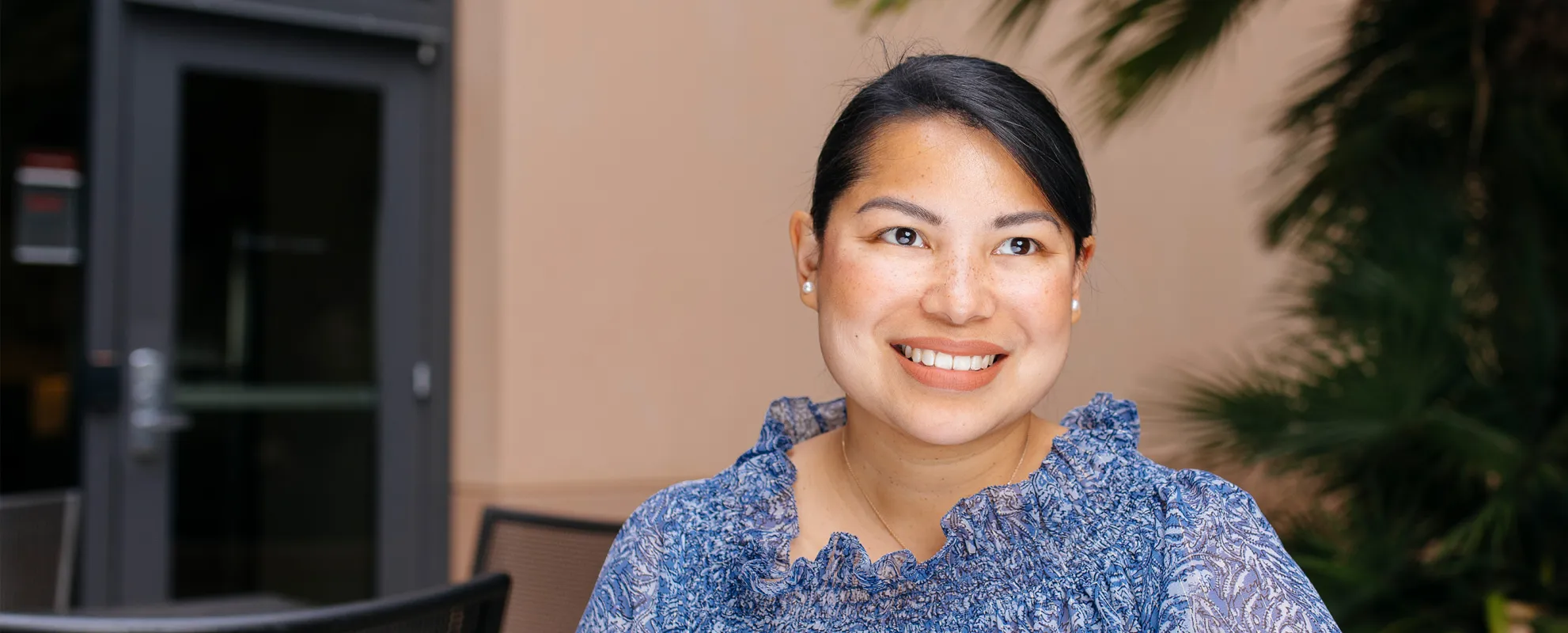
Natasha Su Sivarajah felt the pull of public service from early childhood, inspired by her family’s dedication to her neurodivergent older brother, her mother’s determination to help others like him, and her father’s role as a doctor in their Malaysian hometown.
“Our parents taught us to be grateful for what we have,” says Sivarajah, whose skills as an actuary led her to a leadership role with Malaysia’s sovereign wealth fund, Khazanah Nasional Berhad. “They really shaped my worldview to that of service to society.”
She is maintaining that service to society approach with her own family and their goals. After working in the Malaysian public sector, focusing on science, technology, and health, her husband has turned his attention to sustainability projects for their country, mainly with solar power. They’re also raising a five-year-old daughter who has her own special loyalty to Stanford.
My childhood was defined by my older brother because my mother spent a lot of time setting up schools for neurodivergent children, and my sister and I also spent a lot of time looking after him and involving him in our social lives. I was embedded in the lives of special needs kids, and that experience taught me empathy and the importance of community at a young age.
“Ikigai” is about finding the one thing that I should be doing that’s a confluence of what I love, what I’m good at, what the world needs, and what I can be paid for. My North Star has been finding a role that enables me to give back to Malaysia and society. That has guided the arc of my career. What I love is driving impact and development and nation-building. What I’m good at and can be paid for is the technical skills I developed as an actuary. What the world needs is nation-building, especially in matters of food security in a time of climate change and a strained healthcare system, while maneuvering geopolitical complexities. Those are the challenges I’m exploring at Stanford.
I pursued a career as an actuary in the insurance space. I’ve been taking that expertise and bringing it to the fund. For example, I was involved in investing into insurance companies and “insurtech,” based on my expertise from my previous role as actuary. We’re trying to convert the income from our legacy investments and reinvest that into nation-building projects. The way I see it, it’s all part of the bigger mandate of impact.
Malaysia is a middle-income country with good institutions and a stable economy. We’ve been lucky with our semiconductor industry, but the world economy has been upended with tariffs and intensifying geopolitical competition over AI, semiconductors, and critical technology infrastructure. There are a lot of opportunities we could grasp if only we knew what positions to take and how to capitalize. It’s crucial that we do things when the opportunities present themselves, especially with the geopolitical tensions. We’re trying to make full use of these volatile times and leverage Malaysia’s existing strengths.
Currently, the fund is working on improving the productivity of mid-tier companies. We’re also trying to develop the Malaysian venture capital ecosystem. We’re also focused on capitalizing the Malaysian semiconductor manufacturing space and ensuring we take advantage of the AI megatrend to maximize the benefit for Malaysia.
We can all feel the effects of climate change on lives and businesses. I got more involved in Khazanah’s sustainability initiatives because the central bank and the securities commission are trying to get companies to embrace and drive the Net Zero climate change agenda. My role involved identifying ways to connect the joint committee’s initiatives with what we were observing on the ground across our companies.
Definitely. I became increasingly involved, attending several working sessions — including one focused on developing a voluntary carbon exchange market for Malaysia. That experience gave me insight into the core challenges shaping voluntary carbon markets: the balance between supply and demand. On one hand, Malaysia has an abundance of nature-based resources, such as our forests, which could generate significant value through carbon credits. Yet, this potential has remained largely untapped because it requires the introduction of strong policies. On the other hand, stimulating and aggregating demand for carbon credits is equally challenging. We need to find ways to incentive or mandate for organizations to pursue decarbonization.
I wanted to broaden my scope and have a career that was more targeted towards impact. Malaysia has a unique position in the global value chain, and unique problems, and that spurred me to pursue the Master of Science in Management degree.
Stanford GSB has been quite magical and fascinating. The beauty of Stanford GSB is that people are so accessible, and it’s easy to have meaningful and enriching conversations with anyone. I’ve been introduced to amazing leaders at the Stanford Doerr School of Sustainability and the Southeast Asian Program. I’m also taking a class called Climate Finance in Private Markets. I’m trying to see if there’s a role that can be crafted for Malaysia and trying to find alignment between what’s happening here at Stanford and what I want to do.
I’m also taking a class called Leading Strategic Change in the Healthcare Industry. I’m learning about the healthcare landscape in the U.S. and finding parallels with the Malaysian healthcare industry — the power dynamic between providers, insurance companies, pharmaceuticals, and newcomers in tech and telemedicine. The next step is to understand public financing issues such as Medicaid and Medicare in the U.S. and the drivers behind skyrocketing private insurance premiums. We know what needs to be done, but there’s significant lobbying power that makes change difficult.
When I joined Khazanah, I had two managers who inspired me. One has always reminded me to focus on the big picture and encouraged me every day to dream big. Another showed me how to be an empathetic leader and show up for colleagues. Their influence is helping me approach life after Stanford with a blank slate and find a goal that would make me jump out of bed in the morning.
I came to campus with a couple of ideas — climate and healthcare. At the same time I’m trying to understand the geopolitical landscape, and how to impact Malaysia at this point in time. And I’m also thinking about how we can drive innovation in some of our legacy companies and future-proof them from disruption.
I sing with the Stanford Memorial Church choir every Sunday. It’s very rewarding and fulfilling.
The playground in front of our house. We live in Escondido Village, where every cluster of houses has its own playground. She creates scenes and plays different characters within that scene; the playground is her inspiration.
Photos by Elena Zhukova