Quote
There’s no better place than the GSB to learn about AI, leadership, and entrepreneurship.
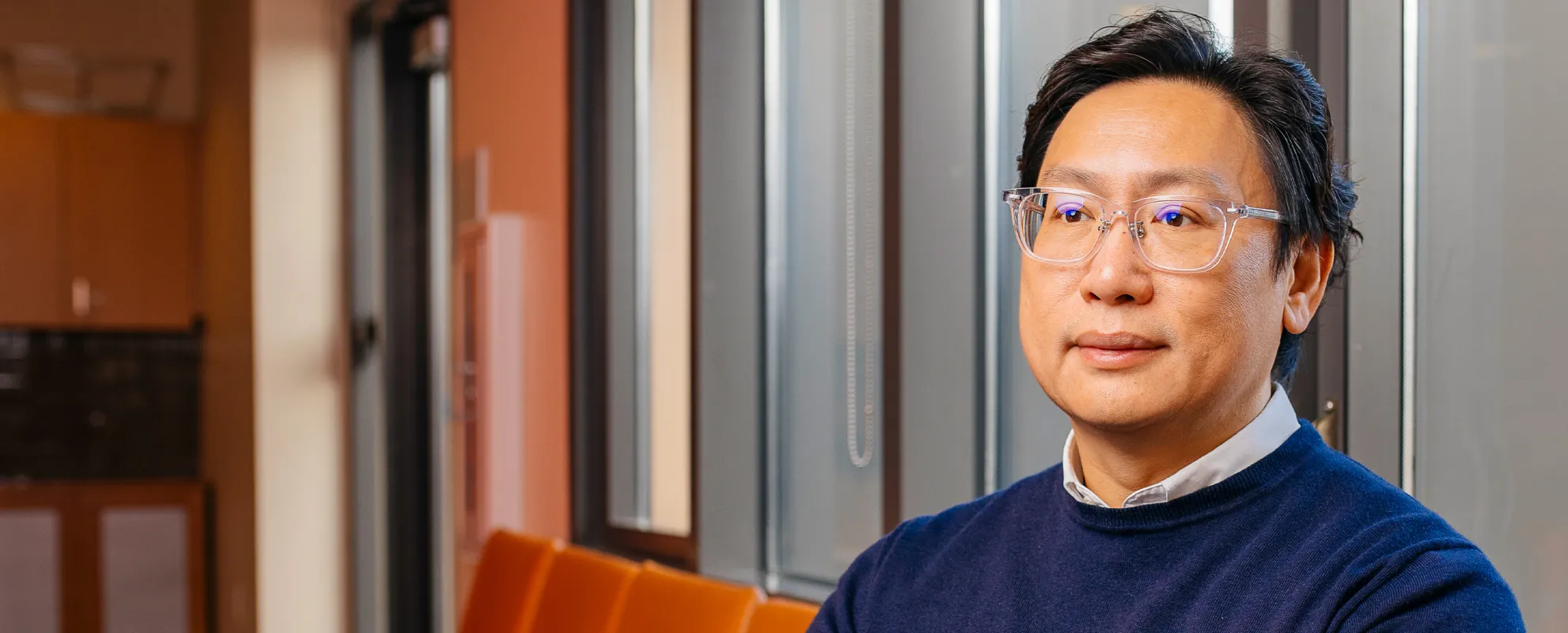

Wilson Wong had been running a successful Asia-focused hedge fund for a decade when he decided to liquidate the fund, return his investors’ money, and enroll in Stanford GSB’s year-long MSx Program to better understand how artificial intelligence might help him in his career.
“As an investor, the internet bubble was an amazing time,” says Wong. “I was at Fidelity Investments as the tech team leader in Asia, and I was fascinated by what was happening. I learned a lot during the bubble, and I made a note to myself to pay close attention to paradigm shifts in the future.”
Wong sees parallels with what’s happening now in the world of artificial intelligence. “I knew it was big, and I wanted to understand AI, and use AI tools to become a better investor.”
I saw the MSx Program as a once-in-a-lifetime opportunity to learn about AI. When I thought about where I could learn AI, I was immediately drawn to Silicon Valley and Stanford. Then I realized on top of AI, soft skills are critical to business success. There’s no better place than the GSB to learn about AI, leadership, and entrepreneurship.
My two sons are in college at the University of Chicago, so they think it’s pretty cool that we’re all in school at the same time, learning about the next big thing.
Definitely. In undergrad, I studied business and finance, but I wasn’t trained to be a leader. I had solid quant skills, but I needed to improve my communication, negotiation, and marketing skills. At the GSB, I’ve learned skills to become a well-rounded leader.
In the past, when I tried to explain my fund strategy to potential investors, I would start by telling them their approach was wrong and then jump into educating them. After taking a marketing class at the GSB, I’ve learned how to engage my audience, craft my messaging, and make a better argument. That was an epiphany. I wish I’d known that earlier.
Strategy Beyond Markets focuses on strategic interactions in markets with politicians and governments. The topic is challenging for someone with a non-U.S. background, and I spent a lot of time studying. Even though it was difficult, it was exceptionally interesting and relevant.
Organizational Behavior gives you insight into corporate dynamics, how to run meetings, how to share information, and what kind of biases we have. I’ve learned how to assemble a team to try to get unbiased discussion, and how to approach conversations with an open mind. What I learned in that class, I will put into practice in my future career.
I’m currently doing an independent study, focused on how AI will transform the asset management industry. That’s exactly what I wanted to understand when I applied to the program. Specifically, we’re trying to understand how the large language model and machine learning really impact fundamental research. I think the findings from this project will help me become a stronger investor over time, which in turn will enable me to create a positive impact through my philanthropy efforts.
People often use the price-to-earnings ratio, but I think the price-to-trust ratio is critical in investing. You want to find companies that act long-term for the benefit of shareholders and stakeholders, including employees, suppliers, and customers. By the same token, investment managers who consistently act with a long-term mindset toward employees, investors, and all counterparties, including service providers, are the ones who ultimately build trust and succeed.
The Bible. Christian beliefs help me be a good investor because I’m anchored by strong values. In times of market volatility, I always have a foundation to find my bearings.
Because there are so many Asians in California, it’s very easy to feel at home. I love the weather and the Stanford campus, and I spend lots of time walking and enjoying the outdoors with my wife.
Be thoughtful. AI will change the future, but you have to discern good and sustainable businesses from hype.
Photos by Elena Zhukova