August 13, 2026
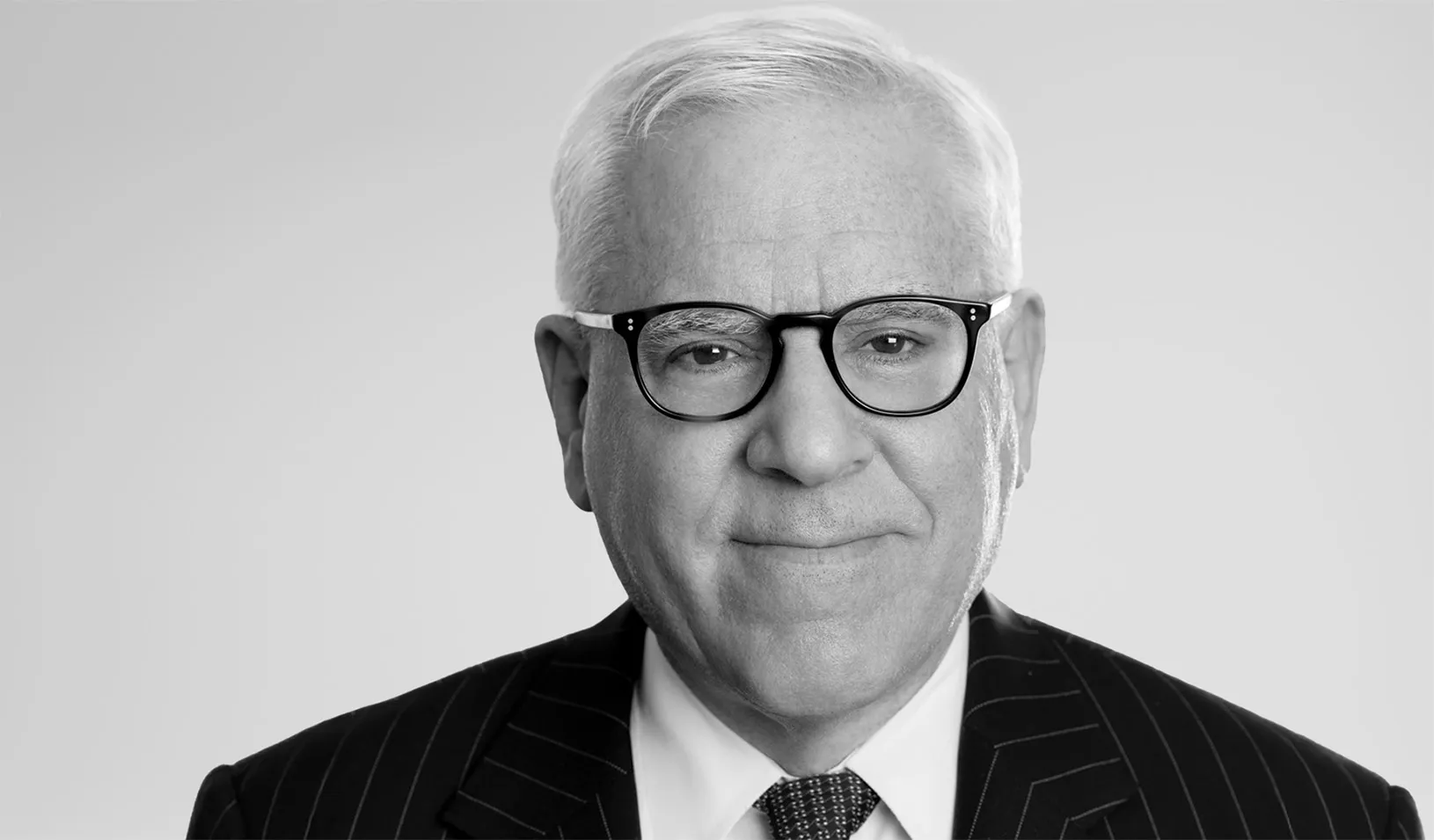
| by Michael McDowellDavid Rubenstein, co-founder and co-chairman of the Carlyle Group — one of the world’s largest private equity firms — was the first person in his family to go to college. Born to blue-collar parents in Baltimore, Maryland, he didn’t set out to be an investor. “I was always interested in politics,” Rubenstein tells Sanil Rajput, MBA ’26, in a conversation recorded live at Stanford Graduate School of Business. Though he got his JD from the University of Chicago, “I wasn’t really interested in the law and the law wasn’t interested in me,” he says.
A roundabout series of events resulted in a job advising Jimmy Carter; that role, in turn — and the abrupt end of it when Carter lost the presidency to Ronald Reagan in 1980 — would eventually lead him to private equity.
“I struggled for a while to get a job,” Rubenstein recalls. “Because when you’re out of power in Washington, you’re a dead man.” After reading that a former Treasury secretary had turned $1 million into $80 million in 18 months on something called a leveraged buyout, Rubenstein co-founded Carlyle in 1987.
“ ‘When you’re getting kicked out of town, get out in front and pretend you’re leading a parade,’” he says, quoting former Illinois Senator Everett Dirksen. “What does that mean? It means take advantage of the situation you find yourself in. If you’re getting kicked out of town, say you’re leading a parade. If you’re in Washington, D.C., say you understand companies heavily affected by the federal government better than the guys in New York do.”
Today, Carlyle manages several hundred billion dollars and has offices in more than 30 countries. Rubenstein has since become a prolific philanthropist, interviewer, and as of 2024, owner of the Baltimore Orioles.
“Leaders are people that have a vision of where they want to go, and they’re willing to take the trouble to try to get there,” he says. “There are very few great leaders that have gotten anywhere by just going on [an upward] trajectory. They fail, and they pick themselves up and get back into the game, and they just march on… if you don’t fail at something in life, you’re probably not working hard enough, in my view.”
Listen & Subscribe
Stanford GSB’s View From The Top is the dean’s premier speaker series. It launched in 1978 and is supported in part by the F. Kirk Brennan Speaker Series Fund.
During student-led interviews and before a live audience, leaders from around the world share insights on effective leadership, their personal core values, and lessons learned throughout their career.
Full Transcript
Note: This transcript was generated by an automated system and has been lightly edited for clarity. It may contain errors or omissions.
Sanil Rajput: Welcome to View From The Top: The Podcast. I’m Sanil Rajput, an MBA student of the Class of 2026.
Michael McDowell: And I’m Michael McDowell, a producer at Stanford Graduate School of Business. Sanil, who’s on View From The Top today?
Sanil Rajput: We have the privilege of speaking with David Rubenstein, one of the smartest people I have ever met. David is the co-founder and co-chairman of the Carlyle Group, one of the biggest private equity firms in the world, and also the owner of the Baltimore Orioles. I see him as a true renaissance man, somebody who has covered so many industries at the highest level, truly a brilliant individual that we can all learn from.
Michael McDowell: Excellent. So, just for listeners who may not be familiar, what is the Carlyle Group?
Sanil Rajput: The Carlyle Group is one of the biggest private equity groups in the world. It was started in the 1980s by David Rubenstein himself with a group of four co-founders. And unlike other private equity groups at the time, their specialty was collaborating with Washington. They had a strong understanding of policy and made early investments in industries like aerospace and defense, which got them to a lot of success before a lot of other PE groups had even emerged. And since then, they’ve grown into a few hundred billion dollars of assets under management and operations across more than 30 countries in the world.
Michael McDowell: Why did you want to talk with David? And what did you want to ask him?
Sanil Rajput: I was most excited to talk to David because of his background coming from the Hill. As somebody who wants to work in politics one day, I was shocked by the success that David had at such a young age. He was a presidential advisor by the time he was 27 years old. And he took that unique knowledge and turned it into one of the most successful private equity firms of all time. I consider him an icon and an inspiration. And I also wanted to ask him about all of the interviews that he’s done with other people.
Michael McDowell: Yeah.
Sanil Rajput: He happens to be one of the most prolific business interviewers of all time. The David Rubenstein Show is on its 11th season, and I wanted to know what he thinks goes into a perfect interview.
Michael McDowell: Sounds phenomenal. Should we roll the tape?
Sanil Rajput: Let’s do it.
David, thanks for joining us.
David Rubenstein: All right. Ready to go.
Sanil Rajput: All right. You are known as a legend within private equity, but you’re also an iconic business interviewer. You’ve had the chance to have hundreds of conversations with world leaders and executives, and so what are you most excited about from this conversation?
David Rubenstein: From this conversation?
Sanil Rajput: Mm-hmm.
David Rubenstein: Well, that you’re doing it. Look, Stanford is a great university and Stanford Business School is a great business school. My son is a graduate of Stanford Business School. He’s right there. And so I’ve had an affection for the university. Earlier today, I interviewed the person who runs the Stanford endowment, Bob Wallace, who’s right there.
And over the years, when I was chairman of the board at Duke University, I brought the board here to Stanford to show them what a good university can do and some things we could do at Duke. When I became chairman of the University Chicago Board, I brought the University of Chicago Board of Trustees here as well. And I’ve known many of the faculty members, and many students I’ve hired over the years so I really admire this university. I’m happy to be here. And to all of you who are Stanford graduates or should consider yourself or future graduates, you’re very, very lucky because your graduate degree here will help you open a lot of doors. And you’ll be able to make a lot of mistakes before people say, “Well, how’d they get this degree from Stanford? How’d she get this degree from Stanford?” You’ll be afforded the opportunity to make mistakes because you got a Stanford GSB degree.
Sanil Rajput: Well, we are very lucky to have you too, so let’s get into it. You were born in 1949 into a blue collar Jewish family in Baltimore, which at the time was segregated both by race and religion. What values from your family and your upbringing have stuck with you over the years?
David Rubenstein: Well, my parents were not college graduates or high school graduates. My father dropped out of high school to go into World War II. He came back, he met my mother. She dropped out of high school to marry him. They got married at an unseemly age. She was 17, he was 20. More than nine months later, I was their only child.
And when you grow up in a blue collar setting, my parents never really were educated, you don’t feel sorry for yourself, you just adapt to the situation you have. So many of you probably have had modest circumstances as well in your life, but you don’t complain about it, you just do the best you can. And there’s a real advantage to growing up in modest circumstances because when you grow up in modest circumstances, you know if you achieve something people are going to say you probably did it on your own. If you grow up in a wealthy family and your father is famous or something, no matter what you achieve, somebody can say, “Well, your father was this or that.” It’s more complicated to grow up in a wealthy family and then achieve something and have people think you did it on your own. I never regret the circumstances that I had; it was what it was. And it was just a blue collar kind of setting in Baltimore.
Sanil Rajput: When thinking about your arc, you’ve talked about education as a path to economic mobility. As the first person in your family to go to college, what did education mean to you?
David Rubenstein: There’s no doubt that education is something that, if you can get it, you have it the rest of your life and people can’t take it away from you. And people will judge you largely on where you were educated or whether you have an education. When you meet somebody, they’re going to typically say, “What’s your name? Where are you from? Where’d you go to school?” And if you go to a good school like Stanford, people are going to be impressed. Now, you have an opportunity to show people you’re not as impressive as they think if you do bad things, but you have a big competitive advantage if you go to one of the famous schools like Stanford. And so people admire a place like Stanford or other great universities because people usually, to get in there, you have to be reasonably talented, and to get out of there, you have to be reasonably talented. You have a big advantage in life getting a degree from one of these universities. Now, you have an opportunity to mess it up. You can go to Stanford or Harvard or Chicago or Duke or something and do poorly, and then eventually people will say, “Well, somehow he or she got into that university, they made a mistake when they admitted him.” But generally, there’s a big advantage to going to a good school, and everybody who went to Stanford and goes to Stanford knows that.
Sanil Rajput: I think the Admissions Council is here somewhere; I wonder what they think about me. We’re sitting here in the Bay Area, a place that has amazing schools, yet in the past 20 years there’s been a rise of dropout culture largely fueled by successful entrepreneurs. Do you think the value of education has changed?
David Rubenstein: I interviewed Bill Gates one time in his office, and I said, “Bill, do you think if you actually had a college degree, you could’ve been more successful in life?” And he didn’t realize it was a joke. And kind of explained, well, he actually made a mistake dropping out because he said the computer revolution that Paul Allen told him was about to happen wasn’t actually happening. And so had he stayed at Harvard, it wouldn’t have made a difference. And obviously Mark Zuckerberg dropped out maybe for the same reasons; he thought he was going to miss something.
But in the end, there is a dropout culture that now people think they’re going to be the next Mark Zuckerberg or Bill Gates, but that’s generally most people aren’t going to do that, so I think there’s a real advantage to actually getting the degree. Maybe you don’t have to get it in the same period of time that everybody else gets it. If it’s a GSB two years, maybe you take a year off or if you want to do something like that. Some people drop out and never come back GSBs. Like Steve Ballmer I think went to one year of Stanford Business School and dropped out. And I don’t know whatever happened to him, but I guess he worked out okay. He’s your most famous non-graduate.
Sanil Rajput: Yeah. He’s done pretty well for himself, I would say.
David Rubenstein: He’s done okay.
Sanil Rajput: Yeah. Well, you have two degrees yourself. After an undergrad from Duke, you went on to law school at the University of Chicago. And you could have stayed in law and taken what I would consider a pretty clear and straightforward path to wealth. Why go into politics?
David Rubenstein: Well, I was always interested in politics. I wasn’t really interested in the law and the law wasn’t interested in me as, when I practiced law, my clients kept saying, “You’re not that great a lawyer,” so I realized I probably wasn’t that great a lawyer. When I was a young boy in a very modest blue collar background, neighborhood, a man running for president of the United States was going to drive by that day. And he wasn’t president yet, but his name was John Kennedy. And I admired him for the little I knew, I was probably 12 or 13. But I went out to watch him drive by, and he drove by and he waved and I thought he was waving at me, but probably was waving at other people. But I admired him.
And then when my teacher went through his inaugural address with us when he got elected, the inaugural address given on January 20th, 1961 was a really incredible work of artistry. It was a very short speech, but relatively speaking, probably the best inaugural address of the 20th century with the possible exception of FDR’s first inaugural address. And I thought I don’t have the charm, the good looks, the money, anything that you need to beat John Kennedy, but maybe I could be the person who helped write that speech. And so I found out who wrote that speech. His name was Ted Sorensen. He was a brilliant young man who had been, at the age of 31, John Kennedy’s top advisor in terms of speeches and things like that. Worked on a Senate staff for him.
And so when I graduated from law school, I went to work at that law firm that he was at with the hope that I could get some of his pixie dust to rub off on me and then maybe I could work for somebody who’d be president of the United States and I could be an advisor. And in fact, I did go to work for a man who told me he would be next president of the United States, or had a good chance. And I went to work, as you may have heard in the introduction, to chief counsel for somebody that was the chairman of the Senate Subcommittee of Constitutional Amendments. His name was Birch Bayh. And Birch Bayh did not get to be President of the United States. He was a senator from Indiana. And once I joined him as chief counsel, 30 days later, he dropped out. And so I said, “Uh oh, my acumen isn’t so good in picking candidates.”
And then I got an interview with somebody else. Somebody called me and said, “You want to interview with somebody else who’s running president?” I said, “Well, who is it?” They said, “His name is Jimmy Carter.” I said, “He’s never going to be president. He’s a peanut farmer from Georgia. He’s never going to be president of the United States.” And they said, “Well, what else do you have to do? It was a good point, so I took the interview, I got the job, and then I joined Jimmy Carter’s campaign in the year he was running in 1976. And he was 34 points ahead of Gerald Ford. And then after I finished, he won by one point.
Carter said, “What was your contribution? I was 34 points ahead before you carpet braggers showed up.” But White House staffs, we have learned, are not filled on merit, they’re filled on who worked in the campaign. I worked in the campaign and my boss was Carter’s domestic advisor. I became the deputy domestic advisor at the age of 27, a job I wasn’t qualified for, but Carter wasn’t qualified to be president. I thought he didn’t know much, I didn’t know much. And I got inflation to 19%, which nobody’s done since.
And some of you will have this experience in life. People came up to me all the time when I worked in the White House and to say, “You’re really a bright young man, and if you want a job, call me.” And I said, “Look, I’m going to be the senior domestic advisor, just like Ted Sorensen was in the second term of Carter. My boss will leave and go be attorney general. I’ll be the senior advisor, same age as Ted Sorensen was. I’ll be advising Carter in his second term. Why would I leave?” And so I didn’t take any of those interviews.
When we lost the election, the day after we lost the election to Ronald Reagan in 1980, and I told Carter, “You’d never lose this election because Ronald Reagan’s so old.” He was 69 years old. I said, “Nobody that old can possibly be president.” Now nobody that young can be president. But we lost, and so I called all these people up who had told me how bright I was and they wanted to hire me and they never called me back because when you’re out of power in Washington, you’re a dead man. And so I struggled for a while to get a job. I didn’t want to tell my mother her only child was unemployable so I kept saying I had so many job offers, I didn’t know which one to take, but actually I didn’t have that many.
And so I finally practiced law again, but I didn’t really enjoy it. And you can’t ever achieve anything worthwhile in life if you don’t enjoy it. Nobody ever won a Nobel Prize hating what they do. If you love what you’re doing, you’ll probably do well, but if you hate what you’re doing, you’re never going to be great at it. And I didn’t like practicing law, and obviously my clients didn’t think I was that good at it so I decided to start Carlyle with no knowledge of how little I really didn’t know about private equity.
And most people that start companies start companies with knowing very little about what they’re about to do, very few, because if you knew all the problems in starting a company, you probably wouldn’t start it. That’s why younger people tend to start companies more than older people, because older people know all the problems of getting something off the ground; younger people usually don’t.
Sanil Rajput: I want to talk about that unique experience that you had in the White House. It was a very exclusive seat. And at age 27, just four years into your career, and younger than the average person in this room, you were an advisor to the president. How did you get noticed so early and move up the ranks?
David Rubenstein: Well, luck is an important thing in life, and I was lucky. I got an interview with a man who was close to Carter. Remember, Jimmy Carter, when he was running, was not exactly somebody they everybody wanted to work for. When he was running, there were about a dozen other candidates who were better known than he was, and so he really had a few people from Georgia around him. One of them was a person who was his policy advisor and a man that I did the interview with to get the job. But it wasn’t as if they did a test on who was the most talented person my age who wants to work in a presidential campaign. I wouldn’t have gotten the job. But I was willing to do it. I was willing to move to Atlanta. And had to be willing to move to Atlanta to get the job.
And then Carter won. And Carter, when you think back… Everybody’s too young here to remember this, but Carter was a one-term governor of Georgia. And he probably couldn’t have been reelected because you only could have one term in those days. But he wasn’t that popular, and so he probably couldn’t have been reelected if it had been allowed. Yet he had something brilliant. He reinvented the presidency and the post-presidency and the pre-presidency. He came up with this clever idea of going to Iowa and winning the Iowa caucuses. And all of you would say, “Well, that’s very normal. You go to Iowa, then you go to New Hampshire and then South Carolina.” That was very novel at the time because Iowa was the first caucus. And Carter, quote, “won” the Iowa caucuses; what propelled him to New Hampshire.
But he didn’t really win, he came in second to undecided. Undecided was first. Carter came in second, and he only had 12,000 votes. The 12,000 votes as second propelled him to New Hampshire. Now today to win the Iowa caucus, he’d probably need 150,000, 200,000 votes. But in those days, it wasn’t that big a deal. Carter thought of that, and then he won New Hampshire and then was off to the races. And before other people who were better known than he was could stop him, he had pretty much locked up the nomination, and so I went along for the ride.
And then after he got elected, he asked my boss to do something. They gave the assignment to me. Carter said something very novel, and I realized he was very inexperienced when he said this. He said, “I want to honor my campaign promises.” When you have a politician who wants to honor their campaign promises, you know he doesn’t really know what he’s doing because these promises are inconsistent and impossible.
But in those days before the internet was invented, you had to actually do research in a library to figure out what had happened before, so they gave me the assignment of figuring out what Carter had promised in these two years of campaigning. I went through all the books and everything, every promise, every interview, everything, every questionnaire, and I actually compiled all of his promises. And then of course when I gave it to him, he said, “Wow, I can’t wait to honor these.” But then I realized that wasn’t going to be realistic because they were inconsistent with each other to some extent.
But anytime Carter had an interview, he would have me sit in the interviews with him because I would be the person who would say, “Well, Mr. President, you can’t do that because you promised you wouldn’t do that or you said you were going to do this or that.” I would be the bad guy who could tell Carter he can’t do these things in front of other people. So I got to know Carter a little bit. But he was young too. He was only 52 years old when he was elected. He’d had very modest government experience. He had no experience in Washington. And in the end, in those days, I was probably willing to work harder than the other people on the White House staff, and so I rose up a little bit. But again, the election was lost, so I had to start my life all over again.
And everybody here will probably have some similar experience where you think you’re great and everything is going this way, and all of a sudden it goes this way because something bad happened. It wasn’t your fault, necessarily. And then you have to build your life all over again. And the people that really get somewhere in life, usually people that struggled. If you have a trajectory that goes this way all the time, it’s not going to be easy when something bad happens.
When I worked in the White House, there was a person in the administration, I’ll try to disguise who it is, who had a resume that was the greatest resume I’d ever seen. He went to Harvard College, summa cum laude, president of the Harvard Crimson, Rhodes Scholar, got a PhD from Oxford, Yale Law School, editor-in-chief of the Yale Law Journal, Supreme Court clerk. He had everything you want. And he was chiseled, great athlete, blonde hair, blue-eyed. This guy, he’s got everything. He’s handsome, he’s charming, and he’s smart. And this guy, every time in the Carter Administration somebody look at his resume, they would give him another job just looking at the resume.
And then eventually in life, he kept getting jobs that way too, but then he had a real problem in his professional career where he had a real problem and he stumbled and he fell flat on his face because he had never fallen before, he’d never failed before. And if you’ve never failed, you don’t know how to deal with adversity. And I had some adversity in life and adversity dealing with the Carter administration. It propels you to have some bad experiences in life. This particular person never had it, and so when he got ‘em in his middle age as he was ready to get a big job and it didn’t work out that well, he didn’t know how to deal with it. You have to learn how to have adversity. So don’t think things are bad when all of the sudden something doesn’t work out for you. It’s probably going to be helpful in building your character.
Sanil Rajput: There’s a lot of value in having fortitude, but I think there’s a lot of value in being tactical as well. And those that worked with you in the White House mentioned you were very tactical with your writing. You had some special techniques with your memos that moved them to the top of the president’s reading stack. What made your writing so effective?
David Rubenstein: Well, let me tell you what he’s referring to. In the White House, it’s probably changed a little bit now because that’s now 40 years ago, but I was not married, I had no social life. I only wanted to be in the White House. That was my goal, to be an advisor to president, so I worked around the clock. And so I’d have second shift of secretaries come in around 7:00 at night. I’d work at 7:00 to 1:00 AM.
The way the White House staff’s work is everybody’s supposed to take their memo, and they give it to the staff secretary. The staff secretary compiles it, summarizes it, puts it in order, and gives it to the president and puts it in the Oval Office inbox when you have presidents that actually read. So the president would come in at 6:00 in the morning, and he would read the inbox. I wanted to get him to read my memos first. The best way to do that was to ignore the staff system. And then before I go home at midnight, I would just go into the Oval Office, where I had the right to do, and put my memo on the very top of the president’s inbox so he’d read my memo first. And so somebody who had a different point of view, the president would get to that memo later, but he’d already say, “I decided this issue,” so he didn’t have to read that person’s memo. So I could win a lot of battles by getting my memo on top. I did that a lot. It usually worked.
Sanil Rajput: You quite literally put the memo at the top of the stack.
David Rubenstein: Put it at the top. He’d read it first, and then when he got to some subject when another person who had a different point of view, in their mind, he would say, “Well, I already read this subject, so I don’t have to read this second memo.” It worked.
Sanil Rajput: Simple and effective. I love it.
David Rubenstein: It seemed to work. Now I think they probably have a better system. Again, you have to have presidents that actually read memos, though.
Sanil Rajput: Fair enough. Today there are a wide range of approaches with how companies engage with the White House. Some are aligned, some remain apolitical, and some try to push back. How do you think business leaders should think about where to land on that spectrum?
David Rubenstein: How they should think about-
Sanil Rajput: Where to land on the spectrum of how to engage with the White House.
David Rubenstein: How companies?
Sanil Rajput: Business leaders and executives.
David Rubenstein: Well, our system is fairly transparent. If you are a big donor to a president of the United States, you’re going to get access to president; there’s no doubt about it. We have a system today… I don’t make political contributions, none, zero, never, because I find it somewhat corrupting. And so in the old days, you could give $1,000; it wasn’t that corrupting. Now there’s no limit to how much you give. If you give $1 million, $10 million, $50 million to a president or a president’s PAC or something, you’re going to get access, all the access you want. And so that’s a great way.
Another way to get access is to be the CEO of a large company or an important company because that will probably propel you to the White House want to hear your views as well. And then you can do what other people do, which you hire people who have access to the president. There’s a whole infrastructure in Washington, D.C., of people that get access to a particular president. Every president has it. You hire those lobbyists and they get you in. It’s not that hard to get to meet a president and not that hard to make your case to them. Whether they listen or not is a different story, but it’s not that difficult to do. And many people realize that if you make political contributions to the right president, the right party, you hire the right people to get you in and you do some things and say good things about the president in power, you’re probably going to have some influence. And that’s like it is in life. It’s nothing different than any other thing in life. But in Washington, D.C., the stakes are so great that people are willing to put in a lot of money and a lot of time to get access to a president.
And you have some presidents who will say, “Look, I can’t make these decisions myself. I have to listen to the staff. I want to have things come from the bottom and percolate to the top.” We have a system today where the president is making decisions from the top down, and he makes all the decisions and he’s not really reading memos and he’s not looking for both sides of the issues as much as maybe other presidents have, so you can get a lot of influence with this president by doing the right things with this president or other presidents as well.
Sanil Rajput: Gotcha. You got to pay to play. So, with that said, moving on from the White House, I want to talk about Carlyle. You founded Carlyle in 1987, and leveraged buyouts were still a fairly new concept. You also had no finance experience at the time. How did you get the right to compete in that arena?
David Rubenstein: Well, the phrase private equity hadn’t even been invented then. What happened was I was a lawyer. I went back and practiced law. I wasn’t that good at it. And as I said, if you’re not that good at something, you probably aren’t going to enjoy it. And I didn’t enjoy it. And my clients reminded me I wasn’t that good at it, so I was looking for something else to do. And then I read about a man named Bill Simon who had been secretary of the treasury under Gerald Ford. And he did something called a leveraged buyout. I didn’t know exactly what it was, but it turned out, reading this newspaper article, that he put $1 million of his own money into an investment and he made $80 million in 18 months. I said, “Wow, that must be good.” He bought a company called Gibson Greeting Cards from RCA and he made $80 million in about 18 months.
I didn’t know exactly what a leveraged buyout was, but I thought it was better than practicing law so I went down the street to Bill Miller, who had been secretary of the treasury in the Carter administration, and said, “Look, your predecessor did a leveraged buyout. You know a lot about finance. I don’t know anything about finance. Why don’t you start a leverage buyout company and I’ll be your lawyer?” And he obviously realized my legal skills weren’t so great so he didn’t really do it.
Ultimately I decided I would do it myself. And if you want to do anything in life and you really think it’s great, do it yourself, probably you’d be better off. And so I decided I would start a firm. I would hire people that had MBAs, and then they knew something about finance and then I would tell them and I would help them raise the money. And so originally I recruited three other people that had MBAs. They knew something about finance. They were all living in Washington. And I told them I would raise the money. I raised $5 million to get started from four investors, and that was it.
And then we came up with some things that enabled it to grow over the years and we transformed the private equity world a little bit. Some have done a better job than we did. But I came up with the idea of having multiple disciplines, not just buyouts, but we do buyouts, growth capital, venture capital, distressed debt, what it might be and have different funds. And then I decided to globalize it by putting funds together for the Carlyle in Europe, Asia, Middle East, Africa and other parts of the world. Globalize it and have many different disciplines. And that was novel at the time. And so I made myself into a fundraiser for Carlyle and the face of the firm, and I had other people focus on investments more than I was. I was on the investment committees. The other guys really knew more about it than I did.
Sanil Rajput: You described yourself as the fundraiser. There are a lot of people here that are starting companies. What can we learn from you about the art of fundraising?
David Rubenstein: Well, in most business schools, I don’t think there are… I didn’t look at your curriculum, whether there are courses in fundraising. But I’ve often thought that people spend half their life asking people for money, and they should learn how to do it better maybe in school. For example, it used to be the case to get a PhD, you had to have two foreign languages in addition to knowing your subject and having a thesis. And I always thought instead of having two foreign languages as part of a PhD requirement, it should be a course in fundraising because PhDs in the academic center are always raising money for research grants or something, and people don’t really know how to raise money. They don’t teach it much in schools because it’s considered the lowest part of the totem pole. And the highest part is to be the CEO or the top people making the deals, and the lowest part is the fundraising part and so people really don’t like being in fundraising.
And there’s three different types of fundraising. One is you’re doing it for business, like private equity; another is you’re doing it for charitable purposes; another is for political. And there are different skill sets in doing them, but in the end, I made myself into somebody willing to go around the world and beg for money for Carlyle, and I learned how to do that. But in the end, I had to do it by not reading books on fundraising because there weren’t really many books on how to do fundraising; you just have to learn how to do it in the end. And that’s what helped grow the firm. We had a good track record, but in the end I was willing to go around and ask people for money in a time when it wasn’t that common for people to run around the world and ask for money.
Sanil Rajput: One of my favorite fundraising stories of yours is going to the Middle East with former president George H.W. Bush.
David Rubenstein: Right.
Sanil Rajput: Now, it’s one thing to know powerful people. How do you get them to work with you?
David Rubenstein: To work with you?
Sanil Rajput: Mm-hmm.
David Rubenstein: Well, I was in Washington, DC, and if I’d started Carlyle and I’d moved to New York, people would’ve laughed at me. You’d say, “You’re not an investment banker.” The extent that there were private equity firms, they were then called buyout firms, I guess. They were all run by former investment bankers out of New York investment banking firms. And so if I’d moved to New York, people would’ve laughed, said, “You don’t have any investment bankers in your firm and you don’t have any background in finance.” Rather than move to New York and be humiliated by people saying I wasn’t qualified, which I wasn’t, I said I would stay in Washington and base it there. And it was novel.
And I remember a famous senator from Illinois named Everett Dirksen who once said, “When you’re getting kicked out of town, get out in front and pretend you’re leading a parade.” What does that mean? It means take advantage of the situation you find yourself in. If you’re getting kicked out of town, say you’re leading a parade. If you’re in Washington, D.C., say you understand companies heavily affected by the federal government better than the guys in New York do. And so I said, “We understand aerospace defense better, we understand other industries better, telecommunications better than the guys in New York.” And to some extent, maybe we did, maybe we didn’t, but it sounded good. And so we invested in those areas, and it tended to work out.
But then I realized that even if we were doing reasonably well, people weren’t going to come to an annual meeting to hear David Rubenstein’s views on something or another so I decided I would bring in some famous people who could draw people into our firm, into our annual meetings, into our fundraising meetings. I initially recruited Frank Carlucci, who had been Secretary of Defense. Smart man. And then he did a very good job of opening doors for us in an appropriate way. Obviously you have to have reasonable, good talent ultimately and track record to get people to give you money. But if you get in the door, it’s going to be helpful.
And then four years later, one of the most impressive people I ever met was available because he’d lost. His friend, George Herbert Walker Bush, was defeated for president in 1992 by Bill Clinton. And so Jim Baker, former Secretary of State, former chief of staff of the White House and former Secretary of Treasury as well, was available, so I went to see him. And I was a tiny, little firm then, but I tried to convince him that we had former Secretary of Defense Carlucci with us. Maybe he could join us. And he did ultimately join.
And when you went around the world with Jim Baker, you could get in to see anybody. And my last name was Rubenstein, so I never thought that I could go to the Middle East and raise money probably that effectively, but Jim Baker said, “Look, it’s not true. You come with me and we can open doors.” So, I get to the Middle East, and first time I’m meeting people, I didn’t think they would like me, but they did. And in the end, we raised money there.
And then he said, “My friend is tired of being retired, and maybe he could join us as well.” I said, “Well, who’s your friend?” “George Herbert Walker Bush, former president.” I said, “Okay, he can join us too.” And then George Herbert Walker Bush said, “Well, my friend would like to join too.” “Who’s your friend?” “John Major, former Prime Minister of England.” Okay. I got a lot of former people who’d served in government.
Now, they weren’t making investment decisions obviously, but they were able to do this. If I have a dinner in London and say David Rubenstein’s going to make a speech about something, nobody’s going to show up. If I say Jim Baker and George Bush are going to talk about X, Y, and Z, people will show up, and then I could get my little pitch in at the end. It was an effective tool. I didn’t invent it, but other people have done that kind of same thing as well. It was a way to get in the door.
But in the end, if you don’t have a good track record, you’re not going to raise money. You got to have a reasonable track record to get people to listen to you, even if they hear a speech from George Herbert Walker Bush. It was effective technique.
We were later criticized for it and we had to end it because when the Gulf War went south under George W. Bush, people started blaming Carlyle saying, “We have nothing to do with the war.” “Well, George Bush is at your firm. Jim Baker used to be with George Bush. You’re all friends with George W. Bush. You’re responsible for the war.” I said, “I have nothing to do with the war.”
But in the end, I had to go and tell all these famous people that they were retired one day, which wasn’t easy. They go to George, former president of the United States, and say, “You’re a friend of mine, you’ve been in the firm for X number of years and you’re very helpful, but you got to retire today.” Because we were just being heavily criticized because our image was that we were part of the George W. Bush administration. I would say that wasn’t easy, but in the end, our track record was good enough so that I didn’t need to go out and bring in a lot of other people like that. Other firms have now done that same thing. They’ve brought in a lot of famous people. David Petraeus was brought into KKR. Other firms have brought in famous people. And we wouldn’t be against doing it, but it’s not necessary at this point, we’re so well established.
Sanil Rajput: Fast forward 40 years and Carlyle is now one of the most successful PE firms in history. But back in 1987, there was a ton of white space to start a PE firm. If you look at private equity today, is there still opportunity to start and grow another Carlyle?
David Rubenstein: Business people will say over the last couple hundred years or so everything that’s been invented that should be invented has already been invented. And so there’s always a tendency to say there’s nothing new to invent, but there’s always something new to invent. There’s always new things to invest in. Yes, the white space is different. In the old days, private equity, there was private equity, there was venture capital and very few things other than that. Now you’ve got so many different gradations of it: distressed debt, private credit. There’s infinite number of different categories of private investments.
There’s always new opportunities. For example, as artificial intelligence comes along, things in the AI area, as nuclear fusion comes along, there’s new areas to invest there, as quantum computing comes along, new areas to invest there. There’s always going to be something new and there’s always going to be a wrinkle that somebody will apply to it. There’s never been a case in the history of the world where entrepreneurs or people that have some willingness to work harder or to try something different have not ultimately produced some successes in what they’re doing.
Now, not everything is going to work, but I think there’s a culture now that if you start a business, you’re always going to succeed. That’s probably misleading as well. Not every new business starts. 99% of the businesses that start don’t work. But if you have a graduate degree from Stanford, let’s say, or an undergraduate degree from Stanford, or you dropped out of Stanford or Harvard or something and you’re reasonably intelligent and you start to have a good idea, you probably have a reasonable chance of getting something off the ground. The trick is if you get it off the ground and you make money, what are you going to do with the money? And that’s a bigger challenge.
Sanil Rajput: We’ll be back with more of David Rubenstein after this.
BREAK
Sanil Rajput: You mentioned a major inflection point right now, which is AI. And there’s a race going on between OpenAI and Anthropic who are trying to partner actively with private equity firms. A few of Carlyle’s competitors have leaned into a partnership with one firm or another. So, as you watch your competition take on AI, how do you make sure that Carlyle stays ahead?
David Rubenstein: Well, we have developed close relationships with major AI companies. Some of the things we haven’t announced, some things I can’t talk about, but we have our own internal AI unit that’s set aside in a different city than the core of our businesses. We spend a lot of time on that area, and we think we’re in reasonably good shape in it, but nobody has yet unveiled, and maybe at some point somebody will, an AI system that is so good that you can get rid of all the people on your investment committee and just say, “We’ll use AI.”
I’ll give you an example where we do use it. And I think we’ve publicly talked about this. We bought a company years ago called AlpInvest, which is a leading secondaries firm. And at the time it was not thought to be that big a deal. Today it’s a gigantic business for us and for other firms that have secondaries businesses has boomed in the secondaries world. And secondaries is more than just secondaries, but people buying secondaries or people using financing to do different kinds of things or co-investment funds and so forth.
But if you buy a large secondaries portfolio, let’s suppose Harvard wants to sell $2 billion of its buyout and private equity portfolio, to do that you’re going to have to examine probably 500 different partnerships. And if you examine 500 different partnerships, you’ve got to look at each deal in every partnership. That can take months and months and months, and it does take months and months and months, and really know what the value is. With artificial intelligence, we and other people are presumably in our business have been doing it, you can analyze these 500 partnerships in an hour and you can figure out whether you should bid X, Y, or Z to buy that partnership or that part of things that’s being sold. Artificial intelligence is already being used and in turning deals directly. Clearly everybody that is in this business is using artificial intelligence to either assess whether the company should be bought or what price you should buy it and then how to fix the company once you do buy it. Yeah, it’s already had a big difference in our business for sure.
Sanil Rajput: Private equity as an industry comes with critics. And one of the main criticisms I’ve heard recently is that PE contributes to a K-shaped economy. Gains compound at the top while others fall behind. Now, as someone who comes from a modest background yourself, how do you respond to the criticism that Carlyle contributes to inequity?
David Rubenstein: Well, there are two main criticisms. One, you could argue that private equity, when private equity first started, it was seen as the leverage buyout phenomenon. And what it was is the early days of private equity, the deals were 99% leverage. The deal I talked about earlier, Gibson greeting cards, 99% leverage, 1% equity. And very typically that 1% was taken out as a 1% fee so there was almost no equity in it. The famous RJR deal done in 1989 by KKR was 5% equity, 95% debt. That was very typical. Then in 1988, ‘89, a lot of the deals started going south because the economy wasn’t good and there was looking at these deals again. And so ultimately the world of private equity changed to a deal where you probably put 45% to 50% equity in, so not as leveraged.
Well, how do you get high rates of returns if you’re not that leveraged? In the early days of private equity, what people would do when they were leveraged that highly was they sell off assets, cut employees, ship jobs offshore, do all the kinds of things that are the standard playbook then. And you could make a lot of money just basically on the leverage working in your favor and then selling off assets and so forth. Today, what you have typically is what we call EBITDA growth where you’re basically you have operating executives who come into the companies that you buy and try to help grow the company’s EBITDA. And you’re not focused on shipping jobs offshore, you’re not focused on shutting down plants or cutting costs, you’re focusing on growing the business. And that’s how the business has changed. It’s much different.
Now, you’re never going to convince somebody that’s not in the private equity world or the investment world that investment professionals or private equity people are good for society. You’re never going to convince people of that. You can try, but you’re not going to likely succeed.
I think my own view of private equity is that you have to recognize that what private equity people are doing is they’re trying to make companies better than they once were. And in the case of buyouts, if you buy something, presumably it’s got some opportunity to fix it up and you can make it better. And by doing that, you are employing people, enhancing the employment if you’re really successful, you’re paying taxes and you’re doing other things to help society.
I’ll give you one example that I’m personally involved with, though I wasn’t at the time. There’s an Armenian immigrant to this country, and he came and he went to a school called MIT and he got a PhD. And he was a biotech guy, and he started doing biotech investments. And one of his companies was one that was trying to do a new type of biotech, and it wasn’t really getting anywhere. My son-in-law who went to Harvard Medical School, Harvard Business School, Harvard College, knows a lot about biotech, he wanted to join that company. And I said, “Look, I’ve looked at this company. It’s never had a product. In 10 years, they’ve never had a product approved by the FDA, so forget it.” He said, “Well, this guy is passionate about this company he’s built, and I think it will turn around.” I said, “Look, listen to me. It’s not going anywhere.” He didn’t listen to me. He went to join the company.
And then later he came to me and said, my son-in-law, “This company’s going public.” I said, “Public? You’ve never had a product approved by the FDA. How can you go public?” He said, “Well, it’s like a research project. It’s going public. You want to buy the stock?” I said, “I’m not going to buy that stock.”
Later when COVID came, the company turned out to be successful. It was Moderna. And the Armenian immigrant stayed with it. And what he did is he showed that people in the investment world do good things for society by staying with it and producing a great product that saved people’s lives. It shows what people that do investing can do. You can save people’s lives, you can make people’s lives much better. I should say I’m on the Moderna board now, but I wasn’t then.
And my point is that private equity, you’re never going to convince somebody that is not in the investment world that people in the investment world are great. You can spend all your energy doing that, you’re just not going to do that. But if you take examples like the Moderna example, other examples where companies have been improved and jobs have been saved or enhanced, I think you’ve done a good thing for society in the end. But there’s no doubt that the private equity image is not great and it’s not going to get better.
Initially, these firms were called leverage buyout firms, and the word leverage became odious. They again called them management buyout firms. Then the word buyout became odious and they came up with private equity. Now private equity became odious, so they come up with other things. And it’s an interesting phenomenon.
I have a family office now, and it’s called Declaration. When I go to people and I say, “I’d like to do a transaction with you,” they say, “I don’t really like private equity firms.” I say, “No, I’m going to do it with my family office.” “Family office, that’s wonderful. We love family offices.” The family office has incredible and great image, and so everybody that’s in the private equity world should rename their private equity firms family offices because people love family offices. It’s amazing. We haven’t ruined the image of family offices yet. But the image of private equity is not as great as I would like it to be. Let’s put it that way. And I do think that it’s unfortunate. We’ve made some mistakes in the beginning of the private equity industry and we’re now fixing some of those things. And the industry does a pretty good job today with EBITDA growth and growing companies, but there’s always going to be some mistakes and some things that don’t look good.
And there’s certain industries that you’re never going to invest in and look great in. For example, if you invest in nursing homes, very difficult to look good in nursing homes because you’re making money when older people are not getting medical treatment that maybe they should get. And then people in nursing homes eventually die inevitably, and so people will come after you and say, “Well, look at all the people who died in your nursing home.” Well, what do you expect people to do in a nursing home? Eventually they’re going to die. That’s why you should avoid certain industries, in my view.
But in the end, private equity I think does a pretty good job for society. And I don’t think it’s ruined society. I think it can be improved in certain areas. It’s much better than it used to be. And we are the envy of the world in terms of what we’ve been able to do with the private equity industry. Other countries haven’t really done what we’ve done, and we’ve benefited from it, I think. The United States and Western Europe are still the epicenter of private equity investing. Two thirds of all private equity dollars invested in Western Europe and United States and Canada still.
Sanil Rajput: I want to take a step back from private equity now and talk about society. You read over 120 books a year, so I’m curious what we’re missing. What are you paying closer attention to that the American people are either not discussing enough or is under-reported in the media?
David Rubenstein: Well, I read a lot of books because I do a lot of interviews of people who are authors of books, and I think it’s a courtesy to read the book. And actually, you’ll probably be a better interviewer if you actually read the book, so I force-feed myself to do it. And it’s another thing, the reason I do it is this, and one of the reasons I like doing interviews: If you get older… And this is a young crowd, but anybody that’s 60, 70, 80 will recognize what I’m talking about. When you get to be a certain age, you realize your body and your mind aren’t going to work quite as well as they used to. That’s the way life is. And so you’re always worried is your brain departing or not going to function that well? And obviously you have a genetic predisposition to Alzheimer’s. There’s not much you can do about it. But if you don’t have a genetic predisposition to it, your brain will still slow down at a certain age. And earlier onset Alzheimer’s can be in the 50s or 60s, but if you’re in a normal pattern, your brain is not going to work perfectly as you age.
But they tell you to keep your brain exercise, do crossword puzzles, do musical instruments, do foreign languages. I’m not good at foreign languages. I can’t do crossword puzzles, and I am completely tone-deaf so I took up the habit of interviewing people. And interviewing, you have to spar with people, you have to listen to what they say, you have to be prepared. And if you’re doing an interview of somebody who has a book that’s written, you read the book. It’s force-feeding yourself to read the book. That’s why I enjoy it. And I think reading books is something that more and more people should do.
Sadly, in this country, we’re reading less. About 18% of adults in this country are functionally illiterate, which means they can’t read past the fourth grade level. If you can’t read past the fourth grade level, you’re very likely to wind up in a bad situation. Economically, you’re not going to do that well if you can’t read. About two thirds of the people in federal prisons are functionally illiterate. And about 80% of the people in juvenile delinquency courts and juvenile delinquency system are functionally illiterate. And so I try to encourage people and a lot of things I do to encourage people to read. And some people can’t read so can be taught to learn how to read. You can still learn how to read as an adult. And we ought to improve literacy. And I try with some of the things I do to get people to read more and read books. Books focus the brain more than an email does, in my view. And it helps your brain. That’s why I like the interviewing in terms of the books and so forth.
And I’ll tell you how the interviewing came about. It wasn’t like I said, “Hey, I should be an interviewer.” It wasn’t really anything like that. What happened is I now have five TV shows on interviewing that I interview. And I have one on books now on C-SPAN, and I interview great authors, encouraging people to try to read these books.
What happened was when Carlyle was starting and I started having a big business of having annual meetings with our funds, I wanted to make sure people showed up at the Carlyle annual meeting so I could not only tell them how their fund was doing they invested in them but let them know about the new funds that we had. I’m going to sell new funds as well as let them know about the existing funds. Well, to make sure people showed up, I had to have attractive attractions. My saying, “David Rubenstein’s going to make a speech,” probably wouldn’t attract that many people, but if I hired former presidents of the United States, former secretaries of state, former CEOs of famous companies and paid them a fee, people might show up.
I started doing that, and then I realized these former presidents sometimes are boring speakers and the former Secretary of State are boring speakers, and I’m paying them a big fee so I went to the speaking agents one time and said, “Look, I might think I could interview them and maybe make it a little bit more interesting.” And they said, “Is the fee going to be the same?” I said, “Yeah, the fee’s the same.” As long as the fee’s the same, they don’t care. I started interviewing people. I made people look funny who weren’t that funny. I made people look more charming than they are. And as a result, I even made Ben Bernanke look exciting. And so I took that in my brain that I could do that.
And then what happened was I became the head of the Economic Club in Washington. And I was supposed to get four business people a year to speak and let them speak and then take questions from the members and read the cards. And then when I did that, the business people that came in that I recruited were CEOs of big companies, but they were terrible speakers and they were reading a text that somebody had written for them and people were falling asleep. I got the questions from the members, and they were terrible too so I pretended I was getting questions from the audience, but I was making them up. And they were funny questions, so I had some humor. And so eventually I said, “I’m going to junk that format and go to the interviews.” And that’s what Bloomberg saw, and then they put me on TV and I started doing interviews. But I happened to fall into it by happenstance.
Anyway, it’s something I do now because you get to meet a lot of people and you get to read a lot of stuff. And that’s how it came about. And I think you’re obviously going to, I hope, get your own TV show soon, right?
Sanil Rajput: Knock on wood. That wasn’t the original plan, but I’ll happily take one if you’re willing to [inaudible].
David Rubenstein: All right. Well, you never know. You never know, you might wind up on TV tomorrow.
Sanil Rajput: Hopefully for good reasons. From all the conversations you’ve had, you’ve spoken to presidents, founders, entertainers, what have you learned about what separates the most influential people from the rest?
David Rubenstein: Well, the most successful people, or usually most influential as well, are people that have a drive to achieve something. They don’t say, “I really want to be a follower. I really want to follow somebody else.” Those aren’t the most successful people. People that have an idea, they want to do something with their life. We’re only on the earth for a relatively short period of time, 70 years, 80 years, 90 years, whatever it might be. Still in the grand span of life, it’s relatively short.
And some people say, “I want to just go through life. Don’t bother me. I’m not going to bother anybody. I’m just going to go 9;00 to 5:00, work 9:00 to 5:00 and just have two and a half children and just have an average life.” And those people probably might have an enjoyable life. But if you really want to achieve something and you want to be a leader, that is a different skillset. And you have to really be driven to do it and you have to feel like you want to do something that’s more important than just going to work and then coming home and doing the same thing over and over again.
I notice that leaders are people that are driven either because they had personal problems in the background. They want to prove that they were great and they can overcome the problems of their youth or they want to just accomplish something for purposes of life. They want to leave a mark behind when they’re gone. They want their children, their grandchildren to feel like their father or grandfather or grandmother or mother were successful and did something. There are many different things, but the leaders are people that have a vision of where they want to go and they’re willing to take the trouble to try to get there even though it might be unpopular at times to do that. And they’re willing to go through walls even if at times the walls are very difficult to go through because they’re going to be failing.
And most people that get anywhere in life have failed. There are very few great leaders that have gotten anywhere just going on a trajectory this way. They fail and they pick themselves up and get back into the game and march on. Everybody has had those problems. And if you don’t fail at something in life, you’re probably not working hard enough, in my view.
And remember, if you’re going to be a leader, you have to know where you’re taking people. And you also have to know how to persuade people. All of life is really about persuading people to follow you if you’re a leader. How do you persuade people? Learn how to talk well. You don’t have to be Martin Luther King at the Lincoln Memorial to be an effective speaker, you can talk less effectively than that and still learn how to get people to follow you by expressing yourself well or you learn how to write. You don’t have to write the Gettysburg Address to influence people, but you can still write well in a meaningful way that people will follow you. People will follow you if you talk well and you have a convincing case or you write well. Or that most effective thing is do what you tell people you want them to do. Be a leader by showing them how you’re doing what you want them to do.
George Washington stayed at Valley Forge in 1777 with his troops. He could have stayed at the Four Seasons or the Grand Hyatt or something, but he stayed with his troops, he stayed with his troops. And they really admired him for that. And so that’s a really effective way to be a leader. Great leaders are people that have a vision of where they want to go, they know how to communicate it, and they’re not interested in making money only for the sake of making money because the great leaders in the business world want to achieve something more significant than making money.
Sanil Rajput: Amazing. And I’m hearing this theme of grit and determination and influence from leadership, which I think we see a lot of in our class.
David Rubenstein: Well, the most important point I wanted to convey today is really this, and it’s that what everybody should want to do who’s in this audience is to figure out what you can do with your life that’s meaningful. We’re celebrating the 250th anniversary of our country’s beginning. Many of you are Americans. And we’re celebrating it really because one sentence that’s in the Declaration of Independence is a sentence that has been the inspiration for people in this country and around the world. “We hold these truths to be self-evident that all men are created equal, that they’re endowed by their creator with certain unalienable rights, that among these are life, liberty, and the pursuit of happiness.” Now, obviously we haven’t had equality in this country, and no country’s had equality perfectly, but the idea of moving towards equality for everybody is a goal that everybody should have.
And as Thomas Jefferson wrote, part of what life is about as well is the pursuit of happiness. What is happiness? He didn’t mean happiness by giddiness, he meant really be able to pursue one’s life in doing something meaningful with it. And everybody here should try to figure out what do you want to do with your life that’s meaningful? How are you going to give back to society? And how do you become happy?
The most elusive thing in life is personal happiness. As all of you probably know by now, it’s not that easy to be happy. How many of you wake up every day and you’re happy all day? Very rarely the case. Your happiness occurs because you’re doing something useful with your life. In the end, generally people are the happiest are people that are helping other people and helping other people in society. All of you who are building careers should have a career that it doesn’t just help yourself, but in the end, either through the profits you make and the money you make or your time, do things for other people.
And the most valuable thing you have is your time. You can make money all you want if you’re inclined to do so, but you can’t increase the amount of time you have. You have a finite amount of time. And think about how you can give your time to help other people in ways that are going to improve their lives and ultimately improve the country that you’re from or the country you’re living in.
And that’s what I think is the most important thing that business schools can do, which is to give people skills about how they can make money or run an organization, but ultimately how they can take the benefits of what they’ve done with their business career or whatever their career might be and help other people either by giving money to help other people or giving their time and doing something useful. Because what you want to do is you want to get to the point of your life when you’re in your 70s or 80s, you can look back and say, “I did something useful with my life.”
And if you think only thing you’re doing with your life is piling up money, you’re never going to be that happy. The most tortured people I know are some of the wealthiest people in society. They’re tortured souls because they have a lot of money, they have a lot of art and other accoutrements of wealth, but they’re not really happy. The happiest people are people that found a way to do something useful with their life and to help other people. And just think about that when you get your degree what you’re going to do that’s useful with your life, not just making more money.
Sanil Rajput: David, thank you so much for your time.
David Rubenstein: Thank you.
Sanil Rajput: Appreciate it. Ladies and gentlemen, David Rubenstein.
David Rubenstein: Thank you.
Michael McDowell: That was a phenomenal conversation. There was a ton there. David has had such an incredibly varied and diverse career. Truly a man of the world, as you said at the top of the episode. What do you think his story reveals for those who aspire to make their way on the global stage?
Sanil Rajput: What I realized from talking to David was that we spend so much of our time thinking about linear paths, how taking option A will lead us to option B, then option C, until we get to an eventual success. But if you look at David’s trajectory, it was very much non-linear. He started in the White House, then went back to law, then went into private equity, then dipped from private equity into politics again, and then into sports ownership. And it’s very hard to form a straight line up and to the right to say that he would for sure be successful.
He is an amazing example of somebody who accumulates learnings across different distinct experiences but has found a way to intertwine those learnings into painting a bigger picture. And what he ended up doing, from law to politics into eventually finance, was finding a way to create a private equity firm that gave back to the country, which was his original goal when he was inspired by JFK when he was just a little kid. I’ve started to give myself a little bit more grace with my career to chase what my gut feeling tells me is the most interesting or exciting thing for me and trust that at the end of the day, there’s going to be a positive outcome. And while doing so, making sure that I’m working on what I think is the most important thing for me at the time.
Michael McDowell: So early in the conversation, he shared this wonderful vignette of President Kennedy waving to him as an adolescent and later referenced JFK’s inaugural address. I’m going to quote a bit of it. “And so, my fellow Americans, ask not what your country can do for you, ask what you can do for your country. My fellow citizens of the world, ask not what America will do for you but what together we can do for the freedom of man.” Why do you think we need leaders? Why does leadership matter, hearing that?
Sanil Rajput: I think we’re seeing now more than ever that the future of our country depends on the people that are leading it. And leadership and impact on society doesn’t just happen in DC, it happens in the organizations across the country who are impacting their local communities and the broader country as a whole. As leaders, we have access to capital and resources and control over how those resources influence other people’s lives. And I think we need to be especially mindful of the fact that the country is changing. There are broader macro level changes if you consider things like geopolitics, and then there are local level changes within the United States, things like demographic shifts that we need to be aware of.
So in my opinion, leaders now more than ever need to have an understanding of what’s going on in the country because it will affect their employees, it will affect the work that they do, and it will change the impact that they have on the country in the long term. If you’re someone who’s worried about legacy, your trajectory, and the way people in society perceive you, you have to be plugged into what’s going on in America.
Michael McDowell: I don’t think it’s unfair to say that education is everything for David. I’m curious what you took away from how he talked about education, literacy, and what that means for individuals in society.
Sanil Rajput: David describes education as a means of economic mobility. He grew up in a working class household in Baltimore, and it was through working hard and a little bit of luck that he was able to go to Duke, then U Chicago. So he is a prolific donor to some of the top institutes in America, specifically for scholarships, because he believes that he can give other people just like him that same chance to rise up.
He also is worried about the state of literacy in the U.S. today. Our ability to read has gone down, our education levels across the U.S. have gone down, and the average American today is not as educated as they were before. We are now competing in a world of information technology, and so one of my personal beliefs is that, as a country, we need to be investing a lot more in our educational system. We need to be paying teachers more, give students better access to lower student to teacher ratios, and make sure that every child receives a high quality of education. We need to invest in our future.
Michael McDowell: Because it matters for all of us.
Sanil Rajput: It matters for everybody.
Michael McDowell: I want to ask you a little bit about David’s work as an interviewer on the other side of the table. If David was going to interview you, what do you think he’d ask?
Sanil Rajput: As we were walking out, I asked David his favorite question to ask anybody he interviews, and his question is, did your family live long enough to see you hit success?
Michael McDowell: Wow.
Sanil Rajput: Yeah. But to me, when David mentioned that, that is probably one of the most beautiful and hard-hitting questions I’ve ever heard, and I wish I put it in the script for him.
Michael McDowell: Sanil, thank you so much for sharing, and thank you for this conversation.
Sanil Rajput: Thank you so much. I appreciate it. You’ve been listening to View From The Top, the podcast, a production of Stanford Graduate School of Business. This interview was conducted by me, Sanil Rajput, of the MBA Class of 2026. Michael McDowell is our managing producer and Veronica Simonetti edited and mixed this episode. Special thanks to Liz Walker.
View From The Top is the Dean’s Premier Speaker Series. It was started in 1978 and is supported in part by the F. Kirk Brennan Speaker Series Fund. During interviews led by students, leaders from around the world share insights on effective leadership, core values, and lessons learned along the way. You can find more episodes of View From The Top on our website, gsb.stanford.edu/business-podcast. Don’t forget to rate and subscribe and follow us on social media @stanfordgsb. And see you next time on View From The Top.
For media inquiries, visit the Newsroom.