December 12, 2025
| by Chelcey AdamiNetflix announced a $72 billion deal on December 5 to buy Warner Bros. Discovery, which, if approved, joins the famed movie studio with one of the world’s largest streaming services. The proposed merger sparked a hostile bid from Paramount the following Monday and wide-ranging discussion of its implications.
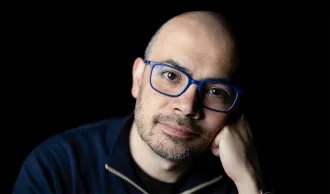
We asked Ali Yurukoglu, the Jonathan B. Lovelace Professor of Economics at Stanford Graduate School of Business, about what the merger may mean for entertainment.
What were your first thoughts when you heard about this proposed merger?
I was intrigued by both the business strategy and the regulatory aspects of this merger. From a business strategy point of view, given that Comcast and Paramount were also bidding on Warner Bros. Discovery (WBD), it was interesting to see Netflix emerge as WBD’s first choice.
While media mega-mergers are not rare, this is the first involving Netflix. Warner Bros. has been involved in some high-profile and ill-fated mega-mergers in the past: with AOL in the early 2000s and AT&T in the late 2010s. If finalized, I will be interested to see how harmoniously these two companies integrate. In addition to the business strategy aspects, my mind turned to the regulatory merger review process.
How do you anticipate antitrust regulators will respond to the proposed merger?
U.S. antitrust regulators will likely consider potential effects on consumers, on advertisers, and on content creators as they assess whether this merger might pose a harm to competition. After reviewing the data, if they believe that the merger is likely to harm competition, regulators would file a lawsuit to challenge the merger as illegal under the antitrust laws. The merging parties would have a chance at trial to defend the merger as legal by arguing that synergies from the merger would lead to better outcomes for consumers, advertisers, and content creators rather than hurt them.
If it goes to trial, one key issue will be how closely Netflix and HBO Max compete for consumers’ money and attention, for advertisers’ dollars, and for acquiring content relative to other entities. The merging parties would likely point to competition from legacy media conglomerates such as Comcast (and its Peacock streaming service), Paramount (Paramount+), and Disney (Disney+ and Hulu), and to large technology companies such as Amazon (Amazon Prime Video), Google (YouTube and YouTube TV), and Apple (Apple TV+), among others.
In recent years, the government has won some media and entertainment merger trials, such as the trial for the proposed acquisition of Simon & Schuster by Penguin Random House in book publishing, and has lost some trials, such as the trial for Microsoft’s acquisition of Activision in gaming.
Streaming services have significantly changed the way people watch movies. What does this deal potentially mean for traditional moviegoing?
It is hard to say. Movie theater attendance per capita has been on a long-term decline that predates streaming. Netflix, in its existence so far, has been less inclined to distribute its feature film content at movie theaters. Thus, movie theater attendance may further erode if Netflix owns the Warner Bros. studio and disfavors theatrical releases.
On the other hand, Netflix has also shown that it will behave like a traditional media company when it makes business sense to do so. For example, for many years, Netflix said having advertising on its service was not in its DNA, but then introduced advertising in 2022.
It is possible that Netflix, if it acquires Warner Bros., would reevaluate its stance toward theatrical distribution due to changing incentives.
What do you think this merger means for the way entertainment is produced?
In the context of how rapidly technology advances, I don’t believe this merger would have much noticeable effect on the way entertainment is produced. The media and entertainment industry is constantly adjusting to technological progress: Think of the transitions from radio to television, to color television, to the commercial satellite dish, to cable television, to VHS tapes, to digital cable and DVR, to streaming, to short-form social video.
The mega-mergers we see, in my view, tend to be the result of adaptation to major technological shocks rather than the cause. I believe we will continue to see major changes in the production of media due to content creation costs continuing to decline from technology advancements, such as premium quality video recording on iPhones, and from generative artificial intelligence tools to create animations, sounds, and video.
The original version of this article was published by Stanford Report on December 9, 2025.
For media inquiries, visit the Newsroom.