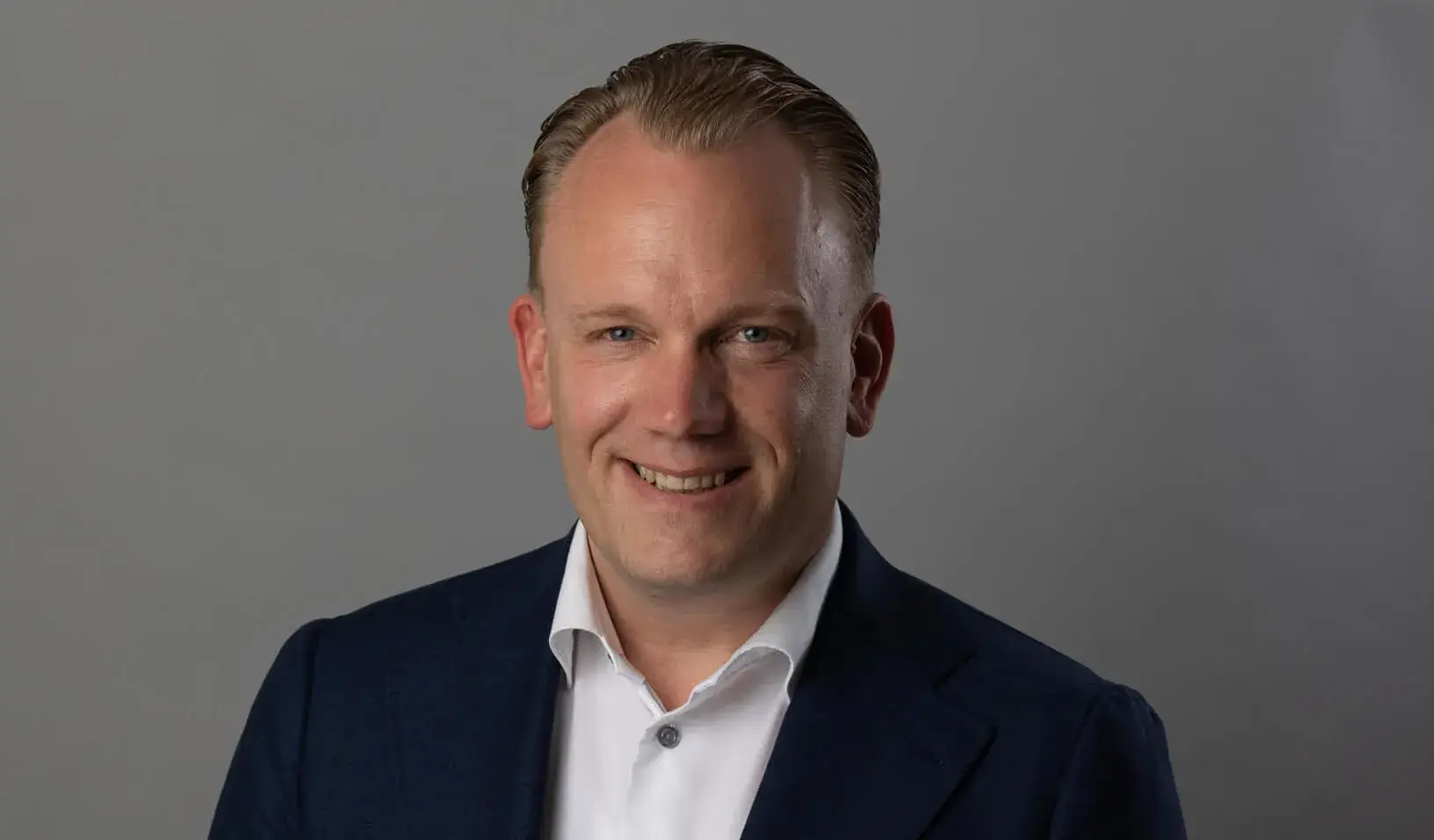
In 2022, Michael Maas was a vice president and general manager responsible for an international organization and significant enterprise revenue. He was no stranger to the challenges tech leaders face when charged with driving growth and innovation in a highly competitive marketplace. The rapid advancement of artificial intelligence was beginning to accelerate the sense of urgency for teams to innovate and businesses to adapt.
Michael reflected on his long career and considered the future. After decades in enterprise leadership roles at tech companies, Michael decided to take time out to reassess his approach. “I’m the grinding type, head down — work, work, work. I go fast,” says the Netherlands native. “I thought, ‘What do I need to change? Can I move into this new era and grow?’ I needed to pause and give myself time to develop.”
This prompted Michael to enroll in the Stanford Graduate School of Business (GSB) Executive Education Stanford Executive Program (SEP). He opted to participate in SEP Flex, the hybrid format of the program that combines an on-campus learning experience with live online learning over 14 weeks.
“I wanted to deepen my strategic thinking and broaden my perspective as a leader,” he says. “I was particularly interested in understanding how organizations create sustainable competitive advantage and how leaders design organizations that can adapt to technological change.”
Fostering Collaboration with Global Teams
SEP Flex offered Michael the in-depth, intensive learning he desired, in a hybrid format that worked well for his professional schedule as well as his family obligations at home. He was drawn to the program’s curriculum, which focuses on three key themes: leading people, leading organizations, and leading global systems.
“The on-campus experience in Silicon Valley was incredibly energizing,” he says. “The environment itself is inspiring because innovation and entrepreneurship are deeply embedded in the culture. The curriculum covered topics like strategic leadership, organizational design, finance, and innovation.” He adds, “The content was very practical. It’s like an MBA course of two years condensed into six months.”
The Leading by Design session with SEP Faculty Director Bill Barnett in particular gave him new tools and a fresh perspective on fostering collaboration among international teams.
“Many times, an executive team defines the strategy, builds three slides, and says, ‘We need to go faster, we need to do more,’” he explains, noting that the rapid adoption of AI has intensified timelines. “Design thinking taught me the power of cross-functional collaboration as a productivity booster. You need to get everyone’s opinion and voice, so departments and people are aligned. The power of that is massive. When you look at multiple perspectives and opinions, you get higher buy-in.”
Achieving Professional and Personal Transformation
Michael says the impact of SEP was immediate and continues to shape him. “One of the biggest shifts for me was moving from operational leadership toward systems thinking,” he notes. “Instead of focusing only on individual functions, I now think more about how leadership, culture, processes, and technology interact within organizations.”
Michael’s experience not only gave him strategies and tools to reenergize his business approach — it also helped him grow on a personal level. The program’s mindfulness meditation practices, he notes, set the tone for the day to promote positivity and productivity in the current fast-paced, AI-supercharged business environment.
Creating a Global Network of Colleagues
“Equally valuable were the discussions with fellow participants,” Michael says. “Leaders from different industries and countries brought very different perspectives on how they were navigating transformation.”
Michael says his cohort stays connected, helping each other navigate the future of business. “We organize student speaker sessions where participants share experiences and leadership insights,” he says. “I also try to reconnect with fellow graduates whenever I travel. Those ongoing interactions make the network incredibly valuable.”
Leading the Future of Business
In 2026, Michael became senior vice president at Lucid Software, a visual collaboration platform at the center of how organizations accelerate work in the AI era — drawing directly on the strategic frameworks he developed at Stanford. Michael leads sales across Europe, the Middle East, and Africa (EMEA).
“Continuous learning is one of the best investments you can make in yourself, especially in times of change,” Michael says. That conviction deepened after SEP graduation. “One of the most important things Stanford taught me is that in a world of constant technological change, continuous learning is not optional. It is the job.”
That mindset led him back to Stanford GSB Executive Education in 2025, where he completed the Harnessing AI for Breakthrough Innovation and Strategic Impact program. “AI is not just another wave; it is a fundamental shift in how organizations compete, how leaders make decisions, and how teams create value,” he reflects. “SEP gave me the strategic foundation to think in systems. I returned to Stanford because it was the natural place to apply that same lens to the most transformational technology of our time.”
Michael looks forward to what’s coming next. “SEP gave me so much energy and clarity. It validated what I’m doing in business and shows me I’m on the right path. I want to continue learning. I will not stop.”
Interested in learning more about this program?
Explore Stanford Executive Program details, curriculum, schedule, and more.