November 05, 2026
| by Michael McDowell“I wasn’t buying stocks at 13 years old and knowing what I wanted to be,” says Marc Stad, MBA ’08, in a View From The Top conversation with Grant Stierwalt, MBA ’27, recorded live at Stanford Graduate School of Business. “My four older siblings, my parents, everyone — none of them finished high school. So I was just trying to survive a lot.”
Since then, Stad has succeeded in “obtaining the unobtainable.” A longshot internship resulted in a successful million dollar investment. After 25 private equity firms turned him down, he showed up at TPG on his lunch break and got a job. While racing to win a massive Uber deal, he sent a one line-email to Warren Buffett’s assistant, Deb. Two minutes later, Buffett called, and eventually joined the bid. “You can follow the rules or you can come up with your own rules,” Stad says.
Today, Dragoneer Investment Group manages “maybe $45 billion,” and Stad is on his way to owning the NBA’s Minnesota Timberwolves and the WNBA’s Minnesota Lynx.
“It was just putting one foot in front of the other,” he says, crediting the many mentors who helped him find his way. “Unless you have a parent who’s done something that you want [to do] or some family friend, which I didn’t have, you need to go seek people out who can guide you,” says Stad. “It has to be a symbiotic relationship. It could be about money. It could be about bringing youth and joy to their life. It could be about fun. Whatever it may be, it can’t just be out of obligation.”
Listen & Subscribe
Stanford GSB’s View From The Top is the dean’s premier speaker series. It launched in 1978 and is supported in part by the F. Kirk Brennan Speaker Series Fund.
During student-led interviews and before a live audience, leaders from around the world share insights on effective leadership, their personal core values, and lessons learned throughout their career.
Full Transcript
Note: This transcript was generated by an automated system and has been lightly edited for clarity. It may contain errors or omissions.
Grant Stierwalt: Welcome to View From The Top: The Podcast. I’m Grant Stierwalt, an MBA student of the Class of 2027.
Michael McDowell: And I’m Michael McDowell, a producer at Stanford Graduate School of Business. Grant, who’s on View From The Top today?
Grant Stierwalt: Yeah, so today we have Marc Stad, founder and managing partner of Dragoneer Investment Group. It was such a treat being able to sit down with Marc because he doesn’t do a lot of media, and so this was a special conversation to really get to understand his meteoric rise in the investing community, as well as bringing home one of our alumni.
Michael McDowell: Fantastic. It was an amazing conversation. I really enjoyed it. For those in the audience who may be unfamiliar, can you tell us a little bit about Marc and also about Dragoneer?
Grant Stierwalt: Absolutely. So what’s funny about Marc is he’s now suddenly in the news quite a bit. He just purchased an NBA team.
Michael McDowell: That’s right.
Grant Stierwalt: He did. But what people don’t realize is that Marc was actually the first person in his family to graduate high school. And so thinking about the world that he jumped into, he had to carve a path for himself. And so a big theme in our talk was about creating your own opportunities. And Marc would continue to do that throughout his career. And he founded an incredible technology investment firm. They invest in both public and private companies, and he’s been wildly successful and as one of the top tech investors in the world today.
Michael McDowell: So you mentioned that he’s invested in technology, but I wanted to ask you, what kind of investor is Marc? Could you kind of place him for us in the ecosystem?
Grant Stierwalt: It’s a good question. They don’t like titles in the investing world. They all like to be a little mysterious, but Marc leads Dragoneer, which I think would be defined as a crossover fund. They do publics and privates, often pre-IPO into IPO, but really his ideology is a long-term hold strategy. And so we see many different investment vehicles that could be as short as a couple days, but even five to seven years would be considered on the longer end to get a return. And what Marc’s done is he’s really made a name for himself of picking winners and holding them for a long period of time, and it’s worked really well for him. And so we were really excited to get some of the different insights and things that he’s learned along the way to make all of that happen.
Michael McDowell: How did you prepare for this conversation and what were you most excited to ask Marc about?
Grant Stierwalt: Yeah, this was a tough one. Marc does not have a lot out there. He has led, I think ultimately a pretty private life for someone who has been as successful as he is. I was very fortunate to have time with him before the interview, as well as talking with some of his friends, his family, getting to understand who Marc is as a person and what has driven him, I think has really helped me be able to shape this interview and make sure that I was getting the best stories, but also bringing out the best of all that Marc has to offer because I wanted people to see that.
Michael McDowell: It seems like he could have talked a lot longer.
Grant Stierwalt: Yeah, I completely agree. I think we probably saw the tip of the iceberg on both stories and also insights that he’s accumulated over the years.
Michael McDowell: Maybe you two can take this show on the road?
Grant Stierwalt: I couldn’t agree more. Yeah.
Michael McDowell: All right, Grant. With that said, should we roll the tape?
Grant Stierwalt: Let’s do it.
Grant Stierwalt: Marc, we are so excited to have you join us. Welcome back to campus.
Marc Stad: Good to be here. We didn’t have this campus when I was here. This is a lot nicer than I remember it.
Grant Stierwalt: Well, many of us just completed our summer internships and after talking with my classmates, you’ll be glad to know that I believe your record-breaking GSB internship is still intact. Could you tell us more about this mysterious internship?
Marc Stad: Well, it’s good to be here. I remember when I was a first year at the GSB, the first View From The Top was Herb Kelleher, who was the founder of Southwest. When Sarah called and invited me to share the same stage that he was on is a real honor. So thank you so much. It’s interesting, Reese and Tim are here from IGSB. So they were the ones who recruited me out of this school. And yeah, so much of my belief in life was you got to kind of obtain the unobtainable. And I was told by the one who ran campus recruiting here that the hardest job in investing to get out of the GSB was at IGSB, Investment Group of Santa Barbara. So the challenge was on, and I remember I’d send Tim notes and ideas and emails and missed calls and he never returned my call.
And then I remember we were on a student trip to India and back then none of us had cell phones. So we went to a cyber cafe and I wrote to Tim and I said, “I’m in a cyber cafe in India. The only note I’m sending is to you. Is there any way you would consider interviewing me?” And I think the reply was, “That’s a good one. Reese will be on campus in a week and he’ll stop by and meet you.”
So ultimately they gave me a summer job, but they weren’t exactly sure how to organize it because they weren’t really looking for a 20-something year old analyst. So the deal was they would give me a million bucks of their money. I would invest it in anything I want in the public markets and I’d get half the profits. And they made it very clear that in 10 weeks, we don’t expect you to do much with the money, but we want to just make sure that you can make a decision, that you can drive your own time.
So anyway, they sent me 30 books that I received in my Schwab dorm room. I was barely going to classes because I had to read these books in the three months before I started. And when I got there, they just said, “Here’s the money. Here’s how you spend it. Good luck.” And there were lessons in those books. And I remember I was reading through prospectuses and everything else. And I’ll always remember it was the summer of ’07, IPO market was hot, unlike today. And a company called MercadoLibre was going public and it just had all the things you want in a company. It had a two-sided marketplace. It had a great founder who went to the GSB. It was attacking a big market and it was coming out at like $800 million. And I remember writing Marcos, the founder, a note, and he agreed to meet me after Capital Group down in LA for dinner because our AUM wasn’t quite what Capital Group’s AUM was.
And we met and it was so abundantly clear from that meeting that this company was going on the moon. So I ended up taking the million bucks and putting it into MercadoLibre. And I remember Tim comes in and he says, “Diversification is a thing…” But I didn’t think I would find another good idea that summer. So I put it in, IPO’s at 18, goes to 80. And I remember telling Marcos, “We’re going to own the stock forever.” So I called him three days later and said, “Can I sell your stock?” Because the million was now four million, so my net worth four days ago was negative and now I was actually a wealthy man. So he agreed, we sold and it was definitely one of the better GSB internships you can imagine.
Grant Stierwalt: Just like that. That’s how it’s done.
Marc Stad: That’s how it’s done.
Grant Stierwalt: Well, Stanford and that incredible summer were just one stop on a long career of achievement for you. Harvard for college, top consulting and investing experiences, Stanford MBA, of course, and eventually founder of your own firm. How did this journey all start for you?
Marc Stad: We’re all students of Buffett if you’re in the investing world. So I wasn’t buying stocks at 13 years old and knowing what I wanted to be. I’ve said this before, but my four older siblings, my parents, everyone, none of them finished high school. So I was just trying to survive a lot. I mean, my wife and I joke about a story that I’ve never said publicly, but I remember we had a car in our house, but at one point my dad stopped paying for the car and we would park the car a mile away so the collection people wouldn’t find it. And I always remember telling my dad, I said, “Dad, we live a block from a police station. That’s the last place someone’s going to think you’d hide a car that hasn’t been paid for.”
So there was no, “One day I’ll be an investor.” It was just putting one foot in front of the other, but I was good at school, and high school was a great experience for me. So I applied to, I think 21 colleges. And when you get into Harvard at the time, I thought that was a no-brainer. So I went there. I wanted to go into politics. I wanted to go save the world, whatever that meant. And I remember I had this opportunity when I was 20 to write Bob Rubin’s endorsement speech for Al Gore. And Harvard’s obviously close to New Hampshire. It’s the first primary state, so he was doing it up in Nashua, New Hampshire. So I picked him up at the airport, we rehearsed the speech, he gave it.
And on the way back, he asked some questions and he said, “Whatever you do, do not be a poor kid in Washington at 22 years old. Go make some money first and learn how the economy works and how business works.” So he ultimately got me a job. He was the CEO of Citigroup at the time. So I worked at Salomon Smith Barney and then leveraged that to get a job ultimately at McKinsey and went from there.
Grant Stierwalt: You brushed right by it, but in case anyone missed that, here you were 20 years old, an intern working with the head of Citi. How do you create opportunities like that?
Marc Stad: It’s a good question. I think if anything, it speaks to mentorship. I find unless you have a parent who’s done something that you want or some family friend, which I didn’t have, you need to go seek people out who can guide you.
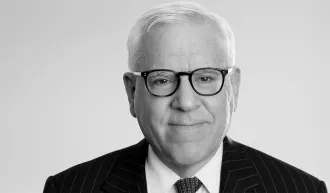
There’s a misconception, I get a lot of notes every week from people. I wrote a piece about mentorship in Time Magazine after David Bonderman passed away because he was a great mentor of mine. You can’t just write to someone and say, “I want you to be my mentor,” and they’re going to miraculously be your mentor, it has to be a symbiotic relationship. It could be about money. It could be about bringing youth and joy to their life. It could be about fun. Whatever it may be, it can’t just be out of obligation. No one’s going to mentor you out of obligation.
But I think you just, as I’ve gone on this journey and come across people like Tim and Reese and David and others, if you find the right person who’s kind of got a big heart and sees a lot of hope in the next generation, they spend time with you and then you make it interesting for them, you make it symbiotic, and it doesn’t become an obligation hopefully for them or for you later in your life. It brings great joy. So I don’t know, I guess I was just a really precocious young kid with a big personality who convinced people to spend time with him.
Grant Stierwalt: That makes sense. And as you think about, so that’s how you sort of look for mentors. How did you end up meeting some of the mentors and figure out who to target for that strategy?
Marc Stad: I think the idea of targeting would be a mistake. I think it needs to be very organic. So David ran TPG. He was the oldest, most senior person there. I was the youngest, I was 26 years old or 25 years old at the time. I always wanted to find an opportunity to talk to him, but never had a chance. When there’s 11 layers between you, it’s hard. And I remember we were at an offsite in Aspen at the St. Regis and he was using the restroom and talking to another guy on the other side of the restroom about a hotel he wanted to buy, which was interestingly announced today that the hotel got sold.
And I remember I went up to him afterwards and I said, “David, I’m Marc. I love hotels. Can I do the deal for you?” I didn’t know anything about hotels by the way, but I just figured I’d go learn about it. And Colony Capital and Tom Barrack owned the hotel. And I spent the next year kind of… I had a day job, so nights and weekends. I remember Elisa and I were on Valentine’s Day and it wasn’t a really good date, because I was reading documents for this hotel the whole weekend, but I ended up buying that hotel or representing David in the purchase of that hotel.
And I’ll always remember at the end of it, he’s like, “I need to give you something. Can I give you some money?” I said, “No, I’ll just take an IOU.” Because I figured there’s not a lot of people David owed anything to. And many years later when Reese and Tim allowed me to bring in another partner of capital, I always remember calling David and saying, “You’ve been saying that you like what I’ve been doing and investing in some of these companies and the folks down at IGSB have agreed that I could bring on your capital.” And he goes, “How much are you thinking?” And I said, “Five million bucks.” And he said, “Sounds good.” And then I was super pissed. He’s like, “What’s wrong?” I go, “I clearly didn’t ask for enough.” But again, from that moment for the next 20 years until David’s passing, we were just friends and partners.
Grant Stierwalt: So I love hotels and IOUs. I’ll tuck those two away.
Marc Stad: I love whatever you need to love.
Grant Stierwalt: Many people would see a TPG on a resume and assume that you went through the normal process, that someone smart like you, it was easy to get in, it was smooth sailing, and it was almost an afterthought that you would end up there. Was that how the process went for you?
Marc Stad: No, it was interesting. When I was at McKinsey, I decided I wanted to go into private equity. The problem back then was you basically had to come out of Goldman or Morgan Stanley, particularly for the bulge bracket PE firms. So I tried them all. I got like 25 rejections. I couldn’t get a job. Everyone thinks it’s always easy, but I keep coming home to Elisa. We were dating at the time and I was like, “They all rejected me. Blackstone, TPG, CD&R, you name it, they said no.” I don’t know. They would use the excuse, we want people who know how to model and came out of investment banking.
So I ended up taking a job at a middle market PE firm and got really great experience there. TPG had a policy that if they rejected you, they wouldn’t hire you. But I remember I was at lunch break and I kept reading about all the cool things they were doing. They had bought Burger King and J. Crew. So we were at lunch and I was like two blocks from their office. So I ended up just going there and asking Bridget, I remember who was at reception saying, “Who’s in charge of recruiting?” It was a guy named Tom Reinhardt.
And Tom came out and I said, “I’d love a job here.” And he goes, “There’s a process for this.” And I said, “you told me…I promise you I can model as well as anyone two years younger than me. I’ve just spent the last two years in private equity. Would you give me a shot?” And he brought me to his office and next thing you know, I spent six hours there. It ended with an interview with Jim Coulter and he gave me a job and that’s how I got a job at TPG. So again, you could follow the rules or you can come up with your own rules.
Grant Stierwalt: Throughout our conversations, your ability to get things done, to turn a no into a yes, it came up again and again. And obviously with your internship experience, that was never more on display. I want to touch on Investment Group of Santa Barbara. It was a place that you found instant success with that internship, but continued to thrive after graduation. How did those experiences at the firm shape you and your investing philosophy?
Marc Stad: What was so great about IGSB is first, they took the time to teach me the elements of a great company and a great investment. And if there’s one thing, if you want to be an investor in this room to take from this conversation, other than what we’ve talked about so far, which is hustle, it’s actually what makes a company great. And I have young people coming to me all the time talking about wanting to start investment firms and I always focus on their mentorship and what they’ve learned. And most of the time they just haven’t learned the right things.
IGSB taught me first and foremost, you look for companies that have wide moats, real, we call them natural monopolies or sustainable differentiation. Second, you look for companies that will produce great free cash flow over time, who have great financial models. Third, you back wonderful founders. And what I’ve learned on this journey is the delta between one in a million and really, really, really good is everything. And the great founders create the great companies. Fourth, you look for companies that have big addressable markets. You look for companies that you can understand and analyze, and then you buy them when there’s good upside, but you feel there’s a margin of safety. So there’s these seven rules. I remember I had them on this whiteboard. And the problem is when you look at a company, they always violate one of the rules usually, not the right founder, you can’t really understand the business, it’s too expensive. But once in a while, all seven things are there.
So the first thing was it really taught me what I’m looking for and when. The second thing was it was just a strategy. It was first, it was a flexible pool of capital. So much of money management, you’re kind of pigeonholed into a certain strategy or approach, but when you had permanent money that was totally flexible, you learned your only job was to make money, was to compound capital.
The second was in a real belief in a tiny number of companies will drive all the returns. So when you’re there and you’re in no rush, they never come to you and ask, “How are you doing this week, this month?” It’s funny. When I started Dragoneer, we had a policy that we would not report monthly numbers, even quarterly. We’re just like, “Come back and check in a few years.” That didn’t work so well. But with Reese and Tim and David, they never asked about the performance. So when you have this flexible pool of money, kind of an infinite horizon, you’re trained in what a great company looks like, it leads you to just wait for a fat pitch to come across. And I think the reason in all those years, there wasn’t a single big mistake, but also some really great investments was the model that the foundation IGSB laid, which is what we built Dragoneer on top of.
Grant Stierwalt: So know what you’re looking for, but then also be patient enough to not jump at the first thing.
Marc Stad: Or the 20th thing. It’s hard. Investors want to invest. They want to put money to work, but people always talk about this diversification point, but if you’re patient and you wait for… Go look at the best investors, it’s always very, very few things that drive the return. What’s interesting is, remember, we’re not venture capitalists. At the stage in which we invest, where the model is proven, you often know at the time, you feel it in your bones that it’s going to be a good one.
Grant Stierwalt: You would eventually leave, as you mentioned, to start Dragoneer. Many people in the crowd today will consider whether to stay where they are or leave to start their own thing. How did you think about taking the leap and making that bet on yourself?
Marc Stad: The reality is you have to be honest with yourself. Do you think you’re the best in the world at something? It kind of requires a certain bit of arrogance, but you got to do it with some humility as well. But if you believe you are, then go do it. If you don’t believe you are, then go find someone who is and team up with them. So I think first you have to say, for me, I got lucky that I had this incredible training and I was able to develop a track record. In those first few years, we backed Palantir and Facebook and DeepMind and anyway, a handful of companies that went on to be quite successful on the private side. And then we had the public portfolio.
But fundamentally, the idea was, I always remember I was with Bonderman, half my money was David’s and half my money was IGSBs. And we were running around in Asia and we had done, I think, seven privates and a dozen or so public investments. And he said, “I’m going to run out of liquidity. I don’t have more money. So if you want to keep doing this, it’s time to go out on your own and develop a brand, hire a team and raise capital.” But the fundamental idea was to continue doing what we’re doing, but with three ideas.
First, a small number of companies are going to drive all the returns, so we’d be highly concentrated. There will be volatility with it, and we were honest about that, but we’re going to focus on a few things. Second, we would just hire the best people to work here. And I remember in the early days, we would hire one person a year. Sometimes we would interview a hundred to find one. There were a couple years we would even hire zero. We wanted to find the right type of person for this model. And my belief is you don’t need a lot of people. So that was the second. And the third, we wanted to have limited partners that bought into this idea that a small number of companies would drive returns. There’ll be volatility, but the long-term compounding would be really high. And we launched with 180 million and today we’re maybe 45 billion or something like that. And it was just sticking to those three key things: great people, great companies, great limited partners.
Grant Stierwalt: And I’m hearing the common theme across all those is being patient, know what you want, and not settling for less, whether that’s hiring or people or the investments, you continue to follow that strategy, it sounds like, in every aspect of your career.
Marc Stad: Yeah.
Grant Stierwalt: So you went to Dragoneer and it obviously seemed so apparent now looking back, we’ve seen incredible growth through investments in both Spotify and Airbnb, but then more recently as well, leading rounds in both OpenAI and Anthropic. Much of Dragoneer’s continued success has been due to breaking the mold. How do you approach creativity in finding investments?
Marc Stad: I mean, that’s core to the model. What we figured out early on was this idea of sitting behind a model or a desk and waiting for an investment banker to bring you an idea just wasn’t going to work. The other thing we figured out was when we started, whether it was ’07 at IGSB or 2012 with Dragoneer, at that time, growth was kind of a four letter word. People were really excited about venture capital because there was these big outcomes that firms like Excel and Greylock and others had, or they were really excited about private equity and they wanted to work at firms like Blackstone, et cetera.
But we saw that there was a tide changing. And if you look, right around that time is when PCs were ubiquitous, the web was connecting everything, compute costs were going down, memory, you know, storage costs were going down and we thought that there would be a number of companies that would go on to be really generational companies, but you would have a period of time to invest in them while they were still private. That didn’t happen before 2009, 2010.
And I mean, you talk about creativity… I’m trying to think. One story I remember is Uber. There’s someone in the room here who I remember calling. We were investors in Uber and there was a lot of chaos going on at the company, and there were a lot of people who worked at Uber whose entire net worths were in Uber stock and they were seeing a lot of the volatility and news stories. So I remember going to the head of business development and the CEO and saying, “Is there an opportunity for us to come in and do a big cleanup round, like a secondary round, a tender?” And we thought it could be really large. I mean, there’d probably never been a tender at that point of a billion dollars.
And he liked the idea, but I couldn’t get much traction. About a month later, I get a call from him and he goes, “I have good news and bad news.” I go, “What’s that?” He goes, “The good news is we’re going to do a tender. We like your idea. The bad news is we’re going to do it with SoftBank, not with you.” And they had just raised that big hundred billion dollar fund, so it was hard to compete with. And I said, “Well, this is crazy. I’ve been talking about this for a month.” And they said, “Listen, they have unlimited money. They could speak for the whole thing, and if they don’t invest in us, maybe they’ll invest in our biggest competitor.” So I remember I went to bed that night and I woke up around three in the morning just really upset by the situation, and I decided that in the next few hours, I would try to assemble the $5 billion they were offering.
And I remember it was 3:00 AM Pacific Time, but Asia was up. So I called a few friends in Asia, a big strategic in Asia, a big sovereign in Asia, a few investors in Asia. And then I remember calling General Atlantic when New York was awake and then Tiger and TPG and a bunch of firms. And by about 9:30 in the morning, we had indications of interest for $6 billion.
So, wrote a letter, “Dear Board of Uber, this esteemed group of eight or nine investors would like to make an offer to lead a tender with $6 billion.” And at the last minute before I sent it, I remember I’d met Buffett about two months prior and he said, “If you ever have a great deal, call me.” So I called up a friend who had connected us and said, “Can you give me his assistant’s email?” So I send Deb a note and I say, “Dear Deb, I have a deal for Warren.” Two minutes later, my phone rings and it’s, “Hi Marc, it’s Warren.” And I was like, “Oh my God.” So I walked him through the situation and he said, “Look, I’m not interested in doing a deal that eight other investors are doing. Let’s do a convertible that just Berkshire can do with Dragoneer. And in addition to that, you can do your tender piece.” So we changed the letter from six and a half billion to $10 billion and we included them.
So we sent the letter over and I always remember Masa, who’s become a dear friend, calls Yuri Milner at DST and says, “Who the hell is this guy Marc?” And ultimately the board had our offer, their offer. They had to take a little bit of time. So we added a sentence to the term sheet that said, “This offer expires in 24 hours, but if you sign it and SoftBank gets there, we’ll agree to split the deal.” I think it was 70/30, may have been 80/20, but I think 70/30. The board ended up signing our offer, a week later signed with SoftBank, and we became partners and we ended up doing, I think it ended up being about a $12 billion tender between the two of us. And it’s a great example of just kind of inventing as you go along led to such an interesting successful deal.
Grant Stierwalt: And talk about turning a no into a yes.
Marc Stad: Right.
Grant Stierwalt: Of all the big bets and winning names that we talk about, were there any investments that didn’t go according to plan?
Marc Stad: So if you take a minute and you think in 2009, ’10, when the iPhone came out in ’07, the app store in ’08, so right at the beginning, I think the cumulative market cap of all consumer internet companies was about $500 billion. And that was Netflix and Tencent and Booking and Amazon and Google, pretty much made up all publicly traded internet companies. And then at the same time, about $500 billion in SaaS, made up of Salesforce and a few others.
By 2021, the value of all consumer internet and the value of all SaaS was about $14 trillion. So we’d never had a period… If you think the entire US stock market’s about 75 trillion. So 15 trillion, that must be a third to half of all incremental market cap was just this wave of consumer internet and SaaS and including the Chinese internet growth. So what happened was all the investors, because there weren’t really growth funds at the start of that, and in just 11 years, a lot of growth funds emerged, VC firms now had growth funds, PE firms now had growth funds, folks like us showed up and lots and lots of big funds were raised at exactly the wrong moment.
The reality is by 2021, it was over. There were no new SAS companies to be had. There were no new consumer internet… I mean, you could have an app, walk your dog by that point, order you your food, get you a car, get accommodations, whatever it may… Communication was all happening already, it was pretty mature. But, the memo, people didn’t get that. And remember back to all the books at IGSB, be patient, fear greed, et cetera, but people couldn’t help themselves. So in that period, including us, in 2021, was the only period where I think we broke from our lessons and what we set out to do. We didn’t get it totally wrong, but we did make some investments that we look back and regret.
So the point is when there’s tons of optimism and euphoria and you’re at the end of a cycle like that and there’s so much money and no one has done wrong for 12 years riding a trend, things are going to end badly. So I think the lesson learned was in 2021, we were in a bubble and that bubble ended and now we’re at the start of a new era, which is called AI.
Grant Stierwalt: Thinking about this new bubble, how does this moment compare to past disruptions?
Marc Stad: Did I say new bubble?
Grant Stierwalt: That’s what I heard. How does this moment compare to past disruptions that you’ve seen?
Marc Stad: Yeah. If you talk about that cycle from 2010 to 2020, it actually started way earlier. I was thinking about this a few days ago and ChatGPT and I spent a couple hours together and we’re looking this up and I found it fascinating. So the Mag 7, which makes up about $25 trillion today, so a third of the entire US market cap, I look at it six of the seven companies were founded within about 10 years. So NVIDIA was ’93. You had Google, you had Amazon, you had, I’m going to call Apple, when Steve Jobs came back in ’98, you then a few years later had Tesla and Meta, so all of them but Microsoft. It’s fascinating that six of the seven effectively most valuable companies on the planet, there’s a couple, there’s Aramco and a… But of the Mag 7, six were founded in effectively 10 to 11 years, which is kind of amazing.
And the reason is that was the start of this tech wave, of the last tech wave. But the problem with investing in that period is it would be very hard to invest in NVIDIA, you couldn’t predict what was currently happening. You had to predict what would… One day there’ll be AI, chips will really matter. They’re going to develop CUDA and have a moat around their business. Or this guy Bezos seems really incredible. This book idea, it’s not about the book idea. It’s about starting with books, getting density, ultimately selling you everything you want quicker, cheaper, more conveniently, and that would be the future of Amazon. And then later comes AWS, or Google… So it was an incredibly profitable period if you picked those handful of companies, but really, really difficult.
So that’s if you want to be early in the cycle. If you want to wait and you want to buy DoorDash when we did it at let’s say six billion, you could already press a button and food shows up at your house. You just had to believe that Tony was going to win and you had to believe that a lot more people like you would buy food. Well, both of those seem pretty good bets. Spotify, you have to believe Daniel, remember there was Rhapsody, there was Rdio, Grooveshark, iHeart, Pandora. There were a lot of music streaming. You have to believe in streaming, not hard, but you have to believe Spotify would win. A different part of the cycle.
I think of AI right now, we don’t know what it will be. Will it change the way we communicate? Certainly. Will it change the way we shop? Certainly. Will it change a lot of things? Yes. Could there be huge changes that we don’t currently anticipate? Definitely, but we’re early in the cycle. So the question will be what companies that are being founded now will endure? Can you predict them? And the ultimate determinant will be which ones will have moats? And that’s an open question. We don’t know which ones will have the moat. It’s going to take some time. So you could take some early bets.
The other thing about this cycle, unlike the last cycles, it’s very cap ex heavy. And we already have big companies that are very innovative with great founders that have distribution like a Meta, like a Google, like a ByteDance, like a Tencent, et cetera. So it’s an interesting question. When you have a CapEx heavy cycle, will the winners of the next generation just be the incumbents getting bigger or will it be new companies that emerge like we saw in the last cycle? And like I said, that’s a question that nobody knows the answer to, but look for the moats. It’s all that ever matters.
Grant Stierwalt: We’ll be back with more of Marc Stad after this.
Grant Stierwalt: Hypothetically, you were a grad student considering career options. How would this moment influence your decisions?
Marc Stad: I’m curious if I asked this crowd, raise your hand, this is business school crowd, raise your hand if your number one most desired job is to be a consultant, McKinsey, Bain, BCG. Isn’t that amazing? That would’ve been pretty much number one when I was here. Not one hand went up. Raise your hand if it’s banking, Goldman Sachs, Morgan Stanley. One. Okay, good luck. I mean, one of one. I feel for you if you don’t get the job. That was insensitive, good luck. Number third, what about you want to be a founder of a company? Great, quite a bit. And then what about you want to get a job at OpenAI or Anthropic? If you could all get that job, who would take that job? Okay, a decent number. And then how about if you want to start an investment firm? So it’s interesting, right? So many people want to… I didn’t say work at an investment firm, I said start an investment firm.
So I think the lessons are the things we’ve talked about here. First of all, seek mentorship, make sure you’re trained. Don’t go start it unless you know what you’re doing. So I would seek mentorship. And the other thing is I was told early on, I remember when we were running around and I see Christian’s here and others and we’re trying to raise money, everyone wants to put you in a bucket. You need to be the hedge fund bucket or the long only bucket or the private equity bucket or the… And I remember we always got nos. They didn’t understand, “You’re going to do public, you’re going to do private, you’re going to be long only. We can’t really get money back from you. It’s kind of going to go into a black hole.”
And I just remember always going to the CIO and saying, “You just got to put us in the… Let’s create a bucket called miscellaneous.” And as an investor, you actually make the most money when you invest in companies when they’re in the miscellaneous bucket. So I would try to convince these allocators, if all you’re doing is putting money where there’s already a lot of it, you’re probably not going to do great. So I guess what I would leave you with on that question is seek mentorship and don’t necessarily just go create something that already exists because odds are what already exists is probably pretty good.
Grant Stierwalt: And on that note, we’re now going to turn to the audience for Q&A.
Student: Hey, I’m Ned, an MBA1. You mentioned putting all of your $1 million allocation into one company as an intern. Many of our classes, and Tim, as it turns out, would mention diversifying to reduce risk. Did this feel like a big risk to you at the time?
Marc Stad: I think diversifying feels like a big risk. If you’re trying to beat the market, how are you going to do it by diversifying too much? As we’ve analyzed things at Dragoneer, the answer has always been it is better to wait until you have very high conviction and when you have high conviction, swing really, really hard than it is to do a bunch of low and medium convictions. When I was here, remember I only had 10 weeks, but we were convinced MercadoLibre at $18, the sixth-best idea wasn’t going to be better than that one. So I think it is a lot better to swing hard than it is to diversify for diversification’s sake.
Student: Name is Steph Wong. I’m an MBA1 and a huge Olivia Miles fan. So you touched on this a little bit earlier, many are speculating that with the rise of AI, it means the end to software as a service business model. I’m curious about what is your perspective on the future of SaaS?
Marc Stad: Our view is we’re trying to look forward at where the next great big opportunities lie. It’s interesting, in the US, private equity has, I think it’s 13,000 companies are owned by private equity. If you add up the value of all 13,000 private equity companies, and you add the debt, it’s about $5 trillion. It’s a massive number. NVIDIA is worth $5.7 trillion. I still don’t think people appreciate how big these next generation of growth companies can become. And so my view is SaaS, I’m now not entirely largely putting into that bucket of the five trillion. Shouldn’t we go use our very scarce capital on behalf of our limited partners and try to go find the next Uber, the next Robinhood, the next Airbnb? So I’m sure there’s tons of opportunities in SaaS and very smart people will figure it out, but that’s not where we’re focused.
Student: Hi, my name’s Isabelle Dibble. I’m also an MBA1. My question’s a little bit different. I’m curious to know what drew you to basketball and pursuing team ownership?
Marc Stad: Are there any Timberwolves fans in this audience? Okay. Hey, there we go. My kids, my best friend, my wife, and a few people from Minneapolis. I think my childhood dream was to have $8.50 cents to get into the Great Western Forum to watch the Lakers play and maybe get a Kobe autograph, which I still, I never did get.
So I think it goes back to just life and it’s just been putting one foot in front of the other. And what happened was I heard about Marc Lore and Alex Rodriguez buying the team a handful of years ago. I read about it in the newspaper. I remember we were on spring break with my family and I told Lisa, “Oh, I met that guy, Marc Lore. I can’t believe he’s buying a basketball team.” I go, “I wonder if they’re looking for any partners.”
So I found his phone number and I called him and they weren’t at the time, but he said he would consider it. In the meantime, he introduced me to Alex and I went and met Alex and the three of us got along great. And as time went on, there was an opening to invest as a minority in the team, at which point we decided to do that.
And then as time went on, Marc decided that he wanted to go focus on building his business Wonder and that he would sell his controlling stake. And my inclination was absolutely not. This was against so much of what I… staying quiet, being an investor, being super committed to running Dragoneer. So it was kind of a quick no, but as it set in, first it did feel like one of those opportunities that would probably never come back again. Secondly, as I talked to our family, we just thought it could just be so fun. And my wife’s been begging me to find a hobby for years and fun is good. So I thought that would be a good thing.
The third thing was I really felt Elisa would be an incredible contribution to it, to both the city, the community and ownership. I thought Alex would be an incredible partner in his ability to connect with players, and he’s so bright and hardworking and positive and optimistic. And then I thought I had a skillset and I thought the three of us could do something really special.
The other thing is, as we’re in this really tumultuous time in the world and a scary time in the world, I just thought sports brings so many people together. When I sit around with my friends and we get into talking about the world and we all start yelling at each other and get bummed out or whatever it may be, then when a game comes on, we stop and we go cheer. And so I said, “It’s such a positive force for good. It could be so fun.”
And the reality is I also thought Minnesota deserves goodness and has gone through so much. And sometimes in life it is about winning and losing. And Minnesota, the Timberwolves have never won a championship. So when I saw that, no men’s team, fortunately the Lynxs have won, I believe four times, but no men’s team has won since 1991 since Kirby Puckett, which I was a big fan of baseball in the early 90s. So I just said, “It could be fun. It could bring my family together. My wife will crush it. It could be a force for good. It could be a good thing to use our capital. And ultimately, I think we could go win some championships and we could bring the ingredients together necessary to win.” So I think that all came together and here we are, but nothing’s been approved yet, but we’re giving it a shot.
Grant Stierwalt: Well, Marc, we have one final question that we’re asking all our View From The Top guests this year. At GSB, we talk about changing lives, changing organizations, and changing the world. As you look at the world today, what do you think future leaders, the people in this room, need to focus on to drive change?
Marc Stad: It’s one of those that now you’re going to ask everyone, but I have to go first with this question. I’m going to maybe answer it by rephrasing it. You asked the question, what does this group need to do in the future? I would encourage almost the opposite. What do current leaders need to do to change the world positively? I have found as you go on life’s journey, you often become highly realistic, sometimes pessimistic.
And I remember when I was a student here or a student in college, just how idealistic I was and optimistic and hopeful. I think when you go back to the idea of mentorship, why did Reese have me around or Tim have me around or Bondo have me around and why did they like having young people around? It’s because they bring hope and energy and optimism. So when I want to go get pumped up and excited about something, I usually go hang out here at Stanford on the advisory council or at high schools or even elementary schools with my kids. So I guess I would say, why don’t we say current leaders should come hang out with all of you and leave a little hopeful.
Grant Stierwalt: Awesome. Well, this has been such a treat. Thank you, Marc.
Michael McDowell: Is this the year that Ant Man wins one for the Timberwolves?
Grant Stierwalt: If only I knew I would be placing a large bet on some of the sports books right now, but I like their odds. I think that they’ve had some ups and downs. I thought the year was a few years back, making it to the semis, it looked very good, heartbreaking defeat. And then ultimately they haven’t really been able to create that success again. I do think with someone like Marc at the helm, maybe the chess pieces start to get put in place for another run.
Michael McDowell: We’ll be watching. So thinking about the thing that we can’t stop thinking about AI, Marc said the word cycle. I believe you said the word bubble. Talk about that.
Grant Stierwalt: Absolutely. Well, heat of the moment, but it’s fun to get a lot of different perspectives out on this because a lot of people are talking about high valuation. Some people are ready hand over fist to give them more money. Some are starting to pull the brakes and you hear about the large cap ex investments that these companies are making in AI.
What I really liked about Marc’s take is that there are going to be winners and losers, which does include many more losers than winners. And I like hearing people’s experience that have gone through it. And for him, he even mentioned in 2021 that his own firm fell victim to the excitement of a cycle and starting to throw money at companies that maybe aren’t the long-term winners that he’s used to investing in.
And so I think now it’s good to have eyes wide open on the fact that there are many, many, many companies that throw AI at the end of their name and many of them are going to fail and that’s okay, that’s a part of the process, but there are going to be a few that absolutely change the world and how we do things. And so it’s not something we need to necessarily be fearful of, but I do think especially for anyone thinking about investing, you have to be really, really careful right now and to Marc’s point, pretty patient to make sure you get it right.
Michael McDowell: So is it a bubble?
Grant Stierwalt: It depends which company you invest in, I guess, but the jury is still out I think on that one.
Michael McDowell: What did you make of his suggestion that leaders spend more time with, well, us, young people for the hope, the energy and the optimism?
Grant Stierwalt: It was interesting to hear. I think as someone who’s young, maybe turning the corner and becoming one of the older leaders at some point here, right now is marked by such uncertainty. There’s excitement for sure and we’re in Silicon Valley, so I think we see that more than anywhere. But I think in many other parts of the world, there’s a lot of fear and when things look different, you don’t always know where your place is going to be. And so for me, the idea of really leaning into optimism is probably now more than ever relevant. I really connected with that and I think it’s something that I would only emphasize myself to others.
Michael McDowell: So Marc talked a lot about the importance of mentors and mentorship. Is there anything you’ve learned from a mentor that you’d like to share with us or any reflections on Marc’s thoughts on mentors that feel relevant?
Grant Stierwalt: Yeah, it’s funny. You never quite think of them as mentors until enough time has passed and that relationship’s been built. I think me, like many people feel like, “Oh man, I don’t really have mentors.” But there are some of those people where you look back and you think, “Okay, yeah, I do have a couple.” And one of my mentors really taught me the importance of bringing your whole self to work and maybe extrapolating, I think vulnerability in general is something that a lot of people struggle with. We’re kind of taught to fake it till you make it, show a strong face. And listen, there are some real benefits to that, but there’s also really a lot of power in being authentic. And I think in this world where technology’s moving rapidly, people are finding new and creative ways to change the way they do things with tech, I think the human connection and being vulnerable and breaking down those walls actually, again, like optimism is important now more than ever.
Michael McDowell: And there’s almost nothing more human than having a conversation.
Grant Stierwalt: I couldn’t have said it better.
Michael McDowell: Grant, thank you so much.
Grant Stierwalt: Oh, thank you. This has been such a treat.
You’ve been listening to View From The Top: The Podcast, a production of Stanford Graduate School of Business. This interview was conducted by me, Grant Stierwalt, of the MBA Class of 2027. Michael McDowell is our executive producer and Veronica Simonetti edited and mixed this episode. Special thanks to Liz Walker.
View From The Top is the Dean’s Premier Speaker Series. It was started in 1978 and is supported in part by the F. Kirk Brennan Speaker Series Fund. During interviews led by students, leaders from around the world share insights on effective leadership, core values, and lessons learned along the way. You can find more episodes of View From The Top on our website, gsb.stanford.edu/business-podcasts. Don’t forget to rate and subscribe and follow us on social media @StanfordGSB. And see you next time on View From The Top.
For media inquiries, visit the Newsroom.