May 01, 2026
| by Seb MurrayIn Brief
- When small retailers in Mexico received free digital payment devices without set-up support, most stopped using them.
- Hands-on support and customer promotion doubled adoption rates and cut program costs.
- This research suggests that practical support is necessary to expand digital payments and financial inclusion in developing economies.
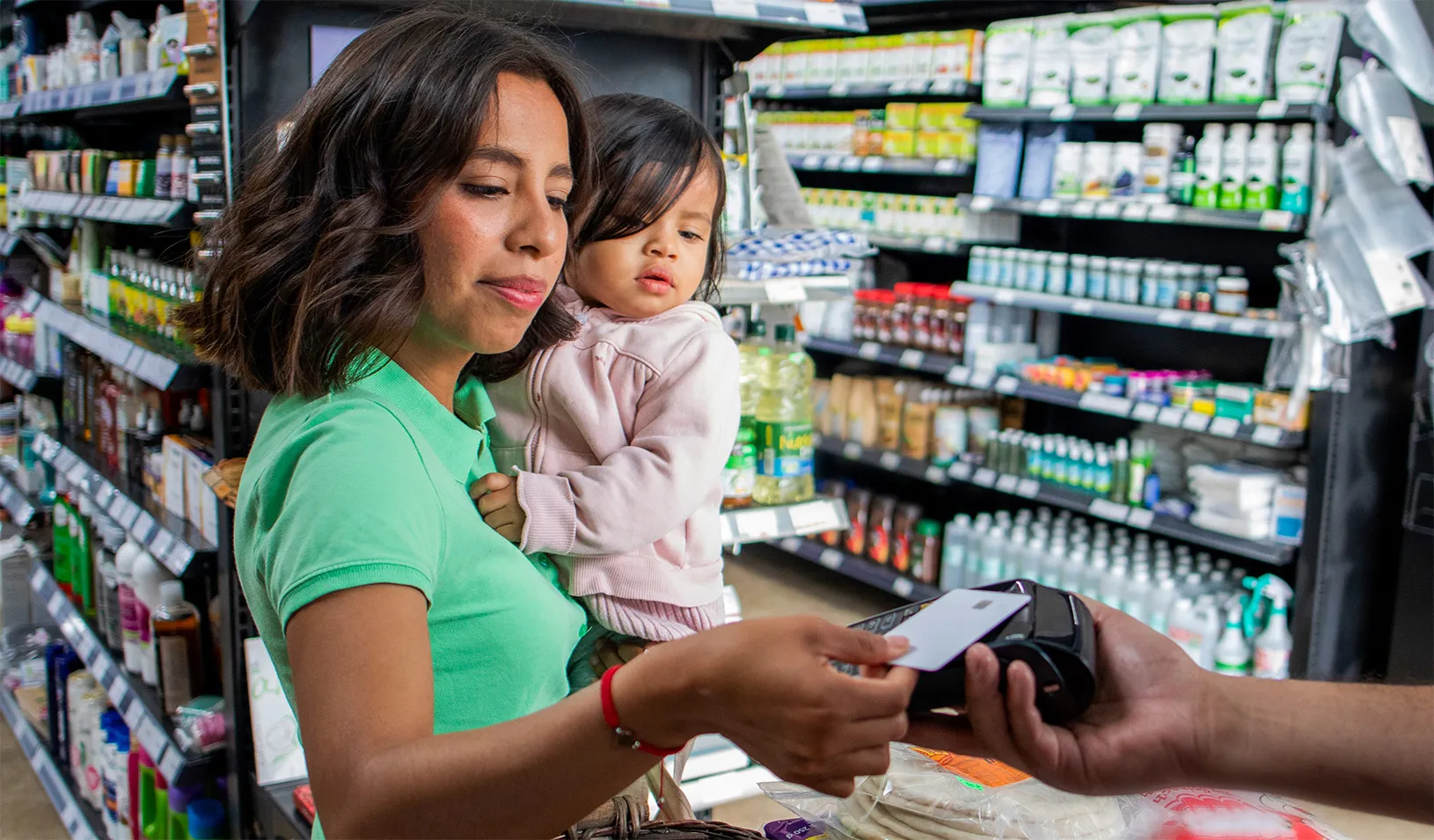
In 2018, a Mexican government program handed out thousands of free digital payment devices to small retailers. Six months later, barely 12% were still using them. New research by Stanford Graduate School of Business marketing professor Sridhar Narayanan suggests the barrier to adoption was not the upfront cost of the new system, but whether merchants could set it up and use it properly.
“What limits merchants from adopting these systems isn’t the big economic calculus,” Narayanan says, “it’s relatively simple, practical problems: whether the system actually works in the store, whether the bank account is linked, whether employees know how to use it. Those small things turn out to matter most.”
The study, written with Shreya Kankanhalli, PhD ’21, of Cornell University, Stephen J. Anderson of Texas A&M University, and Leonardo Iacovone of the World Bank, is based on a field experiment involving 479 cash-only retailers in Guadalajara.
The researchers found that helping retailers install the system, fix problems, and promote it to customers effectively doubled adoption within a year. After 12 months, nearly one-third of retailers without hands-on support were accepting digital payments, compared with nearly two-thirds of those who received support — a roughly 33-percentage-point jump.
Narayanan frames the problem as one affecting developing economies more broadly and links it to financial inclusion globally. Digital payments are widely seen as a way to boost retailer performance, improve consumer financial health, and make transactions more transparent.
The paper reflects Narayanan’s broader work on how small businesses in emerging markets adopt new technologies. The paper points to two bottlenecks for small retailers adopting digital payments. Many merchants never fully installed the system. And those who did often struggled to get customers to use it.
Getting the system up and running in Mexico required 17 separate steps. For example, retailers had to download an app, link a bank account, upload ID documents, and connect the card reader via Bluetooth. Even among those who received support, about half ran into at least one serious installation problem. One in five faced multiple major issues.
When Narayanan sent a “customer success manager” to visit retailers twice to install the system, fix problems, and train staff, the share with a working device in-store rose from around 40% to 74%. Adoption — measured by accepting at least one digital payment — increased by about 20 percentage points.
For the least digitally prepared retailers, installation support alone raised adoption by 45 percentage points — nearly tripling the rate seen among similar businesses without help.
Yet getting the device to work was only half the battle. “It’s not enough for the merchant to have the device,” said Narayanan. “Customers have to know the business accepts digital payments and be willing and interested to use something other than cash.”
Left to Their Own Devices
Retailers who installed the system often saw little initial demand; in an economy where cash remains dominant, customers had little reason to switch. So, a second intervention focused on getting them to pay digitally. Over eight store visits, customer success managers helped retailers promote the option by putting up signs, developing sales tactics to encourage electronic payments, offering small incentives such as candy, and tracking usage to see what worked.
The extra support lifted adoption by another 13 percentage points and sharply increased usage. Merchants who got installation help alone averaged about three digital payments a month in the first year. Those who received the full package averaged more than five, and the gap persisted over the following year.
The results carry practical lessons for governments and payment providers. Narayanan says: “Around the world, we tend to focus on the cost of technology as the main barrier to its adoption. But what often determines whether it succeeds is how well it’s implemented.”
The economics back that up. The original program in Mexico cost about $585 per retailer. Adding structured onboarding, targeted to the retailers who needed it most, cut the cost of getting a merchant to actually use the system by up to 63%.
The case may add up for retailers, too. The researchers estimate they would need a 27% to 46% increase in monthly profits to recover the cost within a year. Drawing on separate survey data, the researchers note that merchants who accept digital payments earn about 57% more than similar cash-only shops — suggesting the investment could pay for itself.
The field experiment also found the effects spread beyond the retailers who got support. Nearby merchants that did not receive the intervention were more likely to adopt digital payments.
The broader lesson for governments and payment providers is that expanding digital payments in developing economies requires more than inexpensive hardware. It requires properly installing the system, training staff, and convincing customers to use it.
Without that support, the gains from digital payments may remain out of reach.
For media inquiries, visit the Newsroom.