Illustration by: https://www.istockphoto.com/portfolio/eamesBot
Innovation rarely waits for the next planning cycle. When new technologies arise, or customer expectations shift, organizations can lose their footing if their strategy doesn’t evolve with them.
“Disruption really means the emergence of a new set of competitors, a different way of doing business, a different technology that allows you to do business in different ways,” says Stanford GSB Professor Charles O’Reilly.
Many organizations move quickly when new opportunities arise, but they may struggle to align new initiatives with long-term organizational priorities.
“Almost all companies today are really interested in innovation, but the thing that they often are not sophisticated enough at is making this distinction that we’ve been talking about between ideation, incubation, and scaling,” O’Reilly explains.
In courses like Leadership Agility within Stanford LEAD, O’Reilly explores how adaptability and collaboration can help leaders build greater creativity and strategic problem-solving capabilities.
A strong, strategic approach is essential for managing change. Leadership agility gives executives the ability to recognize when to act, how to prepare, and how to adapt as new information emerges.
What Leadership Agility Means for Today’s Leaders
Leadership agility allows leaders to recognize meaningful change early and respond without losing strategic direction. It requires both judgment and speed; executives need to ask what is changing, why it matters, and where the organization needs to move next.
Shifting markets and evolving expectations within organizations reshape how companies compete and how people do their best work. From daily workflows to larger organizational priorities, leaders must manage change at every level.
As organizations face disruption, adaptable leaders refine their approach to keep the organization focused on its larger goals.
When Disruption Happens, Leaders Often Default to Familiar Patterns
Experience is one of an executive’s greatest assets. It is also the default a leader falls back on under pressure, when what worked before starts to look like the only safe option.
O’Reilly cautions that those instincts can keep leaders tied to past approaches, even when the situation itself has changed. “A strategy that had been successful within the context of a particular time and place may suddenly be all wrong,” O’Reilly notes.
Leaders facing change often default to familiar patterns:
- Holding too tightly to the plan: Leaders defend assumptions formed under earlier conditions rather than revisiting them as circumstances evolve.
- Waiting for certainty before acting: Leaders delay decisions in search of complete information, even when timely action is needed.
- Driving activity without clear priorities: Leaders push new initiatives and expectations without establishing a shared understanding of what matters most.
- Micromanaging instead of empowering: Leaders respond to uncertainty by increasing oversight and control, limiting employees’ ability to make decisions and adapt quickly.
- Allowing teams to pull in different directions: Leaders fail to create alignment across functions, leading to competing priorities and fragmented responses.
These patterns can feel like the safe choice when managing change, but they can keep leaders tied to assumptions that no longer reflect the business’s needs. The longer those assumptions go untested, the more costly it becomes to change course.
What Leaders with Agility Do Instead
Moving past the default path begins with distinguishing what has felt successful in the past from what a new approach actually requires. A new initiative may call for an entirely new approach, but past success and stakeholder expectations can make an established strategy feel like the safest option.
Stanford GSB Professor Christian Wheeler argues that letting go of preconceived expectations allows leaders to be more attentive to the work around them. “It allows you to be responsive to ideas in your environment, to see connections between ideas that others overlook,” he explains.
That responsiveness gives leaders a stronger baseline for determining what an initiative requires and moving that work forward.
Here’s what that looks like:
- Questioning assumptions regularly. Rather than defending existing plans, leaders actively look for signals that the environment is shifting and revisit past assumptions.
- Creating strong feedback loops. Leaders invite perspectives from across the organization, stay close to customers and stakeholders, and surface insights early before small changes become larger challenges.
- Making decisions without waiting for certainty. Leaders recognize that complete information is rarely available. Instead, they make thoughtful decisions with the information they have, monitor outcomes, and adjust when necessary.
- Treating learning as part of strategy. Leaders encourage experimentation, reflection, and continuous learning so the organization can adapt as new information emerges.
- Providing both direction and flexibility. Leaders create shared understanding around long-term goals while giving teams the autonomy to adapt how those goals are achieved as conditions evolve.
These practices help organizations respond to uncertainty more effectively. Doing so creates space for leaders to stay committed to a long-term vision while supporting their teams in day-to-day work.
Balancing Today’s Demands With What Comes Next
Leadership agility shapes how executives balance today’s performance with work that prepares the organization for what comes next. O’Reilly refers to this as organizational ambidexterity: the ability to manage current business initiatives while preparing for changing conditions.
In practice, O’Reilly argues, leaders must support exploitation, which emphasizes efficiency and ongoing improvement, while creating space for exploration through experimentation and repetition.
“The skill sets for each of these are vastly different — oftentimes people are good at one and not the other,” O’Reilly says.
This is where bottom-up and top-down innovation need to work together, he explains. Employees can drive new ideas, while senior leaders design workflows and processes that give both forms of work room to develop.
Leadership agility allows executives to hold both perspectives at once: room for employees to explore new ideas, and resources concentrated where the strongest opportunities already exist. That balance meets today’s demands while keeping the next set of possibilities in play.
Making Decisions with Incomplete Information
Senior leaders must also be prepared to make critical business decisions before they have all of the relevant information. Stanford GSB Professor Jesper Sørensen offers a useful perspective to help executives move forward with limited information, without treating assumptions as facts.
“You have to think about strategy as an argument, built on assumptions about how the uncertainty is going to resolve itself so you can accomplish your goals,” he says.
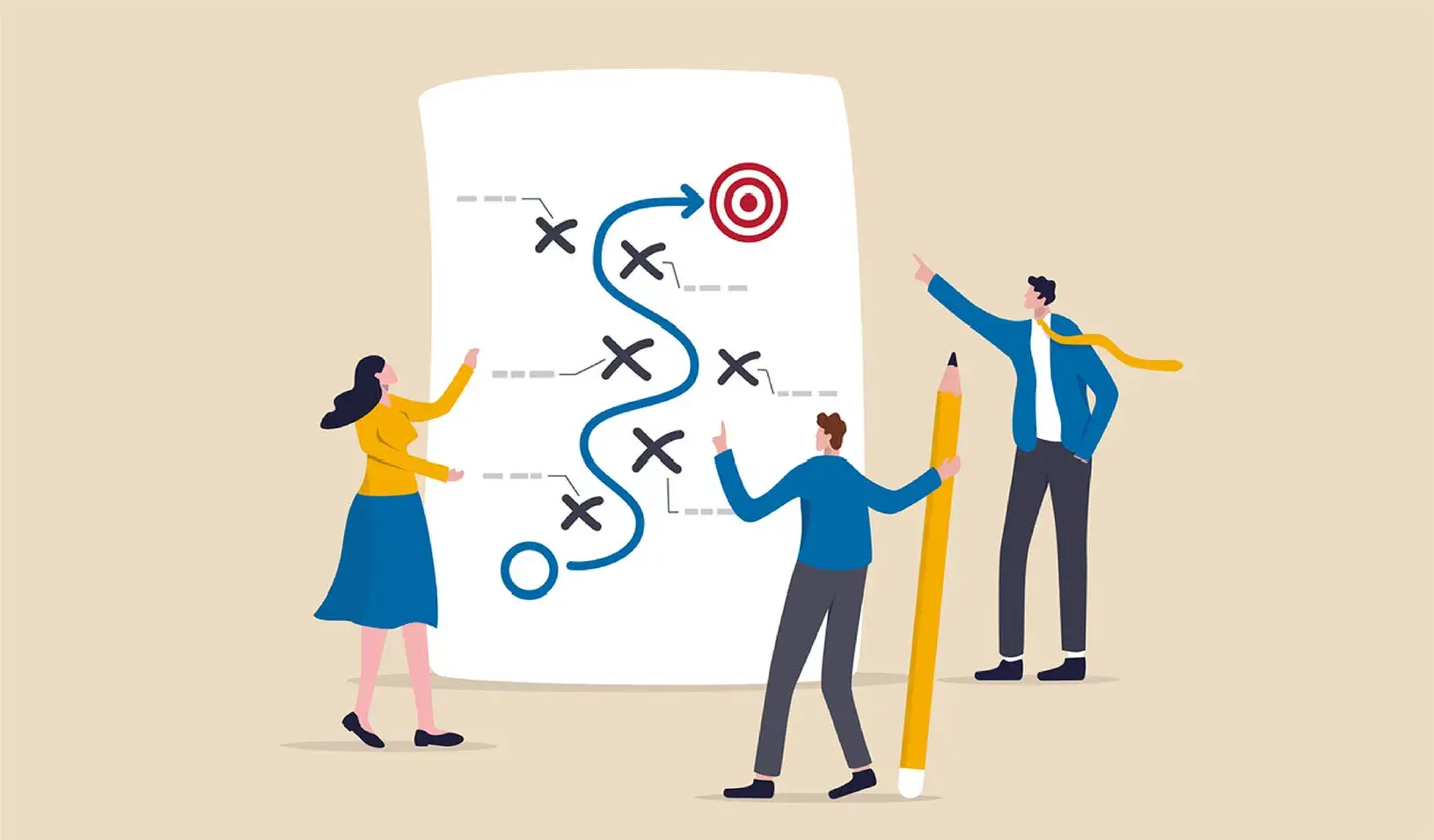
Effective leaders map how proposed actions should produce a desired result, while clarifying the assumptions behind each decision to reveal weaknesses before moving forward.
In their new book, Making Great Strategy: Arguing for Organizational Advantage, Sørensen and Stanford GSB Professor Glenn Carroll organize that process around three main steps:
- Visualization: Start by identifying the intended result, then map out what actions are needed to achieve it.
- Logic: Evaluate the assumptions that connect each step to determine whether they hold true as time goes on.
- Debate: Encourage and consider alternative perspectives to test whether the argument remains plausible across teams.
This process helps experienced leaders act without waiting for certainty. As new information emerges, they can revisit past assumptions and refine strategic direction when the logic no longer holds.
Building Leadership Agility
Leadership agility grows through repeatable habits. Leaders strengthen it by becoming more disciplined about what they pay attention to before making a decision and how they learn afterward.
By considering feedback, planning for flexibility, and encouraging adaptability, leaders can better prepare an organization for change.
Strengthening Strategic Foresight
Strategic foresight begins with understanding what a plan depends on. Sørensen and Carroll encourage leaders to start with the desired result and work backward through the milestones and conditions required to achieve it.
“If you are going to decide to invest a billion dollars in something, you should be as rigorous as possible, and that means pushing yourself to surface the unstated assumptions that you are making,” Sørensen explains.
Once those assumptions are known, leaders can watch for signals that an approach could be weakening. Useful signals include:
- Customer behavior shifts
- Technology adoption patterns
- Regulatory movement
- Talent capability gaps
- Competitor experimentation
- Operating constraints
These signals provide an early indication that an assumption may no longer hold or a strategy may need to shift. Some signals will be incomplete, and early indicators can shift over time, but leadership agility helps leaders refine their approach based on what they learn and maintain focus on the end goal as the work evolves.
Embedding Flexibility into Strategy
Foresight helps leaders recognize when an assumption may become less effective, while flexibility helps them determine how to respond once that information emerges.
A strong strategy should guide action while leaving room to refine the approach as conditions change. Sørensen encourages leaders to put a strategy into practice and continuously evaluate the results to better understand which processes are working well and which may need to evolve.
“You’re going to learn something. The data that’s generated will shed light on your theory and then say, well, wait a second, I see that what we were assuming was that customers really cared about this, and that turns out to be wrong,” he explains. “So now how do I have to then adjust my behavior?”
Leaders can encourage flexibility by:
- Building milestones that trigger strategic review
- Naming the assumptions behind major choices
- Creating room for controlled experimentation
- Assigning ownership for sensing market shifts
- Linking resources to learning
At each review point, leaders compare the results with their original logic to decide what needs to change. Strategic flexibility helps them adjust how work progresses while keeping teams aligned on the intended outcome.
Leading Adaptive Teams
Leadership agility and organizational adaptability also depend on the culture leaders build across their teams. O’Reilly’s research found that adaptive cultures, which emphasize speed and experimentation, performed better in revenue and growth.
“A culture that says, ‘We don’t have all the answers; we’ve got to try these experiments’ — that’s the type of culture that promotes ambidexterity,” he says.
Leaders reinforce that culture by making experimentation and flexibility part of the work, then using what teams learn to guide future decisions.
Leaders can support adaptive teams by creating:
- Shared language around the change
- Clear decision rights
- Space for experimentation
- Feedback loops that surface risk early
By connecting the broader change to individual roles, leaders help teams see how their insight can support the organization as it adapts.
The Role of Executive Education in Building Agility
Executive education helps experienced leaders strengthen their leadership agility. At Stanford GSB Executive Education, participants learn with faculty and peers who bring different perspectives to shared leadership challenges.
Together, executives test assumptions and connect research-backed frameworks to decisions they’re already facing, challenging them to expand their thinking and remain adaptable as their organizations grow.
Several Stanford GSB Executive Education programs support this kind of learning:
- The Executive Program in Strategy and Organization helps leaders diagnose strategic problems and create action plans that fit their organization.
- Digital Transformation: Leading Organizational Change in the Age of AI helps senior-level executives align technology to business objectives.
- Leading Change and Organizational Renewal helps senior-level executives address organizational inertia and support ongoing innovation.
These programs give leaders space to practice strategic agility before the next disruption demands it.
Why Agility is Now Essential for Modern Leadership
Change rarely arrives on a schedule, and teams need direction they can trust. The teams that successfully move forward in times of disruption are those led by professionals who are prepared to adapt as those opportunities evolve.
The most effective leaders will be those who can help their teams continue moving, even as changing expectations and priorities shift the path forward. Leadership agility gives leaders a way to anticipate what the future may hold and decide what the organization needs now.
As organizations grow more complex and new innovations continue to emerge, that capability has become a key differentiator for modern leaders.