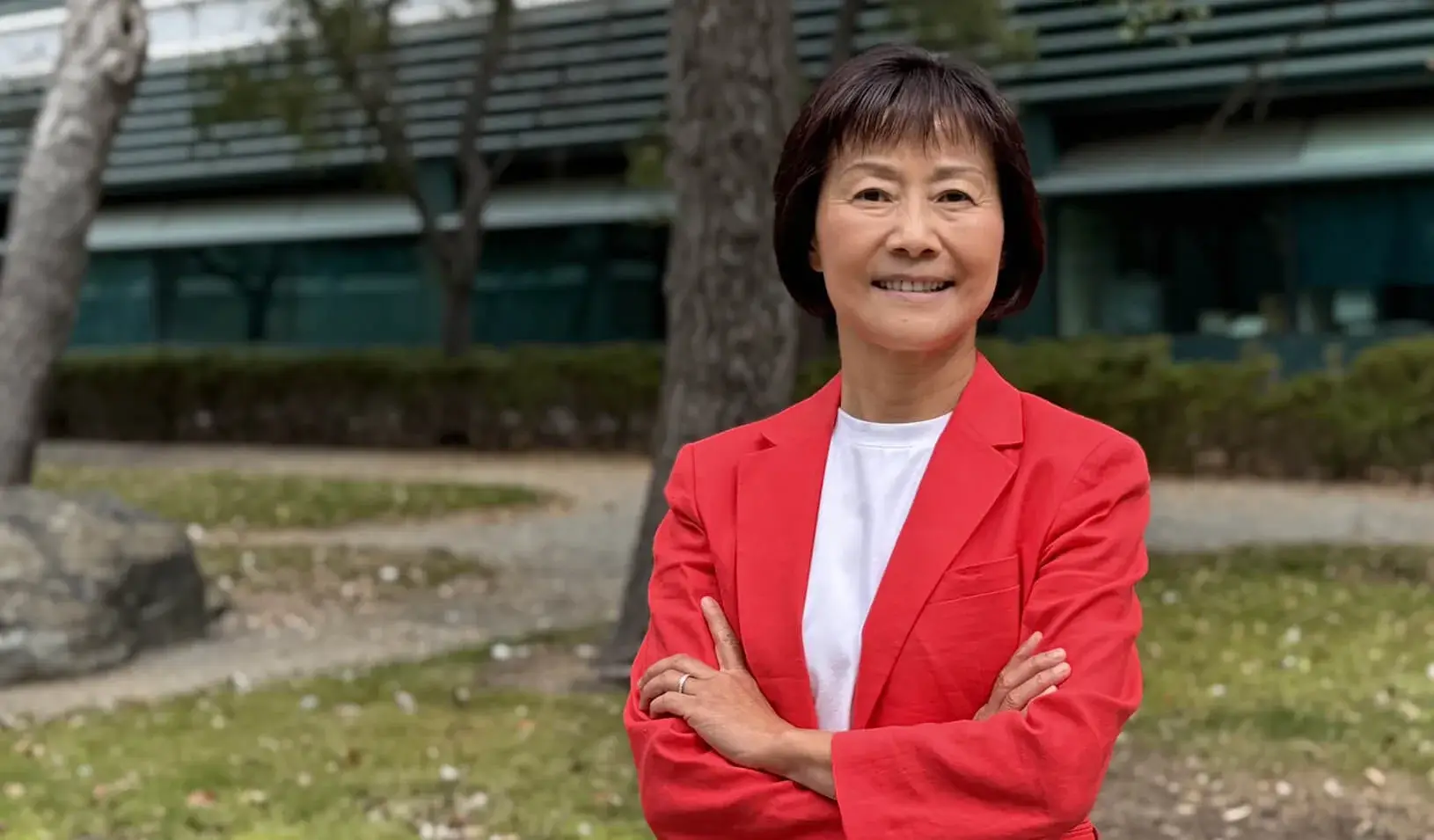
Throughout nearly 30 years at IBM, Ruoyi Zhou has enjoyed being at the forefront of technology innovation. She’s seen tech icon “Big Blue” — founded in 1911 and credited with inventing the hard drive and the ATM, among many other innovations — shift from being a leading maker of PCs to focus on B2B solutions in hybrid cloud, artificial intelligence, and quantum computing.
“I’ve had the opportunity to ride multiple waves of technology evolution,” Ruoyi says. “It has been both humbling and energizing to build a career in such a dynamic and forward-looking industry. It takes curiosity, resilience, and constant reinvention.”
As Director of Strategic Research Partnerships at IBM Research, Ruoyi aims to “accelerate scientific breakthroughs in healthcare, sustainability, and other fields.” She has forged partnerships with the Cleveland Clinic, multisector partners in Quebec, and Yonsei University in Seoul.
A lifelong learner, Ruoyi has taken part in multiple educational programs offered by IBM. Recently, her role changed from launching research projects and partnerships to “exploring viable business models and commercializing these groundbreaking innovations.” Ruoyi wanted to expand her strategic and leadership capabilities to drive greater impact and carry forward IBM’s legacy of innovation.
This challenge brought her to the Stanford Graduate School of Business Executive Education program Driving Innovation and New Ventures in Established Organizations.
“This program taught me that technological breakthroughs don’t always translate into business impact,” Ruoyi shares. “I recognized the importance of turning new technologies into scalable ventures that create real-world value. Doing so requires a different set of skills and a new mindset — one that bridges research, innovation strategy, and business execution. I was looking for a program that connects emerging technologies with organizational transformation. That’s why the Stanford Driving Innovation program stood out to me. Choosing Stanford felt like a natural decision.”
Learning New Ways for Reinvention
Stanford GSB believes innovation isn’t just for startups, but can be challenging for established companies. The program curriculum is designed for senior-level leaders in large companies to help them design, generate, and lead successful innovation. It encompasses design fundamentals, strategy and innovation, and practical tools for real-world business challenges.
“It’s designed for senior leaders like me in established organizations who want to reimagine how innovation, new ventures, and growth platforms can emerge and thrive,” Ruoyi says. “The program exceeded my expectations, with a world-class faculty and an equally impressive cohort.”
Ruoyi says “Thinking Inside the Box” shifted her mindset. “It’s about working within constraints [at established organizations] to unlock new possibilities,” she says. “The idea that ‘perfection is finally attained not when there is nothing more to add, but when there is nothing left to take away’ was a completely new perspective for me. As an engineer, I was trained to keep adding features, often without fully considering the value each one brings to the end user. This helped me prioritize value over volume in product design.”
Sessions on the mind-body connection were “eye opening” for Ruoyi — a Silicon Valley veteran who rises at 4 a.m., juggles work and family demands, and travels the world for business. “I learned that my psychological and physical well-being impacts people around me,” Ruoyi says. She has since incorporated elements of mind-body training into her daily routines.
Learning alongside peers from industries inside and outside of Silicon Valley was also valuable for Ruoyi, as their diverse perspectives “enriched the learning experience and broadened my understanding of innovation across different sectors.”
Leading a Big Tech Icon into the Future
A few months after completing the program, Ruoyi says she’s using her newfound skills, frameworks, and ways of thinking to continue building IBM’s legacy of innovation, while mentoring students and the next generation of technology leaders. “Growing in this industry means staying curious, humble, and bold,” she says. “Reinvention isn’t a one-time shift, it’s a way of working and thinking that I continue to embrace every day.”
Ruoyi reflects on her Stanford experience and her evolving role at IBM. “Innovation inside a legacy company isn’t just possible, it’s powerful,” she says. “Moving forward, I’m more confident in navigating complexity, driving innovation, and fostering partnerships that turn breakthrough technologies into real-world impact.”
Interested in learning more about this program?
Explore the Driving Innovation and New Ventures in Established Organizations program details, curriculum, schedule, and more.