May 27, 2026
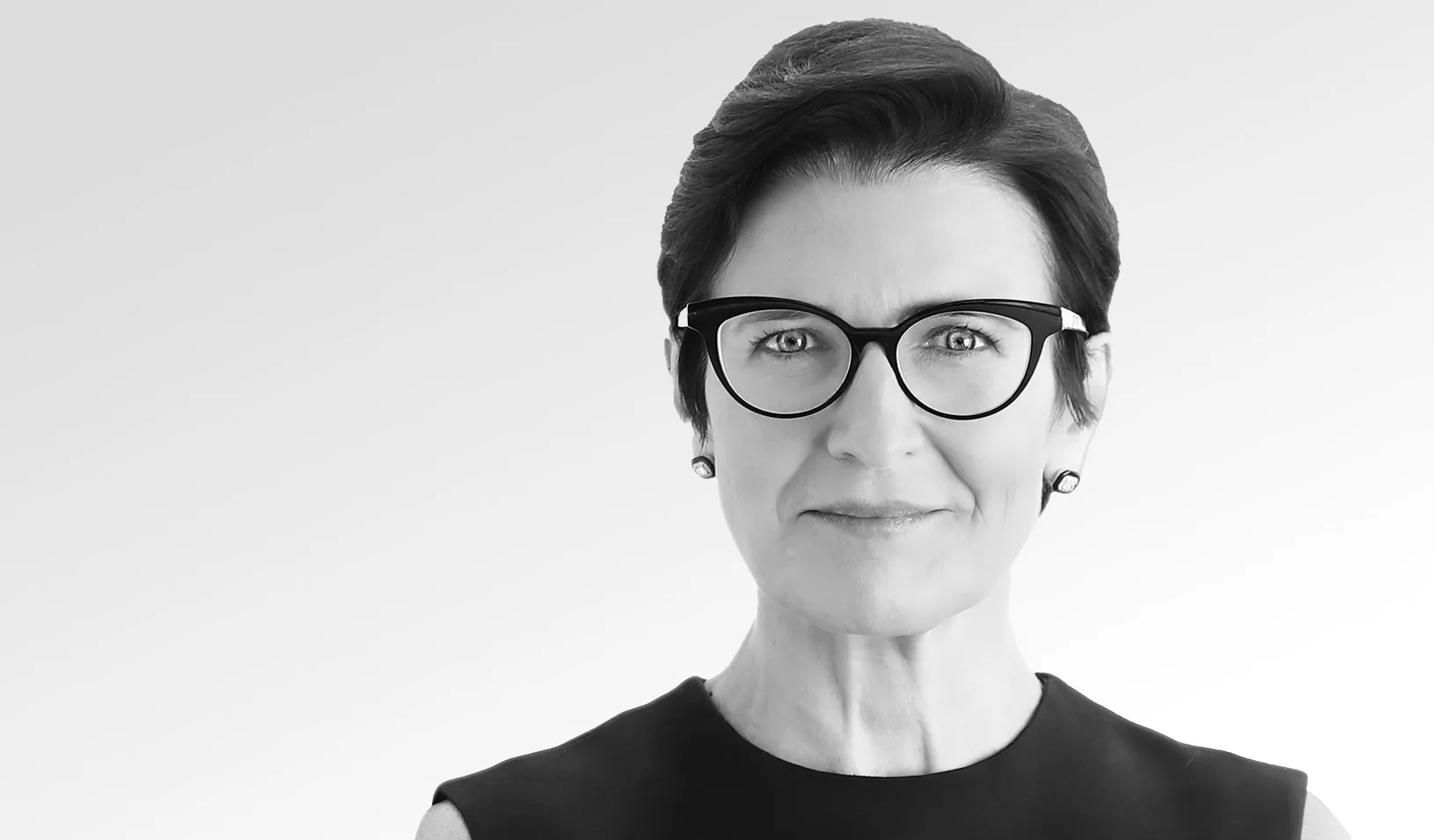
| by Michael McDowellA former Citi CEO once tore up Jane Fraser’s career development plan. “It completely changed the next 10 years of my life,” she recalls, in a conversation at Stanford Graduate School of Business with Sanil Rajput, MBA ’26.
This unexpected move led her to pursue skills and relationships over job titles. “Go the unorthodox path,” Fraser says. “Because — surprise, surprise — you will get the job if you have the skills to be successful in it.”
Fraser, who became CEO of Citi in 2021, is the first woman to lead one of the United States’ “Big Four” banks. She got there by taking the jobs no one else wanted, from turning around a division losing $250 million a year to relocating from London to a call center in Missouri. “If something’s not in great shape,” Fraser says, “it’s amazing how you get left alone to fix it.”
Fraser, who oversaw a major reorganization, offers tips for changing company culture, such as firing “people that just take energy away from the team.” As she explains, “Good people in a bad culture, they’ll go back to being good people again and fix the culture. But an a––e is always an a––e.”
Yet Fraser prizes understanding those she disagrees with. “Empathy is not being nice,” she says. “It’s just being thoughtful about the other side of the table.”
Listen & Subscribe
Stanford GSB’s View From The Top is the dean’s premier speaker series. It launched in 1978 and is supported in part by the F. Kirk Brennan Speaker Series Fund.
During student-led interviews and before a live audience, leaders from around the world share insights on effective leadership, their personal core values, and lessons learned throughout their career.
Full Transcript
Note: This transcript was generated by an automated system and has been lightly edited for clarity. It may contain errors or omissions.
Sanil Rajput: Welcome to View From The Top: The Podcast. I’m Sanil Rajput, an MBA student of the Class of 2026.
Michael McDowell: And I’m Michael McDowell, a producer at Stanford Graduate School of Business. Sanil, could you set up today’s conversation for us?
Sanil Rajput: Yeah. Jane Fraser is the CEO of Citi, one of the largest banks in the world with 200,000 plus employees across over a hundred nations. Jane is a very powerful person. She is one of the first female executives of a massive global bank. She rose up through the ranks from McKinsey and then into Citi running various divisions before she made it all the way to the top. There’s a lot to learn from her. I think she’s an inspiring figure and we had an amazing conversation.
Michael McDowell: You sure did. And as you just described, Jane really is a singular leader. Can you help us understand why?
Sanil Rajput: There are a few things about Jane that stood out to me. One is she’s very direct and part of that comes from the challenges that she’s faced within Citi. She took on some of the toughest jobs within Citibank. She restructured different parts of the organization. She was there through the global financial crisis and she wasn’t afraid to roll up her sleeves and get things done. And a lot of that comes from her being willing to call things as they are, being very truthful about things, but almost using that and viewing it as a form of respect.
I think another thing I admire about her is she leads with empathy. One thing she described is she really values employees’ whole lives. She understands that people even within finance have families. The other thing I really admire about her is just her sharpness and understanding of the world. To run a bank of that scale that operates in over a hundred countries, you really have to understand policy, macro environments and how the world works. And it was clear from our conversation that she reads a lot. She is plugged into the news and day-to-day events and she has a very clear stance for how Citi operates in the big picture. And I think that allows her to stay focused, but at the same time, predict the future.
Michael McDowell: Tell me a little bit about how you prepared for this conversation.
Sanil Rajput: We prepared in a few different ways. The first was understanding Citi. I don’t have a finance background. I come from tech and so the world of investment banking is very murky to me. So I started off just reading a lot about how banks operate, what Citi’s role is in the world, all of their different product lines. And I spoke to a lot of employees at Citi to get their perspective from the inside.
Michael McDowell: Nice.
Sanil Rajput: Then I focused on Jane. I spent a lot of time reading her bio, understanding her background. There isn’t that much about her personal life story out there, so I will admit Deep Research was very helpful in coming up with some of the smaller details. I really wanted to understand the arc of her history, how she got to where she is today. And then the most helpful part was probably talking to insiders. So I had the chance to talk with two members of Citi’s Board —
Michael McDowell: Wow.
Sanil Rajput: … who told me a lot about her as a person and also about the organization. I had the chance to chat with finance professors here at Stanford GSB as well, who gave me their perspective on what would be really interesting to learn from somebody who operates a bank like that. So it was a combination of going out there and just doing a lot of reading from the web using some of the modern AI tools that we have right now and just tapping into our network at Stanford, which is just so connected, especially in the world of finance.
Michael McDowell: Excellent. Well, shall we press play?
Sanil Rajput: Yeah.
Sanil Rajput: Welcome to View From The Top. We are so excited to learn from you today. So let’s jump right in.
Jane Fraser: Yep.
Sanil Rajput: You have quite the international background.
Jane Fraser: Yeah. You grew up in Scotland with this weather, you leave.
Sanil Rajput: Yeah. Well, you did leave. You moved to Australia at a young age and attended an all girls school that’s known for creating a lot of powerful female leaders. How did your early education shape you?
Jane Fraser: Yeah. It was one of those weird experiences. I was in a conference in the Middle East and they had a whole group of now friends who run the different financial institutions and there were two women out of this group of 20 of us and everyone was from all over the world and the two women had been at the same high school in Sydney, Australia. And we were both going, “Wow, that says something about that school.” I’d left Scotland when I was 12. My parents immigrated to Australia and the school was fantastic. It taught you to go for it and that’s not really what you get taught as a girl in the ’80s or ’70s in, God, that makes me so old, in Scotland. And the headmistress there just equipped you to… You gave it a shot, you gave it a go and it didn’t matter if you didn’t succeed, just try it, go for it. And also an insatiable curiosity about the world, about how things worked and other pieces. So it was a wonderful education. Yeah, to this day I think that was a great foundation.
Sanil Rajput: So your school sets you up with a strong foundation. Let’s fast-forward a few years. After graduating from Cambridge University, you began your career at Goldman Sachs in London and then attended Harvard Business School. We’re not going to hold that against you. By 30, you made partner at McKinsey. Your career was on fire, but then you chose to step back and work part-time. Tell us about that decision.
Jane Fraser: Yeah. So back in the ’80s when I was looking at other women, I was at Goldman as an analyst and there were very few women in financial services at that point and those who were weren’t exactly role models. They were either trying to be more male than men and didn’t really like that although just miserable. So I had switched over to McKinsey where I felt there was just a better chance of still having fascinating strategic discussions, career learning and all of those good things, but at least a chance of having a little bit more balance. The year before I made partner, I wanted to have a family.
And so we had uh, our first son was born right before I made partner and I made partner the phone call came in and I was just so desperate to get the head of the firm off the phone because our son needed feeding. I was two weeks into a newborn and at that juncture I thought, “I’m going to go part-time as a partner there.” So I was part-time for five years. And for me, it was the ability to have both a career but also be a mom. If you have a kid, I wanted to have a chance of spending time. And so I found a way that I could do so. I had one less client and several mentors had all said, “Just tell everyone that no, you’re not working this day. If you had other client meetings on that day, you wouldn’t be able to do it.” So they helped give me a bit of the courage to stay the course.
I worked the entirety of the time I was partner five years part-time and that’s given me a lifelong belief that you do need to make choices which will be more in favor of your personal life rather than your professional life at certain times. And that’s okay because as someone told me, your career, you’re going to have many careers in your life and you’re going to be measuring them in decades. So why are you so fussed about something that will be probably 5, 6% of your professional life, make some of those trade-offs and have the courage that it won’t slow you down.
Sanil Rajput: Wow. So it sounds like McKinsey was a very supportive environment.
Jane Fraser: Yeah, it was pretty supportive. I still think they got their value for money. I would say on a 60% program, they were getting 70, 80%, but still these are the ones where you have the courage that at certain points in your career you will have other priorities. You’ll say no to jobs, you’ll say no to mobility opportunities and that’s the point where you have to have the courage that you’ll have other opportunities that will come up and that you find a balance.
Sanil Rajput: Well, toward the end of your time at McKinsey, you co-authored this book.
Jane Fraser: If anyone has any trouble sleeping at night, I really strongly recommend it.
Sanil Rajput: Well, Race for the World is a book about building global businesses.
Jane Fraser: Yes.
Sanil Rajput: And by the way, I’m going to ask you to sign this before you go. I’d love your autograph. When you joined Citi in 2004, one of the most complex global institutions in the world, was there anything you realized you had underestimated in your book?
Jane Fraser: Yeah. I think particularly now the speed of technological innovation and how quickly it moves around the world and then the geopolitics. The geopolitics at the time were pretty simple. Whereas now the impact as a CEO, you end up having to spend a lot more time worrying about what’s happening in terms of the voice of the people. You’re much more worried about what are the different tensions that are going on. And that was something that this was much more purely the business dimensions of it and not understanding the full range of stakeholders the same way. And some of the things we got right, some of the things we got wrong.
Sanil Rajput: You joined Citi at a pretty interesting time. Let’s talk about 2008.
Jane Fraser: Yeah.
Sanil Rajput: You served as Citi’s global head of strategy during the peak of the great financial crisis.
Jane Fraser: Yes. As a woman who liked shopping, I certainly spent all my time selling things.
Sanil Rajput: And fun time to be a banker.
Jane Fraser: Yeah.
Sanil Rajput: During what may have been the lowest point in Citi’s history, what did the institution need the most from its leaders?
Jane Fraser: Look, I think there’s a couple of different pieces. I learned a lot. I’d been at the firm for three years when the financial crisis hit and then was put into the strategy and the M&A role, which is really divesting. And we chose a different CEO and the previous one was fired, and Bob Joss remembers this time well, who’s sitting in the room. I think at that point you need incredibly clinical thinking. You can’t have emotional attachments to different areas. The CEO at the time was a trader and one of the things traders are very good at is they’re unemotional about the different positions, different things they hold onto and also someone who’s very smart. And that mindset was something I really learned at that point from him. Another element I think is important is courage and you have to be courageous to take some of the tough decisions.
And I think having seen how far awry the firm had gone at that point, it gave me long life courage to take the tougher, longer term decisions. And those are things that I saw that group of leaders doing. They really took bold decisions and they put a bit of time in. They got a move on, but they put enough time into the thinking and then they would move quickly. And I think those were the things that I saw that was important. What got us there was a lot of poor management decisions. What I then saw was just sticking to certain principles and I’ve tried to follow that too. It’s very hard to follow to set all the rules you need, but certain principles were in place. So we had one of, we’re not in the business of manufacturing, we’re in the business of distribution. So we will sell everything that’s to do with manufacturing and that way we can be true to our customers of finding the best product for them and giving it to them.
So those types of principles certainly I found incredibly valuable for sticking to certain things the same way we used it in COVID. We had a set of different principles about how we would respond as a firm. We stuck with them. So that would be one of the things I saw from the leaders that I’ve shamelessly copy pasted for the rest of my career was be courageous, was be very clinical about decisions like get your ego and get the emotion out of the way. The ego’s usually the toughest one. And the third one was this other element of curiosity and decisiveness. Yeah.
Sanil Rajput: I’d love to ask you about courage. I think a lot of people in this room are about to graduate from the GSB, figuring out what they do next. When you think about your own risk appetite, what do you do to increase that for yourself?
Jane Fraser: Yeah, my risk appetite used to be awful. If I didn’t feel I was… To this day, I still have to catch it. If I don’t feel I’m 120% prepared for something, I’m out of my comfort zone and my hand up in class used to be like this and I learned it better be like that. And you just had to get comfortable with those pieces. Some of the courage comes from trusting yourself and taking certain leaps through my career. I’ve done all sorts of what’s sometimes lateral, other times, almost downward moves in order to build different skills. And so being courageous to go an unorthodox path is something you guys are going to have to do in spades given where the world is going to be and not just getting comfortable.
You’re going to fail at a few things. That’s okay. And you’re your own worst enemy. So those are the areas that I think the greatest courage is in your own emotional resiliency and your willingness to grasp at opportunities and not worry that if you fail, you’ll pick yourself up and you’ll go for it again. That’s one of the reasons I came to the States. I hated that about the UK, that there was none of that mindset. Whereas I do think this country is pretty remarkable in that and this part of the world even more so. Yeah. Courage is tough.
Sanil Rajput: It is tough and —
Jane Fraser: It’s learnt. You can learn courage. You don’t need to be born with it.
Sanil Rajput: I think you showed a lot of courage in some of the moves that you made during your time at Citi because after the crisis, you repeatedly chose to lead parts of the bank that were in tough spots. For example, when you took over Citi Private Banking in 2009, the division was losing $250 million a year. Why did you pick these tough jobs?
Jane Fraser: Yeah. I mean, because someone once asked, “Is it because none of the men wanted to take them?” There might be a bit of truth in some of that. I think one of the things, I’m not a tweaker so I never wanted a job where you’d just be tweaking things to make it better. I think I’d be awful at it. I think a lot of people in this room would be awful at tweaking jobs too. It’s more fun to be bold in making changes. And then if something’s not in great shape, it’s amazing how you get left alone to fix it. Whereas if something is actually going well, you have everybody giving you helpful advice and opinions on what you can be doing better. So one of the fun things about turnarounds or changing things more radically, quite often you’re left a little bit more on your own.
Then when it starts getting successful, then everyone jumps onto the train and heads that way. But I’ve always quite enjoyed transforming things a bit more and then you learn a playbook of what you need to do and you can repeat a lot of it in different situations like get the team in place that you need as a first step because otherwise you’re going to be doing everybody else’s job and be really lousy at the one you’ve actually been put in to do. So there’s just different steps that I put in place each time now and they’ve been helpful so far.
Sanil Rajput: Well, with every new challenge you took on, you stepped into a different part of Citi with different people, different rules, different ways of life. When you join new teams, how do you earn their trust and the right to be their leader?
Jane Fraser: So I’ll give you an example. I was running the private bank out of London and it’s a fantastic job. You’re serving the world’s billionaires and their families and they all have incredible stories about how they made their fortune. They usually then lost it, then they made it again. And it was one of the most humbling jobs too, because you would, by definition, were never going to be as successful as any one of the clients, so keeps you grounded. But I’d been doing that for four years and I could tell I felt the business, it was time for the business to have a different leader and I thought it was time for me to do something else. So I had a list of criteria of different things I thought would be good and I moved from London to 45 miles outside of St. Louis, Missouri from running the private bank to running the mortgage business at the back end of the mortgage crisis out of a call center.
And everyone thought I must have really screwed up to be doing that move. For me, it was logical. I’d learned how to run a factory business. I was doing something in the middle of a big crisis at the end of the great financial crisis. I’d have exposure to the Hill and Congress. I’d learn different risks. So I had this whole categories of things I thought it would be good for. And I stood in front of the cafeteria and there were 22,000 people in the mortgage business and the market had just crashed again in mortgages and they all knew half of them were probably going to get fired. And I stand up in St. Louis, Missouri with my accent, having never worked in mortgages in my life before. And that was one of those moments that I was like, “Okay, you might have the job, but you have to earn the right to lead.” And I thought the only way I could get these people to follow me is if they feel I’m really in it with them.
I thought the only way I can persuade them is my son, who was 11, who was rather upset about being told to move from London to the States as 11 year olds are. I explained to them that he had come for the day, he had had his day at the new school he was going to and I explained he’d run around the baseball pitch the wrong way because he didn’t know which way to run because he’s used to cricket where you go backwards and forwards. And I felt that would be the only way that that audience could say, “Okay, she’s actually is coming here. If her kids are moving here, she’s going to be here.” And then we just always talk to them straight.
But those are some of the things of part of it is they’ll trust you if they feel you’re going to talk to them straight and you put yourself into their shoes. So how would I want to be communicated to what would it be and then get good people around you when you don’t know anything. Just go and get people who know, have that courage to have a team that is better than you are at any of their jobs and just lead them and help them be successful. So those are the things that I learned how to… I don’t know if you ever earn the right to lead, but that was the way that you capture the hearts and minds of people.
Sanil Rajput: Well, you clearly did something right because on March 1st, 2021, you became CEO of one of the most systemically important banks in the world. You also became the first woman to lead a big four US bank. When you stepped into that role, did you feel a sense of responsibility beyond the institution itself?
Jane Fraser: Yeah, it’s weird. The first day you become a CEO, I remember walking into my boss, what I felt was my boss’s office and you sit down in the chair and you suddenly feel the weight. There’s a weight around you. And I see it from my friends who are CEOs when they stop and they just say the weight’s lifted off because you are, and many of you have probably run your own companies before this or will be shortly… If you’re the CEO, that defines who you are. You’re no longer Jane. Even to friends and other people outside, you are the role all the time. Even Friday night when you just want to go out and relax with your husband and have dinner, you are the role to everyone around. So that sense of responsibility is there.
And then I definitely felt it a bit more for being the first woman in the role, just a sense of you just sat there, you’ve got to try and get, you’ve got to do the Taylor Swift, shake it off, because you’re not going to do a good job if you’re feeling that pressure and that element of, “I better be in the job for… I better do a good job.” It doesn’t help, but you definitely felt the responsibility. It made me more mindful about how I did things rather than just the what I was doing and that I think everyone should probably feel when you’re going to leadership positions because people will remember you for how you led or how you turned up much more than they’ll remember you for whatever decision you made or you took. So I think that piece is important.
Sanil Rajput: When you first sat in the CEO chair, you had a bit of a job to do. In your early days as CEO, you said that Citi was failing to match the efficiency and profitability of rivals like JP Morgan and you were ready to roll up your sleeves and make some changes. When you need to change a complex organization of 250,000 people, where do you even start?
Jane Fraser: Yeah, I was lucky. I knew the company, so I knew the things I thought needed to get changed strategically. And so I started with, and it’s going to sound, you’re all going to be like… I started with the vision and said, “What is it the firm is going to be?” And define that around the client base we’d be, and what were the different business that fit together where we had a competitive advantage, where there were synergies across them and I felt we could really scale and win and then get rid of everything else. And the world had gone very… It was starting to get incredibly complex and we were running businesses that were both global in nature and incredibly local in nature. And my view was I had to get out of everything that was locally defined so I would only be in businesses that could have global platforms and then the last mile could be local, but that got us out of retail banking, branch based banking out of local credit card.
We got out of all of those businesses, but I was always very motivated that, you will inspire people with where you run to, not just what you’re getting out of. And so it was always mindful of defining what we would be, but the vision wasn’t just enough. It was also what were the cultural changes we need to make. So one of the first things we did was a from/to in terms of some of the culture and then putting that into the leadership principles that we use for how we recruit and evaluate people. And I ended up putting the time in and I had a pretty clear view of over a 5 to 10 year period where I’d imagine the org structure would go, how we’d need to be re-engineering and changing the bank. So I had a pretty good sense of the journey and a lot of the decisions were then the timing. When’s often the toughest piece? So I knew I had to sell everything before I could reorg. Once we’d reorged, I knew all the different pieces that we thought would fit together.
So a clear sense of who we were, but the most important bit was just it’s that never make it a no vote, always make it a yes vote. What is it that you want the firm to be, not what you want to fix because you will not inspire people with, “We’re going to fix this, we’re going to fix that.” You will get incredible things out of people and they’ll take the mountain for you if you lay out something that they get really excited by and you see that every single day in this part of the world, but even in boring financial services, that’s true and we’re able to get a lot of talent to come and join because teams like… Some teams just love, they love running into the fire. Some people are just made that way. And so if you can galvanize a team to run into the fire and do amazing things, they surprise themselves and it becomes infectious in an organization and that can be true of a team. It can be true of a company. Yeah.
Sanil Rajput: I think there’s something really powerful about how you galvanize teams and I think we can see that in a lot of the transformational work that you’ve done. I want to talk about one transformation in particular. In 2023, you launched a massive restructuring project that completely redesigned the accountability structure at Citi and put five core businesses directly under you. How do you deal with resistance and bring people along with you?
Jane Fraser: Yeah. So we often find if in companies you’ll have multiple layers within the company and that just slows down communication, it slows down innovation and productivity. So we took out four layers in our company. One was the layer beneath me and that then brought the management of the bank much closer to the actual businesses day-to-day. And then we took out three layers in the middle of the organization, which is often the [inaudible] or whatever you want to call it, that stops things inside a company. And if you’re trying to get somewhere to be agile that’s stuck in there, but we’ve always done it this way, you need to put a lot of change through. So we changed through a huge number of people. 50,000 people in our bank had different managers in a three-month time period, but that’s when you can then put new norms in, get rid of more of the bureaucratic processes, get things to be agile, and then get people to suddenly believe they can innovate.
And that’s remarkably powerful because some of you will go and work in companies that or your own companies which will be smaller and you don’t have to worry about the legacy. Others of you will be in institutions where you’re going to have legacy to deal with and you want to have your cake and eat it of what are the best strengths of that, but then what are the areas that are really getting in the way? And we’ve always done it this way. People getting comfortable. A lot of folk can be very complacent. The biggest thing is fire every asshole in your company because good people in a bad culture, they’ll go back to being good people again and fix the culture, but an asshole is always an asshole and it’s amazing how that just drains energy.
So the people that just take energy away from the team, get them off the team, help them find another opportunity. You don’t need to be an asshole about it. So you can help them get into something else but get rid of them. And my favorite one on that was one of my friends who had been McKinsey with me, runs one of the big German insurers and he’d said he’d done the same. He got rid of people who were draining energy on the board, on his management team, two superstars, but they were there and then he said, “And I only see my mother once a month now rather than every weekend. And that’s really helped my own emotional energy completely.” So those are some of the things that make a difference. Yeah.
Sanil Rajput: On the note of firing the assholes, I think there is an element of empathy that you have to do that with. One of my favorite quotes from you is that empathy can be a competitive edge. How do you lead with empathy while making decisions like layoffs that will fundamentally change people’s lives?
Jane Fraser: Yeah. So it is a bit like that story in mortgages where you’re standing, you go to a site and you’re going to tell everyone that the site is going to get shut down and you put yourself and say, “Okay, I’m a member of that site. How do I want that to be communicated? I want to be told straight. I want to be told it clearly upfront and then I want you to tell me what are you doing for me.” So empathy for me is putting yourself in the other person’s shoes and understanding their position. I don’t know how you sell a thing to a client. If you don’t put yourself in their shoes and don’t… If you’re sitting there saying, “What is it I need to sell? What is it I want to sell to them as opposed to what do they need?” And if you go into the, “Okay, what do they need?” You unlock a whole range of things that you would never do if you were just pushing your own agenda or pushing your own pieces to it.
So to me, empathy is about understanding needs of your employee base, of your customers, of someone… We had an activist shareholder in our stock and I remember my coach telling me I had to deal with them with empathy and I had a very rude response to that one. And they said, “No, but understand the pressure they’re under and then you’ll be able to… If you can solve for them, they’ll get out of you.” And he was absolutely right. I wouldn’t quite call that empathy in the traditional form, but when I did put myself into, okay, what are the things that these guys are embarrassed and embarrassed about that they’re not looking good to the outside world in and what’s a successful off-ramp here? That’s when we had a breakthrough.
So that’s where I think empathy gives you a competitive edge because there’s far too many people that don’t try and understand the other perspective and then just not being a jerk to people. And Warren Buffet, who was in our stock for a while and he had two things, pieces of advice he gave me, which I’ll pass on. He said, “You can always call them an asshole tomorrow.” Really good piece of advice. “So never in anger respond to that email or other pieces.” And then he said, “Criticize by category, praise by name.” And that’s also another really good piece of advice because you’re always going to regret. If you criticize someone by name, it’s going to come back and bite you. So those are different elements of empathy. Empathy is not being nice, but it’s just being thoughtful about the other side of the table.
Sanil Rajput: In addition to empathy, you’re also known for leading with humor. A few years ago, The Wall Street Journal called you Citi’s Chief Executive Prankster that is —
Jane Fraser: My team’s gullible.
Sanil Rajput: Okay. Well, I was going to say you stole my dream job title. That’s pretty cool. Tell me more about your favorite prank and how you use humor as a leader.
Jane Fraser: My favorite one was normally we have a team building exercise when we have the quarterly management offsite and we have a site up in upstate New York. It’s about an hour’s drive out of New York City. And so we decided that, and we told everyone, just bring athletic gear, comfortable athletic clothing. We’re going to do an outside activity in the evening. And then on the Thursday, this was the Monday was the offsite. And on the Thursday we found a website for the most dodgy skydiving club near the site and we sent out the waiver form from them, told everyone to sign them. And the only one who really didn’t fall for it was our general counsel. We said there’s no way that the insurance would cover having the entire senior management team of Citi Group jumping out of an airplane on a night skydiving team building exercise.
So he didn’t fall for it, but we had all the other excuses come through, “I’m too fat.” There were various other ones and others who signed up for it. And then the next day on the Friday we sent out just a note and Friday was April Fool’s Day and we sent an outer note saying, “It’s always good to get ahead of April Fool’s Day with your team.” So that was fun. The best bit though was actually that was the other cool thing we did. As soon as the note went out, we had a 65-year-old leader on the team, woman, and we had her send a note out responding to everyone saying, “Sign me up. I did this a few years ago. Best thing I’ve ever done.” So none of the 50-year-old men were going to say, “I’m too scared.” after that. Gotta find the [inaudible].
Sanil Rajput: If you ever do decide to go skydiving, I would love to come with you.
Jane Fraser: There you are.
Sanil Rajput: [inaudible]
Jane Fraser: There’ll be several people pushing me out of the plane if they do.
Sanil Rajput: Well, luckily the team’s still around. You didn’t go on that dodging skydiving adventure. So now we can talk about the future for Citi.
Jane Fraser: Yes.
Sanil Rajput: Citi’s vision is to be the preeminent partner for institutions with cross-border needs, but between tariffs and geopolitical conflict, it feels like our world and financial system are becoming more fragmented. Does that change how you lead a global institution?
Jane Fraser: Yes and no. I think it doesn’t change certain things. So trust and your reputation are probably two of the most critical elements, particularly as a bank, but I think for any institution, reputation is absolutely critical. And so thinking about, for example, today, not just fragmentation but the political environment, you need to run a company as independent of who’s in power in whichever country and make sure that your decision making is the right thing for the institution. And that’s hard. I think when you’re a global company, we’ve had operations in Venezuela for years, Haiti, other places, you understand a bit more of what that is like. We have a bank in Ukraine. So you get used to some of the geopolitical tensions that are out there. But I think we are moving from a world where America dominated to one where China is far advanced of America in many different industries and ultimately we’ll be moving to much more of a multipolar world.
The famous middle powers will be rising up as well. This will all take time, but I think it’s one where you really appreciate diversity because there isn’t one model that’s the right model. There isn’t one way of doing things that is the right way of doing things. And so as the world becomes more fragmented, we’ll find a greater diversity of different approaches. We’ll find different diversity of business models. We’ll certainly have a lot of tensions to manage. And as a leader on a global institution, you then have to keep going to what is it that your clients need and then is that different in different parts of the world and you adapt accordingly? But always, those principles always go to the use case.
Don’t get outraged by, oh, this is shocking, this is happening in the world. I can’t believe it. It’s just a waste of time. Focus on what are the things you can control? What can you do about it and how do you help people succeed in that environment? And we’ll all be in client service in different forms. The most important thing is be really clear on the use case because there’s lots of hammers in search of nails. Hone in on a nail and then get the hammer to crush it. But be very clear in a fragmenting world of what your job is and what your company’s job is and stick to that and don’t get distracted by the noise.
Sanil Rajput: On the note of sticking to business, Citi is systemically important. And for the audience, that basically means failure would seriously affect the global economy.
Jane Fraser: So just to give you an example, we move $2,000 trillion around the world every single year. How do you sleep at night with that? Because if we go down, and this is for 5,000 multinationals, this is payroll, supply chains, cash management, the foreign exchange, hedging, et cetera. It’s the working capital of the multinationals around the world. So when you say systemically important, the weight I talked about earlier, if something goes wrong in our company, that causes chaos for everyone else. So you’re constantly with that weight of making sure you’re trying to stop bad things from happening or recovering very quickly when they do. That’s what systemically important means.
Sanil Rajput: I’m trying to wrap my head around what $2,000 trillion looks like.
Jane Fraser: I know.
Sanil Rajput: If you’d like to move some of that into my bank account, I wouldn’t mind.
Jane Fraser: It’s $5 trillion a day. It’s bigger than the GDP of Germany. Yeah.
Sanil Rajput: Well, you work closely —
Jane Fraser: And this is America. This is the soft power of America. These types of things that the multinational companies have done everywhere around the world, make sure the world works. It’s something to be proud of. We often don’t talk about sometimes you don’t feel so proud at the moment, but there’s plenty to be proud of.
Sanil Rajput: When you’re working closely with the governments of nearly a hundred countries, maybe even more, when economics and geopolitics now become more and more intertwined, how do you preserve Citi’s neutrality while still maintaining this global financial stability?
Jane Fraser: Oh, you’re not a politician. And thank God, but it’s a much easier job. And in the sense if you are, you have a set of fiduciary responsibilities, you have a set of stakeholders, your shareholders, your employees, your customers, society writ large depending on the company. And your job is to do a good job at the day job and run the organization, not for the renters, but for the long-term owners. And they have different… A renter and a long-term owner has very different sets of principles or things that they want you to do, let’s put it like that. And I don’t find it hard. It’s pretty clear what I need to do and what our company needs to do. And what you don’t want to do is turn yourself into a politician.
I don’t have the right to tell Mexico what the government should be doing there. I can advise them on economic policy and what will help development and growth and progress from that point of view, but stay clear of having the arrogance of telling them how to run their country better, but advise them on what is better economic policy, what’s worked in different places, different pieces. And frankly, as soon as you move into that mode, you are far more powerful because they know that you don’t have… It’s not your agenda you’re working on or your ego, you’re just there trying to help and cancel and that’s power.
Sanil Rajput: We’ll be back with more of Jane Fraser after this.
Sanil Rajput: Let’s talk about technology.
Jane Fraser: Yeah.
Sanil Rajput: With the rise of fintechs, financial innovation today is happening at startup speed.
Jane Fraser: Yeah.
Sanil Rajput: How does a bank with Citi’s scale compete with newer companies on innovation?
Jane Fraser: Yeah. And you said the key word there. I think today there is a race for scale. Again, where Europe’s struggling and America and China are winning is scale and the ability to innovate at scale is what’s critical. That’s where all those things about having an agile organization, it’s not BS. You need people to be nimble, you need to be willing to shut down businesses or things that are going to get disintermediate and disintermediate yourself. But the most critical thing with fintech, think about it. We were talking with a company the other day in payments and they were saying, we move, we’ve hit a trillion dollar mark. It was an IPO pitch. And they turned around and said, “So how many trillion do you move?” You’re like, “2,000 trillion a year.” Get on our platform, we’ll help you scale. It was probably the lower point of the IPO.
It’s not where you’re endearing yourself to them. It was we’re so much bigger than you, but there are places where scale makes an enormous difference today and it’s a race for scale and we often see companies topping out. So a fair amount of what you’re trying to do is innovate so you’re getting rid of the things that you’re going to get disintermediated on, but you’re also wanting to incorporate onto your own platform where many of these different fintech players can be augmentative, but you can also help them, everything, your competitors and your collaborators all start merging and you’re better off trying to find win-wins each time rather than zero-sum games. So that’s a lot of the approach is how do we get our egos out of the way, find win-wins with different players, but equally where you don’t think someone’s got a good business model or you don’t think they’re good, not doing business with them either. Some of the crypto players are in one bucket there and others are in the good guy bucket, for example. Yeah.
Sanil Rajput: When I was looking into some of the technology that Citi’s working in today, I was surprised to learn that you’re actively exploring tokenized assets and even your own stablecoin. When you think through emerging technologies, how do you differentiate between a true structural shift in finance versus another cycle of tech hype?
Jane Fraser: You don’t know. So you need to be, if we looking at tokenization, stablecoin, different areas, no one can tell you which approach is going to win what it is. So you do want to have a portfolio and you want to be learning and you want to be able to pivot if you need to. But again, it comes back to this hammer and nail. If we look at where finance is headed, it’s moving to always-on and instantaneous and our customers want you to be able to move money around the world instantaneously 24/7 and they want to do it with no hassles. So if the new technologies come that are enabling that, tokenization is one. We’re going to adopt it very quickly.
We move billions of dollars in tokenized deposits around the world all the time and we merge the fiat. So dot actual cash with the coins or with the tokenization all on the blockchain. So for us, it’s just a question of what’s the use case? How does it help our clients? If it’s better than the solutions we have today, you jump on them and then you make sure they work and then shut down the old stuff and be willing to do that. And the benefit again, scale if you’re looking at doing tokenized deposits, it’s much easier off our platform where you’re moving trillions a day than it is if you’re trying to start it up. Yeah. But you’ve got to be willing to shut down things and disintermediate yourself, which is hard.
Sanil Rajput: Well, we’ve talked about tokenized assets.
Jane Fraser: Yes.
Sanil Rajput: There’s another technology that is top of mind for everyone in this room and that is AI. AI has now officially entered the world of finance through credit memos, risk analysis, and now even AI investment banks. What role does human judgment continue to play inside of banking that AI is not going to replace?
Jane Fraser: Look, trust. If you’re sitting there with a CEO, fellow CEO, and they’re looking at doing a massive merger, a transformational deal, another piece like that, and you’re sitting there going through what are the different decisions they’ve got to make, how are they thinking about it, pros, cons, what approach? And you’re then imbuing confidence into helping them, confidence in their decisions so they’ll go ahead. And that AI can’t teach you. It can teach you the what’s the right answer to do, does this make sense, et cetera, but there’s still this relationship, trust, human element that’s absolutely critical. And I see it with relationships. We have a great connection between American Airlines. Before you were all born, we had a credit card with American Airlines and it’s been a multi-decade relationship, but if the CEO and I didn’t really get on, we were negotiating a renewal of the relationship, AI couldn’t do that.
That was about two human beings saying, “Okay, we’re committing to do some pretty bold, difficult things together and we’re in it together and we both trust each other.” Those are things that AI doesn’t replace. And it also gives me that I look at it and go, we still need to have apprenticeship is still how a lot of humans learn and we’re going to be greatly enabled by AI. It’s going to do amazing things that are going to make jobs fascinating, but we’re still going to need pyramids and we’re still going to need people to learn because human beings are still going to be critically important. Jobs will be much more interesting and we’re all going to have to get used to changing jobs and reinventing ourselves regularly. But I think the notion that human beings are going to be sitting on their rear end watching sports all day long and not having a valuable role to play is, we’re better than that. I don’t believe in that, but it is going to be disruptive.
Sanil Rajput: Thank you for sharing the importance of relationships and I want to pause there to pass the floor to a few members of our audience to ask you some of their questions.
Student: Hi, I have a question.
Jane Fraser: Yes.
Student: Can you hear me?
Jane Fraser: Yes.
Student: Hi. I’m Verasa.
Jane Fraser: Hi.
Student: I’m an MBA2. Thank you so much for being here. I appreciated a lot of what you shared on just human-centered leadership and there not being one right business structure to do things. You touched a little bit on earlier on the question that I had, but I really wanted to talk about just as you steward so much systemic capital and wealth in the world, how do you think about the responsibility to support on the fronts of wealth inequality domestically and globally and what are some specific levers that you believe that an institution like Citi can pull to actually help support there?
Jane Fraser: I often think that I say this quite often, you have to be a bank with a brain, a bank with a soul, and the soul is your people. I look at Ukraine, our people in Ukraine, our bank has not… It’s the only American bank and one of the only international banks in Ukraine. Our people have not let that bank shut one day because if it does, the payrolls of the multinationals that operate in Ukraine will not work. The supply chains into Ukraine will not work. We run the Visa network and the Clearstream network there, so the credit card system, all these different things will not work if our people didn’t turn up.
And just before the war broke out, we moved half our people to the border, Lviv, who we’ve all heard of now. And then when the war started, we set up operations with the bank we have in Poland and all our people moved who could, the men couldn’t move, but all of the women moved and the wives and families of our employees, we moved them all to Poland and they lived with our Polish employees and we set up a school in the building in Poland for the kids. And this has been the case for four years. Right now, our employees, we gave them all generators because they only get at most four hours of power a day and it is cold as hell at the moment in Ukraine. It is brutal.
But they know that if we go down, it is highly consequential for the country. The same we’re the only bank in Israel, US bank, and we play an important part similarly there, the same in much of the Arab world and the rest. So it’s easy in the developed world to be sanguine about this because we have it pretty damn good. But when you go to other countries and you just see the motivation people have to make sure that things are working so their country operates well. I find our people will do extraordinary things to make sure that the bank can support companies and keep economies open. And the other bit, we saw it in COVID, we saw it many times.
Again, folk will get out of bed to serve a client. They’ll get out of bed too and be really motivated if they’re feeling that what they do matters. We’re the number one affordable housing lending in America. We have a chronic housing shortage and the team that does that, they are so proud and they go the extra mile to try and make sure that we can get more units built, get tax policy passed to help that and other elements. So those things, it’s not just this corporate social responsibility, tick the box, BS stuff. It truly motivates people to work for a company that is trying to do good things, trying to do the right things. And I think that’s those companies that can do that, it’s a competitive advantage. It can’t be the raison d’etre, but it’s got to be part of the package.
Student: Hi, Jane.
Jane Fraser: Hi.
Student: I’m Caroline. Thank you for all your sharing. So I’m the current student of MSx. So before I came here, I worked as the investor relations officer for the public tech companies. So I really appreciate all the help that we had from the Citi and Citi has been the trust partner in our capital market. So I have a question that Citi operates across over 180 countries. How do you think about the boundary between the global standardization and the local adaptation today? And in your view, what’s the most fundamental structure challenge facing global financial institutions right now?
Jane Fraser: Yeah. A few different pieces there. The benefit we have is not just we’re in lots of countries, but we’ve been in China 125 years, Japan the same, India the same. We just had a hundred years in Australia, we have a hundred years in Germany going up. So often in Korea, we were the first foreign bank. Depressingly we opened roughly the same year I was born, made me feel ancient, but it gives you much more local understanding. And even when you’re global, our local teams on the ground who understand risks, who to do business with, who not to touch for business in different parts of the world, who can also just connect with the clients there, know who won the soccer that weekend or what’s been going on on the ground, those other elements, they’re very important. So even for big global companies, that local knowledge on risk, the relationship to mention these other things is where a lot of the richness lies.
And I think the best global company is they can have a standard product suite, but understanding all the local nuances and other pieces is where a lot of the joy of a global company comes from. And as the world fragments, I think it comes back the same thing. There is no one model. We laugh at Citi and say the benefit of Citi is we have one language and that’s bad English because everyone is from everywhere around the world. But with that comes an appreciation, there is no right way, there is no single way of doing things. There are different ways of doing it. So I would encourage all of you in your own companies or wherever you work, find ones that have that, what I call this is a global mindset, that there are many different ways of doing things because when you have that openness and I think that becomes the most important competitive advantage that you could possibly have as a company is appreciating there are many ways of doing things and not just one. All right.
Sanil Rajput: Thank you so much to our audience members for some great questions. Now Jane, in a View From The Top tradition, I have a few rapid fire questions that we’ll run through quickly. Are you ready?
Jane Fraser: I’m ready, I think. So usually when you get asked a question, you have no idea what the answer is. Yes.
Sanil Rajput: It’ll be fun. Most fun role —
Jane Fraser: Please don’t ask me what my favorite Bad Bunny song is.
Sanil Rajput: I don’t think I know any Bad Bunny songs, so we’ll avoid that one. Most fun role you’ve held at Citi.
Jane Fraser: Oh, running the private bank just because of all the entrepreneurs and they all tell you their story and what they’ve done, what their fears and opportunities are.
Sanil Rajput: Okay. Cambridge UK or Cambridge USA?
Jane Fraser: Oh, Cambridge UK. It’s the real Cambridge.
Sanil Rajput: Favorite Scottish food?
Jane Fraser: Oh, I like Haggis. Yeah.
Sanil Rajput: I’ll try it one more. And if you weren’t CEO of Citi, what would you be?
Jane Fraser: Oh, I would love to be a travel writer or travel advisor. I love going to different parts of the world. So I have a list on my iPhone of when I’m done, where are the places that I’ve gone to, but I’ve actually never been able to visit that I want to be going to see.
Sanil Rajput: Amazing. Well, Jane, I have one final non-rapid fire question to close this out. There are students in this room who want to lead Fortune 500 businesses one day. What is one piece of advice you have for them?
Jane Fraser: I’ll make it quick. The old CEO of Citi called me up one day and said, “I want you to come to my office and give me your development plan.” So I quickly wrote it up that night and brought it with me. And do you remember when Nancy Pelosi just tore up the things behind the president? That’s what he did to my development plan and he said, “You’re thinking about it all wrong. You are laying out a plan as to what are the jobs you would like and how you get there.” He said, “What you need to think about is how are you going to succeed in those jobs? So what are the skills, the relationships and the other things that you need to be acquiring in order to be successful in the jobs you want and go about getting those?” And it completely changed the next 10 years of my life.
I went around doing much more lateral moves. I went out systematically building what are the different skillsets, relationships, things I would need to know to have the jobs at the C-suite of Citi rather than just laying out an aspiration. And I took a highly unorthodox career path and I’m the luckiest woman imaginable, it’s been a fabulous life. So go the unorthodox path, but think about what are the skill sets and things I need to be successful in the job, not how do I get the job? Because surprise, surprise, you will get the job if you have the skills to be successful in it.
Sanil Rajput: Ladies and gentlemen, please give Jane a hand.
Michael McDowell: All right. Talk about 125% prepared. That was an extremely dense conversation from leadership to the contemporary realities of the global financial system to culture, reorgs, and more. Where would you like to begin?
Sanil Rajput: I’d love to start off with her leadership style. Jane was way easier to talk to than I’d expected, especially for an executive at that level. I think she just felt very human. It felt like I was talking to a friend, especially because she was light, she was very charming. She was able to unpack serious situations, take a step back and view them in a very human way. And that definitely reduced my stress going into this conversation. I imagine that has a pretty massive effect on her employees as well. We talked a little bit about her comedic style too. I didn’t know that had a place in finance. I know we have DJs running big banks like Goldman Sachs, but I wasn’t sure if comedians would be at the top as well.
And as somebody who likes to lean into humor, that made me feel like I could bring my more authentic self to work. And I wonder if some of her peers feel that way. The final thing I’ll touch on at least right now on her leadership is she just has such a great sense of organization. The way that she took Citi as a behemoth and as a very complicated product and turned it into five distinct business lines, that reorganization is bold. I’m imagining it took a lot of effort to bring employees along the lines with her, but now she just has such a better grasp of the business. And so to me, it’s a sign of what it takes to manage a company at scale. It’s a level of organization and framework-based thinking that I would love to unlock one day.
Michael McDowell: And continuing along this line a little bit, she had some super astute thoughts as to how a global business like Citi is navigating an increasingly complex, increasingly multipolar world. What can those who aspire to be global leaders? What can they learn from Jane?
Sanil Rajput: I think there are two buckets of global leadership that I found interesting. One is just a response to the times. We are in an era of increased fragmentation and I can imagine that’s scary for a bank like hers. It’s difficult when you have operations of your bank in different countries that are in theory now competing with each other, consider themselves adversaries. And Jane and Citi have found a way to lean into neutrality and continue to operate their business, find customers and work with customers who want to operate across those countries in the same way. And I think it’s a remarkable skill, especially with the current administration, but it seems like focusing on the work on markets rather than on politics has been effective for her.
Michael McDowell: That’s a great segue to another question I wanted to ask you, which is about scale as well as the need for Citi to be always-on and instantaneous. How is she thinking about pushing this business into the future?
Sanil Rajput: I was surprised at the level of technological adoption that Citi is pushing for. One of the things we talked about was whether new technologies like decentralized systems or AI are just fads or if there’s something to lean into. And Citi has been investing a ton of resources into tech development. They’re exploring their own stablecoin. They’re exploring other forms of cryptocurrencies and they’re also looking into how AI can be pushed into different departments of the bank. What I saw from her was an interest in understanding the tech of the future, but also a very cautious interest. It didn’t seem like they were diving into technology just for the sake of doing it and signaling that they’re a futuristic company. Yeah. They picked what makes the most sense for their business. So if you look at Citi as the bank that handles all cross border needs, they are this global bank. It made a lot of sense for them to invest in things like stablecoins because one of the biggest values of decentralized systems is the ability to go international and go global.
The same thing with AI. I think there are parts of Citi’s offering that are very tech forward. They do a lot of work that requires, for example, quantitative investing that requires being very tech-savvy and they’re leaning into AI in specific parts of their business where it makes most sense. I think it’s an interesting challenge when you’re trying to do that with a 200,000 person company, but they are selectively using their resources in the right way to experiment, figure out what works, and then take the successful experiments and bring it into the business.
Michael McDowell: Take the unorthodox path and think about the skills you’ll need to be successful.
Sanil Rajput: I think it is so easy for people to think of their careers as a linear track. We have this dream of, especially in finance, two years of banking, two years of private equity, then business school, and then back to private equity. Jane did not follow that path. She was unconventional and she started in finance, but she moved to Spain because she wanted to learn Spanish. Who does that? And then she ended up in McKinsey instead of just staying there and making money, she said, “I’m going to go try finance.” because that’s what came to mind. She was interested in global markets, so she’s going to go work at a global business.
And what I took from that is there is so much joy and lore and interesting information you can get from being nonlinear. A lot of people will find themselves going up and to the right, but in order to get there, they have to go left then down and then to the right and then maybe back left again before they eventually find their way in that direction. She gave me a lot of confidence in acknowledging that one’s straightforward dream might not happen but also isn’t necessarily the best thing for them. I think one has to really enjoy the journey, do what strikes them as interesting or what really appeals to them at the time and have some faith that things are going to work out.
Michael McDowell: Sanil, thank you so much.
Sanil Rajput: Thank you so much. It’s been a privilege being here and I’ve really enjoyed the conversation about Jane. You’ve been listening to View From The Top: The Podcast, a production of Stanford Graduate School of Business. This interview was conducted by me, Sanil Rajput, of the MBA Class of 2026. Michael McDowell is our managing producer, and Michael Reilly edited and mixed this episode. Special thanks to Liz Walker.
View From The Top is the Dean’s Premiere Speaker series. It was started in 1978, and is supported in part by the F. Kirk Brennan Speaker Series Fund. During interviews led by students, leaders from around the world share insights on effective leadership, core values, and lessons learned along the way. You can find more episodes of View From The Top on our website, gsb.stanford.edu/business-podcasts. Don’t forget to rate and subscribe and follow us on social media at @stanfordgsb. And see you next time on View From The Top.
For media inquiries, visit the Newsroom.