June 11, 2026
| by Seb MurrayIn Brief
- Nearly half of all miles traveled by oil tankers are “in ballast” with empty tanks.
- Reasons for this include trade imbalances, unpredictable demand, and industry fragmentation.
- Small pools of shared vessels could cut carbon emissions from empty sailing by 15%, new research finds.
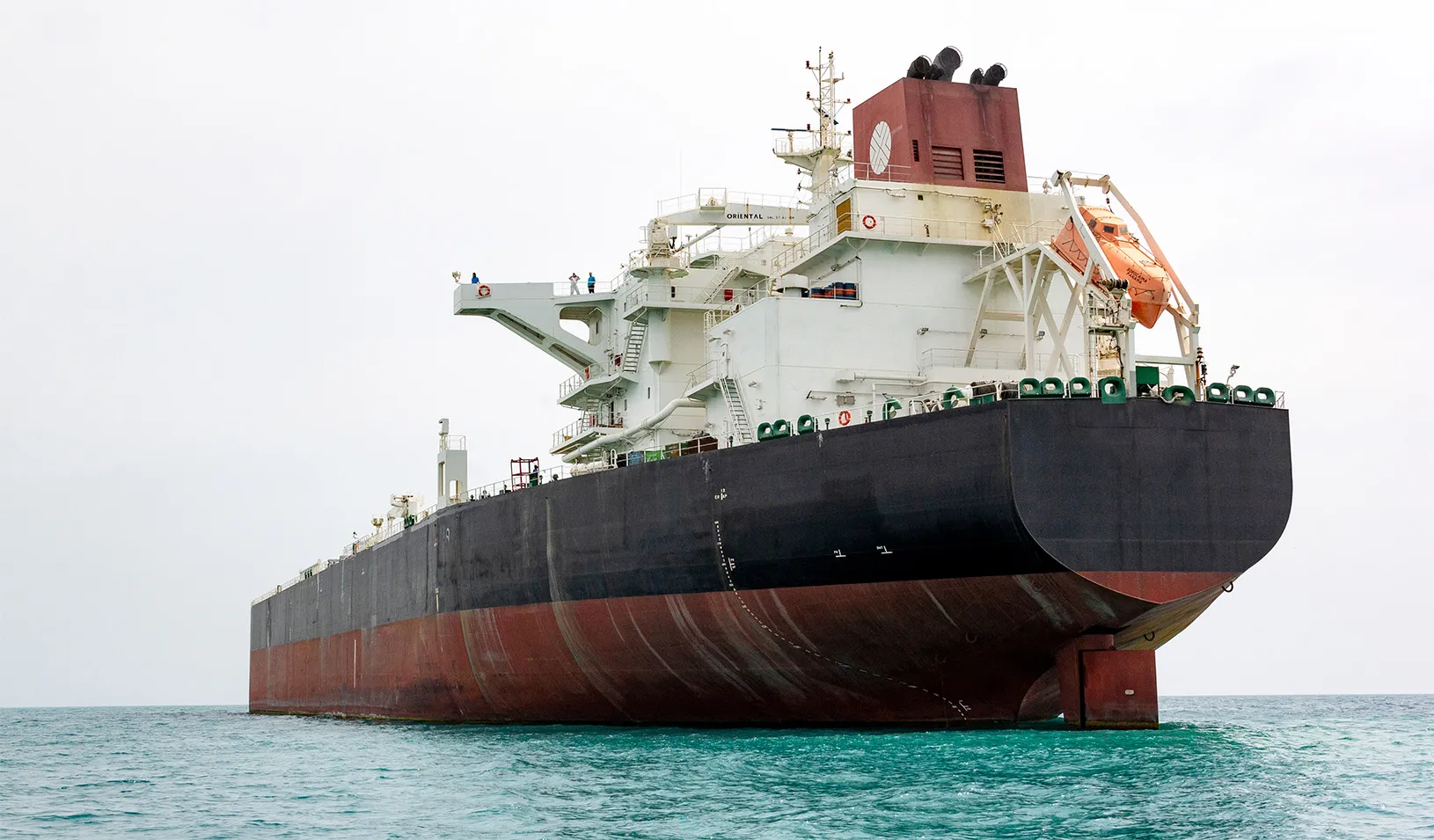
Nearly 9,000 oil tankers sail the seas, carrying around 60% of the world’s crude oil. After unloading their cargo, these massive ships often sail with empty tanks, a practice known as “ballasting.” This accounts for nearly half of all miles traveled by oil tankers — a major source of fuel consumption as well as carbon emissions.
Some of this inefficiency is unavoidable since ships may have to sail long distances before reloading. Yet ballasting can be far less wasteful, according to new research by Kostas Bimpikis, a professor of operations, information, and technology at Stanford Graduate School of Business, Giacomo Mantegazza, PhD ’24, of the University of Southern California, and former Stanford GSB postdoctoral scholar Salomón Betech.
The researchers pored over data on almost 235,000 voyages by nearly 6,000 oil tankers over four years, building a model to determine the causes of ballasting. “We show that some empty miles could be avoided,” Bimpikis says. “The question is how? Our answer is partial, but it points to consolidating the market.”
Tankers often sail in ballast because their owners don’t know where their next cargo will come from. Yet the researchers find that ballasting is also the result of a decentralized industry where each owner optimizes their own fleet rather than working together. This lack of coordination creates a “fragmentation tax” that accounts for 7% to 16% of empty sailing (depending on the size of the tanker). That’s roughly twice the share put down to unpredictable demand.
Shipping pools where shipowners share vessels and manage them together could cut ballasting-related emissions by up to 15%, the paper finds. The scale is significant: Around 40% of every tanker voyage is spent sailing empty. For mid-sized Aframax tankers, fragmentation accounts for roughly 7.5% of those tankers’ total emissions. Fewer empty miles mean lower fuel costs and more cargo carried, boosting profits.
In some cases, reorganizing the market could cut emissions more than carbon taxes. A $100-per-ton carbon tax would reduce emissions by less than 4%, according to an estimate cited in the paper.
Yet coordination at scale is difficult because the tanker industry is highly fragmented. Operators often manage just a handful of vessels, and none control more than 5% of global capacity. “If you consolidate the market, you can mitigate most of those empty miles,” Bimpikis says. But, he adds, “If you consolidate too much, you create monopolies.”
Fleet Fixes
Full consolidation isn’t necessary, since most of the gains can be captured without centralizing the industry or curbing competition. Small pools of around 60 vessels, or about 5% of the Aframax fleet, could capture 80–90% of the available efficiency gains, the researchers find. The gains come from scale and coordinated decision-making: Larger pools find cargo faster and serve more ports, so their vessels spend less time sailing empty.
Small operators also have strong incentives to join a pool. “Even after sharing the gains, each participant is better off,” says Bimpikis, pointing to the advantages of scale — from buying fuel more cheaply to finding cargo more easily.
However, not all the inefficiency of ballasting can be eliminated. The paper finds that around three-quarters or more of empty miles are driven by trade imbalances, with oil produced in a few regions, such as the Middle East, and consumed across many others. But fragmentation remains the largest avoidable source of inefficiency.
The data confirms the fragmentation effect. Markets with more concentrated ownership have shorter empty journeys and lower emissions. A look at vessel ownership shows that more coordinated tanker fleets reduce ballast emissions by roughly 25% compared with highly fragmented fleets.
The implication is that cutting oil tankers’ emissions is not just about switching to cleaner fuels or implementing carbon taxes. How markets are organized also matters. In shipping, better coordination between existing assets could deliver large gains without waiting for new technology or heavy policy intervention — a point Bimpikis and his colleagues argue is often overlooked.
They also note that policymakers could accelerate this shift by offering incentives, including tax breaks, to encourage the formation of shipping pools.
These insights go beyond seaborne trade as well. Similar dynamics show up in other fragmented industries, Bimpikis says. “In U.S. trucking, for example, no one controls large fleets — the market is made up of small operators facing the same coordination problems,” he says. “Some degree of consolidation could be beneficial.”
For media inquiries, visit the Newsroom.