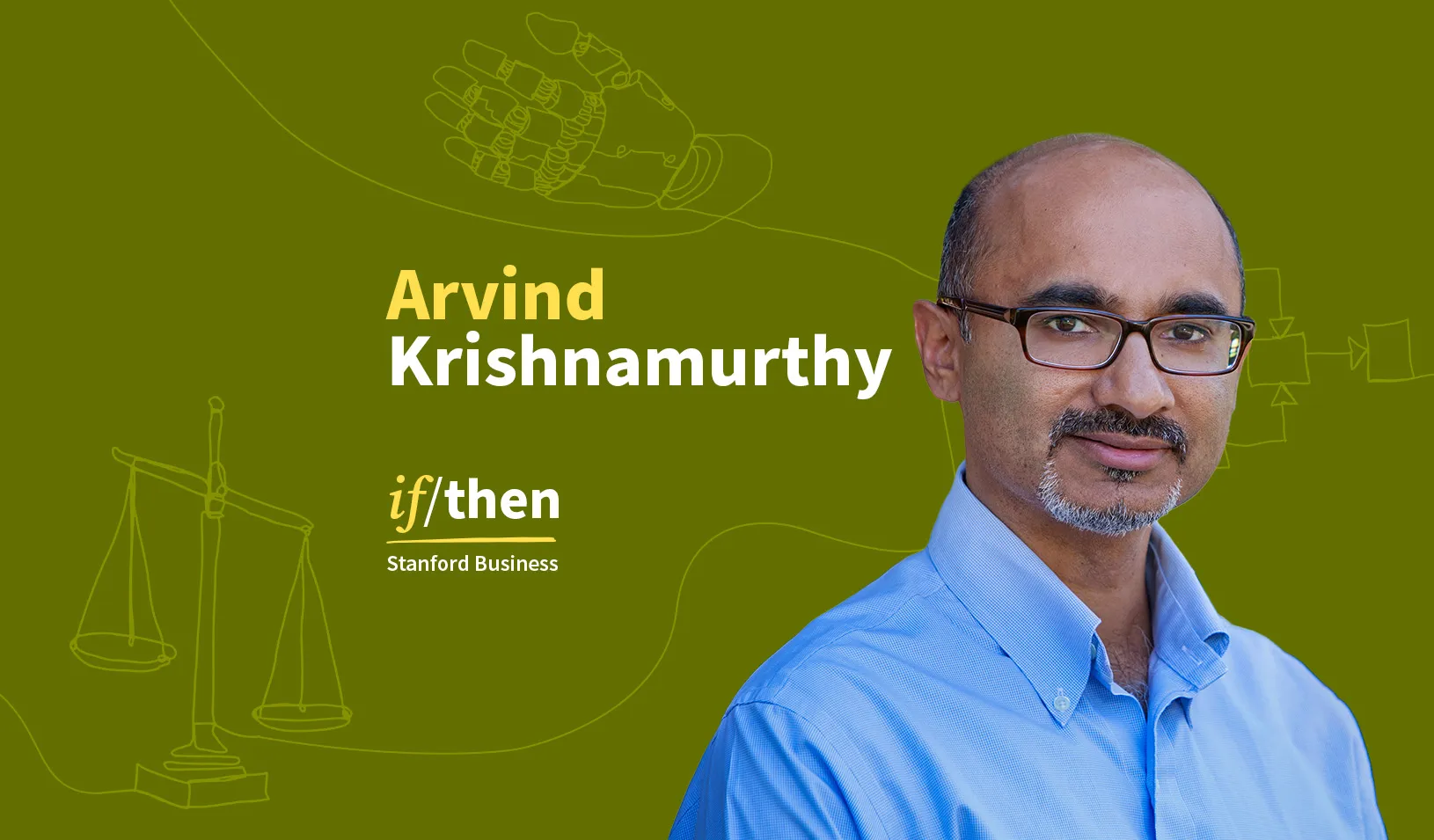
“One way of thinking about the dollar is that it’s this giant parking garage,” says Arvind Krishnamurthy, a professor of finance at Stanford Graduate School of Business. “It’s a parking garage for wealth. You can bring your car in, and if you turn around three minutes later and you want it out, easy.”
Krishnamurthy studies the dollar’s role in global financial markets, and has traced the history of global reserve currencies to understand why they exist, how they function, and the benefits conferred to the country whose currency is where the world parks its wealth.
He’s found that the liquidity and safety offered by the dollar is worth approximately $29 trillion to the United States. The benefit shows up everywhere, from cheaper mortgages to lower borrowing costs for the federal government. “It’s this sort of hidden asset in the U.S.,” Krishnamurthy says.
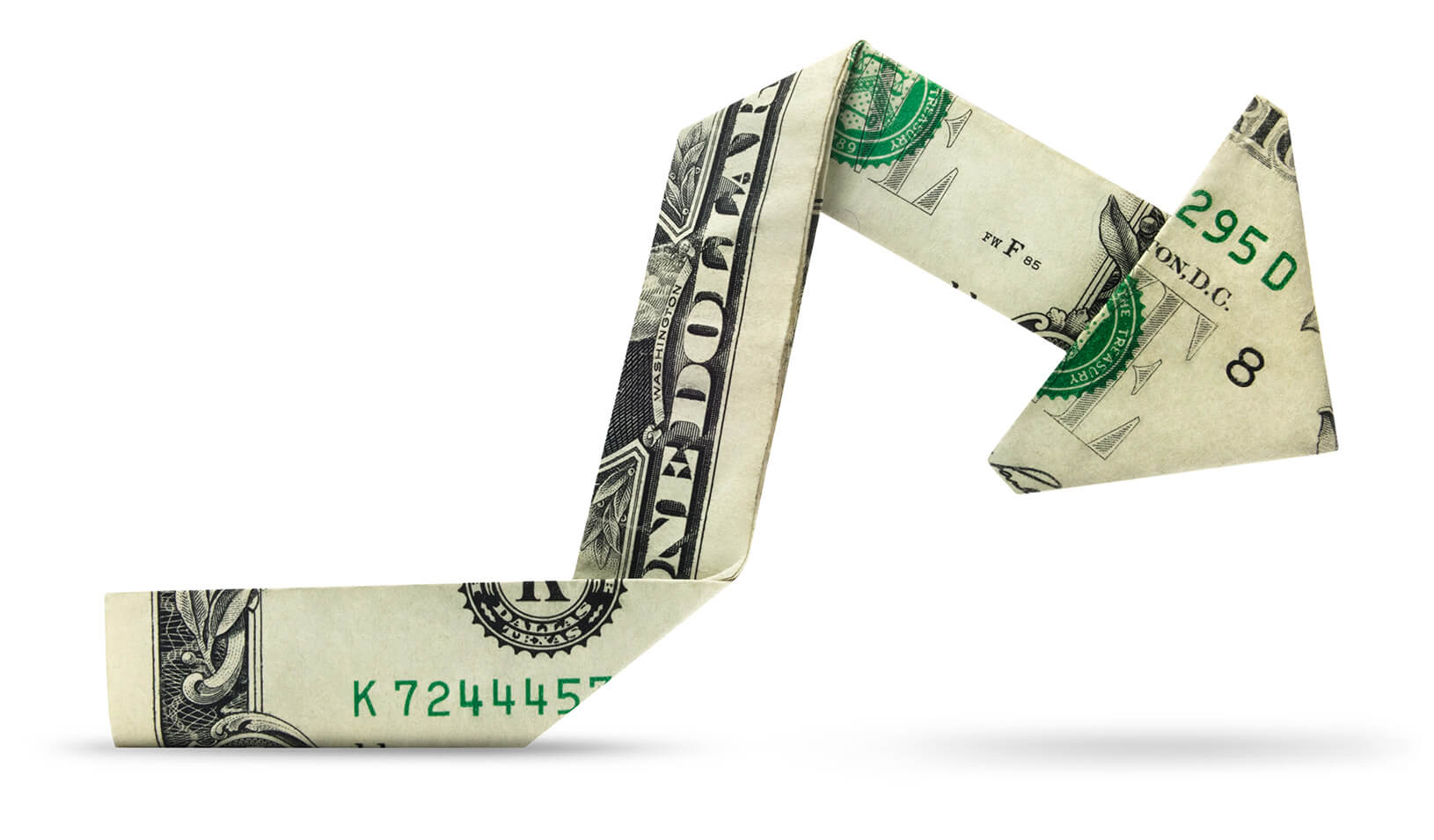
But he’s also calculated the downsides, which are modest yet real: Reserve-currency status inflates the dollar’s value and a stronger dollar makes American exports pricier, widening the trade deficit. “When you put everything on the same balance sheet, you realize there’s a huge interest savings component and a small exchange rate effect,” Krishnamurthy says.
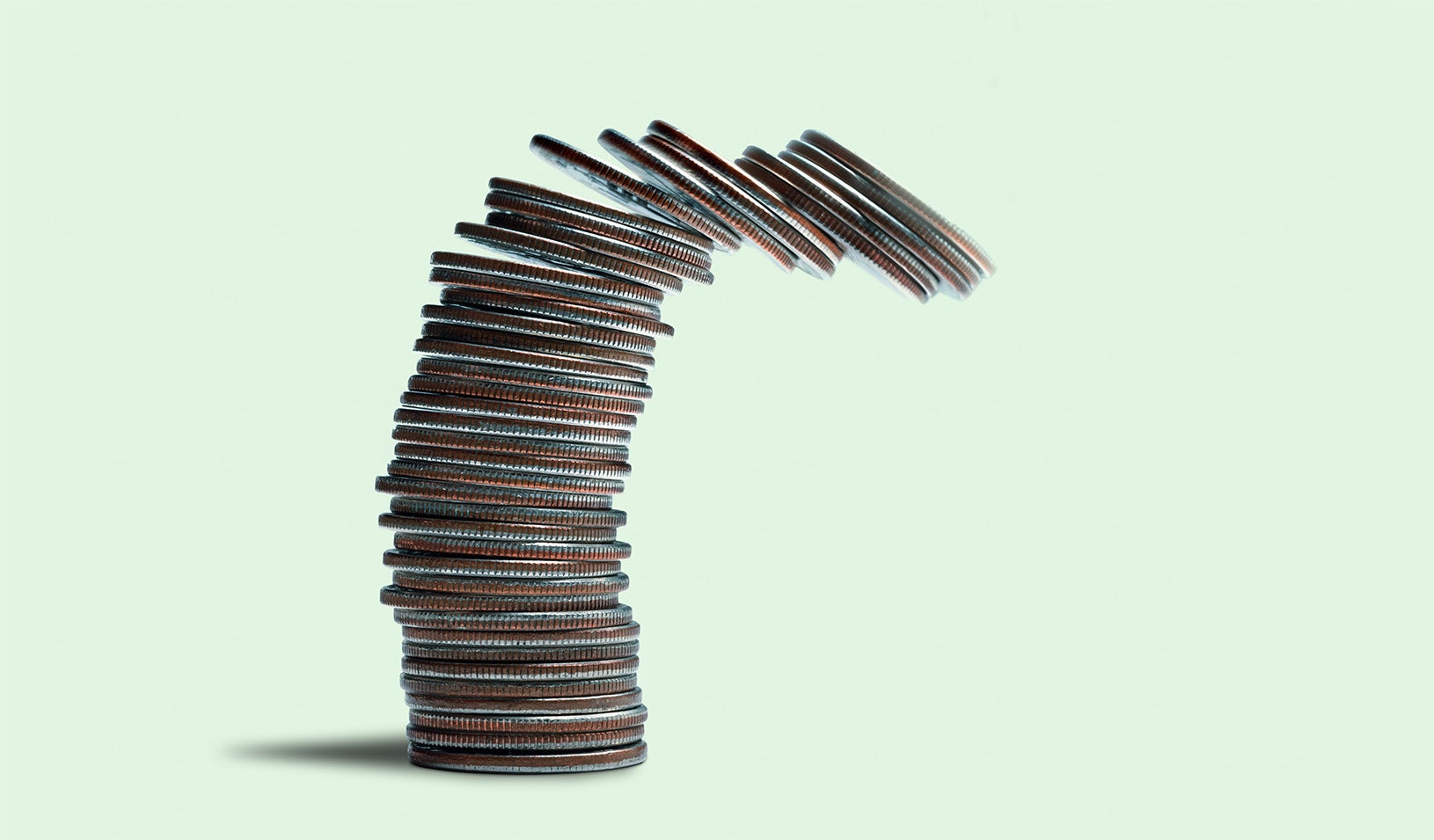
Large deficits could gradually erode the dollar’s strength, but its dominance is likely to persist. “We are still a very dollar-centric world,” Krishnamurthy says. “In a decade or two decades or three decades, who knows? The world could change again.”

If/Then is a podcast from Stanford Graduate School of Business that examines research findings that can help us navigate the complex issues we face in business, leadership, and society. Each episode features an interview with a Stanford GSB faculty member.
Full Transcript
Note: This transcript was generated by an automated system and has been lightly edited for clarity. It may contain errors or omissions.
Kevin Cool: $29 trillion. It’s an amount of money so large, it’s almost impossible to comprehend.
Students: I can’t even fathom what that is. That’s like a macro global economic amount of money. could be some country’s debt, maybe ours.
Students: The amount of zeros really makes it hard to wrap your head around.
Kevin Cool: Students outside Stanford Graduate School of Business tried to do exactly that on a recent afternoon.
Students: $29 trillion. To me, that means 29 super successful companies, probably many countries’ GDP. Where I’m from, Sweden, it’s probably more than what we have in GDP.
Students: I would say that it’s probably the sum of the revenues of most of the firms in the Bay Area.
Students: I mean, I’ve been in Silicon Valley for a couple days, and it’s still not fathomable to me. But yeah, maybe to the locals, like Sam Altman was pitching that he needed that much for his next round.
What would I do with that money? Oh man, I would start seeing what charities I can work with and any that are effective.
Students: When you’re given that sum of money, you can change a lot. Money doesn’t make you happy, but it can absolve a lot of problems out there in the world.
Students: I think I would at least make sure there’s free education and free healthcare for every individual in the world. What else would I do with that kind of money? Maybe start a country.
Students: That’s very hard question, honestly. I would try to give to someone that knows how to make them, this money, like redistributed to like countries and people.
Students: I think I would buy apartments in every city in the world, and then a house in every country. And I think I’d probably have more left after I’m done with that.
Kevin Cool: Just how much money is $29 trillion anyway? As of late 2026, it’s almost the combined GDP of the world’s second, third, and fourth largest economies, China, Germany, and Japan. It’s enough to give every single American $85,000. We’re talking about that number because today’s guest, Arvind Krishnamurthy, a professor of finance at Stanford GSB, says that’s how much the American economy benefits from the fact that the US dollar is the world’s global reserve currency.
Arvind Krishnamurthy: So, giving up, if you want to, the reserve currency would mean that the folks who live in the US are collectively giving up on the order of $29 trillion.
Kevin Cool: This is If/Then from Stanford GSB, where we sit down with faculty and explore how their research deepens our understanding of business and leadership. I’m your host, Kevin Cool.
My first question for Arvind, what is the global reserve currency, and why does it matter?
Arvind Krishnamurthy: So, we live in a world, and we’ve lived in a world, I’d say, you know, post-World War II, but even more strongly post the 1980s, in which the dollar is the reserve currency of the world. There’s a lot of investors all around the world who have their wealth invested, particularly in dollar-safe assets.
And when I mean safe assets, I mean things like treasuries or bank deposits, basically kind of the dollar is used around the world as a place to park, wealth.
Kevin Cool: Yeah.
Arvind Krishnamurthy: Organically, the world has centered on the dollar as being a place to park your safe assets. And a number of these facts I’m describing about the dollar were also true of the sterling.
Kevin Cool: The British sterling.
Arvind Krishnamurthy: The British sterling. So, I, I, I think that it’s, it’s, it’s important to realize that organically the world has often centered on one, two, three, on a couple of currencies, often one, as being the central currency of the world. That just has been a pattern that you have seen a- around the world.
And so then that begs, I think, the interesting economic question, why? What, what forces would lead you to one?
And especially coming from finance, it’s a particularly maybe surprising result because one of the first things you learn in finance is diversification. Which is don’t put all your eggs in one basket.
Kevin Cool: Right.
Arvind Krishnamurthy: And one of the things the world has done is it seems to gravitate towards putting all its eggs in one basket, particularly when it comes to reserve currencies. Like, why isn’t the world one in which there’s a basket of reserve currencies that involve the Canadian dollar, the US dollar, Mexican pesos? That’s not it. It’s, it’s sort of-
Kevin Cool: Well, do you have thoughts about that?
Arvind Krishnamurthy: Yeah, absolutely. So, there’s efficiency in scale- when it comes to reserve currencies, and the efficiency, I think that, in my mind, really happens in the world is around liquidity.
Like, one way of thinking about the dollar is it’s this giant parking garage the US has. It’s a huge financial market. It’s a very liquid market.
Kevin Cool: A parking garage for money.
Arvind Krishnamurthy: It’s a parking garage for wealth. Yeah. Like, ah, you know, you can bring your car in. If you turn around three minutes later and you want it out, easy.
There’s a lot of liquidity in getting wealth in and out of the dollar, and part of the liquidity is because the garage is big, and liquidity as, by its nature, has this feature that the more participants are in a market, the more liquid the market will be.
From a, a liquidity standpoint, you want one. This is, I think, where the parking garage fits in. You want one, and you want it to be large enough.
Kevin Cool: Yeah.
Arvind Krishnamurthy: You also want the gates to work efficiently. So, you want there to be no gates, so that you can come in and out quickly. You want it to be safe. You wanna be fairly sure that no one’s gonna break into the garage and steal your car.
Kevin Cool: Right.
Arvind Krishnamurthy: Right? And the US asset market has provided all of those through both the financial market infrastructure, liquidity of the market, the assets are safe- the rule of law works.
Kevin Cool: So, we can apply some characteristics. Yeah. It’s large. It’s stable.
Arvind Krishnamurthy: Yeah.
Kevin Cool: It’s highly liquid. Everybody else is there, so it’s efficient and practical. And it’s safe.
Arvind Krishnamurthy: And it’s safe.
Kevin Cool: And it’s safe.
Arvind Krishnamurthy: Yeah.
Kevin Cool: Okay. Yeah.
Arvind Krishnamurthy: And I think if you look back at the world 100 years ago, 150 years ago, you’d say the same thing about the sterling. Among the possible competitors that could have been a reserve currency, the sterling occupied that space. It was economically sizable, particularly financially. It was financially sizable. it was safe.
Kevin Cool: Right. And, presumably, part of the scale, with respect to the sterling is that Britain, I mean, let’s just say it, they were a colonial power.
Arvind Krishnamurthy: Yes.
Kevin Cool: Right? They owned, like, 35% of the world.
Arvind Krishnamurthy: I’ll come back to that because I think one of the things that is interesting is to note that, the US was bigger than Britain, including the Empire, by 1905, which indicates that it’s not purely about economic size.
Kevin Cool: What happened there?
Arvind Krishnamurthy: London is still the financial center of the world-
Kevin Cool: Yeah …
Arvind Krishnamurthy: in 1905.
Kevin Cool: Okay.
Arvind Krishnamurthy: And just to throw, take us back to that period, there’s no Federal Reserve in the US in 1905. There’s a central bank in England. There’s all of the things that you associate with financialization sitting in London but not in the US. The Federal Reserve in the US is 1913, and that helped create a uniform money market. And when you think of financialization in the US and you think of bond markets, it’s really the 1920s-
Kevin Cool: Yeah
Arvind Krishnamurthy: … in New York where this takes off. So, this is also what gives me a clue that it’s not purely economic size. It is about financial market structure that draws in liquidity, that draws in buyers and sellers of assets that really matters, in setting organically the world as a reserve currency, being, you know, in this case, the sterling rather than the dollar.
Kevin Cool: Yeah.
Arvind Krishnamurthy: But then eventually-
Kevin Cool: Right …
Arvind Krishnamurthy: as it’s been the case for the last 50, 75 years, the dollar. And I’ll, I’ll give you another example to make this point. In the 1600 and 1700s, the reserve currency of Europe was really the Dutch florin.
Kevin Cool: Dutch florin?
Arvind Krishnamurthy: Yeah. Okay. So, this was a currency that was issued out of a bank in Amsterdam called the Bank of Amsterdam. And it was a financially sophisticated bank in the sense that this wasn’t currency as pieces of paper floating around. This was a bank that had a ledger that it would keep for all of its customers, and when you wanted to make payments, you would just tell the bank, you know, “Debit my account and credit someone else’s account.” So, this is sitting on a book at the bank where you don’t have to physically transfer coins or gold or anything like that, and you could do this in large volume.
Kevin Cool: So, it was a 1600 version of a digital transaction.
Arvind Krishnamurthy: Absolutely.
Kevin Cool: You didn’t actually have to give them the money.
Arvind Krishnamurthy: Yeah.
Kevin Cool: Right.
Arvind Krishnamurthy: And they ran their bank in a way that allowed there to be a large scale. And in particular, the technical thing that the bank did was, in order to create a florin deposit, you’d have to bring some coin, typically a gold or silver coin. What the Bank of Amsterdam allowed you to do is bring any coin. In fact, the, the most common coin during this time was the Spanish silver dollar. And so, that allowed a very large digital bank sitting in Amsterdam, and that centered Amsterdam as being, a central reserve currency.
Now, the, again, the, the interesting thing about this period is that the largest economy in the world is Spain. So-
Kevin Cool: Right
Arvind Krishnamurthy: … the Spanish are larger than the Dutch economically, but yet they are not the reserve currency.
Kevin Cool: So, it’s not a default choice.
Arvind Krishnamurthy: And I think the answer is it has to do with financial size.
Kevin Cool: Okay.
Arvind Krishnamurthy: The Bank of Amsterdam operated a technology that allowed it to run at a large financial scale, whereas the Spanish were not.
Kevin Cool: Yeah.
What sort of benefits confer to the country whose currency is the global reserve currency?
Arvind Krishnamurthy: Sure. So, this is, I think, one of those, those cases in which I find putting numbers on things I find really useful. Like while I’ve talked to you about ideas and concepts and things that matter for making a reserve currency, and it’s fun to be able to take those concepts and translate those into numbers.
And in the case of the dollar, the approach I’ve taken, and I have a paper that we’ve written, that I’ve been presenting, which ties together a couple of observations. The first observation, which is the one I made to you, which is that a lot of the world holds dollars as a place to store value. So, what does that really mean?
It doesn’t really mean physical dollars. Most of it is about the fact that the world holds US dollar treasuries. It holds US dollar corporate bonds. It holds US dollar mortgage-backed securities. It holds a collection of, of assets in the US to the tune of, we, we do a computation in our paper, we go back in 2016, and we ask how much did the rest of the world hold, and it’s on the order of 40% of US GDP of these types of safe assets.
Kevin Cool: Four zero percent.
Arvind Krishnamurthy: 40% of US GDP. So that’s a, you know, sizable number.
Kevin Cool: Yes.
Arvind Krishnamurthy: So, the second fact is to recognize that because of the world demand for dollars as a parking place, interest rates on these assets are pulled down. And it’s analogous to if you have your money at a bank for safekeeping or for writing checks, you’re not getting paid an interest rate that’s very high.
Right? So, in a, in a sense, the US safe asset market, broadly, now I’m including, all of this debt I’ve been talking about, is, is sort of like the bank deposit for the world.
Kevin Cool: Okay.
Arvind Krishnamurthy: And as a result, the rest of the world is holding those assets and saying, “Well, I, I get some value out of it.” “It’s liquid, and if I wanna go in and out, I’m getting some real value out of it. I’m willing to hold it there and get a low return.” So, take that second fact,
Kevin Cool: So, the trade-off is safety and,
Arvind Krishnamurthy: Yeah. Yeah, safety, liquidity-
Kevin Cool: Yeah
Arvind Krishnamurthy: … and I’m willing to give up a return. I can tell you, on the banking account, I’m getting, I think I’m getting zero right now out of my bank account. I could’ve put my money in a money market fund, in which case I’d be getting, you know, 4%.
Kevin Cool: Yeah.
Arvind Krishnamurthy: So, I know exactly how much I’m losing.
Kevin Cool: Right.
Arvind Krishnamurthy: I can, we can try to do something similar, in the international context, and our estimates are numbers from between 1 and 2%.
Kevin Cool: Okay.
Arvind Krishnamurthy: So, that tells you world demand for dollar safe assets has driven down US interest rates, US borrowing costs on a wide collection of both public and private sector by, in the neighborhood of 1 and 2%. And that number fluctuates. Sometimes it’s larger. Sometimes it’s smaller.
Kevin Cool: But those are significant. Like, I mean-
Arvind Krishnamurthy: Those are, those are big numbers …
Kevin Cool: I mean, anybody who’s ever had a mortgage on a house-
Arvind Krishnamurthy: Yeah …
Kevin Cool: knows a 2% difference in interest rates is a big deal.
Arvind Krishnamurthy: It’s a big deal.
Kevin Cool: Yeah.
Arvind Krishnamurthy: Absolutely. So, I can take those numbers, and then I can, I can, try to show that in different ways to measure how big it is. And what you just, suggested was one way of doing this, which is to ask, to say, “Okay, so the rest of the world holds on the order of 40% of GDP of safe assets.”
“They’re giving up one to 2%, if you want to, in return.” I can, I do a very simple finance thing and just present value the benefits to the US of that.
Kevin Cool: You can attach a number to that.
Arvind Krishnamurthy: I can attach a number to that. Take the 40% of GDP, multiply it by 2%.
Kevin Cool: And what is that number?
Arvind Krishnamurthy: So, we present value that number, and it comes out to be about $29 trillion.
Kevin Cool: $29 trillion.
Arvind Krishnamurthy: Yeah.
Kevin Cool: That’s, that’s a lot of suitcases of money. Like, that’s a very large amount of suitcases of money. Like, that’s hard to even get your brain around.
Arvind Krishnamurthy: Yeah, it’s a big number.
Kevin Cool: So, what does that mean? What are the implications of that?
Arvind Krishnamurthy: So, I think that first of all, you should just; it’s this sort of a hidden asset in the US, and it’s showing up in all sorts of places.
It might be showing up because our mortgage rates are a little lower. So housing, taking a mortgage is a little cheaper. It, it’s, it shows up in a whole variety of financial market activities in the US, and collectively, what I’m describing as $29 trillion, is all of that collectively. It shows up in part because the US government is able to borrow at rates lower than they would otherwise.
Kevin Cool: Yeah
Arvind Krishnamurthy: Especially now, given their indebtedness.
Kevin Cool: Yeah.
Arvind Krishnamurthy: So, it shows up in, in, in all of that, in the world. So, giving up, if you want to, the reserve currency would mean that the US economy, or really the folks who live in the US, are collectively giving up on the order of $29 trillion. And that’s, that’s, as I said, that’s a sizable benefit to the US that-
Kevin Cool: That’s a lot of money to forfeit
Arvind Krishnamurthy: …to forfeit. It’s absolutely.
Kevin Cool: Yeah. So, what does that look like for the US economy if that happens? Is there e- even any way to speculate on that or to attach a number to that?
Arvind Krishnamurthy: Yeah, so this is, I think I can put a number on this. Now, I think we’re, history’s a good guide, but I can’t put numbers on, on the transition. Yeah.
Kevin Cool: Right, right.
Arvind Krishnamurthy: So, I think one of the things which I learned from the history is shifts happen slowly. So, to go back to the, the sterling example, which we talked about, you know, the US is larger than Britain in 1905. But if you wanna say, really, when did the US dethrone the sterling? Probably not until really after World War II. So that’s a long period of time.
Kevin Cool: Yeah. Decades.
Arvind Krishnamurthy: Decades. So, it’s not like we’re gonna wake up one day and lose $29 trillion. It, erosion happens slowly. And so, we can understand an endpoint, which is what this 29 trillion tells you.
The other thing that I take from the history is that the erosion is in part attached to, in particular, safety concerns around public debt.
Arvind Krishnamurthy: Again, take, take the British example. Britain suffers two world wars between 1900 and 1945, two periods in which their debt grows very large. They go off the gold standard in the early 1930s, which is effectively kind of a form of default.
Kevin Cool: Yeah.
Arvind Krishnamurthy: So, there’s a series of things that happen there. The US, you know, in 1905 effectively has almost no government debt.
Kevin Cool: Yeah.
Arvind Krishnamurthy: And at the same time as financialization is happening in the US, there’s a ready place to go. So, I think one of the things in my mind that I keep an eye on right now is I think the large deficits in the US, are exactly the type of thing that over time erode confidence in the reserve currency. But I want to emphasize erosion, not-
Kevin Cool: Erosion, yeah. It’s not a collapse.
But it would seem to inform attitudes about the value of the US having the global reserve currency.
Arvind Krishnamurthy: Yeah.
Kevin Cool: And I’m, I’m curious, you know, if I’m a business leader, or if I’m, you know, a giant shareholder for a corporation, I mean, borrowing costs are important-
Arvind Krishnamurthy: Yeah
Kevin Cool: to my business. How should I be thinking about this?
Arvind Krishnamurthy: I think you should be thinking it’s a really attractive place to be a business.
Kevin Cool: And we wanna keep it that way.
Arvind Krishnamurthy: We wanna keep it that way. Absolutely.
Kevin Cool: Right.
Arvind Krishnamurthy: Right?
Kevin Cool: What’s the relationship, or is there a, a relationship to discussions about how strong the dollar is? And what the argument is for weakening it.
Arvind Krishnamurthy: Yeah. So, there’s been a long-standing, question about the US trade deficit. The US has a trade deficit, and we know, for example, that a stronger dollar worsens a trade deficit.
Kevin Cool: And that happens because…
Arvind Krishnamurthy: If the dollar is expensive in foreign exchange markets, that means our exports are pricey.
Kevin Cool: Right.
Arvind Krishnamurthy: Less of the world buys our exports, and there’s attendant concerns, particularly coming out of this administration, that maybe that is something that has played a factor in reducing the size of the manufacturing sector in the US. So that, the deficit, the dollar, these are all interesting factors.
The connection to the discussion we’re having is, to what extent the fact that the dollar is the reserve currency of the world has maybe led to an appreciated dollar, led to a stronger dollar. Is there, if you want, a cost attached to being the reserve currency, and can we put a number on what that is?
And the answer that we come out with is actually a fairly small number. This was surprising to us, that what we came out with was a number of around eight percent. The dollar is more appreciated than it would be in a world where the dollar wasn’t the reserve currency by about eight percent.
So, that informs me because it tells me that these concerns about an over-appreciated dollar attached to being the reserve currency is a legitimate concern, but it’s not a magnitude-wise a legitimate concern. When you put everything on the same balance sheet, you realize there’s a huge interest savings component and a small exchange rate effect, and that’s how I would, do the computation.
Kevin Cool: Right, because the aggregate interest rate difference is $29 trillion.
Arvind Krishnamurthy: Yeah. It’s, it’s, it’s, it just, it’ll, it’s gonna overwhelm the other thing.
Kevin Cool: Yeah, yeah. There’s no way eight percent appreciation could ever come close to $29 trillion in terms of-
Arvind Krishnamurthy: Exactly …
Kevin Cool: value.
Arvind Krishnamurthy: And that, that is our, the conclusion that we draw.
Kevin Cool: Seems like that would be pretty persuasive to someone who was skeptical about what those benefits are.
Arvind Krishnamurthy: I would hope so. I will tell you.
Kevin Cool: Yeah. So, there are some obvious geopolitical implications of all of this, too. China obviously is on the rise. They’re very ambitious-
Arvind Krishnamurthy: Yeah
Kevin Cool: … in terms of their ascension in terms of influence, regionally and throughout the world.
Arvind Krishnamurthy: Yeah.
Kevin Cool: But I’m curious, based on what we’ve talked about so far, if China is, let’s just do a thought exercise here. If China is the most probable, or logical alternative, to the US dollar as a reserve currency. What would they have to do to make that happen? Or is there even a pathway that could be drawn out like that?
Arvind Krishnamurthy: I, absolutely there’s a pathway.
Kevin Cool: Yeah.
Arvind Krishnamurthy: And absolutely it could happen. I mean, I, I think, you’d have to start by saying they’d need to have an investable capital market. China has capital controls, which going back to the parking garage analogy, you might be able to bring your car in, but the gates,
Kevin Cool: Yeah
Arvind Krishnamurthy: … might be closed when you’re trying to exit.
Kevin Cool: Yeah, right.
Arvind Krishnamurthy: That does not make for-
Kevin Cool: The, the, the government will tell you when you can take your car out.
Arvind Krishnamurthy: When you can exit.
Kevin Cool: Yeah.
Arvind Krishnamurthy: So, you need a large parking garage. You need to know the rules are stable. So, all of those factors are kind of, are pretty central to how these works.
China has been working on one dimension that is, that is relevant, which is they’ve been, when they trade with, say, Southeast Asian neighbors or around the world, they try to invoice their trade in the renminbi.
Arvind Krishnamurthy: But when you look at the numbers, the most important magnitude-wise thing that you want to have happen if you are a reserve currency is you want financial flows to be in your currency. You want firms to be holding their savings in your assets. You want, investors, you want firms to be issuing debt in your assets.
And just to say something closely related, remember, China holds its reserves in dollars. The US does not hold reserves in renminbi. We are still a very dollar-centric world, and even the potential competitor holds their reserves in dollars.
Kevin Cool: Yeah.
Arvind Krishnamurthy: And I feel we’re kind of stuck there. Now, the history that I told you is a, is a decade-long history, and in a decade or two decades or three decades, who knows?
Kevin Cool: Yeah, of course.
Arvind Krishnamurthy: The world could change again.
Kevin Cool: Of course. Sure. Yeah. Well, that’s gonna segue to my next question, which is what are you gonna research next? What’s the next question you have in mind?
Arvind Krishnamurthy: Yeah, so I mean, I, I’m a researcher who just gets interested in something, and I sort of keep working on it for a while. I got interested in this dollar question, looking at some patterns in the foreign exchange market, and we’re looking at this pattern that the dollar tends to appreciate during financial crises. And the really weird one was the dollar appreciating in 2008 when Lehman fails. We have a financial crisis in the US, and yet the dollar appreciates. That’s just weird.
If you think about any other country in which there’s a homegrown financial crisis, Argentina, I bet you you’ll see the currency depreciate, right? That’s led me further down the road.
And most recently, the discussion on our history and going back to the Dutch florin, is I, you know, you can draw a clear line from running regressions on daily fluctuations on the dollar exchange rate to going back and looking at, the movements of the balance sheet of the Bank of Amsterdam from 1740 to 1770. So, my research generally is like that. I kind of just get interested in stuff, and I just keep going.
Kevin Cool: Yeah.
Arvind Krishnamurthy: do I know where I’m gonna go next? I think the answer is I’m probably gonna stay somewhere in this space. There’s still lots of questions left in my mind. You know, what could happen next? A, a bunch of those questions which I suspect I’m gonna be, turning over in my head for the next five years.
Kevin Cool: Well, thank you for being our guest. It was really a pleasure having you on the show.
Arvind Krishnamurthy: Yeah, my pleasure. Thanks for having me
Kevin Cool: If/Then is a podcast from Stanford Graduate School of Business. I’m your host, Kevin Cool. Our show is written and produced by Making Room and the content team at the GSB. Executive producers are Michael McDowell and Jim Colgan. Sound design by Mumble Media, with video production from Whitney Legg, Tatiana Goldman, Aech Ashe, and Stephanie Blenderman.
Special thanks to the students who stopped to take our questions in the middle of their lunch. For more on our faculty and their research, find Stanford GSB online at gsb.stanford.edu, or on social media at Stanford GSB. Thanks for listening. We’ll be back with another episode soon
Producer: And what brings you to the GSB? Is this where you go to-
Students: So, great food.
Producer: Yeah.
Students: Great people, and great opportunities, right? You see, you come for a random lunch and you’re gonna have even an interview.
For media inquiries, visit the Newsroom.