August 20, 2026
| by Michael McDowell“When we’re interacting, we are co-constructing each other,” says Brian Lowery, the Walter Kenneth Kilpatrick Professor of Organizational Behavior at Stanford Graduate School of Business on Think Fast, Talk Smart — a podcast hosted by GSB lecturer Matt Abrahams. “When you see someone behaving in a way that you like or don’t like, if you’re a leader in that environment, you should ask yourself, what am I doing that produces that?”
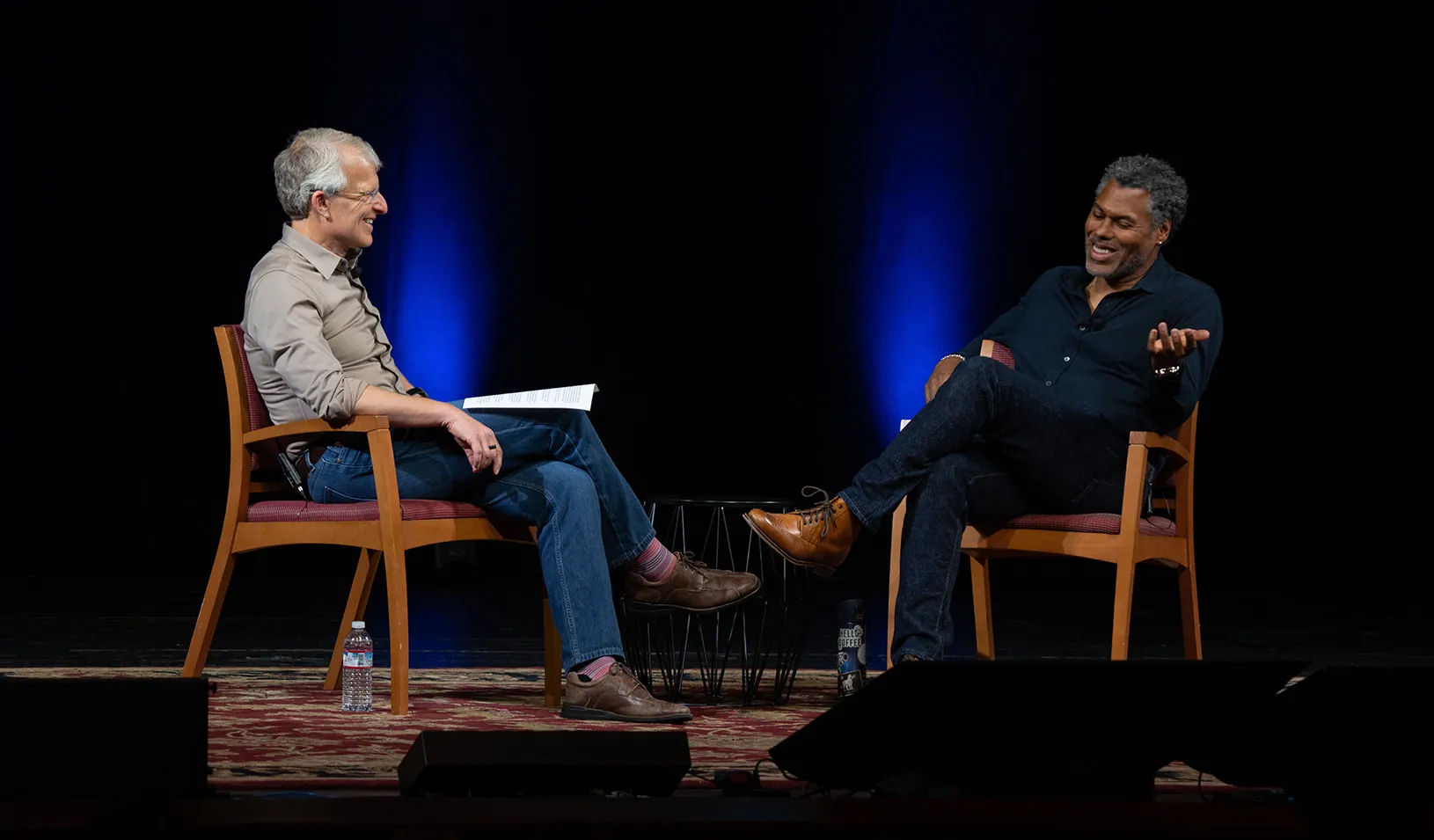
The conversation took place earlier this year at Me2We, an in-person gathering of participants in Stanford’s LEAD online executive education program. Created by and for the LEAD community in 2016, the annual event brings “LEADers” from around the world to Stanford for three days of networking, learning, and socializing. More than a decade later, Me2We continues to be an expression of a vibrant professional community driven to make positive change in organizations and the world.
Aside from the social environments leaders create, Lowery and Abrahams discussed the distinction between purpose and meaning, the importance of sincerity when giving feedback, and why all leaders must be self-aware.
“Doing work on self-awareness actually has notable effects on how your employees respond to you and their experience of work,” Lowery says. “So the closer that the way your employees see you is to the way you see yourself, the safer and the more efficient your employees are.”
It isn’t the first time Lowery has appeared on Think Fast, Talk Smart; previous episodes feature conversations on how to lead; a discussion of Lowery’s book, Selfless: The Social Creation of You; and convenings on power and persuasion.
“The class you teach is very popular,” Abrahams observes. “What’s one thing you hope your students take away from it?”
“My class is about being a better human being,” says Lowery. “And being a better human being and being more effective at engaging with human beings in relationships will definitely make you a more effective leader.”
Listen & Subscribe
Think Fast, Talk Smart is a podcast produced by Stanford Graduate School of Business. Each episode provides concrete, easy-to-implement tools and techniques to help you hone and enhance your communication skills.
Note: This transcript was generated by an automated system and has been lightly edited for clarity. It may contain errors or omissions.
Matt Abrahams: Sincerity, connection, and empathy define a meaningful life. My name is Matt Abrahams, and I teach Strategic Communication at Stanford Graduate School of Business. Welcome to Think Fast, Talk Smart, the podcast. Today, I’m excited to share a live conversation I had with our returning guest, our first four-time guest, GSB professor Brian Lowery. As part of this year’s Stanford LEAD Me2We, Brian and I sat down to discuss what makes for a meaningful life and how we operationalize that through our feedback to and communication with others. Enjoy our conversation.
Brian, thanks for being here. It’s exciting to chat with you. Brian and I have had a number of conversations on the show and otherwise, and I remember a couple years ago when we had our conversation, people got really, really excited about some of your research about motivation, meaning, purpose. Can you remind us the difference from the way you look at meaning versus purpose?
Brian Lowery: Yeah, so purpose is what you do in the morning, right? So purpose is like, “I have to do this, I have to do that,” or, “I’m trying to achieve this.” And meaning is something that, I think of it as like extends you in time, right? So it’s not just what you do at any given moment. One way to think of it is like how you’d be remembered. Why is what you’re doing matters? So that’s how people talk about meaning. It’s about not just what you do, but why does it matter? And also mattering is usually about other people. So purpose is often for you, what gets you up in the morning, but meaning almost always involves other people. So that’s kind of the difference.
Matt Abrahams: So individual versus connecting to others. Do you have advice and guidance on how we can better find our purpose?
Brian Lowery: Find our purpose. I think purpose is whatever. You can just decide what your purpose is. There’s no magic in purpose. I think that people when they say purpose, sometimes what they mean is meaning. Purpose is easy. I think the idea of like find your passion, I don’t personally subscribe to that. I’m like, make what you do your passion, as opposed to go out and try to figure out what it is, ‘cause now you’re searching and who knows. I think you decide what it is you want to do and then commit yourself to doing that thing. That, that thing, that is how you find your purpose.
Matt Abrahams: So it’s almost observing what’s going on in your life and what’s there and then that becomes it. So how do you find meaning?
Brian Lowery: I think meaning is about who do you want to serve other than yourself. And that can be a number of people in different ways. That could be your kids, that could be your students, that could be future generations of users of your product. It could be all sorts of people, but it has to be serving someone other than yourself, connecting to someone other than yourself, providing something outside of yourself that will extend beyond you. So often the way people talk about mattering and meaning is that it has to reverberate beyond your presence. So it can’t just be, “I’m here with you, I did this thing.” It has to be, “I’m here with you doing this thing, and when I leave, what I did will continue to influence you. How I’ve touched you will continue to influence you, and then you will influence other people. And so now I’ve indirectly influenced those people.” That is where meaning comes from.
Matt Abrahams: So it’s almost like a ripple effect.
Brian Lowery: It’s a ripple effect. And I think meaning is about being mindful of the effect you have on other people, and being purposeful about the effect you have on other people.
Matt Abrahams: Okay, so the purpose in many ways drives the meaning.
Brian Lowery: Yeah. In the sense of, like, anything you do can affect other people. You just choose to do something, right? You just choose, “I’m gonna try to make this best place to work. I’m gonna choose to make this meeting or this vacation,” or whatever. But if you’re doing it in service of other people and understand that it’s affecting those people, it will change the way you do it, and it will make it more meaningful for you. When you’re thinking about how what you’re doing touches and influences other people, that will give you an experience of meaningfulness in your life. Being mindful other people are being influenced by your behaviors changes how you understand yourself.
Matt Abrahams: You’re adding at least one layer, if not more, on this notion of empathy that we were talking about. It’s this idea of my impact on you and what it means. When I read your book, and we talked about it before on the show, one thing that I’m still trying to wrap my mind around is this notion of how we define ourselves through others. Can you walk us through that? And if nothing else, this is a tutorial for me ‘cause I’m still trying to grasp this, but can you help me understand?
Brian Lowery: So the way I would say it is, without others, you would have no idea who you were. So in this conversation already, you’ve said, like, you’re, or I asked you about it, but you’re, you’re, you have a wife.
Matt Abrahams: And I have two kids.
Brian Lowery: You have kids.
Matt Abrahams: Yes, I do.
Brian Lowery: You have two kids. All those things come together and tell you something about who you are. Like, you’re a dad, you’re a husband, you’re a podcaster, you’re an interviewer. And you can add things to that, and those collectively are who you are. All of the parts, those plus any others you can come up with that you think of as who you are, depend on relationships with other people. Those ideas of who you are and your own internal ideas of who you are would not exist absent those people. Like, you can’t be a husband without a wife. You cannot be a parent without kids. You cannot be a podcaster without an audience. So without other people, the things that you use to define yourself don’t exist.
Matt Abrahams: So in connection to others, we help define ourselves. Many folks sitting in this room are leaders, managers, and they have others that work for them. How do we help create the selves of those people who work with us or work for us? I mean, there are things we can do to help them define themselves and their roles in our organizations. Talk to me about that.
Brian Lowery: I think that we define people, interact with them all the time in ways that we don’t take seriously because in some cultures, at least in the States and other places, not just the States, but certainly in the States, there’s a sense of like, ‘I exist as an island. I’m the most important thing, and then all I care about is did I affect you and did you affect me?’ But there’s a barrier that cannot be crossed. I just think that’s fundamentally wrong. That is just not how things actually work socially. And so when we’re interacting, we are co-constructing each other. Part of that is really philosophical and abstract. Like, if you’re a leader, you’re telling people what they have to do when they go to work.
You’re telling people what time they have to show up, that you’re making them feel happy to be there or hate being there, right? Those things are part of how they think about themselves. When they go home, they’re talking about you and the workplace in particular ways and themselves as a part of that. Like, I hate my job. I’m the kind of person that hates my job. I love my job. I’m the kind of person who loves my job. You know, these people at work, they’re annoying to me, or I miss them, or whatever it is, but all those things are changing how you see yourself, and they’re changing how you show up and behave at work, too.
If you’re a manager, you are constructing the environment in which people are working. The environment in which people work, the environment which people live, in all sorts of ways directly affects how they behave. And so when you see someone behaving in a way that you like or don’t like, you should first ask yourself, if you’re a leader in that environment, what am I doing that produces that, right? And this gets away from this idea of like they are who they are and they’re just doing what they do, and you start to think of like how am I participating in producing this behavior?
Now, people will be like, “But that’s not true. They’re just a terrible human being, and they’re just lazy.” I’m like, “That’s fine. I don’t know. Yeah, there are some lazy people.” But the thing is, one, I’m right. Two, even if I’m wrong, which I’m not, but even if I were wrong, it is more rational to ask yourself as a leader, what can I do to change the situation than to say, “I have no agency. I can’t do anything ‘cause they are who they are.” Given those two, I think you would choose to say like, “Where am I in this?” And that agency requires responsibility. And what the responsibility I’m talking about here is understanding that how you behave as a leader is shaping how the people that work for you show up and behave.
Matt Abrahams: And I think that puts a lot of responsibility on leaders to really reflect on that. A lot of leaders just optimize for output, right? And they don’t really think about what they’re doing that can lead to that.
Brian Lowery: People don’t understand that who they are is shaping who their employees are. So it’s not just what you tell them to do. It’s who you are, how are you showing up? And so people often just focus on what’s outside of them, like how are they behaving, how do I alter their behavior, without looking at the self. If you change how you show up, you will change how people around you show up. And so in the context of work, people might not see it that way. But if you think about families, people understand this implicitly. If you’re, like, in a terrible mood all the time or you’re unhappy with life or something like that, for sure that is gonna affect your wife and your kids. Like, no one has to explain that to you. But somehow you go to work, it’s as if, like, people all have their responsibilities. Who I am doesn’t matter. I’m just telling them what to do, you do what you’re told. And, like, my person, how I show up, has no influence. That just cannot be true.
Matt Abrahams: That analogy really does help cement the idea. We think of that with our family and friends very easily, but we don’t see it at work. Is there advice or best practices you have for people in leadership roles to help maximize the success and the wellbeing of the people that work with them? What can we do to help them see themselves that way?
Brian Lowery: Doing work on self-awareness actually has notable effects on how your employees respond to you and their experience of work. So there’s evidence, there’s research on this, right? So the closer that the way your employees see you is the way you see yourself, the safer and the more efficient your employees are, as an example. So one is being willing to examine the self and being willing to respond to the environment in such a way that allows for people to know you in a way that allows them to feel a degree of psychological safety. And psychological safety here is, at best, predictability, like understand you, and you think I understand you.
That changes the way we work together. And that’s not about you’re nice. It’s not about doing what I want you to do. It’s just like I’m working for you, I understand you. You agree with that understanding, now we can work in a different way than if I can’t, I don’t really know what’s going on with you. I can’t figure out what’s going on with you. I hear what you’re telling me to do, but I don’t understand you. That creates a distance and some degree of unsafety, which undermines the work relationship and undermines the quality of the work of people. So self-awareness, also being willing to examine and accept the perspective of the other people, even if it doesn’t match yours, is legitimate and reasonable.
So I might not agree with how you see things, but I should take your experience seriously, whether I agree with it or not. And again, the agreement is not the issue, but, like, truly trying to understand, engaging with how you see the world. Also, that there’s clear evidence that that has positive effects because often people care about being respected. So sometimes people worry about or think that people only care about what they get. So of course, people care about that, but they also care about did you hear me? Do you care that I want this thing? Even if you don’t give it to me, do you even respect me?
And if you demonstrate that to people, like you’re asking questions, you really care about the answer they give, even if you don’t agree, you’re trying to understand, and they see that as a sincere, the way they’ll respond to that and the kind of leeway they will give you is surprising. And so that’s another thing I would tell people, like, one, understand yourself. Be sensitive to how other people see you so that you can create a match between how you see yourself and how other people see you. There’s positive gain there. Two, and as a part of that, taking seriously the perspective of other people. You don’t have to agree with them, but taking it seriously changes their experience of the situation. Those things together have huge positive benefits.
Matt Abrahams: So self-awareness as well as acknowledging seriously the other person’s perspective. It strikes me that that requires a level of confidence and vulnerability, though, to do that, to show up as your true self and to look internal.
Brian Lowery: Just to be clear, I have no idea what a true self is, but here’s what I know. You show up in a particular way. Whether or not that’s your true self or not, I don’t know I would worry more about sincerity than truth. The goal is not to, like, be who you are all the time with everyone. Like, that’s just not how human beings operate. And so instead of worrying about the true self, I think you should worry about sincerity. Am I being as honest as I can right now?
Matt Abrahams: With myself and with others.
Brian Lowery: Yes. And that is a different thing than saying, “Am I being my true self?” Sometimes being your true self might be an asshole. Like, you’re in a bad mood, you’re being an asshole. That’s fine. Don’t be that true self. It’s okay. But when you engage with people, be sincere, and that’s different than, like, ‘cause people have this idea of, like, “If it’s in my head, I gotta say it.” No, you don’t. No. Please don’t. Be, don’t be your true self with me. But be sincere, and I think that that’s what people are expecting, sincerity.
Matt Abrahams: It does require you to really think about and know what’s important to you and to have your own values understood. I wanna talk about the crucible of feedback because it strikes me that, you know, many leaders have to give feedback, but this could be a friction point or some tension with some of the issues you’re talking. ‘Cause when I give you feedback, I’m confronting your perceptions of yourself. How does feedback work well in this paradigm?
Brian Lowery: I think it should be, again, sincere. And if you understand the other person’s perspective of themselves, I think the fear is that it’s hard to give hard feedback, it’s hard to get hard feedback, or fear that that’s what you’re gonna get. I think once you create a relationship where there’s sincerity, you can give feedback in such a way where you’re asking people to understand how you experience what is happening. And this is, I think, the issue with feedback, is it feels like I’m making a statement of truth that you don’t like. But that’s not really what’s happening. What I’m telling you is, “Here’s how I perceive what is happening. Here’s how I’m experiencing what you’re doing,” and maybe even, “Here’s what I’m thinking about that.”
That’s a very different claim than like, “You are not good at your job.” Right? “You are bad at this thing.” I might be like, “Look, what you did here didn’t have the effect that we hoped it would.” I think that would be enough for most people to understand and like, “Okay, can I get better or not?” And they can ask questions. You know what’s funny about this? I’m like working on fiction writings, and I have a developmental editor. And so a development editor, the way it works is like you write, you send them pages, and they give you feedback on the pages. They give you direct feedbacks. They go through your writing, they make comments, and they give you a letter that’s like, “Here’s what I see, here’s what I think, here’s what you need to work on,” blah, blah, blah.
It feels deeply personal, and it’s very vulnerable to write something, because it comes from you and it’s who you are, and then have someone give you feedback on that. And recently in our meeting, I was like, “Uh, you know, I really love the way you give feedback.” And like, I felt like I learned something from her, and this is kind of where this is coming from, ‘cause one, the feedback always feels honest, and I don’t always like it. I don’t even always agree with it. And sometimes it’s like the version of like, this isn’t good, and I understand what she’s saying, but I never feel defensive.
I look forward to having these meetings with her. I look forward to getting her letters and feedback. I know it’s not gonna all be positive. In fact, I expect it not to all be positive. And I’m not sensitive about it at all. And I talked to her about it, actually. I said like, “You know, I was gonna tell you that like, first of all, I teach a lot of classes and like, you’re really good at this. I really appreciate the way you give feedback.” And what she said was, “When I give feedback, I always think about the intent of the author.” So I’m like, “What were you trying to do? What was your goal here? You might have completely failed, and I do all the time.
And I need you to understand how you failed because my job is to help you grow, so I, I have to give you this feedback.” And that engagement with her, I think why that feedback works, and what I love about it, is I feel seen in the feedback. And when she says something, I’m like, “That’s correct,” right? But I feel seen. ‘Cause by the way, I worked with someone else who I hated, couldn’t stand her. I was like, “This person is terrible.” And she was also probably right, but the feeling was like, this person is telling me what I should be. She’s telling me what she sees and how I’m falling short of her ideal. It was like even if it was right, it was just bad. And this other woman is like, “I see what you are trying to be.
I see what you are trying to do. And I’m gonna tell you where you’re falling short.” It was just a world of difference. And I thought about that and I’m like, look, if you assume that people are trying to be successful, right, and you’re looking at their intent and like even when they fall short, it’s not that people don’t know they’re falling short. If they don’t, then it is your job to tell them. And so saying like, “I see what you’re trying to do. I see you’re making effort. Here’s where it might not be working.” And doing it in a way that takes seriously that person’s desire to be successful, I think changes things dramatically.
Matt Abrahams: So much richness in that answer. The part that I’m really reflecting on in my own life, seeing the person for who they want to be versus who you think they should be is a fundamental difference in how you approach feedback. And what you said earlier, which I think is also really important, is what am I doing that’s contributing to this? So it’s not just about here’s what’s wrong or here’s what could be improved, it’s what am I doing? And then really help the person to see it through that understanding and being present for them. I have to really think about how I’ve been giving feedback. I appreciate that.
Last question I’ll ask, the class you teach is very popular. A lot of people are really excited to take it. What’s one thing you hope your students take away from the class?
Brian Lowery: The thing that I always want people to take away is, and if you hear me talk outside of class, I think it’s probably more apparent, but I think for me, my class is about being a better human being. And I don’t mean good. I don’t mean like, I hope you all are good people. You should strive to be good people, but I’m not talking about morally a good person. What I’m talking about is being better at being human. And I think the fundamental thing about being human is our connections with other human beings.
And I mean this literally, you are not human without other human beings. You cannot be fully human absent other human beings. And so what is defining about being human is our connections with the quality of interactions with other human beings. When you show up at work and there are people there, those are not different human beings than the human beings that are at home or at any place else that you see human beings. And so being a better human being, being more effective at engaging with human beings in relationships will definitely make you a more effective leader.
Matt Abrahams: It boils down to connection and other-focus. Well, thank you, Brian. An incredibly rich conversation. It’s about introspection, it’s about invitation and empathy and connection. And it is through that that we build ourselves and the stories that we work with others. So it’s about communication internally and externally. Thank you.
Thank you for joining us for another episode of Think Fast, Talk Smart, the podcast. To learn more from Brian, please listen to episodes 23, 84, and 142. This episode was produced by Katherine Reed, Alex McCarthy, Ryan Campos, and me, Matt Abrahams. Our music is from Floyd Wonder with special thanks to Podium Podcast Company. Please find us on YouTube and wherever you get your podcasts. Be sure to subscribe and rate us. Also follow us on LinkedIn, TikTok, and Instagram. And check out fastersmarter.io for deep-dive videos, English language learning content, and our newsletter. Please consider joining Think Fast, Talk Smart’s Learning Community at fastersmarter.io/learning. You’ll find video lessons, learning quests, discussion boards, an AI coach, and book club opportunities. Again, that’s fastersmarter.io/learning to become part of our Think Fast, Talk Smart Learning Community.
For media inquiries, visit the Newsroom.