November 19, 2026
| by Dave GilsonUsually, when guests at Stanford Graduate School of Business talk about liquidity events, it doesn’t involve Jell-O. On a recent afternoon, YouTuber Mark Rober stopped by to discuss his hit videos, in which he’s made an obstacle course for squirrels, an unbeatable robot soccer goalie, and the world’s largest swimming pool of food-grade gelatin.
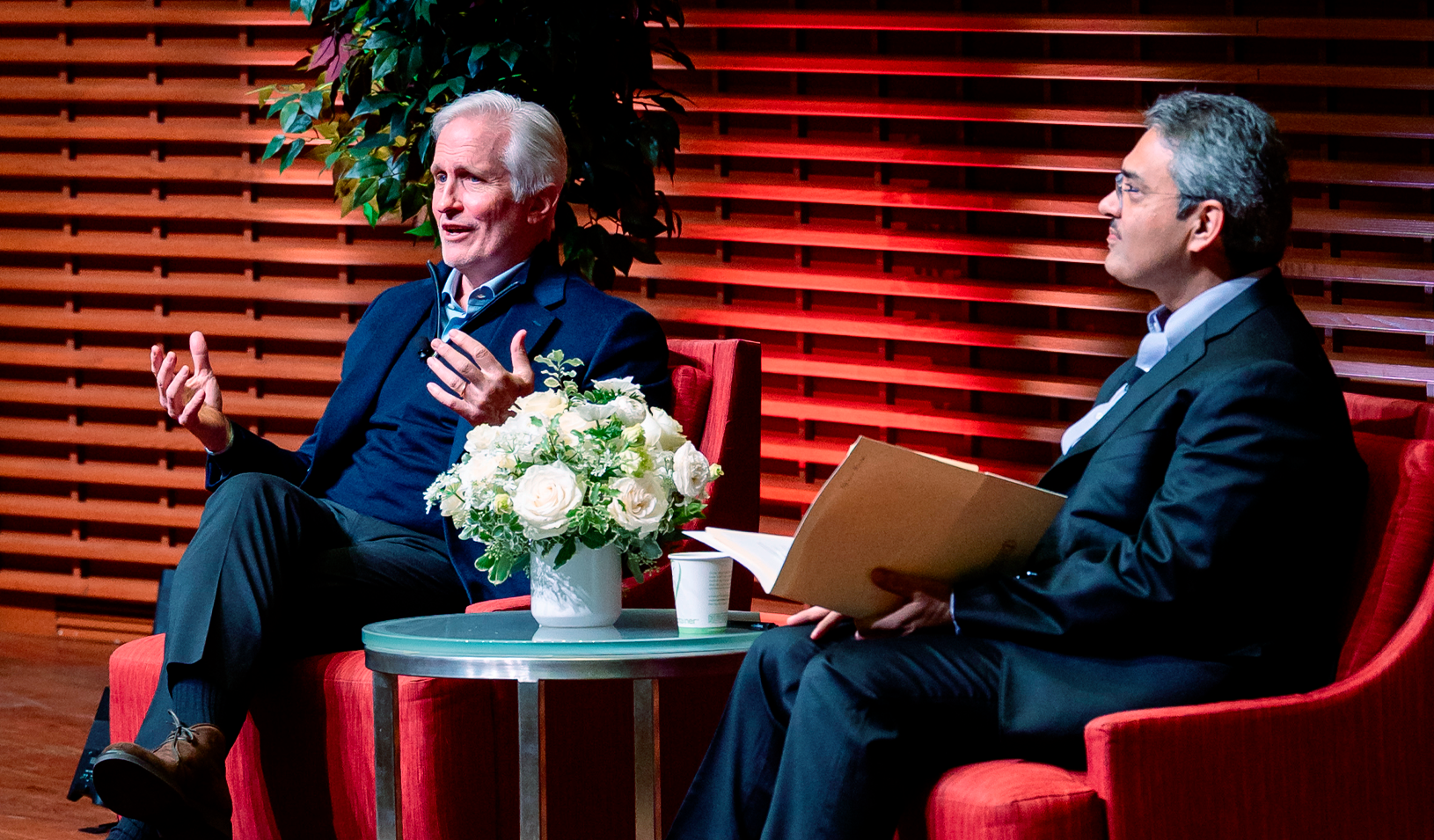
“The trick to make a viral video is you just have to evoke a visceral response in the person who’s watching, full stop,” said Rober, whose channel has more than 84 million subscribers. “It makes you feel something. If you don’t feel something, you don’t finish watching a video, let alone take action and share it.”
Back to Class
In this ongoing series, we bring you inside the classroom to experience a memorable Stanford GSB course.
Rober was speaking in Mastering the Creator Economy: Building Audiences, Brands, and Businesses, a new elective taught by Matt Abrahams, a lecturer in organizational behavior, and Andrew Hall, a professor of political economy. A former NASA engineer, Rober said his larger-than-life stunts are about more than just clicks. His not-so-secret mission is to make science fun and accessible to kids. “You bring ’em in with the clickbait thumbnail and title: 15-Ton Jell-O Pool. Before you know it, you’re sneaking in the six steps of the scientific method or chemistry lessons.”
“You get them here” — Rober said, gesturing to his heart — “and then once you’ve got them, then you get them here” — he pointed to his head.
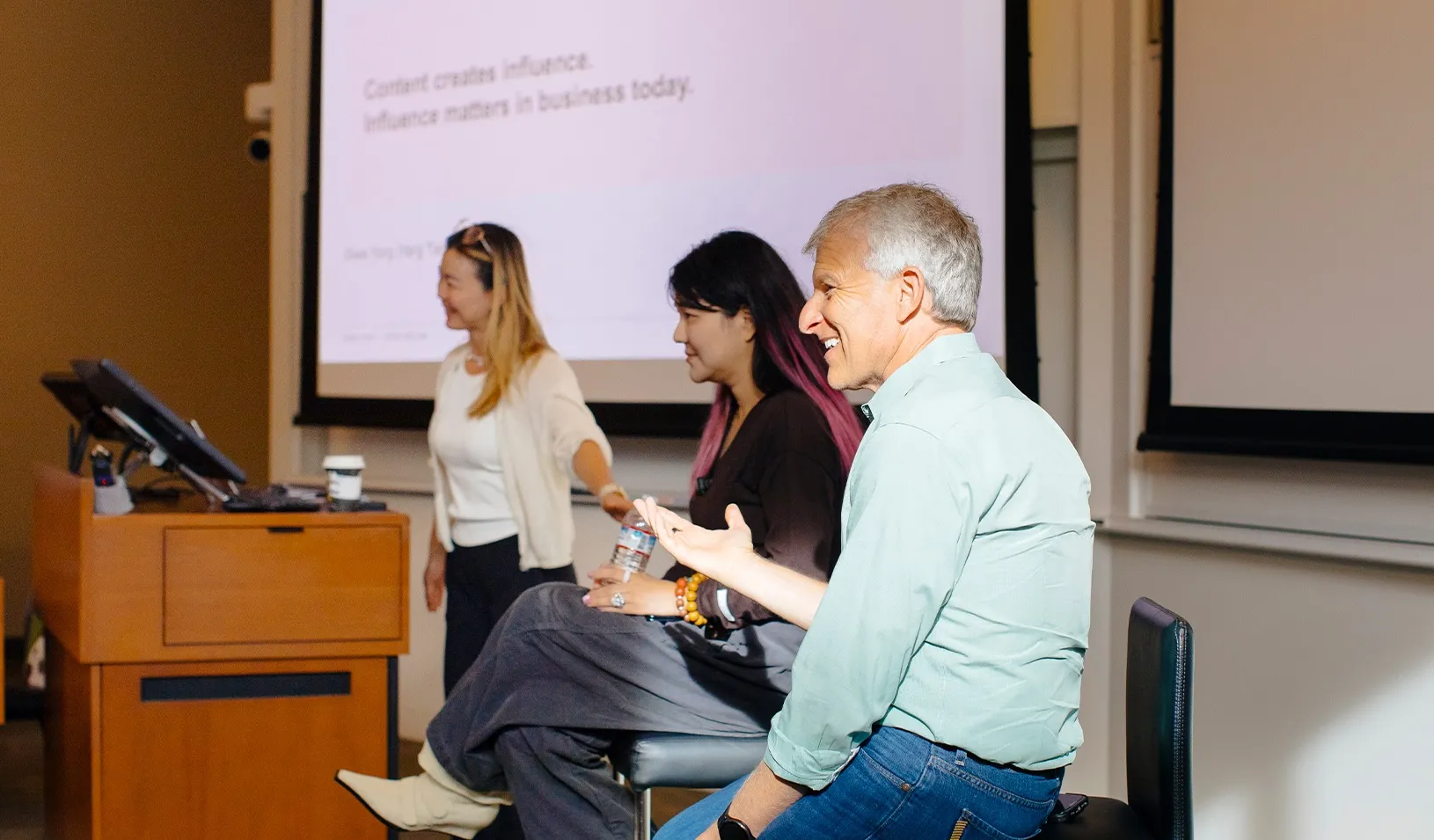
Getting into the heads of successful creators is a big part of Mastering the Creator Economy, but as its syllabus states, “This is not a class about becoming an influencer.” Rather, Abrahams explains, it’s an in-depth look at the mechanics of the creator economy and how it’s driven by the relationship between consumers and creators like Rober. It’s thought to be the first graduate-level business course to focus on the online ecosystem of videos, podcasts, streams, and reels that’s estimated to be worth more than $300 billion.
Students include active creators, those who’d like to connect their brands or startups with creators, and what Abrahams calls the “creator curious” — “people who are trying to figure out if there’s a place for them somewhere in this economy.” The jobs are out there, he says, and many are not in front of a camera. “There is an opportunity to really help lead in the creator economy,” he says. “What’s most needed is people with management expertise and business skills.”
At the center of this economy is the trust creators build with their audiences, an intangible asset that can take years to amass (and just days to lose). A recent study by Deloitte finds that U.S. consumers are 2.5 times more likely to buy a product that’s been recommended by a creator they trust. As platforms such as TikTok, Instagram, and YouTube supplant traditional marketing channels, brands desperately want to piggyback on creators’ parasocial relationships with their Gen Z and Millennial followers. “It’s hard for brands to compete with the trust that creators build, so they rent it,” Abrahams says. The course explores how creators make money through ads, brand deals, and communities. It also gets into the ethical and legal externalities of the business and the challenges faced by creators, such as burnout from churning out content.
Abrahams and Hall bring their own perspectives as participants in the creator economy to the course. Abrahams hosts the popular communications podcast Think Fast, Talk Smart; Hall publishes a Substack where he shares cutting-edge research on AI and politics. Hall says that Mastering the Creator Economy is “100% Matt’s brainchild,” though Abrahams notes that it was designed with help from alums in the ecosystem. The course is also meeting demand from its students. “I have never had students come up and thank me for creating a class before,” Abrahams says.
Like a clicky video, the course promises scroll-stopping moments. “We start with a lot of sizzle up front,” Abrahams says. In addition to Rober, recent guests have included YouTube CEO Neil Mohan, MBA ’05, daredevil YouTuber Michelle Khare, Stanford professor and Huberman Lab host Andrew Huberman, and Colin Rosenblum and Samir Chaudry, who are known for their interviews with fellow creators. Mike McGovern, MBA ’26, a former strategist for small-screen mogul MrBeast, also stopped by. “If you want to make content or be anywhere in the content-making machine, you have to consume content,” McGovern told Abrahams in a video posted on the course’s LinkedIn page. “It’s the only time in your life where sitting and scrolling on TikTok and watching YouTube videos is actually productive.”
Hands-on assignments are designed to prepare students to leverage the creator economy in the next phase of their careers. Students turn what they’ve learned into social content that may be posted on the course’s Instagram and LinkedIn channels. In a self-branding exercise, students define their identity with help from an AI “brand copilot” created by Stanford GSB’s Teaching and Learning Hub. “I know many of you aren’t looking to be creators, but the ability to define your brand can help you in lots of different ways,” Abrahams told the class, noting that employers and investors increasingly look at how applicants and entrepreneurs present themselves online.
Like the booming industry it’s analyzing, Mastering the Creator Economy is rapidly evolving in real time. “We’re laying the train track as we’re running,” Abrahams says.
For media inquiries, visit the Newsroom.