In Brief
- Global talent fuels U.S. AI innovation and leadership.
- Sustaining this leadership requires strength in every part of the AI stack, spanning applications, energy, hardware, infrastructure, and foundation models.
- Regulation that does not stifle innovation has the potential to expand AI’s benefits through reindustrialization and workforce development.
The U.S. is a world leader in artificial intelligence. And behind that success, says California Congressman Ro Khanna, is the U.S.’s embrace of talent from across the globe.
“The first thing that gives America a comparative advantage is that we have people from around the world who want to come here, study here, innovate here, be part of the research universities here,” said Khanna, who represents California’s 17th congressional district, including Silicon Valley. “There’s something not just about getting the world’s talent but having the world’s talent interact with each other from diverse perspectives that creates magic and innovation.”
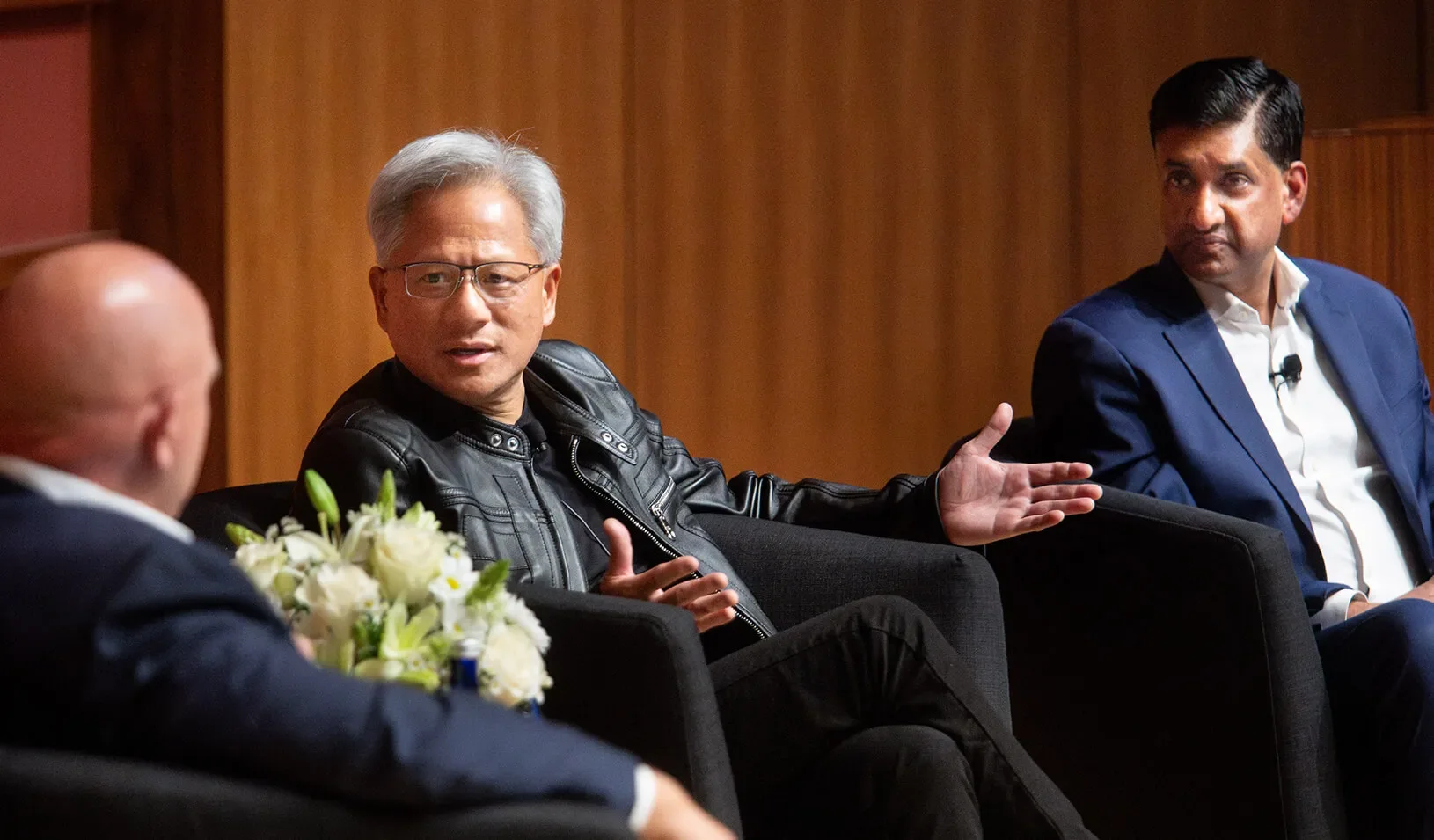
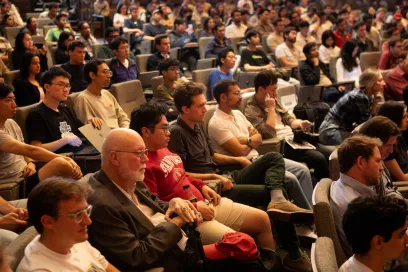
Khanna, along with NVIDIA founder and chief executive Jensen Huang, spoke on April 9 at the Hoover Institution before an audience of 400. The conversation about the U.S’s leadership in AI was hosted by Sarah A. Soule, Philip H. Knight Professor and Dean at Stanford Graduate School of Business, and organized by the school’s new Stanford Leadership Institute. “It is our responsibility to not only help our students to understand this technology, but to understand the broader context in which AI leaders, policymakers, and practitioners are making decisions,” said Soule.
In a conversation moderated by General H.R. McMaster, the Fouad and Michelle Ajami Senior Fellow at the Hoover Institution and the Bernard and Susan Liautaud Visiting Fellow at the Freeman Spogli Institute for International Studies, Huang and Khanna discussed maintaining the U.S.’s strength in AI, regulating the industry, and rebuilding struggling regions in the country to allow more people to share in the benefits of AI.
Now able to perceive, reason, and understand everyday speech, AI applications are already impacting countless areas ranging from helping medical researchers to running business functions and enhancing classroom teaching. Supporting those AI applications are the energy, computer hardware, infrastructure, and foundational model parts of the stack. “If the U.S. wants to stay in the lead, it is vital that we win in every single one” of those areas, said Huang MS ’92 Electrical Engineering.
Diffused into virtually every corner of society, AI is not surprisingly attracting the attention of policymakers and regulators, the speakers agreed. As it regulates, government must also consider how to nurture AI so it enhances national and economic security and maintains the U.S.’s current competitive advantage, said Huang. “We just have to be mindful about premature regulation.”
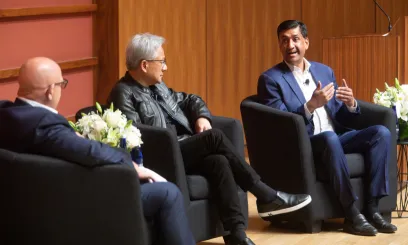
If the U.S. were to fear AI enough “that we resist it, that we regulate it out of society, we regulate it out of industry, and we slow ourselves down, it would be really quite unfortunate” to forgo the technology’s potential, said Huang.
At the same time, regulation may help create and uphold high standards for the AI industry, said Khanna. “American AI should be excellent AI,” he said. “I want America to have the best and that means having well-crafted regulation.” Khanna added that just as other industries operate successfully under regulation, so should the AI industry, as regulations need not stifle innovation but instead can encourage standards making it “the safest, the best, the least violating of privacy.”
The benefits of AI so far are unevenly distributed, with less wealth flowing to struggling regions especially in the Midwest. “We made a colossal mistake in this country, hollowing out places like where I grew up in Bucks County, Pennsylvania,” said Khanna. The notion that the U.S. could thrive on the financial services and technology industries without an industrial base undermines national security and social and political cohesion, he added. To support those affected regions and rebuild their labor forces, Khanna suggested “a 21st century Marshall Plan” with policies for industrial development in emerging technologies.
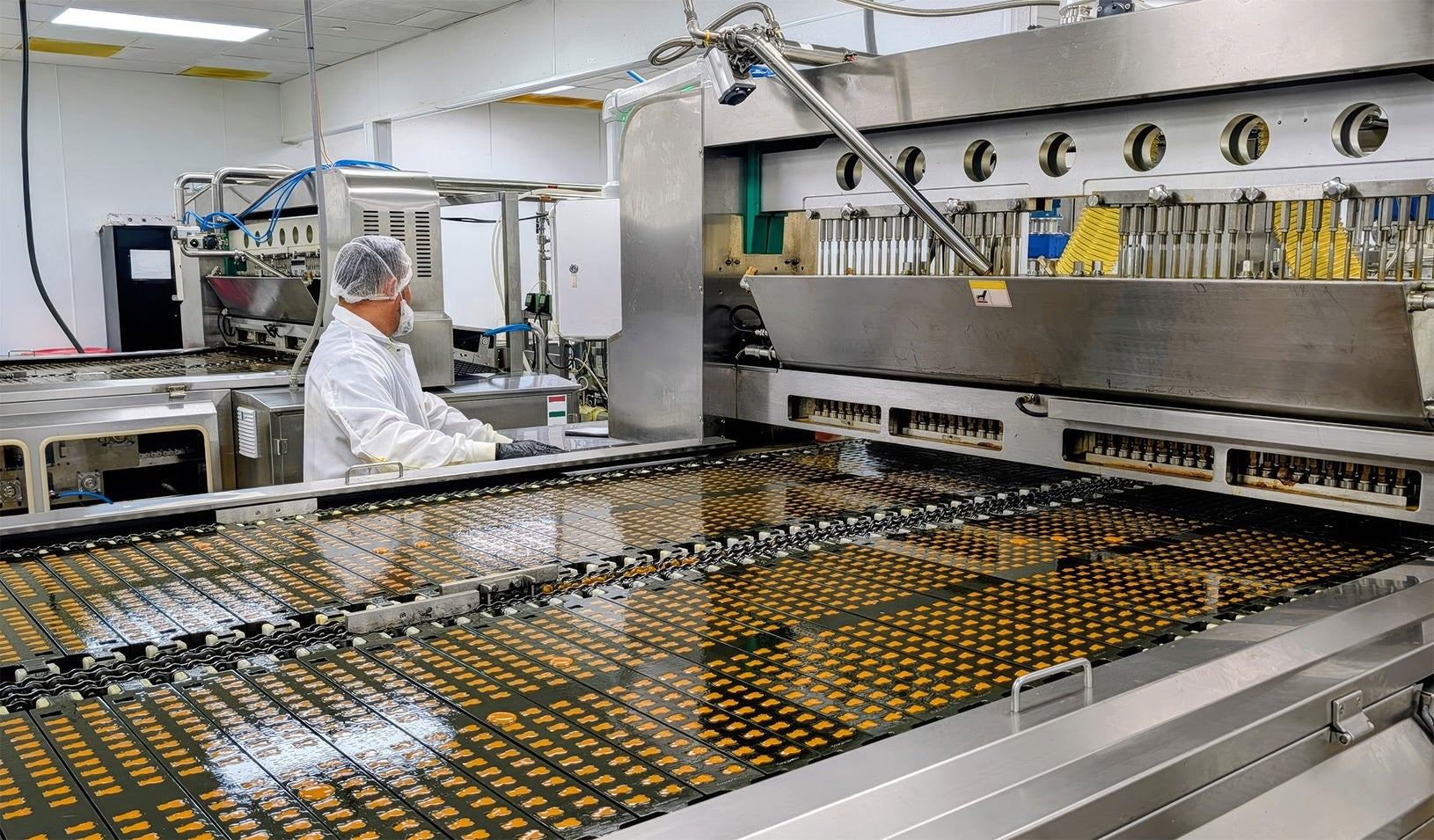
Huang agreed the U.S. needs labor in manufacturing and noted the AI industry is already helping with reindustrialization through manufacturing and construction of data centers and other technology infrastructure.
While AI, like any other technology, undoubtedly affects employment, the widespread notion that it outright eliminates jobs across the board without replacing them with other opportunities may be an oversimplification. Huang contended that AI lets people work more efficiently or redirects them to new tasks. In other cases, AI allows people to perform more-sophisticated work. “Someone used to be a carpenter but because of AI, they’re now an architect,” Huang said. Ultimately, he said, AI will create jobs and result in greater employment in the future.
As for those on the verge of joining the workforce, “this is a better time to be in school or graduating from school than ever,” Huang said. “What I see on the other side is a welcoming industry looking for new college grads who are expert at using AI whether in marketing or finance or engineering … You are the first generation.”
For media inquiries, visit the Newsroom.