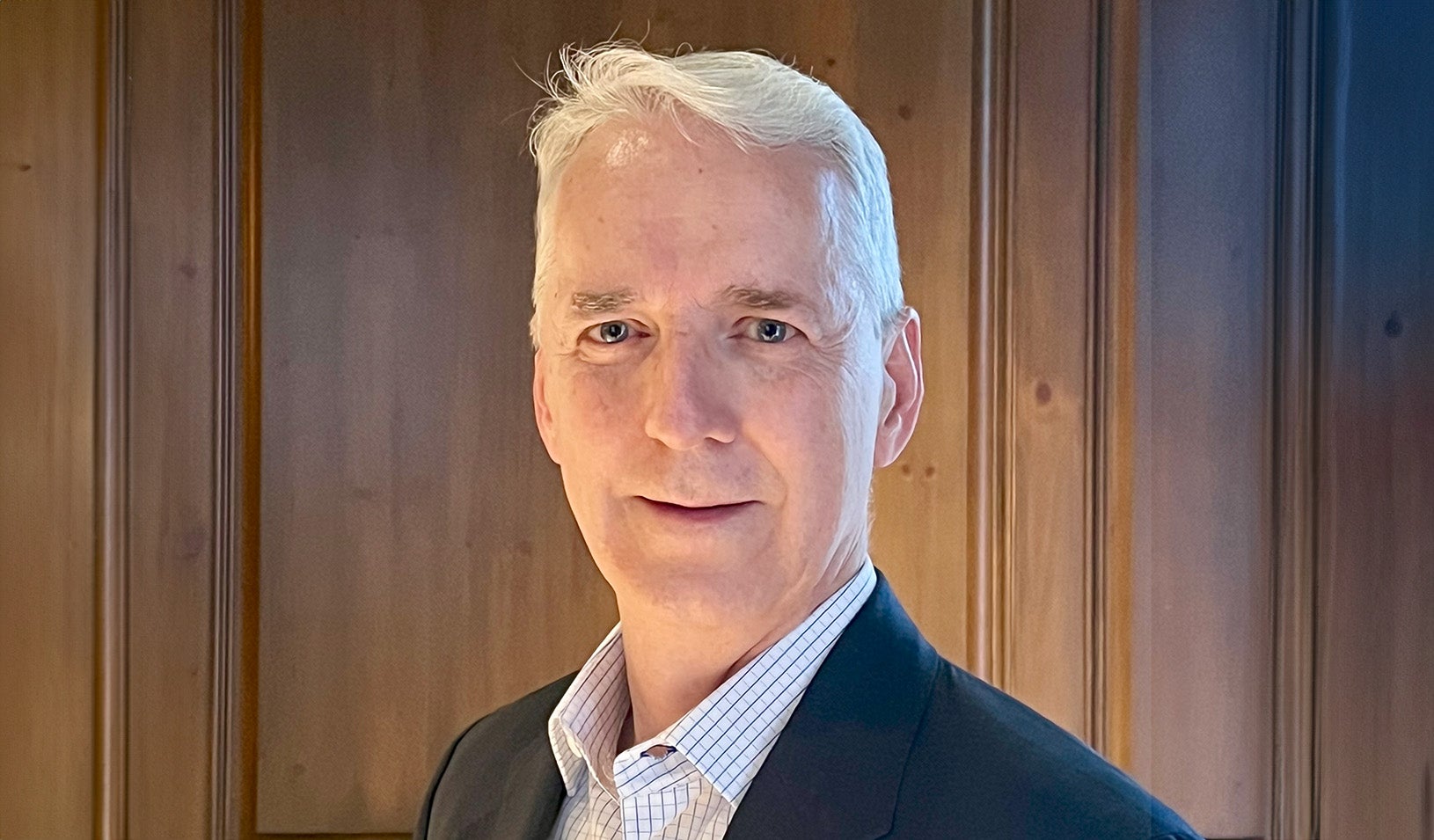
The turning point in Mike Smith’s life came during his time at Stanford GSB, when a classmate, Jeff Phillips, died of AIDS-related pneumonia in 1985. The loss devastated Mike, but it also sharpened his resolve to act. While still a student, he helped found the AIDS Education Project and organized a pioneering, campus-wide fundraising event, building awareness in an era of silence. Jeff’s plea to “remember my name” became the guiding principle of Mike’s career.
In 1987, Mike teamed up with activist Cleve Jones and others to launch the NAMES Project Foundation, with the goal of creating an AIDS memorial quilt. What began in a small San Francisco storefront grew into the world’s largest piece of participatory art, now comprising 48,000 panels. When first exhibited in Washington, D.C., the quilt emerged as a powerful symbol of the growing crisis. “The impact on the national psyche of seeing how many lives we’d lost to this then-poorly-understood disease was extremely powerful,” recalls Deb Whitman, MBA ’88. In recognition of its significance, Mike and the NAMES Project Foundation were nominated for the Nobel Peace Prize in 1989. “Mike’s exceptional organizational skills were paramount in a project that came to symbolize the human toll of the epidemic,” explains Jeff Waters, MBA ’86. Carolyn Gazeley, MBA ’86, describes his work as “instrumental in giving a human face to the AIDS epidemic, sensitively conveying the depth and breadth of suffering, and forcing change at a societal level.”
Mike held multiple leadership roles at the NAMES Project, coordinating displays worldwide. He went on to spend 13 years as executive director of San Francisco’s AIDS Emergency Fund and Breast Cancer Emergency Fund, providing financial assistance to thousands of low-income patients. Later, during the COVID-19 pandemic, Mike turned grief into action once again, spearheading the production of masks for at-risk populations. Through it all, he’s remained “an amazing catalyst for good who has changed the world,” says Melissa Nidever, MBA ’86. Teri Tompkins Read, ’82, MBA ’86, echoes that sentiment: “Mike has selflessly worked to promote understanding and remembrance for all.”