
We empower faculty to design and discover original research that challenges conventions and creates breakthroughs that push boundaries of knowledge.
Publication Types
Journal Articles
Books
Working Papers
Case Studies
Browse Publications
A Framework for Dynamic Oligopoly in Concentrated Industries
In this paper we introduce a new computationally tractable framework for Ericson and Pakes (1995)- style dynamic oligopoly models that overcomes the computational complexity involved in computing Markov perfect equilibrium (MPE). First, we define…
Inefficient Investment Waves
We show that firms’ individually optimal liquidity management results in socially inefficient boom-and-bust patterns. Financially constrained firms decide on the level of their liquid resources facing cash-flow shocks and time-varying investment…
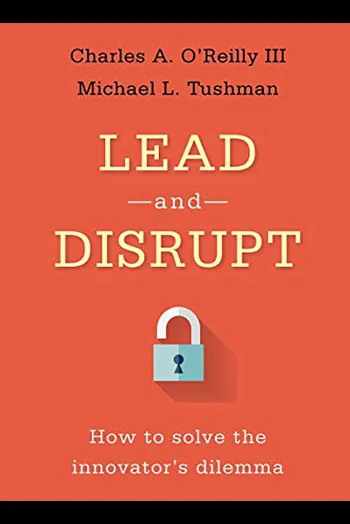
Lead and Disrupt: How to Solve the Innovator’s Dilemma
In the past few years, a number of well-known firms have failed; think of Blockbuster, Kodak, or RadioShack. When we read about their demise, it often seems inevitable — a natural part of “creative destruction.” But closer examination reveals a…
Matching on the Estimated Propensity Score
Propensity score matching estimators (Rosenbaum and Rubin (1983)) are widely used in evaluation research to estimate average treatment effects. In this article, we derive the large sample distribution of propensity score matching estimators. Our…
Selling Information
I consider the monopolistic pricing of informational good. A buyer’s willingness to pay for information is from inferring the unknown payoffs of actions in decision-making. A monopolistic seller and the buyer each observes a private signal about…
Surviving and Thriving
Can innovation among micro-entrepreneurs in South Africa teach global corporations a lesson? Rajesh Chandy, Stephen Anderson-Macdonald and Bilal Zia reckon so.
The Construction of the Consumer Decision Making Field by Jim Bettman – The Case of Preference Construction
The Legends in Consumer Behavior series captures the essence of the most important contributions made in the field of consumer behavior in the past several decades. It reproduces the seminal works of legends in the field, which are supplemented…
The Determinants and Welfare Implications of US Workers' Diverging Location Choices by Skill: 1980-2000
From 1980 to 2000, the rise in the US college/high school graduate wage gap coincided with increased geographic sorting as college graduates concentrated in high wage, high rent cities. This paper estimates a structural spatial equilibrium model…
The U.S. Investment Tax Credit for Solar Energy: Alternatives to the Anticipated 2017 Step-Down
Solar photovoltaic (PV) installations in the United States have been deployed at a rapid pace in recent years, a development that is attributed in significant part to the federal Investment Tax Credit (ITC). Yet, this credit is scheduled to step-…
Precedent and Doctrine in a Complicated World
Courts resolve individual disputes and create principles of law to justify their decisions and guide the resolution of future cases. Those tasks present informational challenges that affect the whole judicial process. Judges must simultaneously…
Economic Value of Flexible Hydrogen-Based Polygeneration Energy Systems
Polygeneration energy systems (PES) have the potential to provide a flexible, high-efficiency, and low-emissions alternative for power generation and chemical synthesis from fossil fuels. This study aims to assess the economic value of fossil-…
Policy Intervention in Debt Renegotiation: Evidence from the Home Affordable Modification Program
We evaluate the effects of the 2009 Home Affordable Modification Program (HAMP) that provided intermediaries with sizeable financial incentives to renegotiate mortgages. HAMP increased intensity of renegotiations and prevented substantial number…
Persuading the Regulator to Wait
We study a Bayesian persuasion game in the context of real options. The Sender (firm) chooses signals to reveal to the Receiver (regulator) each period but has no long-term commitment power. The Receiver chooses when to exercise the option,…
Serial Entrepreneurship: Learning by Doing?
Among typical entrepreneurs, is serial entrepreneurship common? Is the serial entrepreneur more likely to succeed? If so, why? These questions are addressed using data on all establishments started between 1990 and 2011 to sell retail goods and…
Allocating Emissions Among Co-Products: Implications for Procurement and Climate Policy
Co-production (simultaneous production of multiple outputs) occurs in some emission-intensive basic material and agricultural industries. This paper is motivated by ones in which a supplier sells its primary product to a buyer that incurs an…
Causal Inference in Accounting Research
This paper examines the approaches accounting researchers use to draw causal inferences using observational (or non-experimental) data. The vast majority of accounting research papers draw causal inferences notwithstanding the well-known…
Does Advertising Serve as a Signal? Evidence from Field Experiments in Mobile Search
In a large-scale field experiment, we demonstrate that advertising can serve as a signal that enhances consumers’ evaluations of advertised goods. We implement the experiment on a mobile search platform that provides listings and reviews for an…
How Having an MBA vs. a Law Degree Shapes Your Network
You’ve probably heard the expression “It’s not what you know, but who you know, that matters.” The sentiment is rather demotivating. After all, why go the extra mile if success is just determined by connections?
Americans and CEO Pay: 2016 Public Perception Survey on CEO Compensation
Recently, the Rock Center for Corporate Governance at Stanford University conducted a nationwide survey of 1,202 individuals — representative by gender, race, age, political affiliation, household income, and state residence — to understand…
CEOs and Directors on Pay: 2016 Survey on CEO Compensation
Recently, Heidrick & Struggles and the Rock Center for…