
We empower faculty to design and discover original research that challenges conventions and creates breakthroughs that push boundaries of knowledge.
Publication Types
Journal Articles
Books
Working Papers
Case Studies
Browse Publications
Oblivious Equilibrium for Concentrated Industries
This article explores the application of oblivious equilibrium (OE) to highly concentrated markets. We define a natural extended notion of OE, called partially oblivious equilibrium (POE), that allows for there to be a set of strategically…
Seven Myths of Boards of Directors
Corporate governance experts pay considerable attention to issues involving the board of directors. Because of the scope of the board’s role and the vast responsibilities that come with directorship, companies are expected to adhere to common…
The Value of Bosses
How and by how much do supervisors enhance worker productivity? Using a company-based data set on the productivity of technology-based services workers, we estimate supervisor effects and find them to be large. Replacing a boss who is in the…
Trust and Consequences: A Survey of Berkshire Hathaway Operating Managers
For much of its history, Berkshire Hathaway has been regarded primarily as the investment vehicle of Warren Buffett rather than a bona fide corporation. However, as Berkshire Hathaway has expanded beyond its core insurance operations, more…
Conceptual Framework for Financial Reporting: An Introduction to the Special Issue by the Guest Editors
No abstract available.
Trade Induced Technical Change? The Impact of Chinese Imports on Innovation, IT, and Productivity
We examine the impact of Chinese import competition on broad measures of technical change—patenting, IT, and TFP—using new panel data across twelve European countries from 1996 to 2007. In particular, we establish that the absolute…
Fitting in or Standing Out? The Tradeoffs of Structural and Cultural Embeddedness
A recurring theme in sociological research is the tradeoff between fitting in and standing out. Prior work examining this tension has tended to take either a network structural or a cultural perspective. We instead fuse these two traditions to…
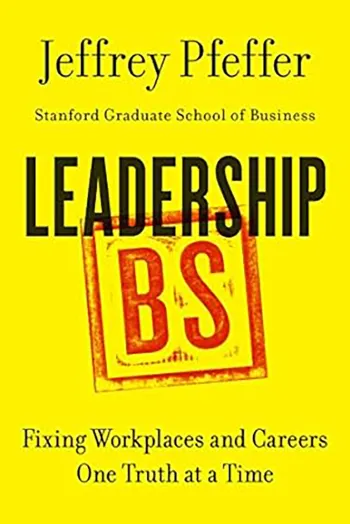
Leadership BS: Fixing Workplaces and Careers One Truth at a Time
Too many leadership failures. Too many career derailments. Too many toxic workplaces filled with disengaged, distrustful employees. Jeffrey Pfeffer, a professor at Stanford Graduate School of Business and the author of Power, offers an…
Allocating Emissions Among Co-Products: Implications for Procurement and Climate Policy
A state with climate policy may impose a tax on imported products for greenhouse gas emissions that occur in production and transportation to its border (a so-called border adjustment). A buyer may voluntarily commit to …
Are Stocks Real Assets? Sticky Discount Rates in Stock Markets
Local stock markets adjust sluggishly to changes in local inflation. When the local rate of inflation increases, local investors subsequently earn significantly lower real returns on local stocks, but not on local bonds or foreign stocks. Our…
Regional Redistribution Through the U.S. Mortgage Market
Regional shocks are an important feature of the U.S. economy. Households’ ability to self-insure against these shocks depends on how they affect local interest rates. In the U.S., most borrowing occurs through the mortgage market and is…
Advertising Content and Consumer Engagement on Social Media: Evidence from Facebook
We investigate the effect of social media advertising content on customer engagement using a large-scale field study on Facebook. We content-code more than 100,000 unique messages across 800 companies using a combination of Amazon Mechanical Turk…
Book Review: Environmental Markets: A Property Rights Approach
A book review of Environmental Markets: A Property Rights Approach. Cambridge Studies in Economics, Choice, and Society by Terry L. Anderson, Gary D. Libecap
Carrots or Sticks? Improving Social and Environmental Compliance at Suppliers Through Incentives and Penalties
Firms are increasingly looking to eradicate social and environmental non-compliances at their suppliers in response to increasing regulations, consumer demand, potential for supply chain disruptions, and to improve their social, environmental,…
Commentary on Prospects for Global Financial Reporting
This commentary reviews the current status of the global use of International Financial Reporting Standards (IFRS) and offers thoughts on the prospects for truly global financial reporting. The shift towards global use of IFRS is one of the…
Effect of Temporal Spacing between Advertising Exposures: Evidence from an Online Field Experiment
This paper aims to understand the impact of temporal spacing between ad exposures on the likelihood of a consumer purchasing the advertised product. I create an individual-level data set with exogenous variation in ad exposure and its spacing by…
Facebook as a Research Tool for the Social Sciences: Opportunities, Challenges, Ethical Considerations, and Practical Guidelines
Facebook is rapidly gaining recognition as a powerful research tool for the social sciences. It constitutes a large and diverse pool of participants, who can be selectively recruited for both online and offline studies. Additionally, it…
Financial Literacy Skills for the 21th Century: Evidence from PISA
I am delighted to be asked to give the Colston Warne Lecture at the American Council on Consumer Interests annual conference. What I want to cover in this lecture is what I consider to be one of the most important topics for consumers: financial…
Gross Substitutes and Endowed Assignment Valuations
We show that the class of preferences satisfying the gross substitutes condition of [Kelso and Crawford, 1982] is strictly larger than the class of endowed assignment valuations of [Hatfield and Milgrom, 2005], thus resolving the open question…
Homogenous Contracts for Heterogeneous Agents: Aligning Salesforce Composition and Compensation
Observed contracts in the real-world are often very simple, partly reflecting the constraints faced by contracting firms in making the contracts more complex. We focus on one such rigidity, the constraints faced by firms in fine-tuning contracts…