In Brief
- Full fellowship support allows PhD students to focus entirely on original scholarship and professional development rather than the financial burden of tuition or outside employment.
- By expanding funding to a sixth year the GSB ensures its scholars remain competitive in a changing academic landscape where time-to-degree is increasing across the social sciences.
- Contributions from former students like Pekka Hietala, MA ’85, PhD ’87, create a self-sustaining cycle that opens doors for the next generation of global scholars to pursue interdisciplinary and high-impact research.
For Stanford Graduate School of Business PhD students, the freedom to pursue ambitious research depends on a simple premise: They should be able to focus on scholarship, not on how to pay for it. That’s why the GSB fully funds every doctoral student. Currently, 128 doctoral candidates are enrolled in the program, with an average fellowship award of $97,213. The GSB dedicates approximately 35% of the school’s total fellowship budget to doctoral education.
That investment helps ensure the next generation of scholars can pursue research that advances business knowledge and influences leaders and organizations worldwide.

Pekka Hietala, MA ’85, PhD ’87
Few people understand the stakes better than Pekka Hietala, MA ’85, PhD ’87, a finance scholar and professor emeritus at INSEAD. Hietala arrived at Stanford from Finland and credits fellowship support as foundational to his academic career. In gratitude, he established and later increased support for the Esa and Helena Hietala PhD Fellowship, named in honor of his parents.
“The purpose of this fellowship is not to ‘repay’ the GSB for the educational experience I had,” Hietala has said. “That wonderful experience cannot be measured in monetary terms. The purpose of this fellowship is to pay back at least the financial support the GSB gave me. Without that support, I simply could not have come to Stanford. I now want to create a similar opportunity for as many other students as possible.
For Hietala, alumni support is about keeping doors open, especially for students whose best research years should not be constrained by financial pressure. “It is important for me to help future generations of scholars without placing financial constraints on them,” he said. “For those of us who pursue academic careers, it truly is a gift to have been able to study among such outstanding fellow PhD students and faculty at the GSB.”
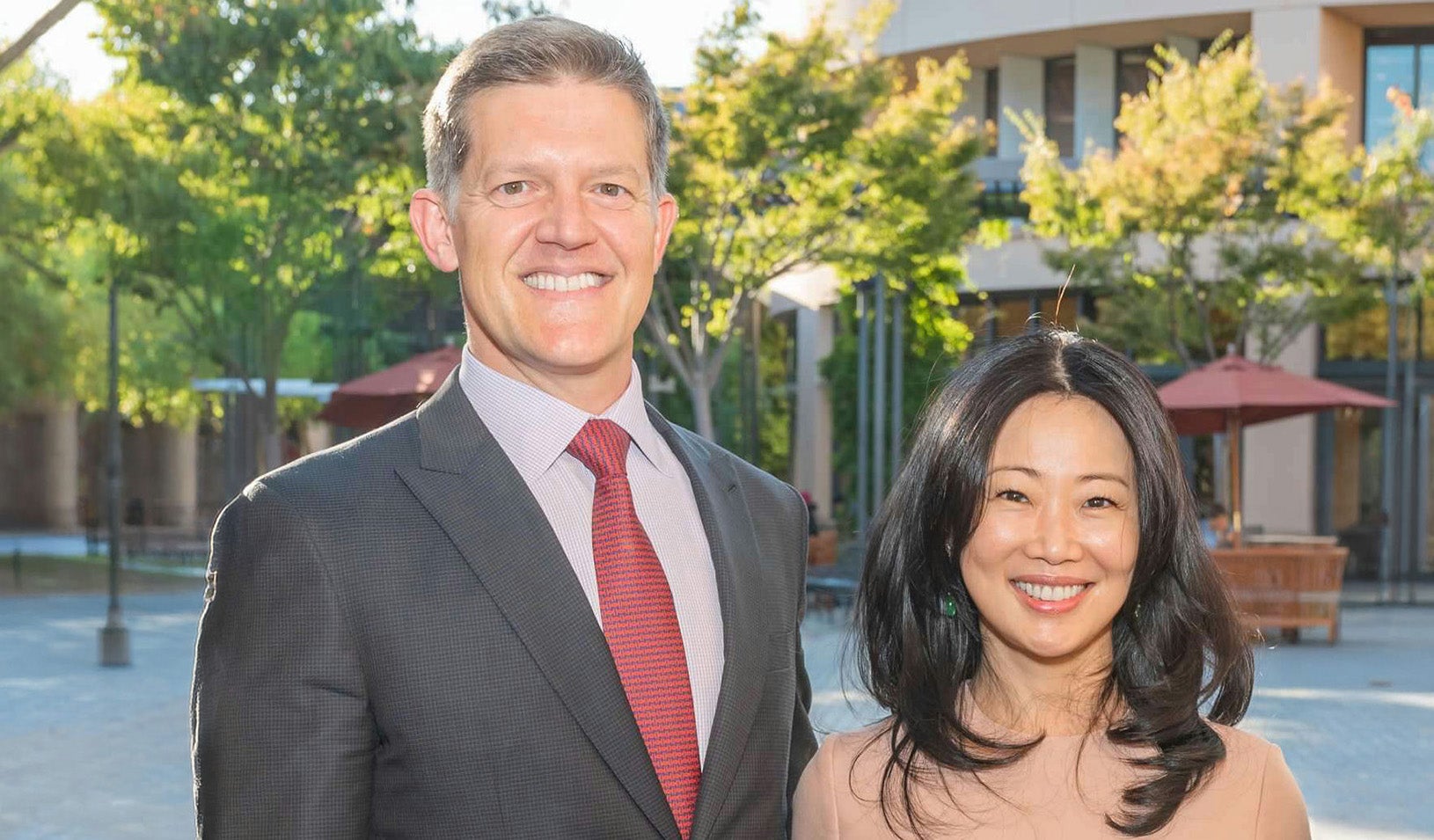
According to Dianne Le, assistant dean of the PhD program, full fellowship support is both a competitive necessity and a pedagogical choice that shapes the quality of students’ work. “We need a competitive fellowship to compete for the very top talent in the world. A fully funded fellowship means they’re here to focus entirely on their scholarship,” Le said.
Le notes that some doctoral programs rely more heavily on teaching or service models, which can slow academic progress. At Stanford GSB, fellowships are designed to protect time for research and professional development, reducing the likelihood that students take on multiple outside jobs simply to make ends meet. “It is absolutely critical,” Le said. “It dictates where they spend their time. Otherwise, they’re holding a second job.”
The PhD experience is also changing in ways that require sustained support. Time-to-degree has increased across the social sciences, and Stanford GSB has responded by expanding fellowship coverage. “In the last decade, the time to complete a degree has increased across peer schools, including at the GSB,” Le said. “We are now funding the sixth year, to help our students be as competitive as possible in their career pursuits.”
That commitment includes a new fellowship to help PhD students pursue faculty roles and dedicate time to the academic job market without sacrificing financial stability. Fellowships do not just change a student’s day-to-day life at the GSB; they can also shape long-term career decisions. Graduates who leave with minimal debt have greater flexibility to pursue academia and continue producing research that informs practice and teaching worldwide.
At the same time, doctoral research is becoming more interdisciplinary. Le points to PhD students collaborating across Stanford, from engineering and medicine to sociology and law, and often coauthoring work that crosses traditional boundaries. That intellectual ambition is exactly what fellowship funding is meant to enable: deep, original scholarship with the potential to shift how business is studied and practiced.
“I like to focus on understanding how technical insights can translate into real-world impacts. I was drawn to the GSB because I believe it is the best place to work on these types of projects and conduct impactful research at the intersection of operations, economics, healthcare, and supply chains. I feel fortunate to be part of a community that encourages curiosity, creativity, and depth of thought,” said Saniya Vaidya, PhD ’30.
For alumni like Hietala, that sense of community and scholarship is exactly the point. Fellowships are not merely financial instruments; they are a commitment to ideas and to the people who will generate them.
“Somebody gave us the opportunity to study at Stanford GSB for free,” said Hietala. “Let us now give back the same opportunity to the next generation.”